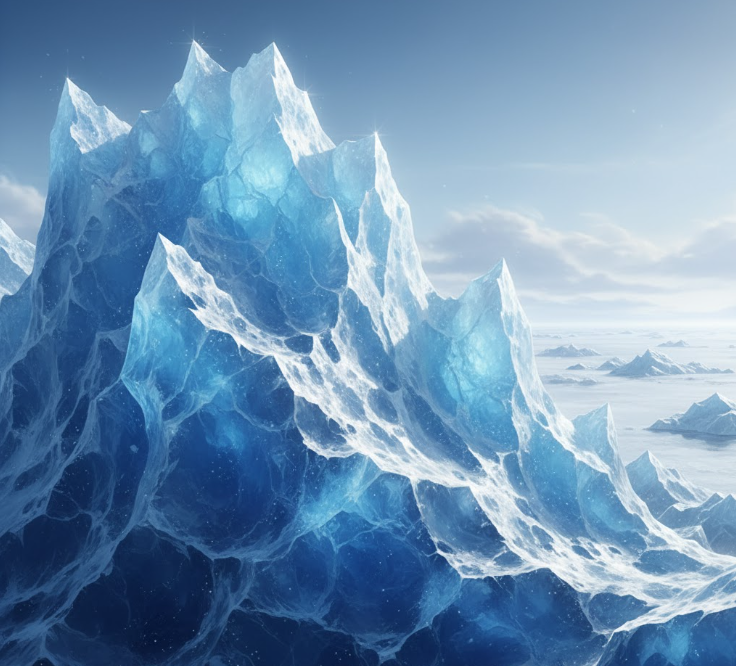
Ice, a seemingly simple substance, presents a fascinating challenge when it comes to description. The English language offers a rich array of adjectives that can capture the nuances of its various forms and properties.
Mastering these adjectives allows for more precise and evocative communication, whether you’re writing poetry, scientific reports, or everyday conversations. This article provides an in-depth exploration of adjectives used to describe ice, covering everything from basic definitions to advanced usage, ensuring you can confidently and accurately portray this captivating element.
This guide is designed for English language learners of all levels, from beginners seeking to expand their vocabulary to advanced speakers aiming to refine their descriptive skills. By the end of this article, you will have a comprehensive understanding of the adjectives associated with ice, enabling you to use them effectively and creatively.
Table of Contents
- Defining Ice and Adjectives
- Structural Breakdown: Adjective Placement
- Types and Categories of Adjectives for Ice
- Examples of Adjectives for Ice
- Usage Rules for Adjectives
- Common Mistakes When Using Adjectives for Ice
- Practice Exercises
- Advanced Topics: Nuances and Connotations
- Frequently Asked Questions
- Conclusion
Defining Ice and Adjectives
Ice is water in its solid state, formed when water is cooled to or below its freezing point (0°C or 32°F). It’s a crystalline structure, meaning its molecules are arranged in a specific, repeating pattern. This simple definition, however, belies the complexity and variety of ice we encounter in the world, from the delicate frost on a windowpane to the massive glaciers of polar regions.
An adjective is a word that modifies a noun or pronoun, providing more information about its qualities, characteristics, or state. Adjectives answer questions like “What kind?”, “Which one?”, “How many?”, or “How much?” They play a crucial role in descriptive language, allowing us to paint a vivid picture with words. When describing ice, adjectives help us convey its texture, appearance, effects, and even its symbolic meaning.
In the context of ice, adjectives can describe its physical properties (e.g., slippery, cold, brittle), its appearance (e.g., clear, opaque, sparkling), its effects (e.g., chilling, refreshing, dangerous), or even its metaphorical qualities (e.g., icy demeanor, frozen emotions).
Structural Breakdown: Adjective Placement
Understanding how adjectives fit into sentences is crucial for using them correctly. In English, adjectives typically precede the noun they modify. This is known as the attributive position. For example:
- The cold ice chilled my drink.
- She slipped on the slippery ice.
However, adjectives can also follow a linking verb (such as be, seem, appear, become). This is known as the predicative position. For example:
- The ice is clear.
- The glacier seemed immense.
Sometimes, adjectives can be placed after the noun for emphasis or stylistic effect, especially in formal writing or poetry. For example:
- The explorer faced dangers manifold, including treacherous ice.
Multiple adjectives can also be used to describe the same noun. In this case, there’s a general order that’s often followed, though it’s not a strict rule.
A common guideline is:
- Opinion
- Size
- Age
- Shape
- Color
- Origin
- Material
- Purpose
For example, “a beautiful large old round white Russian ice sculpture.” In practice, it’s usually best to use only two or three adjectives to avoid sounding awkward.
Types and Categories of Adjectives for Ice
Adjectives for ice can be categorized based on what aspect of the ice they describe. This classification helps in choosing the most appropriate adjective for a given situation.
Physical Properties
These adjectives describe the tangible characteristics of ice, such as its temperature, texture, and state. Examples include:
- Cold: Having a low temperature.
- Icy: Covered with or consisting of ice; very cold.
- Slippery: Difficult to hold or stand on because it is smooth, wet, or oily.
- Hard: Solid, firm, and resistant to pressure; not easily broken or deformed.
- Brittle: Hard but liable to break or shatter easily.
- Frozen: Having been turned into ice or another solid as a result of extreme cold.
- Solid: Firm and stable in shape; not liquid or fluid.
- Dense: Closely compacted in substance.
Appearance
These adjectives describe how the ice looks, including its color, transparency, and surface features. Examples include:
- Clear: Easy to see through; transparent.
- Opaque: Not able to be seen through; not transparent.
- White: Having a color like that of snow or milk.
- Blue: Having a color like that of a clear sky. (Often used for glacial ice)
- Sparkling: Shining brightly with flashes of light.
- Glistening: Shining with a wet or oily look.
- Shimmering: Reflecting light in a way that seems to move slightly.
- Translucent: Allowing light, but not detailed images, to pass through; semitransparent.
- Cracked: Damaged with lines on its surface.
- Jagged: Having sharp, pointed projections.
- Smooth: Having an even and regular surface or consistency; free from perceptible projections, lumps, or indentations.
Effects and Conditions
These adjectives describe the impact of ice on its surroundings or the conditions in which it exists. Examples include:
- Chilling: Causing a sensation of cold.
- Freezing: So cold that water turns into ice.
- Dangerous: Able or likely to cause harm or injury.
- Treacherous: Hazardous because of presenting hidden or unpredictable dangers.
- Melting: Changing from a solid to a liquid due to heat.
- Thin: Having relatively little thickness or depth.
- Thick: Having a large distance between opposite surfaces.
- Glacial: Relating to glaciers or ice ages; extremely slow or cold.
Figurative Language
These adjectives use ice as a metaphor to describe abstract qualities or emotions. Examples include:
- Icy: Emotionally cold; unfriendly.
- Frozen: Unable to move or act; emotionally unresponsive.
- Frigid: Extremely cold; lacking warmth or enthusiasm.
- Glacial: Extremely slow; resembling a glacier in its coldness or slowness.
Examples of Adjectives for Ice
The following tables provide a range of examples of adjectives used to describe ice, categorized by the types discussed above. These examples demonstrate how each adjective can be used in context to create a more vivid and precise description.
Physical Properties Examples
This table showcases adjectives describing the physical characteristics of ice, such as its temperature, texture, and density. These adjectives are essential for accurately portraying the tangible qualities of ice.
| Adjective | Example Sentence |
|---|---|
| Cold | The cold ice numbed my fingers. |
| Icy | The icy wind whipped across the frozen lake. |
| Slippery | The slippery ice made walking difficult. |
| Hard | The hard ice cracked under the weight of the truck. |
| Brittle | The brittle ice shattered when I dropped it. |
| Frozen | The frozen ice covered the pond completely. |
| Solid | The solid ice provided a stable platform for the skaters. |
| Dense | The dense ice of the glacier was incredibly heavy. |
| Chilled | The chilled ice kept the drinks perfectly cool. |
| Frigid | The frigid ice burned my skin. |
| Crystalline | The crystalline ice sparkled in the sunlight. |
| Compact | The compact ice was difficult to break. |
| Granular | The granular ice crunched underfoot. |
| Powdery | The powdery ice drifted in the wind. |
| Crusty | The crusty ice formed a thin layer on the snow. |
| Slushy | The slushy ice made driving hazardous. |
| Waterlogged | The waterlogged ice was heavy and unstable. |
| Melting | The melting ice dripped from the eaves. |
| Sublimating | The sublimating ice disappeared without melting. |
| Accumulated | The accumulated ice formed a thick sheet. |
| Layered | The layered ice showed the passage of time. |
| Compressed | The compressed ice was incredibly strong. |
| Temperate | The temperate ice was closer to melting. |
Appearance Examples
This table provides examples of adjectives that describe the visual characteristics of ice, such as its color, transparency, and surface texture. These adjectives are useful for creating vivid and detailed descriptions of ice.
| Adjective | Example Sentence |
|---|---|
| Clear | The clear ice revealed the bottom of the pond. |
| Opaque | The opaque ice blocked the sunlight. |
| White | The white ice covered the mountains like a blanket. |
| Blue | The blue ice of the glacier was breathtaking. |
| Sparkling | The sparkling ice glittered in the sun. |
| Glistening | The glistening ice reflected the city lights. |
| Shimmering | The shimmering ice created an ethereal effect. |
| Translucent | The translucent ice allowed a faint glow to pass through. |
| Cracked | The cracked ice warned of instability. |
| Jagged | The jagged ice posed a danger to climbers. |
| Smooth | The smooth ice was perfect for skating. |
| Frosted | The frosted ice covered the windowpanes. |
| Iridescent | The iridescent ice displayed a rainbow of colors. |
| Pearly | The pearly ice had a soft, lustrous sheen. |
| Glossy | The glossy ice reflected the surrounding landscape. |
| Dull | The dull ice lacked any sparkle. |
| Murky | The murky ice obscured the objects beneath. |
| Grayish | The grayish ice indicated impurities. |
| Frothy | The frothy ice contained many air bubbles. |
| Textured | The textured ice provided better grip. |
| Etched | The etched ice displayed intricate patterns. |
| Sculpted | The sculpted ice resembled a work of art. |
| Polished | The polished ice gleamed under the lights. |
Effects and Conditions Examples
This table provides examples of adjectives that describe the impact of ice on its surroundings or the conditions under which it exists. These adjectives are helpful for describing the effects of ice on the environment and human activities.
| Adjective | Example Sentence |
|---|---|
| Chilling | The chilling ice made us shiver. |
| Freezing | The freezing ice turned the lake solid. |
| Dangerous | The dangerous ice caused many accidents. |
| Treacherous | The treacherous ice hid many hazards. |
| Melting | The melting ice signaled the arrival of spring. |
| Thin | The thin ice was unsafe to walk on. |
| Thick | The thick ice supported the weight of the car. |
| Glacial | The glacial ice advanced slowly but surely. |
| Damaging | The damaging ice storm downed power lines. |
| Protective | The protective ice layer insulated the plants. |
| Persisting | The persisting ice remained even in the sun. |
| Accumulating | The accumulating ice created a hazard. |
| Shifting | The shifting ice made navigation difficult. |
| Unstable | The unstable ice threatened to collapse. |
| Fragile | The fragile ice broke easily. |
| Eroding | The eroding ice reshaped the landscape. |
| Expanding | The expanding ice cracked the pavement. |
| Compressive | The compressive ice exerted immense pressure. |
| Insulating | The insulating ice prevented heat loss. |
| Conductive | The conductive ice rapidly transferred cold. |
| Corrosive | The corrosive ice damaged the metal. |
Figurative Language Examples
This table demonstrates how adjectives associated with ice can be used metaphorically to describe abstract qualities or emotions. These examples illustrate the expressive power of language and how ice-related adjectives can add depth to writing.
| Adjective | Example Sentence |
|---|---|
| Icy | She gave me an icy stare. |
| Frozen | His emotions were frozen after the tragedy. |
| Frigid | The relationship became frigid over time. |
| Glacial | Progress on the project was glacial. |
| Cold | He gave a cold response to her request. |
| Hard | She had a hard heart. |
| Stony | His face was stony and unreadable. |
| Unfeeling | He was perceived as unfeeling and distant. |
| Indifferent | She was indifferent to their pleas. |
| Aloof | He maintained an aloof demeanor. |
Usage Rules for Adjectives
Using adjectives correctly involves understanding their placement, agreement, and the subtle nuances of their meaning. Here are some key rules to keep in mind:
- Placement: As mentioned earlier, adjectives usually come before the noun they modify (attributive position). However, they can follow linking verbs (predicative position).
- Order: When using multiple adjectives, follow the general order of opinion, size, age, shape, color, origin, material, and purpose.
- Agreement: In English, adjectives do not change form to agree with the noun they modify in number or gender (unlike some other languages). However, demonstrative adjectives (this, that, these, those) must agree in number.
- Comparatives and Superlatives: Use comparative forms (e.g., colder, more slippery) to compare two things, and superlative forms (e.g., coldest, most slippery) to compare three or more things.
- Context: Choose adjectives that are appropriate for the context. For example, “glacial” ice is typically used to describe large masses of ice found in glaciers, not a small ice cube in a drink.
Exceptions and Special Cases:
- Some adjectives are only used in the attributive position (e.g., chief, main).
- Some adjectives are only used in the predicative position (e.g., afraid, asleep).
- Compound adjectives (e.g., ice-cold, snow-covered) are often hyphenated when used attributively.
Common Mistakes When Using Adjectives for Ice
Even experienced English speakers sometimes make mistakes when using adjectives. Here are some common errors to avoid:
| Incorrect | Correct | Explanation |
|---|---|---|
| The ice was more colder than usual. | The ice was colder than usual. | Avoid using “more” with adjectives that already have a comparative ending (-er). |
| The most clear ice. | The clearest ice. | Use the -est ending for superlative adjectives when the adjective is short. |
| A ice cold drink. | An ice-cold drink. | Hyphenate compound adjectives when they precede the noun. |
| The ice is very freeze. | The ice is very frozen. | Use the correct form of the adjective (frozen, not freeze). |
| The ice, that was blue, sparkled. | The ice, which was blue, sparkled. | Use “which” to introduce a nonrestrictive clause (adds extra information). |
Practice Exercises
These exercises will help you practice using adjectives to describe ice. Each exercise focuses on different aspects of adjective usage, from identifying the correct adjective to writing descriptive sentences.
Exercise 1: Identifying Correct Adjectives
Choose the best adjective from the options provided to complete each sentence.
| Question | Options | Answer |
|---|---|---|
| The ______ ice made it difficult to stand. | (a) slippery (b) cold (c) clear | (a) slippery |
| The ______ glacier stretched for miles. | (a) small (b) immense (c) tiny | (b) immense |
| The ______ wind blew across the frozen tundra. | (a) warm (b) icy (c) gentle | (b) icy |
| The ______ ice cubes kept the drink cool. | (a) hot (b) chilling (c) lukewarm | (b) chilling |
| The ______ ice reflected the sunlight. | (a) dull (b) sparkling (c) dark | (b) sparkling |
| The ______ appearance of the glacial ice was stunning. | (a) murky (b) clear (c) blue | (c) blue |
| The ______ ice on the lake was unsafe. | (a) thick (b) thin (c) solid | (b) thin |
| The sculpture was made of ______ ice. | (a) melting (b) solid (c) liquid | (b) solid |
| The ______ surface of the skating rink allowed skaters to glide effortlessly. | (a) jagged (b) smooth (c) rough | (b) smooth |
| The ______ conditions made travel dangerous. | (a) mild (b) icy (c) warm | (b) icy |
Exercise 2: Sentence Completion
Complete the following sentences using appropriate adjectives to describe ice.
| Question | Answer |
|---|---|
| The ______ ice was difficult to break. | The hard ice was difficult to break. |
| The ______ surface of the lake reflected the sky. | The smooth surface of the lake reflected the sky. |
| The ______ temperature caused the water to freeze quickly. | The frigid temperature caused the water to freeze quickly. |
| The ______ ice made the road hazardous for driving. | The slippery ice made the road hazardous for driving. |
| The ______ glacier moved slowly down the valley. | The massive glacier moved slowly down the valley. |
| The ______ ice crystals sparkled in the light. | The clear ice crystals sparkled in the light. |
| The ______ wind whipped across the frozen landscape. | The bitter wind whipped across the frozen landscape. |
| The ______ ice was not safe to walk on. | The thin ice was not safe to walk on. |
| The ______ drink was perfect on a hot day. | The ice-cold drink was perfect on a hot day. |
| The ______ conditions made it difficult to survive. | The glacial conditions made it difficult to survive. |
Exercise 3: Descriptive Writing
Write a short paragraph (5-7 sentences) describing a scene involving ice. Use at least five different adjectives to describe the ice and its effects.
Example:
The clear ice on the pond reflected the blue sky, creating a serene scene. However, the slippery surface made walking across it a challenge. A chilling wind swept across the frozen landscape, biting at any exposed skin. The jagged edges of the broken ice added a touch of danger to the otherwise peaceful setting. Despite the cold, the beauty of the ice was captivating.
Advanced Topics: Nuances and Connotations
Beyond the basic definitions and usage rules, understanding the nuances and connotations of adjectives for ice can significantly enhance your writing. Consider the subtle differences between words like “cold,” “icy,” and “frigid.” While all three describe low temperatures, “icy” often implies a surface covered in ice, “cold” is a general term for low temperature, and “frigid” suggests an extreme and often unpleasant cold.
Similarly, in figurative language, “icy” can describe a detached or unfriendly demeanor, while “frozen” might imply emotional paralysis.
The choice of adjective can also evoke specific imagery or associations. For instance, “glacial” not only describes something related to glaciers but also implies slowness and immensity.
“Sparkling” suggests beauty and light, while “opaque” implies mystery and concealment. By carefully considering these nuances, you can create more evocative and impactful descriptions.
Furthermore, exploring the etymology of these adjectives can provide deeper insights into their meanings. For example, “glacial” comes from the Latin word “glacies,” meaning “ice,” while “frigid” comes from the Latin word “frigidus,” meaning “cold.” Understanding these origins can help you appreciate the subtle shades of meaning that each word carries.
Frequently Asked Questions
- What is the difference between “icy” and “cold”?While both words relate to low temperatures, “cold” is a general term, whereas “icy” specifically refers to something covered in or consisting of ice. For example, you might say “The water is cold,” but “The road is icy.”
- How do I choose the right adjective when describing ice?Consider the specific aspect of the ice you want to emphasize. Are you describing its temperature, appearance, or effect? Choose an adjective that accurately reflects that aspect. For example, if you want to describe the appearance of clear ice, you would use the adjective “clear”, but if you want to describe the dangerous conditions caused by ice, you might use “treacherous”.
- Can I use multiple adjectives to describe ice?Yes, you can use multiple adjectives, but be mindful of the order and avoid using too many, as it can sound awkward. Stick to two or three adjectives that provide the most relevant information.
- What are some common metaphors involving ice?Ice is often used as a metaphor for coldness, detachment, or emotional distance. For example, someone might have an “icy” personality or give a “cold” response.
- How can I improve my vocabulary of adjectives for ice?Read widely and pay attention to how different authors describe ice. Use a thesaurus to find synonyms and explore the nuances of each word. Practice using these adjectives in your own writing.
- Is it correct to say “ice-cold” or “icy cold”?“Ice-cold” is a common and accepted compound adjective meaning extremely cold. “Icy cold” is less common but still understandable, although it might be considered slightly redundant since “icy” already implies coldness.
- What is the difference between “translucent” and “transparent” when describing ice?“Transparent” means allowing light to pass through so that objects behind can be distinctly seen. “Translucent” means allowing light to pass through, but not allowing clear images to be seen. Clear ice is transparent, while frosted ice is translucent.
- Are there regional variations in the adjectives used to describe ice and snow?Yes, certain regions, particularly those with a lot of snow and ice, may have more specific or specialized terms. For example, Inuit languages have numerous words for different types of snow and ice, reflecting their deep understanding of their environment. While these terms may not be widely used in standard English, they highlight the importance of context and cultural knowledge in language.
Conclusion
Mastering adjectives for ice is a valuable skill for anyone seeking to enhance their descriptive abilities in English. By understanding the different types of adjectives, their usage rules, and common mistakes to avoid, you can confidently and accurately portray the various forms and properties of ice. From the slippery surface of a frozen pond to the immense expanse of a glacial landscape, the right adjectives can bring your writing to life.
Remember to practice using these adjectives in your own writing and pay attention to how they are used by others. Explore the nuances of each word and consider the context in which it is used.
With dedication and attention to detail, you can master the art of describing ice and elevate your overall command of the English language. Keep exploring, keep practicing, and enjoy the journey of language learning!