Understanding how to express quantity, specifically “how much,” is crucial for effective communication in any language. In Italian, this involves grasping different grammatical structures and vocabulary depending on whether you’re referring to countable or uncountable nouns, singular or plural entities.
This article provides a comprehensive guide to mastering the various ways to say “how much” in Italian. This knowledge is essential for anyone learning Italian, whether you’re a beginner planning a trip to Italy or an advanced student aiming for fluency.
This guide will benefit learners of all levels by breaking down the concepts into manageable sections, providing numerous examples, and offering practical exercises to solidify your understanding.
Table of Contents
- Introduction
- Definition: Expressing Quantity in Italian
- Structural Breakdown: Key Phrases and Components
- Types and Categories
- Examples: Practical Usage
- Usage Rules and Considerations
- Common Mistakes to Avoid
- Practice Exercises
- Advanced Topics
- Frequently Asked Questions (FAQ)
- Conclusion
Definition: Expressing Quantity in Italian
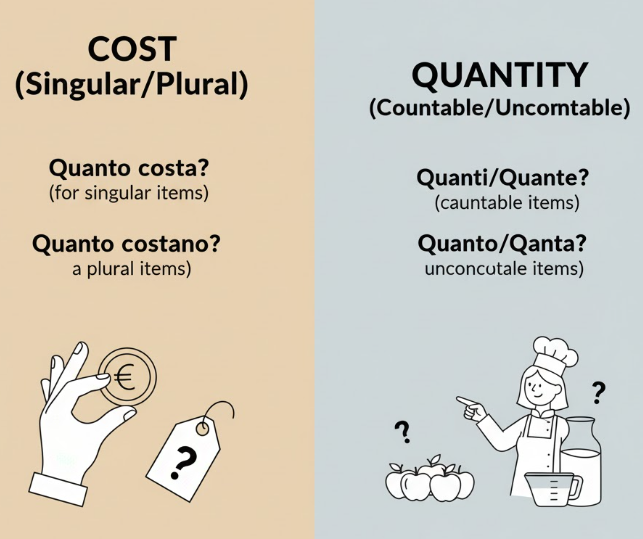
In Italian, expressing “how much” requires understanding the distinction between countable and uncountable nouns. Countable nouns are items that can be individually counted (e.g., books, chairs, people), while uncountable nouns represent substances, concepts, or things that cannot be counted individually (e.g., water, time, money). The choice between quanto, quanti, and quante depends on this distinction and also on the gender (masculine or feminine) and number (singular or plural) of the noun you’re referring to. Mastering these distinctions is crucial for forming grammatically correct and natural-sounding questions and statements about quantity.
Structural Breakdown: Key Phrases and Components
The basic phrases for expressing “how much” in Italian are built around the interrogative words quanto, quanti, and quante. The structure typically involves placing these words before the noun they modify, followed by any necessary prepositions or verbs. The sentence structure will vary depending on whether you are asking a direct or indirect question, but the core principle of matching the correct interrogative word with the noun’s characteristics remains constant. For example, when asking about the amount of sugar in a recipe, you’d use quanto because sugar is an uncountable noun. However, when inquiring about the number of tomatoes needed, you’d utilize quanti because tomatoes are countable and masculine plural.
Types and Categories
Uncountable Nouns: Quanto
Quanto is used with uncountable nouns (nomi non numerabili) in the singular form. These are substances, liquids, abstract concepts, or materials that cannot be counted individually. It translates directly to “how much.” The noun that follows quanto is always masculine singular, regardless of the substance’s inherent qualities (e.g. acqua (water) is feminine, but we still use quanto). Recognizing common uncountable nouns is key to using quanto correctly.
Countable Nouns: Quanti/Quante
Quanti and quante are used with countable nouns (nomi numerabili) in the plural form. Quanti is used for masculine plural nouns, while quante is used for feminine plural nouns. These words directly translate to “how many.” It’s essential to remember the gender and plural form of nouns to select the correct interrogative word. For instance, if you want to ask about the number of books (libri) you would use quanti because libri is masculine plural, while if you want to ask about the number of girls (ragazze), you use quante.
Indirect Questions
In addition to direct questions, “how much” can be expressed in indirect questions. These are statements that include an embedded question. The structure often involves a phrase like “I want to know…” or “Tell me…” followed by quanto, quanti, or quante and the rest of the question. The word order might shift slightly compared to direct questions, but the fundamental principle of agreement between the interrogative word and the noun remains unchanged. Using indirect questions adds a layer of politeness and sophistication to your Italian.
Examples: Practical Usage
Examples with Quanto
The following table provides examples of using quanto with various uncountable nouns. Note how quanto remains constant while the nouns change. Understanding these patterns will make using quanto feel more intuitive.
| Italian | English Translation |
|---|---|
| Quanto zucchero vuoi nel caffè? | How much sugar do you want in your coffee? |
| Quanto tempo hai? | How much time do you have? |
| Quanto costa questo? | How much does this cost? |
| Quanto latte c’è nel frigorifero? | How much milk is there in the refrigerator? |
| Quanto olio devo aggiungere? | How much oil should I add? |
| Quanto amore puoi dare? | How much love can you give? |
| Quanto spazio abbiamo? | How much space do we have? |
| Quanto sale hai messo? | How much salt did you put in? |
| Quanto vino hai bevuto? | How much wine did you drink? |
| Quanto impegno ci vuole? | How much effort does it take? |
| Quanto inchiostro è rimasto nella penna? | How much ink is left in the pen? |
| Quanto coraggio ci vuole per fare questo? | How much courage does it take to do this? |
| Quanto potere ha quella persona? | How much power does that person have? |
| Quanto aiuto ti serve? | How much help do you need? |
| Quanto formaggio hai comprato? | How much cheese did you buy? |
| Quanto riso devo cucinare? | How much rice should I cook? |
| Quanto pepe hai usato? | How much pepper did you use? |
| Quanto burro c’è nella torta? | How much butter is in the cake? |
| Quanto caffè bevi al giorno? | How much coffee do you drink per day? |
| Quanto miele vuoi nel tè? | How much honey do you want in your tea? |
| Quanto tempo ci vuole per arrivare? | How much time does it take to arrive? |
| Quanto denaro hai? | How much money do you have? |
| Quanto lavoro hai fatto oggi? | How much work did you do today? |
| Quanto amore hai nel tuo cuore? | How much love do you have in your heart? |
| Quanto rispetto dovresti avere per i tuoi genitori? | How much respect should you have for your parents? |
| Quanto studio fai ogni giorno? | How much studying do you do every day? |
Examples with Quanti/Quante
The following table illustrates the use of quanti and quante with countable nouns. Pay close attention to the gender and number agreement. Understanding these patterns is crucial for accurate Italian communication.
| Italian | English Translation |
|---|---|
| Quanti libri hai letto? | How many books have you read? |
| Quante persone ci sono alla festa? | How many people are there at the party? |
| Quanti studenti ci sono in classe? | How many students are there in the class? |
| Quante macchine hai? | How many cars do you have? |
| Quanti gatti hai? | How many cats do you have? |
| Quante case hai visitato? | How many houses have you visited? |
| Quanti alberi ci sono nel giardino? | How many trees are there in the garden? |
| Quante mele hai mangiato? | How many apples did you eat? |
| Quanti fratelli hai? | How many brothers do you have? |
| Quante sorelle hai? | How many sisters do you have? |
| Quanti biscotti vuoi? | How many cookies do you want? |
| Quante sedie ci sono nella stanza? | How many chairs are there in the room? |
| Quanti tavoli dobbiamo comprare? | How many tables do we need to buy? |
| Quante penne hai perso? | How many pens have you lost? |
| Quanti quaderni ti servono? | How many notebooks do you need? |
| Quante città hai visitato in Italia? | How many cities have you visited in Italy? |
| Quanti fiumi ci sono in Italia? | How many rivers are there in Italy? |
| Quante montagne hai scalato? | How many mountains have you climbed? |
| Quanti cani ha il tuo vicino? | How many dogs does your neighbor have? |
| Quante piante hai nel tuo appartamento? | How many plants do you have in your apartment? |
| Quanti soldi hai speso? | How much money did you spend? |
| Quante ore hai dormito? | How many hours did you sleep? |
| Quanti giorni mancano alle vacanze? | How many days are left until the holidays? |
| Quante volte sei andato al cinema? | How many times have you been to the cinema? |
| Quanti messaggi hai ricevuto oggi? | How many messages did you receive today? |
| Quante email hai inviato? | How many emails did you send? |
Indirect Question Examples
This table presents examples of indirect questions using quanto, quanti, and quante. Note the slightly different word order compared to direct questions. Mastering indirect questions will significantly improve your conversational Italian.
| Italian | English Translation |
|---|---|
| Vorrei sapere quanto costa. | I would like to know how much it costs. |
| Dimmi quanti anni hai. | Tell me how old you are. |
| Non so quante persone verranno. | I don’t know how many people will come. |
| Mi chiedo quanto tempo ci vorrà. | I wonder how much time it will take. |
| Spiegami quante volte devo farlo. | Explain to me how many times I have to do it. |
| Vorrei sapere quanto zucchero c’è nella torta. | I would like to know how much sugar there is in the cake. |
| Dimmi quanti libri hai comprato. | Tell me how many books you bought. |
| Non so quante macchine ci sono nel parcheggio. | I don’t know how many cars there are in the parking lot. |
| Mi chiedo quanto olio devo aggiungere alla pasta. | I wonder how much oil I should add to the pasta. |
| Spiegami quante mele devo comprare. | Explain to me how many apples I should buy. |
| Vorrei sapere quanto costa la benzina. | I would like to know how much gasoline costs. |
| Dimmi quanti fratelli ha. | Tell me how many brothers he has. |
| Non so quante sorelle ha lei. | I don’t know how many sisters she has. |
| Mi chiedo quanto sale devo mettere nella zuppa. | I wonder how much salt I should put in the soup. |
| Spiegami quante sedie devo portare. | Explain to me how many chairs I need to bring. |
| Vorrei sapere quanto caffè bevi al giorno. | I would like to know how much coffee you drink per day. |
| Dimmi quanti giorni mancano alla fine dell’anno. | Tell me how many days are left until the end of the year. |
| Non so quante volte devo ripetere questo. | I don’t know how many times I have to repeat this. |
| Mi chiedo quanto denaro hai nel portafoglio. | I wonder how much money you have in your wallet. |
| Spiegami quante ore hai lavorato oggi. | Explain to me how many hours you worked today. |
| Vorrei sapere quanto amore hai per me. | I would like to know how much love you have for me. |
| Dimmi quanti anni hai studiato italiano. | Tell me how many years you have studied Italian. |
| Non so quante persone sono venute alla riunione. | I don’t know how many people came to the meeting. |
| Mi chiedo quanto tempo ci vuole per imparare l’italiano. | I wonder how much time it takes to learn Italian. |
Usage Rules and Considerations
Agreement with Gender and Number
The most crucial rule is the agreement between the interrogative word (quanto, quanti, quante) and the noun it modifies. Quanto is always used with singular, uncountable nouns. Quanti is used with masculine plural, countable nouns, and quante is used with feminine plural, countable nouns. Failing to adhere to this rule will result in grammatically incorrect sentences. Double-checking the noun’s gender and number before forming your question is essential.
Word Order
In direct questions, the interrogative word usually comes at the beginning of the sentence, followed by the noun and any necessary verbs or prepositions. However, in indirect questions, the word order can be slightly different. The interrogative word follows the introductory phrase (e.g., Vorrei sapere…). While Italian word order is generally more flexible than English, maintaining a logical and clear structure is always preferable. Ensure that the question remains easily understandable.
Use with Prepositions
When a preposition is required, it typically precedes the interrogative word. For example, “How much is it *for*?” would translate to “Quanto costa *per*?“. The preposition must be carefully chosen to accurately reflect the intended meaning of the question. Using the wrong preposition can change the meaning of the sentence or make it grammatically incorrect. Pay close attention to the context to select the appropriate preposition.
Common Mistakes to Avoid
One of the most frequent errors is using quanto with countable nouns or failing to match quanti/quante with the correct gender and number. For example, saying “Quanto libri hai?” is incorrect; it should be “Quanti libri hai?” Another common mistake is incorrect word order, especially in indirect questions. Always double-check the noun’s properties and sentence structure before speaking or writing.
| Incorrect | Correct | Explanation |
|---|---|---|
| Quanto libri hai? | Quanti libri hai? | Libri is masculine plural, so quanti is needed. |
| Quanto persone ci sono? | Quante persone ci sono? | Persone is feminine plural, so quante is needed. |
| Vorrei sapere quanti costa. | Vorrei sapere quanto costa. | Costa refers to an uncountable concept (the price), so quanto is correct. |
Practice Exercises
Complete the following sentences with the correct form of “how much” (quanto, quanti, quante).
| Question | Answer |
|---|---|
| 1. ______ caffè vuoi? | Quanto |
| 2. ______ libri hai? | Quanti |
| 3. ______ sorelle hai? | Quante |
| 4. ______ costa questo vestito? | Quanto |
| 5. ______ persone sono venute alla festa? | Quante |
| 6. ______ tempo ci vuole per arrivare? | Quanto |
| 7. ______ macchine ci sono nel garage? | Quante |
| 8. ______ zucchero metti nel tè? | Quanto |
| 9. ______ biscotti hai mangiato? | Quanti |
| 10. ______ sale devo aggiungere alla zuppa? | Quanto |
| 11. ______ anni hai? | Quanti |
| 12. ______ case hai visto? | Quante |
| 13. ______ amore hai nel tuo cuore? | Quanto |
| 14. ______ quaderni ti servono? | Quanti |
| 15. ______ acqua bevi al giorno? | Quanta |
| 16. ______ amici hai? | Quanti |
| 17. ______ volte sei andato al cinema? | Quante |
| 18. ______ formaggio hai comprato? | Quanto |
| 19. ______ ore hai dormito? | Quante |
| 20. ______ rispetto hai per i tuoi genitori? | Quanto |
Advanced Topics
Emphasizing Quantity: Tanto
While quanto, quanti, and quante are used to ask “how much/many,” the related word tanto (and its variations tanti, tanta, tante) can be used to emphasize a large quantity. For example, “I have so much work!” would be “Ho tanto lavoro!” Understanding how to use tanto and its variations adds another layer of expressiveness to your Italian.
Adding Nuance with Adverbs
Adverbs like circa (approximately), esattamente (exactly), and più o meno (more or less) can be used with quanto, quanti, and quante to add nuance to your questions. For example, “Approximately how much does it cost?” would be “Quanto costa circa?” Mastering these adverbs will allow you to express a wider range of quantities and estimations.
Frequently Asked Questions (FAQ)
- Q: What is the difference between quanto, quanti, and quante?A: Quanto is used with uncountable nouns in the singular form. Quanti is used with countable, masculine plural nouns. Quante is used with countable, feminine plural nouns. The choice depends on the noun’s countability, gender, and number.
- Q: How do I know if a noun is countable or uncountable in Italian?A: Generally, if you can put a number before the noun and it makes sense, it’s countable (e.g., “three books”). If you can’t (e.g., “three water”), it’s uncountable. However, context can sometimes change this (e.g., “three *glasses of* water”).
- Q: Can I use quanto with plural nouns?A: No, quanto is only used with singular, uncountable nouns. For plural nouns, you must use either quanti (masculine plural) or quante (feminine plural).
- Q: How does word order affect the meaning of the question?A: While Italian word order is flexible, placing the interrogative word at the beginning of a direct question is standard. In indirect questions, the word order shifts, but clarity should always be maintained.
- Q: What if I’m unsure of the gender of a noun?A: When in doubt, it’s best to look up the noun in a dictionary. Correctly identifying the gender is crucial for using quanti or quante accurately. Pay attention to the noun ending as a general guide, but always verify.
- Q: Are there any exceptions to the agreement rules?A: The agreement rules are generally strict. However, sometimes the noun may be implied rather than explicitly stated. In these cases, the interrogative word should agree with the implied noun.
- Q: How can I practice using quanto, quanti, and quante?A: Practice by creating your own sentences and questions using different nouns. Read Italian texts and pay attention to how these words are used in context. Engage in conversations with native speakers and ask for feedback on your usage.
- Q: Is there a difference in formality when using direct vs. indirect questions?A: Yes, indirect questions are generally considered more polite and formal than direct questions. Using indirect questions can make your Italian sound more sophisticated and considerate, especially in professional or formal settings.
Conclusion
Mastering the use of quanto, quanti, and quante is essential for expressing quantity accurately and effectively in Italian. Understanding the distinction between countable and uncountable nouns, as well as the agreement rules for gender and number, is crucial. By studying the examples provided, practicing with the exercises, and being mindful of common mistakes, you can significantly improve your ability to communicate in Italian. Remember to pay attention to context, word order, and the subtle nuances that can enhance your expressiveness. With consistent effort and practice, you will become confident in your usage of these important interrogative words.