Understanding how to express humor and indicate that you’re joking is crucial for effective communication in any language. In Italian, there are several ways to convey this meaning, each with its nuances and appropriate contexts.
This article provides a comprehensive guide to mastering the art of saying “I’m joking” in Italian, covering various expressions, their usage, and common pitfalls. Whether you’re a beginner or an advanced learner, this guide will equip you with the tools to navigate humorous interactions with confidence and avoid misunderstandings.
This article will benefit students of Italian at all levels, travelers planning a trip to Italy, and anyone interested in learning more about Italian culture and communication styles. By understanding the different ways to express that you’re joking, you’ll be able to engage in more natural and authentic conversations with native speakers.
Table of Contents
- Introduction
- Definition: “I’m Joking” in Italian
- Structural Breakdown of Key Phrases
- Types and Categories of Joking Expressions
- Examples of “I’m Joking” in Italian
- Usage Rules and Contextual Considerations
- Common Mistakes to Avoid
- Practice Exercises
- Advanced Topics: Nuances and Idiomatic Expressions
- Frequently Asked Questions
- Conclusion
Definition: “I’m Joking” in Italian
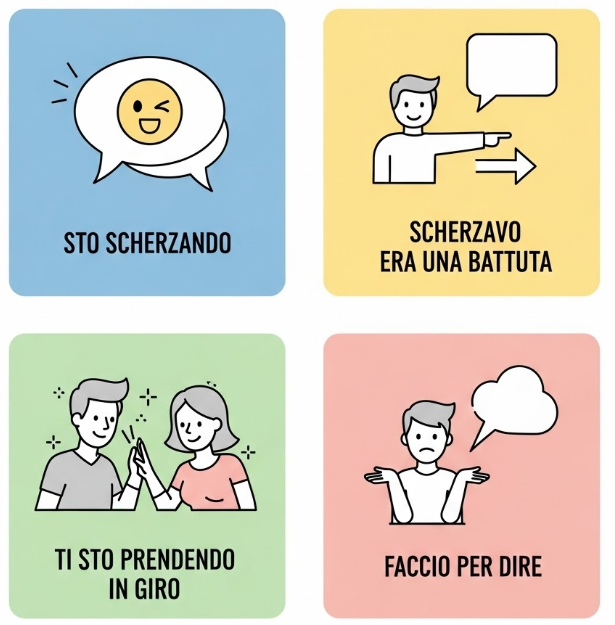
The concept of “I’m joking” in Italian can be expressed in several ways, each carrying slightly different connotations. The most common and direct translations include:
- Sto scherzando: This is the most literal and widely used translation, meaning “I am joking.”
- Scherzavo: This is the past tense of “sto scherzando,” meaning “I was joking.” It’s used when referring to a joke you made previously.
- Faccio per dire: This translates to “I’m just saying,” but can also imply that you’re not entirely serious.
- Era una battuta: Meaning “It was a joke,” often used to clarify after a joke might not have landed well.
- Per dire: Similar to “faccio per dire,” meaning “just saying” or “for the sake of saying.”
These phrases serve the primary function of indicating that a previous statement or action was not meant to be taken seriously. They are crucial for preventing misunderstandings and maintaining positive social interactions.
The context in which they are used further clarifies the speaker’s intent.
Structural Breakdown of Key Phrases
Understanding the grammatical structure of these phrases is essential for using them correctly. Let’s break down the most common expressions:
Sto Scherzando
This phrase consists of two parts:
- Sto: This is the first-person singular present tense of the verb stare (to be). It’s used here as an auxiliary verb to form the present continuous tense.
- Scherzando: This is the gerund form of the verb scherzare (to joke).
The structure follows the pattern: (Subject Pronoun – Implied) + Stare (conjugated) + Verb (gerund). The subject pronoun “Io” (I) is often omitted because the verb conjugation makes it clear who is speaking.
Scherzavo
This is the imperfetto (imperfect past) tense, first-person singular, of the verb scherzare. It directly translates to “I was joking.” It indicates an action that was ongoing or habitual in the past.
Era una battuta
This phrase consists of:
- Era: The third-person singular imperfetto of the verb essere (to be).
- Una: An indefinite article (a/an).
- Battuta: A feminine noun meaning “joke.”
The structure is: Essere (conjugated) + Indefinite Article + Noun. This structure emphasizes the statement as a joke rather than the act of joking.
Types and Categories of Joking Expressions
While the core meaning remains the same, the choice of expression can vary depending on the situation and the nuance you want to convey.
Direct Statements
These are the most straightforward ways to say “I’m joking.” They leave little room for misinterpretation.
- Sto scherzando
- Scherzavo
Indirect Statements
These expressions are more subtle and might require the listener to infer that you’re joking.
- Faccio per dire
- Per dire
Clarifying Statements
These are used to clarify that a previous statement was intended as a joke, especially if it wasn’t well-received.
- Era una battuta
Expressions of Disbelief
Sometimes, after making a joke, you might express disbelief that someone actually believed you.
- Ma dai! (Come on!)
- Non ci credi davvero? (You don’t really believe that?)
Examples of “I’m Joking” in Italian
Let’s explore several examples of how these phrases can be used in different contexts. The following tables provide various scenarios and the appropriate responses.
Table 1: Using “Sto Scherzando” in Everyday Conversations
This table showcases how “Sto Scherzando” is used in various casual scenarios. It emphasizes the phrase’s versatility and common usage.
| Scenario | Italian Response | English Translation |
|---|---|---|
| You tell your friend you won the lottery, but you didn’t. | “Ho vinto alla lotteria!” “Sto scherzando, ovviamente!” | “I won the lottery!” “I’m joking, obviously!” |
| You pretend to be angry about something trivial. | “Sono furioso con te!” “Sto scherzando, non preoccuparti.” | “I’m furious with you!” “I’m joking, don’t worry.” |
| You exaggerate a story for comedic effect. | “E poi ho visto un elefante rosa!” “Sto scherzando, ma la storia era comunque strana.” | “And then I saw a pink elephant!” “I’m joking, but the story was still strange.” |
| You make a sarcastic comment about the weather. | “Che bella giornata!” (when it’s raining) “Sto scherzando, è orribile!” | “What a beautiful day!” (when it’s raining) “I’m joking, it’s awful!” |
| You pretend to have forgotten something important. | “Oh no, ho dimenticato il tuo compleanno!” “Sto scherzando! Tanti auguri!” | “Oh no, I forgot your birthday!” “I’m joking! Happy birthday!” |
| You jokingly blame someone for something minor. | “È tutta colpa tua!” “Sto scherzando, non prendertela.” | “It’s all your fault!” “I’m joking, don’t take it personally.” |
| You make a silly prediction about the future. | “Domani pioveranno polpette!” “Sto scherzando, spero di no!” | “Tomorrow it will rain meatballs!” “I’m joking, I hope not!” |
| You tease someone about their cooking skills. | “La tua cucina è terribile!” “Sto scherzando! È buonissima!” | “Your cooking is terrible!” “I’m joking! It’s delicious!” |
| You pretend to be offended by a harmless remark. | “Sono offeso!” “Sto scherzando, non fare quella faccia.” | “I’m offended!” “I’m joking, don’t make that face.” |
| You make a ridiculous suggestion for a weekend activity. | “Andiamo a scalare l’Everest!” “Sto scherzando, andiamo al cinema.” | “Let’s go climb Mount Everest!” “I’m joking, let’s go to the cinema.” |
| You jokingly threaten to do something drastic. | “Mi trasferisco alle Bahamas!” “Sto scherzando, non ho i soldi.” | “I’m moving to the Bahamas!” “I’m joking, I don’t have the money.” |
| You pretend to be extremely tired. | “Non ce la faccio più!” “Sto scherzando, ho solo bisogno di un caffè.” | “I can’t do it anymore!” “I’m joking, I just need a coffee.” |
| You jokingly say you’re going to quit your job. | “Mi dimetto!” “Sto scherzando, amo il mio lavoro… a volte.” | “I’m quitting!” “I’m joking, I love my job… sometimes.” |
| You pretend to be a famous celebrity. | “Sono Brad Pitt!” “Sto scherzando, mi piacerebbe però.” | “I’m Brad Pitt!” “I’m joking, I wish I was though.” |
| You jokingly say you’re going to eat all the food. | “Mangio tutto io!” “Sto scherzando, ne lascio un po’ anche a te.” | “I’m going to eat it all!” “I’m joking, I’ll leave some for you too.” |
| You pretend to be a superhero. | “Sono Superman!” “Sto scherzando, ma vorrei volare.” | “I’m Superman!” “I’m joking, but I wish I could fly.” |
| You jokingly brag about a non-existent achievement. | “Ho vinto un premio Nobel!” “Sto scherzando, ma ci sto lavorando.” | “I won a Nobel Prize!” “I’m joking, but I’m working on it.” |
| You pretend to be a fortune teller. | “Vedo un futuro luminoso per te!” “Sto scherzando, non so niente.” | “I see a bright future for you!” “I’m joking, I don’t know anything.” |
| You jokingly say you’re going to run away from your problems. | “Scappo via!” “Sto scherzando, dove dovrei andare?” | “I’m running away!” “I’m joking, where should I go?” |
| You pretend to be a grumpy old person. | “Ai miei tempi era tutto meglio!” “Sto scherzando, non sono così vecchio.” | “In my day, everything was better!” “I’m joking, I’m not that old.” |
Table 2: Using “Scherzavo” to Refer to a Past Joke
This table illustrates scenarios where you need to clarify that something you said earlier was a joke using the past tense “Scherzavo.”
| Scenario | Italian Response | English Translation |
|---|---|---|
| Someone seems upset by something you said earlier. | “Ti ho offeso prima? Scherzavo, non volevo.” | “Did I offend you earlier? I was joking, I didn’t mean to.” |
| You realize someone took your previous comment seriously. | “Aspetta, non l’hai capito? Scherzavo!” | “Wait, didn’t you get it? I was joking!” |
| You are asked to clarify a statement you made earlier that could be misinterpreted. | “Quando ho detto che odiavo la pizza, scherzavo ovviamente!” | “When I said I hated pizza, I was obviously joking!” |
| You are apologizing for a joke that went wrong. | “Scusa se ti ho fatto arrabbiare, scherzavo e non mi sono spiegato bene.” | “Sorry if I made you angry, I was joking and I didn’t explain myself well.” |
| Explaining to a child that something scary you said was not true. | “Non c’è nessun mostro sotto il letto, scherzavo!” | “There’s no monster under the bed, I was joking!” |
| You made a joke about someone’s appearance earlier. | “Scherzavo quando ho detto che avevi un brutto taglio di capelli!” | “I was joking when I said you had a bad haircut!” |
| You made a comment about quitting your job earlier. | “Scherzavo quando ho detto che mi sarei licenziato. Non lo farei mai!” | “I was joking when I said I was going to quit. I would never do that!” |
| You teased a friend earlier about their relationship. | “Scherzavo prima quando ho detto che la tua ragazza ti lascerà!” | “I was joking earlier when I said your girlfriend would leave you!” |
| You jokingly said you were going to eat all the cake earlier. | “Scherzavo quando ho detto che avrei mangiato tutta la torta. Ne ho lasciata per tutti!” | “I was joking when I said I would eat all the cake. I left some for everyone!” |
| You said something outrageous earlier and now need to retract it. | “Scherzavo quando ho detto che andrei a vivere sulla luna!” | “I was joking when I said I was going to live on the moon!” |
| You jokingly said you hated a particular food earlier. | “Scherzavo quando ho detto che non mi piaceva il gelato. Lo adoro!” | “I was joking when I said I didn’t like ice cream. I love it!” |
| You jokingly said you were going to sell your car earlier. | “Scherzavo quando ho detto che avrei venduto la mia auto. Non potrei mai!” | “I was joking when I said I was going to sell my car. I could never!” |
| You made a joke about someone’s age earlier. | “Scherzavo quando ho detto che sei vecchio! Sei ancora giovane nel cuore.” | “I was joking when I said you were old! You’re still young at heart.” |
| You jokingly said you were going to move to another country earlier. | “Scherzavo quando ho detto che mi sarei trasferito in Australia. Amo l’Italia!” | “I was joking when I said I was going to move to Australia. I love Italy!” |
| You jokingly said you were going to dye your hair pink earlier. | “Scherzavo quando ho detto che mi sarei tinto i capelli di rosa. Non lo farei mai!” | “I was joking when I said I was going to dye my hair pink. I would never do that!” |
| You jokingly said you were going to drop out of school earlier. | “Scherzavo quando ho detto che avrei abbandonato la scuola. Voglio laurearmi!” | “I was joking when I said I was going to drop out of school. I want to graduate!” |
| You jokingly said you were going to become a monk earlier. | “Scherzavo quando ho detto che mi sarei fatto monaco. Mi piace troppo la vita!” | “I was joking when I said I was going to become a monk. I like life too much!” |
| You jokingly said you were going to run for president earlier. | “Scherzavo quando ho detto che mi sarei candidato alla presidenza. Non sono tagliato per la politica!” | “I was joking when I said I was going to run for president. I’m not cut out for politics!” |
| You jokingly said you were going to become a vegetarian earlier. | “Scherzavo quando ho detto che sarei diventato vegetariano. Amo troppo la carne!” | “I was joking when I said I was going to become a vegetarian. I love meat too much!” |
| You jokingly said you were going to become a professional gamer earlier. | “Scherzavo quando ho detto che sarei diventato un giocatore professionista. Non sono abbastanza bravo!” | “I was joking when I said I was going to become a professional gamer. I’m not good enough!” |
Table 3: Using “Era una battuta” to Clarify a Joke
This table provides scenarios where you need to explicitly state that something you said was “Era una battuta” (It was a joke) to ensure clarity.
| Scenario | Italian Response | English Translation |
|---|---|---|
| Someone doesn’t understand your sarcasm. | “Non capisci l’ironia? Era una battuta!” | “Don’t you understand irony? It was a joke!” |
| Your joke falls flat and no one laughs. | “Nessuno ha riso? Ok, era una battuta.” | “No one laughed? Okay, it was a joke.” |
| You said something that could be taken the wrong way. | “Forse non mi sono spiegato bene, era una battuta.” | “Maybe I didn’t explain myself well, it was a joke.” |
| Someone gets offended by something you said. | “Scusa, non volevo offenderti. Era solo una battuta.” | “Sorry, I didn’t mean to offend you. It was just a joke.” |
| You said something absurd and want to make sure it’s understood as humor. | “Ho detto che avrei comprato un unicorno. Era una battuta, ovviamente!” | “I said I was going to buy a unicorn. It was a joke, obviously!” |
| You made a sarcastic remark about someone’s outfit. | “Era una battuta quando ho detto che il tuo vestito sembrava un pigiama!” | “It was a joke when I said your dress looked like pajamas!” |
| You said you were going to sell all your belongings and live in a tent. | “Era una battuta quando ho detto che avrei venduto tutto e sarei andato a vivere in tenda!” | “It was a joke when I said I was going to sell everything and go live in a tent!” |
| You made a joke about someone’s terrible cooking. | “Era una battuta quando ho detto che la tua pasta era immangiabile!” | “It was a joke when I said your pasta was inedible!” |
| You told someone you won the lottery when you didn’t. | “Era una battuta quando ho detto di aver vinto alla lotteria!” | “It was a joke when I said I won the lottery!” |
| You jokingly said you were going to run away to join the circus. | “Era una battuta quando ho detto che sarei scappato per unirmi al circo!” | “It was a joke when I said I was going to run away to join the circus!” |
| You made a sarcastic comment about the traffic being wonderful. | “Era una battuta quando ho detto che il traffico era meraviglioso!” | “It was a joke when I said the traffic was wonderful!” |
| You told someone you were going to become a professional dog walker. | “Era una battuta quando ho detto che sarei diventato un dog sitter professionista!” | “It was a joke when I said I was going to become a professional dog walker!” |
| You jokingly said you were going to marry your pet. | “Era una battuta quando ho detto che avrei sposato il mio gatto!” | “It was a joke when I said I was going to marry my cat!” |
| You made a comment about someone’s singing being terrible. | “Era una battuta quando ho detto che la tua voce era orribile!” | “It was a joke when I said your voice was terrible!” |
| You jokingly said you were going to move to Antarctica. | “Era una battuta quando ho detto che mi sarei trasferito in Antartide!” | “It was a joke when I said I was going to move to Antarctica!” |
| You told someone you were going to become a famous astronaut. | “Era una battuta quando ho detto che sarei diventato un astronauta famoso!” | “It was a joke when I said I was going to become a famous astronaut!” |
| You made a sarcastic comment about the food at a restaurant. | “Era una battuta quando ho detto che il cibo era delizioso (when it clearly wasn’t)!” | “It was a joke when I said the food was delicious (when it clearly wasn’t)!” |
| You told someone you were going to adopt 50 cats. | “Era una battuta quando ho detto che avrei adottato 50 gatti!” | “It was a joke when I said I was going to adopt 50 cats!” |
| You jokingly said you were going to live in a treehouse. | “Era una battuta quando ho detto che sarei andato a vivere in una casa sull’albero!” | “It was a joke when I said I was going to live in a treehouse!” |
| You made a sarcastic comment about someone’s driving skills. | “Era una battuta quando ho detto che sei un pilota di Formula 1 (when they clearly aren’t)!” | “It was a joke when I said you were a Formula 1 driver (when they clearly aren’t)!” |
Usage Rules and Contextual Considerations
Using these phrases effectively requires understanding the social context and the relationship you have with the person you’re speaking to. Here are some key considerations:
- Formality: “Sto scherzando” is generally appropriate in most situations, both formal and informal. “Faccio per dire” and “per dire” are more informal and should be used with friends and family.
- Tone of Voice: Your tone of voice is crucial. A playful or lighthearted tone will reinforce that you’re joking.
- Facial Expressions: A smile or a wink can also help convey that you’re not being serious.
- Relationship: Be mindful of your relationship with the person. Jokes that are acceptable among close friends might be offensive to strangers or superiors.
- Cultural Sensitivity: Be aware of cultural differences in humor. What is considered funny in one culture might be offensive in another. Avoid jokes about sensitive topics like religion, politics, or personal characteristics.
Common Mistakes to Avoid
Here are some common mistakes that learners make when trying to say “I’m joking” in Italian:
- Using the wrong tense: Confusing “sto scherzando” (present continuous) with “scherzavo” (imperfect past). Make sure you use the correct tense depending on whether you are currently joking or referring to a past joke.
- Forgetting the auxiliary verb: Omitting “sto” in “sto scherzando.” While the gerund form implies action, the auxiliary verb is necessary for grammatical correctness.
- Using inappropriate language: Using overly sarcastic or offensive language, even when intending to joke. Always be mindful of your audience and the context.
- Misunderstanding cultural nuances: Failing to recognize that certain types of humor might not translate well across cultures.
Here are some examples of correct and incorrect usage:
| Incorrect | Correct | Explanation |
|---|---|---|
| Scherzando! | Sto scherzando! | Missing the auxiliary verb “sto.” |
| Io scherzo. | Sto scherzando. | “Io scherzo” means “I joke” in general, not “I’m joking right now.” |
| Era una presa in giro. | Era una battuta. | “Presa in giro” implies teasing or mocking, while “battuta” is a general joke. If you want to say it was a joke in general, “battuta” is better. |
Practice Exercises
Test your understanding with these practice exercises. Translate the following sentences into Italian, using the most appropriate expression for “I’m joking.”
Exercise 1
| Question | Answer |
|---|---|
| I’m joking, don’t be angry. | Sto scherzando, non arrabbiarti. |
| I was joking when I said I didn’t like your cooking. | Scherzavo quando ho detto che non mi piaceva la tua cucina. |
| It was a joke, don’t take it seriously. | Era una battuta, non prenderla sul serio. |
| I’m just saying, don’t get offended. | Faccio per dire, non offenderti. |
| I’m joking, of course! | Sto scherzando, ovviamente! |
| I was joking about winning the lottery. | Scherzavo sul fatto di aver vinto alla lotteria. |
| It was a joke, lighten up! | Era una battuta, rilassati! |
| I’m just saying, take it or leave it. | Per dire, prendere o lasciare. |
| I’m joking, I love your new haircut. | Sto scherzando, mi piace il tuo nuovo taglio di capelli. |
| I was joking when I said I was going to quit my job. | Scherzavo quando ho detto che mi sarei licenziato. |
Exercise 2
Fill in the blanks with the appropriate Italian expression to indicate “I’m joking.”
| Question | Answer |
|---|---|
| “Ho vinto un milione di euro!” “_____, ovviamente!” | Sto scherzando |
| “Ti ho fatto arrabbiare?” “_____, non volevo.” | Scherzavo |
| “Non hai capito? _____” | Era una battuta |
| “_____, non prendertela.” | Faccio per dire |
| “Domani nevicherà a luglio!” “_____, spero di no!” | Sto scherzando |
| “Sono il re del mondo!” “_____, ma mi piacerebbe esserlo.” | Sto scherzando |
| “_____, non offenderti, dai!” | Era una battuta |
| “_____, tanto per dire qualcosa.” | Per dire |
| “Ti odio!” “_____, ti voglio bene!” | Sto scherzando |
| “_____, quando ho detto che avrei mangiato tutta la pizza!” | Scherzavo |
Advanced Topics: Nuances and Idiomatic Expressions
For advanced learners, exploring more nuanced and idiomatic expressions can further enhance your ability to communicate humor in Italian.
- Prendere in giro: This phrase means “to tease” or “to make fun of.” It’s a stronger form of joking and can be used playfully among close friends.
- Scherzare col fuoco: This idiom translates to “playing with fire,” meaning to take unnecessary risks. It’s not directly related to joking but uses the verb “scherzare.”
- Non fare lo spiritoso: This means “don’t be a wise guy” or “don’t be a smart aleck.” It’s used to tell someone to stop making sarcastic or inappropriate jokes.
Frequently Asked Questions
Here are some frequently asked questions about saying “I’m joking” in Italian:
- Is “sto scherzando” always appropriate?
Yes, “sto scherzando” is generally appropriate in most situations, both formal and informal. However, always consider your relationship with the person you’re speaking to and the context of the conversation.
- When should I use “scherzavo” instead of “sto scherzando”?
Use “scherzavo” when referring to a joke you made in the past. For example, if someone seems upset by something you said earlier, you can say “Scherzavo, non volevo offenderti” (I was joking, I didn’t mean to offend you).
- What’s the difference between “faccio per dire” and “per dire”?
Both phrases mean “just saying” or “for the sake of saying.” They are often used to imply that you’re not entirely serious. “Faccio per dire” is slightly more emphatic than “per dire.”
- How do I know if my joke was well-received?
Pay attention to the other person’s reaction. If they laugh or smile, your joke was likely well-received. If they seem confused or offended, it’s best to clarify that you were joking.
- Is Italian humor different from other cultures?
Yes, humor is often culturally specific. What is considered funny in one culture might be offensive in another. Be mindful of cultural differences and avoid jokes about sensitive topics.
- Are there any hand gestures that accompany joking in Italian culture?
While there isn’t one specific gesture exclusively for joking, Italians often use expressive hand gestures to emphasize their points and add emotional context. A playful wave of the hand or a slight shrug might accompany a joke, depending on the tone and situation. The most important thing is to have a relaxed and friendly demeanor.
- Can the phrase “Non è vero!” be used to indicate you’re joking?
While “Non è vero!” directly translates to “It’s not true!”, it doesn’t automatically imply that you’re joking. However, if said with a playful tone after an outrageous statement, it can reinforce that you’re not being serious. It’s best used in conjunction with other joking indicators, such as a smile or a lighthearted tone of voice.
- Is it ever inappropriate to say “Era una battuta”?
While “Era una battuta” is a useful phrase for clarifying that you were joking, it can sometimes come across as dismissive if used insensitively. If someone is genuinely hurt or offended by your words, it’s better to offer a sincere apology rather than simply stating that it was a joke. Empathy and understanding are crucial in such situations.
Conclusion
Mastering the art of saying “I’m joking” in Italian is essential for effective and enjoyable communication. By understanding the nuances of phrases like “sto scherzando,” “scherzavo,” and “era una battuta,” you can navigate social interactions with confidence and avoid misunderstandings.
Remember to consider the context, your relationship with the person you’re speaking to, and cultural sensitivities.
Continue practicing these expressions in real-life conversations to solidify your understanding and improve your fluency. Don’t be afraid to experiment with different phrases and observe how native speakers use them.
With practice and attention to detail, you’ll be able to express humor naturally and effectively in Italian.