Expressing surprise, shock, or disbelief is a universal human experience, and languages offer a variety of ways to convey these emotions. In English, “Oh my God” is a common exclamation.
Understanding how to translate this phrase into Spanish, along with its various nuances and cultural contexts, is crucial for effective communication. This article provides a detailed exploration of the different ways to say “Oh my God” in Spanish, covering everything from literal translations to idiomatic expressions.
Whether you’re a beginner or an advanced learner, this guide will help you navigate the linguistic landscape and express yourself authentically in Spanish.
Table of Contents
- Introduction
- Definition
- Structural Breakdown
- Types and Categories
- Examples
- Usage Rules
- Common Mistakes
- Practice Exercises
- Advanced Topics
- FAQ
- Conclusion
Definition
The English phrase “Oh my God” is an exclamation used to express a range of emotions, including surprise, shock, disbelief, excitement, and frustration. In Spanish, there isn’t a single, direct translation that captures all these nuances. Instead, several phrases are used, each with its own specific connotation and level of formality. These phrases typically invoke religious figures, such as God (Dios), the Virgin Mary (la Virgen María), or a generic expression of disbelief.
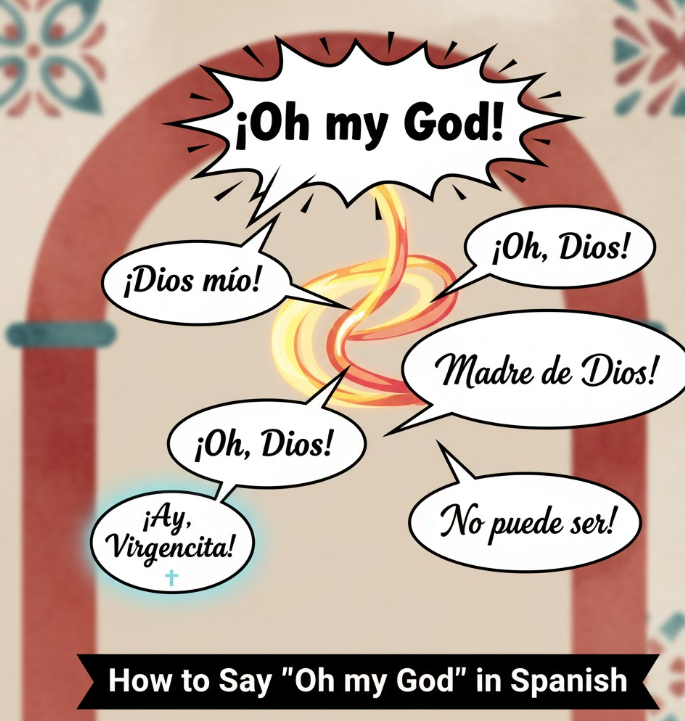
The most common translations include: Dios mío (my God), ¡Oh, Dios! (Oh, God!), Madre de Dios (Mother of God), No puede ser (It can’t be), and regional variations like ¡Ay, Virgencita! (Oh, little Virgin!). The choice of expression depends on the context, the speaker’s personal beliefs, and the desired level of intensity.
Structural Breakdown
The Spanish phrases used to express “Oh my God” often involve simple grammatical structures. Let’s break down some of the most common ones:
- Dios mío: This phrase consists of the noun Dios (God) and the possessive pronoun mío (my). The structure is straightforward: [Noun] + [Possessive Pronoun].
- ¡Oh, Dios!: This is an interjection (Oh) followed by the noun Dios (God). The exclamation marks indicate strong emotion.
- Madre de Dios: This phrase translates to “Mother of God.” It consists of the noun Madre (mother), the preposition de (of), and the noun Dios (God).
- No puede ser: This translates to “It can’t be.” It consists of the negative adverb No (no), the verb poder conjugated in the third person singular present tense (puede – can), and the verb ser (to be).
- ¡Ay, Virgencita!: This includes the interjection Ay (similar to “Oh”), and the diminutive form of Virgen (Virgin), which is Virgencita. The diminutive form often adds a sense of endearment or pity.
Types and Categories
The ways to say “Oh my God” in Spanish can be categorized into literal translations, idiomatic expressions, and regional variations.
Literal Translations
Literal translations directly translate the meaning of “Oh my God.” These phrases are generally understood across different Spanish-speaking regions.
- Dios mío: My God. This is a very common and versatile expression.
- ¡Oh, Dios!: Oh, God! Similar to the English phrase, this expresses surprise or shock.
Idiomatic Expressions
Idiomatic expressions don’t directly translate the English phrase but convey a similar meaning or emotion.
- Madre de Dios: Mother of God. This expression is often used to express surprise or disbelief.
- No puede ser: It can’t be. This conveys disbelief or shock at something unexpected.
Regional Variations
Some expressions are more common in certain Spanish-speaking regions.
- ¡Ay, Virgencita!: Oh, little Virgin! This is commonly used in Latin America, particularly in Mexico, to express surprise, fear, or hope.
- ¡Santo cielo!: Holy heavens! This is another exclamation of surprise or shock.
Examples
Here are some examples of how these phrases are used in context.
“Dios mío” Examples
Dios mío is a versatile phrase used in many situations. The following table provides examples of its usage in different contexts.
| Spanish | English Translation | Context |
|---|---|---|
| ¡Dios mío, qué susto me diste! | Oh my God, you scared me! | Expressing fear after being startled. |
| Dios mío, ¡qué hermoso es este lugar! | Oh my God, how beautiful this place is! | Expressing admiration for a scenic location. |
| Dios mío, no sé qué voy a hacer. | Oh my God, I don’t know what I’m going to do. | Expressing worry or uncertainty about a situation. |
| ¡Dios mío, ganamos el partido! | Oh my God, we won the game! | Expressing excitement and joy after a victory. |
| Dios mío, ¡mira qué desastre! | Oh my God, look at this mess! | Expressing dismay at a chaotic scene. |
| Dios mío, ¿ya son las siete? | Oh my God, is it already seven o’clock? | Expressing surprise at the time. |
| Dios mío, ¡qué calor hace hoy! | Oh my God, it’s so hot today! | Expressing discomfort due to the heat. |
| Dios mío, ¡no puedo creerlo! | Oh my God, I can’t believe it! | Expressing disbelief at surprising news. |
| Dios mío, ¡qué rico huele! | Oh my God, it smells so good! | Expressing pleasure at a pleasant aroma. |
| Dios mío, ¡qué caro es esto! | Oh my God, this is so expensive! | Expressing surprise at the high price of something. |
| Dios mío, pensé que nunca llegarías. | Oh my God, I thought you would never arrive. | Expressing relief at someone’s arrival. |
| Dios mío, ¡qué vergüenza! | Oh my God, how embarrassing! | Expressing embarrassment. |
| Dios mío, ¡qué susto! | Oh my God, what a fright! | Expressing fear. |
| Dios mío, ¡qué suerte tenemos! | Oh my God, how lucky we are! | Expressing gratitude and luck. |
| Dios mío, ¡qué irresponsable! | Oh my God, how irresponsible! | Expressing disapproval. |
| Dios mío, ¡qué paciencia! | Oh my God, what patience! | Expressing admiration for someone’s patience. |
| Dios mío, ¡qué desilusión! | Oh my God, what a disappointment! | Expressing disappointment. |
| Dios mío, ¡qué maravilla! | Oh my God, what a wonder! | Expressing amazement. |
| Dios mío, ¡qué tragedia! | Oh my God, what a tragedy! | Expressing grief or sadness. |
| Dios mío, ¡qué alivio! | Oh my God, what a relief! | Expressing relief. |
| Dios mío, ¡me duele mucho! | Oh my God, it hurts a lot! | Expressing pain. |
| Dios mío, ¡no sé qué decir! | Oh my God, I don’t know what to say! | Expressing speechlessness. |
| Dios mío, ¡esto es increíble! | Oh my God, this is incredible! | Expressing amazement. |
| Dios mío, ¡estoy tan feliz! | Oh my God, I’m so happy! | Expressing happiness. |
“¡Oh, Dios!” Examples
¡Oh, Dios! is another common expression, directly translating to “Oh, God!”. It is often used to express a sudden realization or surprise. The following table provides examples of its usage in different contexts.
| Spanish | English Translation | Context |
|---|---|---|
| ¡Oh, Dios! ¡Olvidé mi billetera! | Oh, God! I forgot my wallet! | Expressing frustration at forgetting something important. |
| ¡Oh, Dios! ¡Mira esa puesta de sol! | Oh, God! Look at that sunset! | Expressing admiration for a beautiful sight. |
| ¡Oh, Dios! ¡Qué difícil es esto! | Oh, God! This is so difficult! | Expressing frustration with a challenging task. |
| ¡Oh, Dios! ¡No puedo creer que haya pasado! | Oh, God! I can’t believe that happened! | Expressing disbelief at an unexpected event. |
| ¡Oh, Dios! ¡Estoy tan cansado! | Oh, God! I’m so tired! | Expressing exhaustion. |
| ¡Oh, Dios! ¡Qué vergüenza! | Oh, God! How embarrassing! | Expressing embarrassment. |
| ¡Oh, Dios! ¡Qué susto me has dado! | Oh, God! You scared me! | Expressing fear. |
| ¡Oh, Dios! ¡Qué alegría verte! | Oh, God! How nice to see you! | Expressing happiness. |
| ¡Oh, Dios! ¡Qué dolor! | Oh, God! What pain! | Expressing physical pain. |
| ¡Oh, Dios! ¡No sé qué hacer! | Oh, God! I don’t know what to do! | Expressing confusion. |
| ¡Oh, Dios! ¡Qué calor! | Oh, God! How hot! | Expressing discomfort due to heat. |
| ¡Oh, Dios! ¡Qué frío! | Oh, God! How cold! | Expressing discomfort due to cold. |
| ¡Oh, Dios! ¡Qué hambre tengo! | Oh, God! How hungry I am! | Expressing hunger. |
| ¡Oh, Dios! ¡Qué sueño tengo! | Oh, God! How sleepy I am! | Expressing sleepiness. |
| ¡Oh, Dios! ¡Qué sorpresa! | Oh, God! What a surprise! | Expressing surprise. |
| ¡Oh, Dios! ¡Qué buena noticia! | Oh, God! What good news! | Expressing happiness about good news. |
| ¡Oh, Dios! ¡Qué mala noticia! | Oh, God! What bad news! | Expressing sadness about bad news. |
| ¡Oh, Dios! ¡Qué desastre! | Oh, God! What a disaster! | Expressing dismay. |
| ¡Oh, Dios! ¡Qué locura! | Oh, God! What madness! | Expressing disbelief about a crazy situation. |
| ¡Oh, Dios! ¡Qué injusticia! | Oh, God! What injustice! | Expressing anger about injustice. |
“Madre de Dios” Examples
Madre de Dios, meaning “Mother of God,” is a more emphatic expression, often used in situations of great surprise or shock. The following table provides examples of its usage in different contexts.
| Spanish | English Translation | Context |
|---|---|---|
| ¡Madre de Dios, qué fuerte! | Mother of God, how strong! | Expressing surprise at someone’s strength. |
| ¡Madre de Dios, qué barbaridad! | Mother of God, how awful! | Expressing shock at a terrible event. |
| ¡Madre de Dios, no me digas! | Mother of God, don’t tell me! | Expressing disbelief upon hearing surprising news. |
| ¡Madre de Dios, qué susto me has dado! | Mother of God, you scared me! | Expressing strong fear. |
| ¡Madre de Dios, qué caro! | Mother of God, how expensive! | Expressing shock at a high price. |
| ¡Madre de Dios, qué belleza! | Mother of God, what beauty! | Expressing awe at something beautiful. |
| ¡Madre de Dios, qué horror! | Mother of God, how horrible! | Expressing disgust or horror. |
| ¡Madre de Dios, qué suerte! | Mother of God, what luck! | Expressing surprise at good fortune. |
| ¡Madre de Dios, qué desgracia! | Mother of God, what misfortune! | Expressing sorrow at a tragedy. |
| ¡Madre de Dios, qué tontería! | Mother of God, what nonsense! | Expressing annoyance at something foolish. |
| ¡Madre de Dios, qué lío! | Mother of God, what a mess! | Expressing frustration at a chaotic situation. |
| ¡Madre de Dios, qué milagro! | Mother of God, what a miracle! | Expressing amazement at a miraculous event. |
| ¡Madre de Dios, qué paciencia! | Mother of God, what patience! | Expressing admiration for someone’s patience. |
| ¡Madre de Dios, qué irresponsable! | Mother of God, how irresponsible! | Expressing disapproval of someone’s actions. |
| ¡Madre de Dios, qué maravilla! | Mother of God, what a wonder! | Expressing astonishment at something wonderful. |
| ¡Madre de Dios, qué desilusión! | Mother of God, what a disappointment! | Expressing deep disappointment. |
| ¡Madre de Dios, qué alivio! | Mother of God, what a relief! | Expressing intense relief. |
| ¡Madre de Dios, me duele mucho! | Mother of God, it hurts a lot! | Expressing intense pain. |
| ¡Madre de Dios, no sé qué decir! | Mother of God, I don’t know what to say! | Expressing being at a loss for words. |
| ¡Madre de Dios, esto es increíble! | Mother of God, this is incredible! | Expressing overwhelming amazement. |
“No puede ser” Examples
No puede ser, meaning “It can’t be,” is used to express disbelief or shock, similar to “No way!” in English. The following table provides examples of its usage in different contexts.
| Spanish | English Translation | Context |
|---|---|---|
| ¡No puede ser! ¿De verdad ganamos la lotería? | It can’t be! Did we really win the lottery? | Expressing disbelief at winning the lottery. |
| ¡No puede ser! ¡Ya es hora de irnos! | It can’t be! It’s already time to leave! | Expressing surprise at how quickly time has passed. |
| ¡No puede ser! ¡Olvidé mi pasaporte! | It can’t be! I forgot my passport! | Expressing dismay at forgetting an important item. |
| ¡No puede ser! ¿En serio dijiste eso? | It can’t be! Did you really say that? | Expressing disbelief at something someone said. |
| ¡No puede ser! ¡Qué coincidencia! | It can’t be! What a coincidence! | Expressing surprise at an unexpected coincidence. |
| ¡No puede ser! ¡Pensé que nunca te volvería a ver! | It can’t be! I thought I would never see you again! | Expressing surprise and happiness at seeing someone unexpectedly. |
| ¡No puede ser! ¡Qué desastre! | It can’t be! What a disaster! | Expressing shock at a chaotic situation. |
| ¡No puede ser! ¡No me lo puedo creer! | It can’t be! I can’t believe it! | Expressing general disbelief. |
| ¡No puede ser! ¡Es demasiado bueno para ser verdad! | It can’t be! It’s too good to be true! | Expressing skepticism about something that seems too perfect. |
| ¡No puede ser! ¡Otra vez el mismo error! | It can’t be! The same mistake again! | Expressing frustration at repeating a mistake. |
| ¡No puede ser! ¡Llegamos tarde! | It can’t be! We’re late! | Expressing dismay at being late. |
| ¡No puede ser! ¡Perdí las llaves! | It can’t be! I lost the keys! | Expressing frustration at losing something important. |
| ¡No puede ser! ¡Se acabó el café! | It can’t be! The coffee is finished! | Expressing disappointment at running out of something. |
| ¡No puede ser! ¡Ya se fue! | It can’t be! He/She is already gone! | Expressing regret at missing someone. |
| ¡No puede ser! ¡Es una broma! | It can’t be! It’s a joke! | Expressing hope that something bad is not real. |
| ¡No puede ser! ¡Es increíble! | It can’t be! It’s incredible! | Expressing amazement. |
| ¡No puede ser! ¡No lo esperaba! | It can’t be! I wasn’t expecting it! | Expressing surprise at something unexpected. |
| ¡No puede ser! ¡No es justo! | It can’t be! It’s not fair! | Expressing anger at an injustice. |
| ¡No puede ser! ¡Qué vergüenza! | It can’t be! How embarrassing! | Expressing embarrassment. |
| ¡No puede ser! ¡Qué suerte! | It can’t be! How lucky! | Expressing amazement at good fortune. |
“¡Ay, Virgencita!” Examples
¡Ay, Virgencita!, meaning “Oh, little Virgin!”, is a common expression in Latin America, particularly in Mexico. It is often used to express hope, fear, or surprise, with a sense of supplication. The following table provides examples of its usage in different contexts.
| Spanish | English Translation | Context |
|---|---|---|
| ¡Ay, Virgencita, que todo salga bien! | Oh, little Virgin, may everything go well! | Expressing hope for a positive outcome. |
| ¡Ay, Virgencita, protégeme! | Oh, little Virgin, protect me! | Asking for protection from danger. |
| ¡Ay, Virgencita, ayúdame! | Oh, little Virgin, help me! | Seeking assistance in a difficult situation. |
| ¡Ay, Virgencita, qué susto! | Oh, little Virgin, what a fright! | Expressing fear after being startled. |
| ¡Ay, Virgencita, gracias por este milagro! | Oh, little Virgin, thank you for this miracle! | Expressing gratitude for a positive outcome. |
| ¡Ay, Virgencita, no permitas que me pase nada malo! | Oh, little Virgin, don’t let anything bad happen to me! | Expressing fear and asking for protection. |
| ¡Ay, Virgencita, ten piedad de nosotros! | Oh, little Virgin, have mercy on us! | Asking for mercy in a difficult situation. |
| ¡Ay, Virgencita, dame paciencia! | Oh, little Virgin, give me patience! | Asking for patience to deal with a difficult situation. |
| ¡Ay, Virgencita, ilumíname! | Oh, little Virgin, enlighten me! | Asking for guidance. |
| ¡Ay, Virgencita, cuídame! | Oh, little Virgin, take care of me! | Asking for care and protection. |
| ¡Ay, Virgencita, que se mejore pronto! | Oh, little Virgin, may he/she get better soon! | Expressing hope for someone’s quick recovery. |
| ¡Ay, Virgencita, que encuentre trabajo! | Oh, little Virgin, may he/she find a job! | Expressing hope for someone’s employment. |
| ¡Ay, Virgencita, que me vaya bien! | Oh, little Virgin, may I do well! | Expressing hope for personal success. |
| ¡Ay, Virgencita, que apruebe el examen! | Oh, little Virgin, may I pass the exam! | Expressing hope for success in an exam. |
| ¡Ay, Virgencita, que no llueva! | Oh, little Virgin, may it not rain! | Expressing a wish for good weather. |
| ¡Ay, Virgencita, que pare el temblor! | Oh, little Virgin, may the earthquake stop! | Expressing fear during an earthquake. |
| ¡Ay, Virgencita, que no me enferme! | Oh, little Virgin, may I not get sick! | Expressing fear of illness. |
| ¡Ay, Virgencita, que no me pase nada! | Oh, little Virgin, may nothing happen to me! | Expressing general fear for personal safety. |
| ¡Ay, Virgencita, que se solucione todo! | Oh, little Virgin, may everything be resolved! | Expressing hope for a resolution to problems. |
| ¡Ay, Virgencita, que me perdone! | Oh, little Virgin, may he/she forgive me! | Expressing hope for forgiveness. |
Usage Rules
When using these expressions, keep the following rules in mind:
- Formality: Dios mío and ¡Oh, Dios! are generally acceptable in most situations. Madre de Dios is slightly more emphatic and may be considered more religious. ¡Ay, Virgencita! is specific to Latin American cultures and expresses a more personal connection to the Virgin Mary.
- Context: The context determines the most appropriate expression. For mild surprise, Dios mío or ¡Oh, Dios! are suitable. For stronger emotions, Madre de Dios or No puede ser may be more appropriate.
- Regional Differences: Be aware of regional variations. ¡Ay, Virgencita! is more common in Latin America, particularly in Mexico.
- Exclamation Marks: Use exclamation marks to emphasize the emotion. However, avoid overusing them, as it can make your writing seem overly dramatic.
Common Mistakes
Here are some common mistakes to avoid when using these expressions:
| Incorrect | Correct | Explanation |
|---|---|---|
| Dios mi | Dios mío | The possessive pronoun must be mío, not mi. |
| Oh, Dios mio | ¡Oh, Dios! | The correct form is Dios, not Dios mio. |
| Madre de Dios mio | Madre de Dios | The phrase is simply Madre de Dios, without the possessive pronoun. |
| No puedo a ser | No puede ser | The correct phrase is No puede ser (It can’t be). |
| Ay, Virgencita mi | ¡Ay, Virgencita! | The phrase is ¡Ay, Virgencita!, without the possessive pronoun. |
Practice Exercises
Test your understanding with these practice exercises. Choose the most appropriate Spanish translation for “Oh my God” in each sentence.
- Oh my God, I forgot my keys!
- Dios mío, olvidé mis llaves!
- Madre de Dios, olvidé mis llaves!
- No puede ser, olvidé mis llaves!
- Oh my God, this is so beautiful!
- ¡Oh, Dios! ¡Qué hermoso es esto!
- No puede ser, qué hermoso es esto!
- Ay, Virgencita, qué hermoso es esto!
- Oh my God, I can’t believe it!
- Dios mío, no puedo creerlo!
- Madre de Dios, no puedo creerlo!
- Ay, Virgencita, no puedo creerlo!
- Oh my God, what a mess!
- ¡Oh, Dios! ¡Qué desastre!
- No puede ser, qué desastre!
- Ay, Virgencita, qué desastre!
- Oh my God, I’m so scared!
- Dios mío, tengo mucho miedo!
- Madre de Dios, tengo mucho miedo!
- Ay, Virgencita, tengo mucho miedo!
- Oh my God, it’s already 7 PM!
- Dios mío, ya son las siete!
- Madre de Dios, ya son las siete!
- Ay, Virgencita, ya son las siete!
- Oh my God, I’m so tired!
- ¡Oh, Dios! ¡Estoy tan cansado!
- No puede ser, estoy tan cansado!
- Ay, Virgencita, estoy tan cansado!
- Oh my God, what a surprise!
- Dios mío, qué sorpresa!
- Madre de Dios, qué sorpresa!
- ¡Oh, Dios! ¡Qué sorpresa!
- Oh my God, how expensive!
- ¡Oh, Dios! ¡Qué caro!
- No puede ser, qué caro!
- Madre de Dios, qué caro!
- Oh my God, I don’t know what to do!
- Dios mío, no sé qué hacer!
- Ay, Virgencita, no sé qué hacer!
- ¡Oh, Dios! ¡No sé qué hacer!
Answer Key:
- a
- a
- a
- a
- a
- a
- a
- c
- c
- c
Advanced Topics
For advanced learners, consider exploring these more complex aspects:
- Subtleties of Tone: Explore how the choice of words and intonation can further refine the emotion being expressed. The same phrase can convey different feelings depending on how it’s said.
- Cultural Sensitivity: Understand the cultural contexts in which these phrases are used. Some expressions may be more appropriate in certain regions or social settings.
- Figurative Language: Investigate other idiomatic expressions that convey similar emotions, such as ¡Válgame Dios! (God help me!) or ¡Cielos! (Heavens!).
FAQ
- Is “Dios mío” the most common translation of “Oh my God”?Yes, Dios mío is one of the most common and versatile translations. It can be used in a wide range of situations to express surprise, shock, disbelief, or excitement.
- When should I use “Madre de Dios” instead of “Dios mío”?Madre de Dios is a more emphatic expression, so it’s best used when you want to convey a stronger sense of surprise or shock. It can also be used in situations where you want to express a more religious
sense of awe or reverence.
- Is “¡Ay, Virgencita!” appropriate in all Spanish-speaking countries?No, ¡Ay, Virgencita! is more commonly used in Latin American countries, particularly in Mexico. It may not be as widely understood or used in Spain.
- What’s the difference between “No puede ser” and “Imposible”?Both phrases express disbelief, but No puede ser (It can’t be) is a more general expression of surprise or shock, while Imposible (Impossible) is a stronger statement indicating that something is not possible or cannot be true.
- How can I learn more regional variations of this expression?Immerse yourself in the language and culture of different Spanish-speaking regions. Watch movies, listen to music, and interact with native speakers from various countries to learn more about their unique expressions and idioms.
Conclusion
Expressing surprise, shock, or disbelief in Spanish offers a rich variety of options, each with its own unique nuance and cultural context. From the versatile Dios mío to the emphatic Madre de Dios and the regionally specific ¡Ay, Virgencita!, understanding these expressions will enhance your ability to communicate effectively and authentically in Spanish. By mastering these phrases and being mindful of their usage rules, you can confidently convey your emotions and engage more deeply with Spanish-speaking cultures.