Understanding how to express “so what” in German is crucial for mastering the language’s nuances, especially when conveying indifference, skepticism, or dismissal. This article delves into various German equivalents of “so what,” exploring their meanings, contexts, and proper usage.
Whether you’re a beginner or an advanced learner, this guide provides comprehensive insights into expressing apathy and challenges in German.
This guide is designed for language learners aiming to improve their conversational skills and comprehend subtle expressions. It offers detailed explanations, practical examples, and exercises to help you confidently navigate these linguistic nuances.
By mastering these expressions, you’ll be better equipped to engage in authentic conversations and understand the attitudes conveyed by native speakers.
Table of Contents
- Introduction
- Definition: Understanding “So What”
- Structural Breakdown of German Equivalents
- Types and Categories of “So What” in German
- Examples: Bringing Expressions to Life
- Usage Rules: Mastering the Nuances
- Common Mistakes to Avoid
- Practice Exercises
- Advanced Topics: Beyond the Basics
- FAQ: Frequently Asked Questions
- Conclusion
Definition: Understanding “So What”
The English phrase “so what” is used to express indifference, dismissal, or defiance. It suggests that the speaker does not consider something to be important or relevant.
In German, there isn’t a single, direct translation of “so what.” Instead, several expressions convey similar meanings depending on the context and the speaker’s attitude.
The function of “so what” is to minimize the impact or importance of a statement or situation. It can be used to challenge an argument, dismiss a concern, or simply express a lack of interest.
Understanding the nuances of the German equivalents is crucial for effective communication and conveying the intended emotion.
Context plays a vital role in choosing the appropriate German expression. For instance, a casual situation might call for “Na und?”, while a more serious scenario might warrant “Was soll’s?” or even “Ist mir doch egal!” The speaker’s intent—whether to express mild indifference or strong defiance—also influences the choice of expression.
Structural Breakdown of German Equivalents
The German equivalents of “so what” often involve simple, straightforward structures. They typically consist of interrogative words like “was” (what), combined with verbs and pronouns to express the desired sentiment.
Let’s examine the structural components of some common expressions:
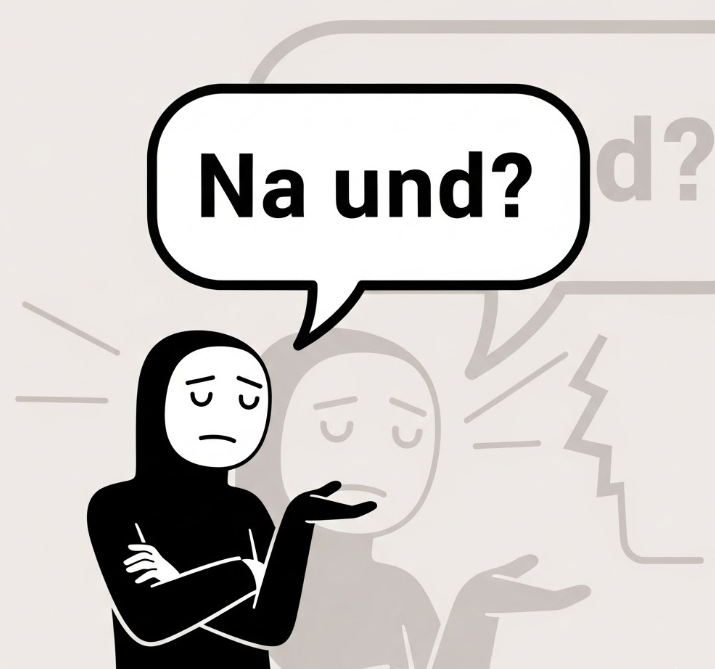
- Na und?: This expression is structurally simple, consisting of the interjection “na” (well) followed by the conjunction “und” (and). It implies “and what else?” or “what’s the big deal?”
- Was soll’s?: This phrase combines “was” (what) with the modal verb “sollen” (should) in its contracted form “soll’s.” It literally translates to “What should it?” and suggests “what’s the point in worrying?”
- Wen kümmert’s?: This expression uses “wen” (whom) and the verb “kümmern” (to bother, to concern). The “s” at the end is a contraction of “es” (it), making the phrase mean “Whom does it bother?” or “Who cares?”
- Was macht das schon?: This phrase combines “was” (what) with the verb “machen” (to do) and the adverb “schon” (already, really). It translates to “What does that do?” or “What difference does that make?”
- Ist mir doch egal!: This expression uses “ist” (is), “mir” (to me), the adverb “doch” (though, after all), and the adjective “egal” (equal, indifferent). The “doch” emphasizes the indifference. It means “It is all the same to me!” or “I don’t care!”
These structural elements reveal the underlying logic of each expression and help learners understand how to construct similar phrases. By analyzing the components, learners can better grasp the nuances and apply them in various contexts.
Understanding the grammar behind these expressions enhances comprehension and fluency.
Types and Categories of “So What” in German
The German language offers a variety of ways to express indifference or dismissal, each with its unique nuance. Here are some common types and categories of “so what” in German:
“Na und?” – The Classic Indifference
“Na und?” is perhaps the most direct and commonly used equivalent of “so what” in German. It conveys a sense of indifference or a challenge to the importance of a statement.
It’s suitable for casual conversations and situations where a dismissive attitude is appropriate. The tone can range from mild disinterest to a more confrontational “what’s your point?”
“Was soll’s?” – Accepting the Inevitable
“Was soll’s?” expresses a sense of acceptance or resignation. It implies that there’s no point in worrying or trying to change something.
This expression is often used when facing a minor setback or an unavoidable situation. It’s less confrontational than “Na und?” and suggests a more philosophical approach.
“Wen kümmert’s?” – Expressing Disinterest in Others’ Concerns
“Wen kümmert’s?” translates to “Who cares?” and expresses a lack of concern for other people’s opinions or problems. It can be used to dismiss concerns that the speaker deems unimportant or irrelevant.
This expression can be seen as somewhat rude or insensitive, so it should be used with caution and awareness of the social context.
“Was macht das schon?” – Downplaying Significance
“Was macht das schon?” is used to downplay the significance of something. It suggests that the matter is not a big deal or that the consequences are minimal.
This expression is suitable for situations where you want to reassure someone or minimize the importance of a mistake or problem. It conveys a sense of perspective and helps to alleviate concerns.
“Ist mir doch egal!” – Strong Indifference
“Ist mir doch egal!” is a strong expression of indifference, conveying that the speaker simply doesn’t care. The inclusion of “doch” emphasizes the lack of concern.
This phrase is more forceful than the others and should be used carefully, as it can come across as rude or dismissive. It’s appropriate when you want to make it clear that you are completely indifferent to something.
Examples: Bringing Expressions to Life
To fully understand the nuances of these expressions, let’s explore specific examples in context. Each expression carries its own weight and is appropriate for different situations.
“Na und?” Examples
“Na und?” is a versatile expression suitable for various casual situations. Here are some examples:
The following table provides examples of using “Na und?” in different contexts, along with their English translations and explanations.
| German | English Translation | Explanation |
|---|---|---|
| “Ich habe die Prüfung nicht bestanden.” – “Na und? Versuch’s einfach nochmal.” | “I didn’t pass the exam.” – “So what? Just try again.” | Expresses indifference and encouragement. |
| “Ich bin zu spät.” – “Na und? Der Film hat noch nicht angefangen.” | “I’m late.” – “So what? The movie hasn’t started yet.” | Dismisses the lateness as unimportant. |
| “Das Hemd ist nicht gebügelt.” – “Na und? Es sieht trotzdem gut aus.” | “The shirt isn’t ironed.” – “So what? It still looks good.” | Minimizes the importance of the unironed shirt. |
| “Ich habe kein Geld dabei.” – “Na und? Ich bezahle.” | “I don’t have any money with me.” – “So what? I’ll pay.” | Dismisses the lack of money as a problem. |
| “Es regnet.” – “Na und? Wir haben einen Regenschirm.” | “It’s raining.” – “So what? We have an umbrella.” | Dismisses the rain as an obstacle. |
| “Ich habe einen Fehler gemacht.” – “Na und? Jeder macht Fehler.” | “I made a mistake.” – “So what? Everyone makes mistakes.” | Normalizes the mistake and offers reassurance. |
| “Wir haben verloren.” – “Na und? Nächstes Mal gewinnen wir.” | “We lost.” – “So what? We’ll win next time.” | Dismisses the loss and focuses on the future. |
| “Ich bin müde.” – “Na und? Geh einfach schlafen.” | “I’m tired.” – “So what? Just go to sleep.” | Offers a simple solution to the tiredness. |
| “Ich habe es vergessen.” – “Na und? Es ist nicht so wichtig.” | “I forgot it.” – “So what? It’s not that important.” | Minimizes the importance of forgetting. |
| “Ich habe keine Lust.” – “Na und? Dann bleib zu Hause.” | “I don’t feel like it.” – “So what? Then stay home.” | Accepts the lack of motivation and offers an alternative. |
| “Mein Deutsch ist nicht perfekt.” – “Na und? Du kannst dich verständigen.” | “My German isn’t perfect.” – “So what? You can communicate.” | Dismisses the imperfection and focuses on functionality. |
| “Ich habe das Rezept geändert.” – “Na und? Schmeckt es trotzdem?” | “I changed the recipe.” – “So what? Does it still taste good?” | Questions the relevance of the change if the result is satisfactory. |
| “Ich bin nicht pünktlich.” – “Na und? Der Zug hat Verspätung.” | “I’m not on time.” – “So what? The train is delayed.” | Blames external factors for the delay. |
| “Ich habe das falsche Geschenk gekauft.” – “Na und? Kannst du es umtauschen.” | “I bought the wrong gift.” – “So what? You can exchange it.” | Offers a solution to the problem. |
| “Ich habe meine Schlüssel verloren.” – “Na und? Ich habe einen Ersatzschlüssel.” | “I lost my keys.” – “So what? I have a spare key.” | Dismisses the problem with a solution. |
| “Ich habe mein Handy vergessen.” – “Na und? Ich habe meins dabei.” | “I forgot my phone.” – “So what? I have mine with me.” | Offers a substitute for the missing item. |
| “Ich habe den Bus verpasst.” – “Na und? Der nächste kommt bald.” | “I missed the bus.” – “So what? The next one is coming soon.” | Minimizes the inconvenience. |
| “Ich habe die Frage falsch beantwortet.” – “Na und? Es war nur eine Frage.” | “I answered the question wrong.” – “So what? It was just one question.” | Downplays the significance of the wrong answer. |
| “Es ist kalt draußen.” – “Na und? Zieh dir eine Jacke an.” | “It’s cold outside.” – “So what? Put on a jacket.” | Offers a simple solution to the cold. |
| “Ich habe kein Ticket.” – “Na und? Kauf dir eins.” | “I don’t have a ticket.” – “So what? Buy one.” | Offers a straightforward solution. |
| “Ich habe meine Hausaufgaben vergessen.” – “Na und? Mach sie später.” | “I forgot my homework.” – “So what? Do it later.” | Suggests postponing the task. |
| “Ich bin nicht vorbereitet.” – “Na und? Improvisiere einfach.” | “I’m not prepared.” – “So what? Just improvise.” | Encourages improvisation. |
| “Ich habe den Termin verpasst.” – “Na und? Vereinbare einen neuen.” | “I missed the appointment.” – “So what? Make a new one.” | Suggests rescheduling. |
| “Ich habe das Passwort vergessen.” – “Na und? Setz es zurück.” | “I forgot the password.” – “So what? Reset it.” | Offers a technical solution. |
| “Ich habe den Zug verpasst.” – “Na und? Warte auf den nächsten.” | “I missed the train.” – “So what? Wait for the next one.” | Suggests waiting for the next option. |
“Was soll’s?” Examples
“Was soll’s?” is best used when accepting a minor setback or an unavoidable situation. Here are some examples:
The following table provides examples of using “Was soll’s?” in different contexts, along with their English translations and explanations.
| German | English Translation | Explanation |
|---|---|---|
| “Das Wetter ist schlecht.” – “Was soll’s? Wir machen das Beste daraus.” | “The weather is bad.” – “What’s the point? We’ll make the best of it.” | Expresses acceptance and resilience. |
| “Ich habe es nicht geschafft.” – “Was soll’s? Ich versuche es wieder.” | “I didn’t manage it.” – “What’s the point? I’ll try again.” | Accepts failure and resolves to try again. |
| “Das Auto ist kaputt.” – “Was soll’s? Wir nehmen den Bus.” | “The car is broken.” – “What’s the point? We’ll take the bus.” | Accepts the situation and finds an alternative. |
| “Wir haben verloren.” – “Was soll’s? Es ist nur ein Spiel.” | “We lost.” – “What’s the point? It’s just a game.” | Minimizes the importance of the loss. |
| “Ich habe die Chance verpasst.” – “Was soll’s? Es gibt noch andere.” | “I missed the opportunity.” – “What’s the point? There are others.” | Accepts the missed opportunity and looks forward. |
| “Der Zug hat Verspätung.” – “Was soll’s? Ich habe Zeit.” | “The train is delayed.” – “What’s the point? I have time.” | Accepts the delay calmly. |
| “Ich habe den Job nicht bekommen.” – “Was soll’s? Ich suche weiter.” | “I didn’t get the job.” – “What’s the point? I’ll keep looking.” | Accepts the rejection and continues the search. |
| “Das Essen ist kalt.” – “Was soll’s? Ich esse es trotzdem.” | “The food is cold.” – “What’s the point? I’ll eat it anyway.” | Accepts the cold food and eats it regardless. |
| “Ich habe einen Fehler gemacht.” – “Was soll’s? Ich lerne daraus.” | “I made a mistake.” – “What’s the point? I’ll learn from it.” | Accepts the mistake and focuses on learning. |
| “Es ist passiert.” – “Was soll’s? Wir können es nicht ändern.” | “It happened.” – “What’s the point? We can’t change it.” | Accepts the past and its unchangeable nature. |
| “Ich habe das Buch nicht gefunden.” – “Was soll’s? Ich kaufe es online.” | “I didn’t find the book.” – “What’s the point? I’ll buy it online.” | Finds an alternative solution. |
| “Der Plan hat nicht funktioniert.” – “Was soll’s? Wir versuchen einen anderen.” | “The plan didn’t work.” – “What’s the point? We’ll try another one.” | Adapts to the failed plan. |
| “Ich habe die Nachricht zu spät gesehen.” – “Was soll’s? Es ist nicht dringend.” | “I saw the message too late.” – “What’s the point? It’s not urgent.” | Minimizes the urgency. |
| “Das Konzert ist ausverkauft.” – “Was soll’s? Wir gehen ins Kino.” | “The concert is sold out.” – “What’s the point? We’ll go to the cinema.” | Finds a different entertainment option. |
| “Ich habe den Termin vergessen.” – “Was soll’s? Ich mache einen neuen.” | “I forgot the appointment.” – “What’s the point? I’ll make a new one.” | Reschedules the missed appointment. |
| “Das Kleid ist zu teuer.” – “Was soll’s? Ich suche ein anderes.” | “The dress is too expensive.” – “What’s the point? I’ll look for another one.” | Seeks a more affordable option. |
| “Ich habe das Rezept falsch gemacht.” – “Was soll’s? Es schmeckt trotzdem.” | “I made the recipe wrong.” – “What’s the point? It still tastes good.” | Focuses on the positive outcome. |
| “Der Akku ist leer.” – “Was soll’s? Ich habe ein Ladegerät dabei.” | “The battery is dead.” – “What’s the point? I have a charger with me.” | Resolves the issue with a charger. |
| “Ich habe das falsche Ticket gekauft.” – “Was soll’s? Ich kaufe ein neues.” | “I bought the wrong ticket.” – “What’s the point? I’ll buy a new one.” | Corrects the mistake by buying a new ticket. |
| “Der Kaffee ist kalt.” – “Was soll’s? Ich trinke ihn trotzdem.” | “The coffee is cold.” – “What’s the point? I’ll drink it anyway.” | Accepts the cold coffee. |
| “Ich habe den Bus verpasst.” – “Was soll’s? Ich gehe zu Fuß.” | “I missed the bus.” – “What’s the point? I’ll walk.” | Chooses to walk as an alternative. |
| “Das Geschenk ist nicht perfekt.” – “Was soll’s? Die Geste zählt.” | “The gift isn’t perfect.” – “What’s the point? The gesture counts.” | Emphasizes the importance of the thought behind the gift. |
| “Ich habe das Spiel verloren.” – “Was soll’s? Es war unterhaltsam.” | “I lost the game.” – “What’s the point? It was entertaining.” | Highlights the enjoyable aspect of the game. |
| “Die Präsentation war nicht perfekt.” – “Was soll’s? Ich habe mein Bestes gegeben.” | “The presentation wasn’t perfect.” – “What’s the point? I did my best.” | Acknowledges effort despite imperfection. |
“Wen kümmert’s?” Examples
“Wen kümmert’s?” is used to express disinterest in others’ concerns and can be perceived as rude. Use it cautiously.
The following table provides examples of using “Wen kümmert’s?” in different contexts, along with their English translations and explanations.
| German | English Translation | Explanation |
|---|---|---|
| “Er hat gesagt, ich soll leiser sein.” – “Wen kümmert’s? Ich mache, was ich will.” | “He said I should be quieter.” – “Who cares? I’ll do what I want.” | Expresses defiance and disregard for the other person’s opinion. |
| “Sie finden mein Outfit komisch.” – “Wen kümmert’s? Ich mag es.” | “They think my outfit is weird.” – “Who cares? I like it.” | Expresses indifference to others’ opinions about personal style. |
| “Die Nachbarn beschweren sich über den Lärm.” – “Wen kümmert’s? Es ist Wochenende.” | “The neighbors are complaining about the noise.” – “Who cares? It’s the weekend.” | Justifies the noise and dismisses the neighbors’ complaints. |
| “Er sagt, ich soll mehr arbeiten.” – “Wen kümmert’s? Ich mache genug.” | “He says I should work more.” – “Who cares? I do enough.” | Defends current work habits and dismisses the suggestion. |
| “Sie kritisiert mein Verhalten.” – “Wen kümmert’s? Ich bin glücklich.” | “She criticizes my behavior.” – “Who cares? I’m happy.” | Prioritizes personal happiness over others’ opinions. |
| “Die Firma hat neue Regeln.” – “Wen kümmert’s? Ich kündige sowieso.” | “The company has new rules.” – “Who cares? I’m quitting anyway.” | Expresses indifference due to impending departure. |
| “Er findet meine Musik schlecht.” – “Wen kümmert’s? Ich mag sie.” | “He thinks my music is bad.” – “Who cares? I like it.” | Defends personal taste in music. |
| “Sie sagt, ich soll mich ändern.” – “Wen kümmert’s? Ich bin zufrieden.” | “She says I should change.” – “Who cares? I’m content.” | Expresses satisfaction with current self. |
| “Die Lehrerin ist unzufrieden.” – “Wen kümmert’s? Ich brauche den Abschluss nicht.” | “The teacher is dissatisfied.” – “Who cares? I don’t need the degree.” | Dismisses the teacher’s opinion due to lack of necessity. |
| “Er sagt, ich soll erwachsen werden.” – “Wen kümmert’s? Ich habe Spaß.” | “He says I should grow up.” – “Who cares? I’m having fun.” | Prioritizes enjoyment over societal expectations. |
| “Die Kollegen reden schlecht über mich.” – “Wen kümmert’s? Ich bin bald weg.” | “My colleagues are talking badly about me.” – “Who cares? I’ll be gone soon.” | Disregards their opinions due to upcoming departure. |
| “Sie sagt, ich soll sparsamer sein.” – “Wen kümmert’s? Ich lebe nur einmal.” | “She says I should be more frugal.” – “Who cares? I only live once.” | Justifies spending habits with a YOLO attitude. |
| “Er findet meine Ideen dumm.” – “Wen kümmert’s? Ich setze sie trotzdem um.” | “He thinks my ideas are stupid.” – “Who cares? I’ll implement them anyway.” | Proceeds despite disapproval. |
| “Die Gesellschaft erwartet etwas anderes von mir.” – “Wen kümmert’s? Ich gehe meinen eigenen Weg.” | “Society expects something different from me.” – “Who cares? I’m going my own way.” | Chooses to ignore societal expectations. |
| “Sie sagt, ich soll mich anpassen.” – “Wen kümmert’s? Ich bleibe ich selbst.” | “She says I should adapt.” – “Who cares? I’ll stay myself.” | Refuses to change for others. |
| “Er findet meine Entscheidungen falsch.” – “Wen kümmert’s? Ich trage die Verantwortung.” | “He thinks my decisions are wrong.” – “Who cares? I take responsibility.” | Asserts control over personal choices. |
| “Die Kritiker sind negativ.” – “Wen kümmert’s? Das Publikum liebt es.” | “The critics are negative.” – “Who cares? The audience loves it.” | Values audience approval over critical acclaim. |
| “Sie sagt, ich soll realistischer sein.” – “Wen kümmert’s? Ich träume groß.” | “She says I should be more realistic.” – “Who cares? I dream big.” | Defends ambitious dreams. |
| “Er sagt, ich soll vorsichtiger sein.” – “Wen kümmert’s? Ich lebe im Moment.” | “He says I should be more careful.” – “Who cares? I live in the moment.” | Prioritizes spontaneity. |
| “Die Regeln sind streng.” – “Wen kümmert’s? Ich breche sie sowieso.” | “The rules are strict.” – “Who cares? I’ll break them anyway.” | Expresses rebellious intent. |
| “Sie sagt, ich soll vernünftiger sein.” – “Wen kümmert’s? Ich mache, was mich glücklich macht.” | “She says I should be more sensible.” – “Who cares? I do what makes me happy.” | Chooses personal happiness over rationality. |
| “Er findet meine Arbeit unnötig.” – “Wen kümmert’s? Ich mag sie.” | “He thinks my work is unnecessary.” – “Who cares? I like it.” | Defends personal fulfillment in work. |
| “Die Konsequenzen sind schlimm.” – “Wen kümmert’s? Ich riskiere es.” | “The consequences are bad.” – “Who cares? I’ll risk it.” | Willing to accept the consequences. |
“Was macht das schon?” Examples
“Was macht das schon?” is used to downplay the significance of something, offering reassurance or perspective.
The following table provides examples of using “Was macht das schon?” in different contexts, along with their English translations and explanations.
| German | English Translation | Explanation |
|---|---|---|
| “Ich habe einen kleinen Fehler gemacht.” – “Was macht das schon? Niemand ist perfekt.” | “I made a small mistake.” – “What does that matter? No one is perfect.” | Minimizes the impact of the mistake. |
| “Ich bin ein paar Minuten zu spät.” – “Was macht das schon? Der Zug hat auch Verspätung.” | “I’m a few minutes late.” – “What does that matter? The train is also delayed.” | Downplays lateness by comparing it to another delay. |
| “Das Essen ist nicht perfekt.” – “Was macht das schon? Es schmeckt trotzdem gut.” | “The food isn’t perfect.” – “What does that matter? It still tastes good.” | Focuses on the positive aspect of the food. |
| “Ich habe nicht alles verstanden.” – “Was macht das schon? Wir können es wiederholen.” | “I didn’t understand everything.” – “What does that matter? We can repeat it.” | Offers a solution to the lack of understanding. |
| “Das Ergebnis ist nicht ideal.” – “Was macht das schon? Wir haben unser Bestes gegeben.” | “The result isn’t ideal.” – “What does that matter? We did our best.” | Emphasizes the effort made. |
| “Ich habe ein paar Euro verloren.” – “Was macht das schon? Es ist nicht viel Geld.” | “I lost a few euros.” – “What does that matter? It’s not much money.” | Minimizes the financial loss. |
| “Das Wetter ist nicht schön.” – “Was macht das schon? Wir können trotzdem Spaß haben.” | “The weather isn’t nice.” – “What does that matter? We can still have fun.” | Encourages finding enjoyment despite the weather. |
| “Ich habe nicht gewonnen.” – “Was macht das schon? Es geht um den Spaß.” | “I didn’t win.” – “What does that matter? It’s about the fun.” | Highlights the importance of enjoyment over winning. |
| “Ich habe ein paar Fehler gemacht.” – “Was macht das schon? Ich kann daraus lernen.” | “I made a few mistakes.” – “What does that matter? I can learn from them.” | Focuses on the learning opportunity. |
| “Ich bin nicht perfekt vorbereitet.” – “Was macht das schon? Ich improvisiere einfach.” | “I’m not perfectly prepared.” – “What does that matter? I’ll just improvise.” | Relies on improvisation skills. |
| “Ich habe das falsche Geschenk gekauft.” – “Was macht das schon? Ich kann es umtauschen.” | “I bought the wrong gift.” – “What does that matter? I can exchange it.” | Offers a solution to the gift mistake. |
| “Ich habe ein paar Kalorien zu viel gegessen.” – “Was macht das schon? Ich gehe morgen joggen.” | “I ate a few too many calories.” – “What does that matter? I’ll go jogging tomorrow.” | Compensates with exercise. |
| “Ich habe das Buch nicht gelesen.” – “Was macht das schon? Ich sehe den Film stattdessen.” | “I didn’t read the book.” – “What does that matter? I’ll watch the movie instead.” | Finds an alternative way to experience the story. |
| “Ich habe den Termin vergessen.” – “Was macht das schon? Ich mache einen neuen.” | “I forgot the appointment.” – “What does that matter? I’ll make a new one.” | Reschedules the missed appointment. |
| “Ich habe das Passwort vergessen.” – “Was macht das schon? Ich setze es zurück.” | “I forgot the password.” – “What does that matter? I’ll reset it.” | Offers a technical solution. |
| “Ich habe den Bus verpasst.” – “Was macht das schon? Der nächste kommt bald.” | “I missed the bus.” – “What does that matter? The next one is coming soon.” | Minimizes the inconvenience. |
| “Ich bin nicht pünktlich.” – “Was macht das schon? Es ist nur ein informelles Treffen.” | “I’m not on time.” – “What does that matter? It’s just an informal meeting.” | Downplays the importance of punctuality. |
| “Ich habe die Frage falsch beantwortet.” – “Was macht das schon? Es war nur eine Übungsfrage.” | “I answered the question wrong.” – “What does that matter? It was just a practice question.” | Minimizes the consequence of the wrong answer. |
| “Ich habe einen Fleck auf meinem Hemd.” – “Was macht das schon? Es fällt kaum auf.” | “I have a stain on my shirt.” – “What does that matter? It’s barely noticeable.” | Downplays the visibility of the stain. |
| “Ich habe nicht genug Geld dabei.” – “Was macht das schon? Ich kann dir etwas leihen.” | “I don’t have enough money with me.” – “What does that matter? I can lend you some.” | Offers to lend money. |
| “Ich bin nicht der Beste darin.” – “Was macht das schon? Hauptsache, du gibst dein Bestes.” | “I’m not the best at it.” – “What does that matter? As long as you do your best.” | Emphasizes the importance of effort. |
| “Ich habe die Nachricht zu spät gesehen.” – “Was macht das schon? Es ist eh erledigt.” | “I saw the message too late.” – “What does that matter? It’s already done anyway.” | Minimizes the lateness of seeing the message. |
| “Ich habe das Rezept nicht genau befolgt.” – “Was macht das schon? Es schmeckt trotzdem lecker.” | “I didn’t follow the recipe exactly.” – “What does that matter? It still tastes delicious.” | Focuses on the positive outcome despite deviations. |
| “Ich habe mein Handy vergessen.” – “Was macht das schon? Ich brauche es gerade nicht.” | “I forgot my phone.” – “What does that matter? I don’t need it right now.” | Justifies the forgotten phone due to lack of immediate need. |
“Ist mir doch egal!” Examples
“Ist mir doch egal!” is a strong expression of indifference and should be used carefully, as it can be perceived as rude or dismissive. Here are some examples:
The following table provides examples of using “Ist mir doch egal!” in different contexts, along with their English translations and explanations.
| German | English Translation | Explanation |
|---|---|---|
| “Was die anderen denken, ist mir doch egal!” | “What others think, I don’t care!” | Expresses strong indifference to others’ opinions. |
| “Ob du kommst oder nicht, ist mir doch egal!” | “Whether you come or not, I don’t care!” | Shows a lack of concern about someone’s attendance. |
| “Was mit dem Projekt passiert, ist mir doch egal!” | “What happens with the project, I don’t care!” | Expresses disinterest in the project’s outcome. |
| “Ob er mich mag oder nicht, ist mir doch egal!” | “Whether he likes me or not, I don’t care!” | Indicates a lack of concern about someone’s feelings. |
| “Was mit der Firma passiert, ist mir doch egal!” | “What happens to the company, I don’t care!” | Shows indifference to the company’s fate. |
| “Ob es dir gefällt oder nicht, ist mir doch egal!” | “Whether you like it or not, I don’t care!” | Expresses indifference to someone’s preference. |
| “Was die Konsequenzen sind, ist mir doch egal!” | “What the consequences are, I don’t care!” | Shows a willingness to accept any consequences. |
| “Ob ich Recht habe oder nicht, ist mir doch egal!” | “Whether I’m right or not, I don’t care!” | Indicates a lack of concern about being correct. |
| “Was die Zukunft bringt, ist mir doch egal!” | “What the future holds, I don’t care!” | Expresses indifference to future events. |
| “Ob du zustimmst oder nicht, ist mir doch egal!” | “Whether you agree or not, I don’t care!” | Shows a lack of concern about someone’s agreement. |
| “Was mit deinem Problem passiert, ist mir doch egal!” | “What happens with your problem, I don’t care!” | Expresses disinterest in someone’s personal problem. |
| “Ob es regnet oder scheint, ist mir doch egal!” | “Whether it rains or shines, I don’t care!” | Shows indifference to the weather. |
| “Was die Regeln sagen, ist mir doch egal!” | “What the rules say, I don’t care!” | Expresses a disregard for rules. |
| “Ob du mich verstehst oder nicht, ist mir doch egal!” | “Whether you understand me or not, I don’t care!” | Indicates a lack of concern about being understood. |
| “Was mit deinem Leben passiert, ist mir doch egal!” | “What happens with your life, I don’t care!” | Expresses disinterest in someone’s life. |
| “Ob du mich unterstützt oder nicht, ist mir doch egal!” | “Whether you support me or not, I don’t care!” | Shows a lack of concern about someone’s support. |
| “Was die Welt denkt, ist mir doch egal!” | “What the world thinks, I don’t care!” | Expresses indifference to global opinions. |
| “Ob du mich verlässt oder nicht, ist mir doch egal!” | “Whether you leave me or not, I don’t care!” | Shows a lack of concern about someone’s departure. |
| “Was die Wahrheit ist, ist mir doch egal!” | “What the truth is, I don’t care!” | Expresses indifference to the truth. |
| “Ob du mich liebst oder nicht, ist mir doch egal!” | “Whether you love me or not, I don’t care!” | Indicates a lack of concern about someone’s love. |
| “Was du sagst, ist mir doch egal!” | “What you say, I don’t care!” | Dismisses someone’s words. |
| “Ob du bleibst oder gehst, ist mir doch egal!” | “Whether you stay or go, I don’t care!” | Expresses indifference to someone’s presence. |
| “Was du tust, ist mir doch egal!” | “What you do, I don’t care!” | Shows disinterest in someone’s actions. |
Usage Rules: Mastering the Nuances
To effectively use these expressions, it’s essential to understand the usage rules and contexts in which they are appropriate. Here are some guidelines:
- “Na und?”: Use this in casual settings to express mild indifference or to challenge the importance of a statement. Be mindful of your tone to avoid sounding too dismissive.
- “Was soll’s?”: Employ this when you want to convey acceptance or resignation in the face of a minor setback. It’s suitable when you want to minimize worry and maintain a philosophical outlook.
- “Wen kümmert’s?”: Use this sparingly and with caution, as it can be perceived as rude. It’s best used when you genuinely don’t care about others’ opinions and are willing to risk sounding insensitive.
- “Was macht das schon?”: This is useful for downplaying the significance of a mistake or problem. It’s suitable when you want to reassure someone or provide perspective.
- “Ist mir doch egal!”: Reserve this for situations where you want to express strong indifference. Be aware that it can come across as harsh, so use it judiciously.
Context is key. Consider the relationship with the person you’re speaking to, the social setting, and the overall tone of the conversation.
Choosing the right expression can make a significant difference in how your message is received.
Common Mistakes to Avoid
Language learners often make mistakes when using these expressions. Here are some common pitfalls to avoid:
- Using “Ist mir doch egal!” too frequently: Overusing this phrase can make you seem rude and uncaring. Save it for situations where you truly want to express strong indifference.
- Misunderstanding the context: Each expression has its nuance. Using “Na und?” when “Was soll’s?” is more appropriate can change the meaning and impact of your message.
- Ignoring the tone: The tone of your voice can significantly alter the meaning of these expressions. Practice using different tones to convey the intended emotion.
- Overgeneralizing: Not every situation that calls for “so what” in English translates directly to a German equivalent. Be mindful of cultural differences and choose the expression that best fits the context.
- Literal translations: Avoid translating word-for-word. The German expressions have their specific connotations that may not align with a direct translation.
Being aware of these common mistakes can help you avoid misunderstandings and communicate more effectively in German.
Practice Exercises
To solidify your understanding, try these practice exercises:
- Translate the following sentences into German using the appropriate expression:
- “So what? I’ll just do it myself.”
- “So what if it’s raining? We have umbrellas.”
- “Who cares what they think? I’m happy.”
- “So what? It’s just a game.”
- “I don’t care what happens.”
- Provide a situation where each of the following expressions would be appropriate:
- “Na und?”
- “Was soll’s?”
- “Wen kümmert’s?”
- “Was macht das schon?”
- “Ist mir doch egal!”
- Correct the following sentences, which use the expressions incorrectly:
- “Ich habe die Prüfung nicht bestanden. Ist mir doch egal!” (when the speaker is visibly upset)
- “Das Wetter ist schlecht. Wen kümmert’s?” (when suggesting an alternative activity)
Answer Key:
- “Na und? Ich mache es einfach selbst.”
- “Na und, wenn es regnet? Wir haben Regenschirme.” / “Was soll’s, wenn es regnet? Wir haben Regenschirme.”
- “Wen kümmert’s, was sie denken? Ich bin glücklich.”
- “Was soll’s? Es ist nur ein Spiel.”
- “Ist mir doch egal, was passiert.”
- Answers will vary depending on the situation.
- “Ich habe die Prüfung nicht bestanden. Na und?” or “Ich habe die Prüfung nicht bestanden. Was soll’s?”
- “Das Wetter ist schlecht. Was macht das schon? Wir können trotzdem etwas unternehmen.”
Advanced Topics: Beyond the Basics
For advanced learners, consider exploring these topics:
- Regional variations: Some expressions may have slightly different meanings or usage in different German-speaking regions.
- Idiomatic expressions: Explore other German idioms that convey similar sentiments of indifference or dismissal.
- Literary usage: Analyze how these expressions are used in German literature and film to convey character traits and emotions.
- Social implications: Study the social implications of using these expressions in different cultural contexts.
Delving into these advanced topics will further enhance your understanding and mastery of the German language.
FAQ: Frequently Asked Questions
Is “Na und?” always appropriate?
No, “Na und?” is best used in casual settings and when you want to express mild indifference. Avoid using it in more formal or serious situations.
When should I use “Ist mir doch egal!”?
“Ist mir doch egal!” should be reserved for situations where you genuinely want to express strong indifference and are aware of the potential consequences of sounding rude.
Can “Was soll’s?” be used in all situations?
“Was soll’s?” is suitable when you want to convey acceptance or resignation in the face of a setback. It’s less confrontational and more philosophical.
Is “Wen kümmert’s?” always rude?
“Wen kümmert’s?” can often be perceived as rude, so use it with caution and awareness of the social context.
How can I improve my understanding of these expressions?
Practice using these expressions in different contexts, listen to native speakers, and pay attention to the tone and body language used when these phrases are spoken.
Conclusion
Mastering the German equivalents of “so what” involves understanding the nuances of each expression and their appropriate contexts. By exploring “Na und?”, “Was soll’s?”, “Wen kümmert’s?”, “Was macht das schon?”, and “Ist mir doch egal!”, you can effectively convey indifference, dismissal, or acceptance in various situations.
Practice using these expressions, be mindful of the tone, and consider the social implications to communicate effectively and confidently in German. With a solid grasp of these phrases, you’ll be well-equipped to navigate the subtleties of German conversation and express a full range of emotions and attitudes.