Asking someone where they are from is a fundamental part of getting to know them, especially when traveling or meeting people from different backgrounds. In German, there are several ways to inquire about someone’s origin, each with its own nuance and level of formality.
Understanding these variations is crucial for effective communication and showing respect for cultural norms. This article provides a detailed exploration of how to ask “Where are you from?” in German, covering various phrases, grammatical structures, and practical examples.
Whether you are a beginner or an advanced learner, this guide will equip you with the knowledge and confidence to engage in meaningful conversations in German.
Table of Contents
- Introduction
- Definition: “Where Are You From?” in German
- Structural Breakdown of Key Phrases
- Types and Categories of Questions
- Examples: Asking “Where Are You From?” in German
- Usage Rules and Considerations
- Common Mistakes to Avoid
- Practice Exercises
- Advanced Topics
- Frequently Asked Questions (FAQ)
- Conclusion
Definition: “Where Are You From?” in German
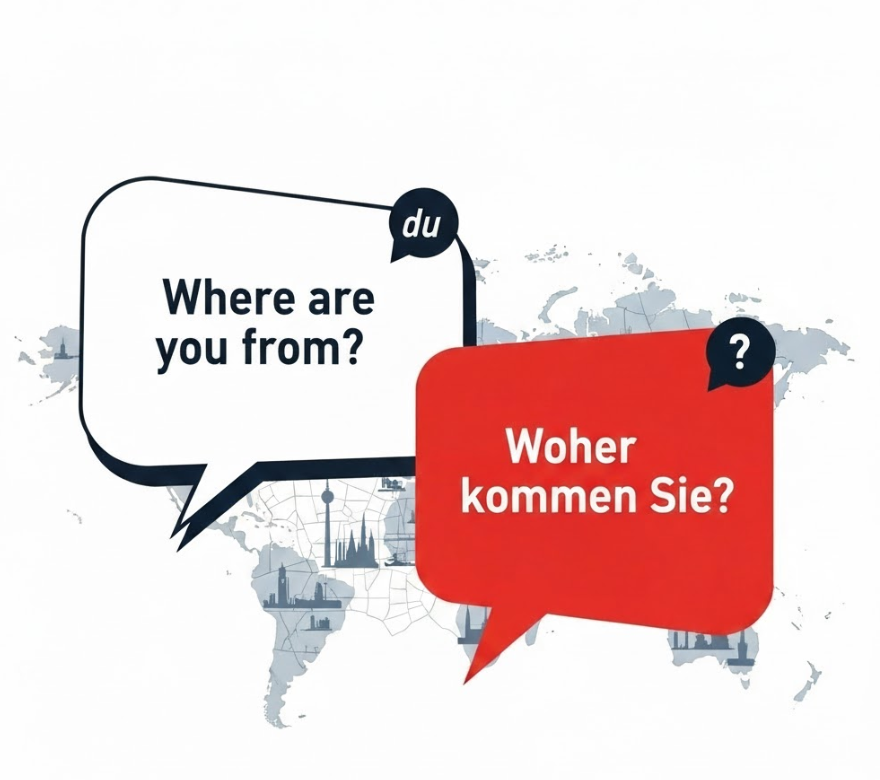
The phrase “Where are you from?” is a seemingly simple question, but its German translation can vary depending on the context and the relationship between the speakers. The most common and direct translation is “Woher kommst du?” (informal) or “Woher kommen Sie?” (formal). These phrases inquire about a person’s origin or place of birth/residence. Understanding the nuances between formal and informal constructions is crucial for appropriate communication. The word “woher” means “from where,” “kommst” is the informal “you come” (singular), “kommen” is the formal “you come” (singular or plural “you”), and “du” and “Sie” are the informal and formal “you,” respectively.
Structural Breakdown of Key Phrases
Let’s break down the structure of the two primary phrases used to ask “Where are you from?” in German:
- Woher kommst du? (Informal)
- Woher: From where (adverb)
- kommst: Second-person singular form of the verb kommen (to come)
- du: Informal pronoun “you” (nominative case)
- Woher kommen Sie? (Formal)
- Woher: From where (adverb)
- kommen: Formal second-person singular or plural form of the verb kommen (to come)
- Sie: Formal pronoun “you” (nominative case)
The word order in both phrases follows the standard German question structure, where the verb (kommst/kommen) comes directly after the interrogative adverb (woher). The pronoun (du/Sie) follows the verb.
Types and Categories of Questions
Formal Questions
Formal questions are used when addressing someone you don’t know well, someone older than you, or someone in a position of authority. The formal “you” in German is “Sie,” and the verb conjugation changes accordingly.
The primary formal question is: Woher kommen Sie? This is the safest option when unsure about the appropriate level of formality.
Informal Questions
Informal questions are used with friends, family, and people you know well. The informal “you” in German is “du,” and the verb conjugation reflects this.
The primary informal question is: Woher kommst du? This is suitable for casual conversations.
Indirect Questions
Sometimes, you might want to ask about someone’s origin indirectly to be more polite or less direct. This can be achieved by framing the question differently or introducing it with a polite phrase.
Examples of indirect questions include:
- “Entschuldigung, darf ich fragen, woher Sie kommen?” (Excuse me, may I ask where you are from?)
- “Ich bin neugierig, woher du kommst.” (I’m curious where you are from.)
- “Wenn ich fragen darf, woher kommen Sie?” (If I may ask, where are you from?)
Examples: Asking “Where Are You From?” in German
Formal Examples
The following table provides formal examples of asking “Where are you from?” in German, along with potential responses.
The table below shows examples of asking “Where are you from?” in the formal context, along with possible answers. This table emphasizes the use of “Sie” and the corresponding verb conjugation.
| Question (Formal) | Answer (Possible) | English Translation | |
|---|---|---|---|
| Woher kommen Sie, Herr Schmidt? | Ich komme aus Berlin. | Where are you from, Mr. Schmidt? | I am from Berlin. |
| Woher kommen Sie ursprünglich, Frau Müller? | Ursprünglich komme ich aus München, aber ich wohne jetzt in Hamburg. | Where are you originally from, Mrs. Müller? | Originally, I am from Munich, but I now live in Hamburg. |
| Darf ich fragen, woher Sie kommen, Herr Doktor? | Selbstverständlich. Ich komme aus der Schweiz. | May I ask where you are from, Mr. Doctor? | Of course. I am from Switzerland. |
| Woher kommen Sie denn? Ich erkenne Ihren Akzent. | Ich komme aus Österreich. Mein Akzent verrät mich wohl. | Where are you from then? I recognize your accent. | I am from Austria. My accent gives me away, I guess. |
| Entschuldigen Sie, woher kommen Sie, wenn ich fragen darf? | Kein Problem. Ich komme aus Italien. | Excuse me, where are you from, if I may ask? | No problem. I am from Italy. |
| Woher kommen Sie? Ihr Deutsch ist ausgezeichnet. | Vielen Dank! Ich komme aus Argentinien, habe aber lange in Deutschland gelebt. | Where are you from? Your German is excellent. | Thank you very much! I am from Argentina, but I have lived in Germany for a long time. |
| Woher kommen Sie, wenn ich fragen darf, gnädige Frau? | Ich komme aus Frankreich. | If I may ask, where are you from, Madam? | I am from France. |
| Woher genau kommen Sie? | Ich komme aus der Nähe von Köln. | Where exactly do you come from? | I come from near Cologne. |
| Woher kommen Sie in Deutschland? | Ich komme aus Bayern. | Where do you come from in Germany? | I come from Bavaria. |
| Woher kommen Sie, wenn ich fragen darf? | Ich komme aus Spanien. | If I may ask, where are you from? | I come from Spain. |
| Dürfte ich fragen, woher Sie stammen? | Ich stamme aus Polen. | May I ask where you originate from? | I originate from Poland. |
| Woher kommen Sie ursprünglich? | Ursprünglich komme ich aus Russland. | Where are you originally from? | Originally, I come from Russia. |
| Woher kommen Sie, wenn ich das fragen darf? | Ich komme aus Griechenland. | Where are you from, if I may ask? | I come from Greece. |
| Woher kommen Sie? Ihr Name klingt nicht deutsch. | Das stimmt. Ich komme aus Portugal. | Where are you from? Your name doesn’t sound German. | That’s right. I come from Portugal. |
| Entschuldigen Sie die Frage, aber woher kommen Sie? | Kein Problem, ich komme aus den USA. | Excuse the question, but where are you from? | No problem, I come from the USA. |
| Woher kommen Sie genau? | Ich komme aus einem kleinen Dorf in der Nähe von Stuttgart. | Where exactly do you come from? | I come from a small village near Stuttgart. |
| Woher kommen Sie? Man hört es an Ihrem Dialekt. | Ich komme aus der Schweiz, genauer gesagt aus Zürich. | Where are you from? One can hear it in your dialect. | I come from Switzerland, more precisely from Zurich. |
| Woher kommen Sie, verehrte Dame? | Ich komme aus England. | Where are you from, esteemed lady? | I come from England. |
| Woher kommen Sie, mein Herr? | Ich komme aus Irland. | Where are you from, my Sir? | I come from Ireland. |
| Woher kommen Sie? Ihr Stil ist sehr international. | Vielen Dank. Ich komme aus Japan. | Where are you from? Your style is very international. | Thank you. I come from Japan. |
Informal Examples
The following table provides informal examples of asking “Where are you from?” in German, suitable for friends and acquaintances.
The table below shows examples of asking “Where are you from?” in the informal context, along with possible answers. This table emphasizes the use of “du” and the corresponding verb conjugation.
| Question (Informal) | Answer (Possible) | English Translation | |
|---|---|---|---|
| Woher kommst du? | Ich komme aus Köln. | Where are you from? | I am from Cologne. |
| Woher kommst du ursprünglich? | Eigentlich komme ich aus Italien. | Where are you originally from? | Actually, I am from Italy. |
| Sag mal, woher kommst du? | Ich komme aus Spanien. | Tell me, where are you from? | I am from Spain. |
| Woher kommst du denn? | Ich komme aus Frankreich. | Where are you from then? | I am from France. |
| Und woher kommst du so? | Ich komme aus Portugal. | And where are you from? | I am from Portugal. |
| Woher kommst du genau? | Ich komme aus der Nähe von München. | Where exactly are you from? | I am from near Munich. |
| Woher kommst du, wenn ich fragen darf? | Klar, ich komme aus Österreich. | Where are you from, if I may ask? | Sure, I am from Austria. |
| Woher kommst du in Deutschland? | Ich komme aus Berlin. | Where are you from in Germany? | I am from Berlin. |
| Hey, woher kommst du? | Hi, ich komme aus der Schweiz. | Hey, where are you from? | Hi, I am from Switzerland. |
| Woher kommst du? Dein Akzent ist interessant. | Ich komme aus England. | Where are you from? Your accent is interesting. | I am from England. |
| Wo kommst du her? | Ich komme aus Irland. | Where do you come from? | I come from Ireland. |
| Erzähl mal, woher kommst du? | Ich komme aus Schottland. | Tell me, where are you from? | I come from Scotland. |
| Woher bist du? (Less common, but understandable) | Ich bin aus Kanada. | Where are you from? (Less common) | I am from Canada. |
| Na, woher kommst du so? | Ich komme aus den USA. | Well, where are you from? | I come from the USA. |
| Woher kommst du eigentlich? | Eigentlich komme ich aus China. | Where are you actually from? | Actually, I come from China. |
| Woher kommst du? Du siehst nicht deutsch aus. | Ich komme aus Brasilien. | Where are you from? You don’t look German. | I come from Brazil. |
| Woher kommst du? Dein Name ist ungewöhnlich. | Ich komme aus Indien. | Where are you from? Your name is unusual. | I come from India. |
| Woher kommst du? Wir haben uns doch schon mal gesehen. | Ich komme aus Australien. | Where are you from? We’ve met before, haven’t we? | I come from Australia. |
| Sag mir, woher kommst du? | Ich komme aus Japan. | Tell me, where are you from? | I come from Japan. |
| Woher kommst du? Dein Deutsch ist super! | Ich komme aus Südkorea. | Where are you from? Your German is great! | I come from South Korea. |
Regional Variations
While “Woher kommst du?” and “Woher kommen Sie?” are the standard ways to ask about someone’s origin, some regional variations exist. These variations are often dialectal and might not be understood everywhere, but it’s helpful to be aware of them.
The table below illustrates some regional variations of asking “Where are you from?” in German. Note that these are less common and might be specific to certain areas.
| Question (Regional) | Region | English Translation |
|---|---|---|
| Wo bist du her? | Common in some parts of Germany | Where are you from? (Literally: Where are you here?) |
| Von wo bist du? | Southern Germany, Austria, Switzerland | From where are you? |
| Woher stammsch du? | Bavaria (dialect) | Where do you stem from? |
| Wo kommst denn her? | Rhineland (dialect) | Where do you come from then? |
Usage Rules and Considerations
Grammar Rules
The grammar rules for asking “Where are you from?” in German are relatively straightforward. The key is to use the correct form of the verb kommen (to come) and the appropriate pronoun (du or Sie) based on the level of formality.
- Verb Conjugation: The verb kommen is conjugated as follows:
- ich komme (I come)
- du kommst (you come – informal)
- er/sie/es kommt (he/she/it comes)
- wir kommen (we come)
- ihr kommt (you all come – informal)
- Sie kommen (you come – formal, singular or plural)
- sie kommen (they come)
- Word Order: In questions, the verb typically comes after the interrogative word (woher).
- Pronoun Usage: Use du with friends, family, and acquaintances you know well. Use Sie with strangers, older people, and people in positions of authority.
Cultural Considerations
When asking someone where they are from, it’s important to be mindful of cultural sensitivities. In some cultures, asking about someone’s origin might be considered impolite, especially if they have a different appearance or accent.
However, in German-speaking countries, it is generally considered a normal and acceptable question, particularly when trying to get to know someone.
However, it’s always a good idea to be respectful and avoid making assumptions based on someone’s appearance or name. If someone seems hesitant to answer, don’t press them for more information.
Pronunciation Tips
Proper pronunciation is essential for clear communication. Here are some tips for pronouncing the key phrases correctly:
- Woher: The “w” is pronounced like the English “v.” The “o” is a long “o” sound, similar to the “o” in “go.” The “r” is a guttural sound, produced in the back of the throat.
- kommst/kommen: The “o” is a short “o” sound, similar to the “o” in “hot.” The “mm” is pronounced clearly.
- du: The “u” is a long “u” sound, similar to the “oo” in “moon.”
- Sie: The “ie” is a long “e” sound, similar to the “ee” in “see.”
Listen to native speakers pronounce these phrases to get a better understanding of the correct pronunciation. Online resources such as Forvo and Google Translate can be helpful.
Common Mistakes to Avoid
Learners often make some common mistakes when asking “Where are you from?” in German. Here are some mistakes to avoid:
The table below lists common mistakes made when asking “Where are you from?” in German, along with the correct versions and explanations.
| Incorrect | Correct | Explanation |
|---|---|---|
| Woher bist du? | Woher kommst du? | “Woher bist du?” is grammatically incorrect, although sometimes used colloquially. “Woher kommst du?” is standard. |
| Woher kommt du? | Woher kommst du? | The verb conjugation must agree with the pronoun. “kommst” is the correct form for “du.” |
| Woher kommst Sie? | Woher kommen Sie? | The verb conjugation must agree with the pronoun. “kommen” is the correct form for “Sie.” |
| Woher sind Sie? | Woher kommen Sie? | “Woher sind Sie?” is grammatically incorrect in this context. Use “kommen” to ask about origin. |
| Wo du kommst her? | Woher kommst du? | The word order in questions must be correct. The verb (kommst) should come directly after the interrogative word (woher). |
Practice Exercises
Test your understanding of how to ask “Where are you from?” in German with these practice exercises.
The following table presents practice exercises to reinforce your understanding of asking “Where are you from?” in German, with correct answers provided.
| Question | Answer |
|---|---|
| 1. You want to ask a new colleague where they are from. (Formal) | Woher kommen Sie? |
| 2. You want to ask a friend where they are originally from. (Informal) | Woher kommst du ursprünglich? |
| 3. You hear someone speaking with an accent and want to ask where they are from. (Formal, polite) | Entschuldigen Sie, darf ich fragen, woher Sie kommen? |
| 4. You are talking to a classmate and want to ask where they are from. (Informal) | Woher kommst du? |
| 5. You meet someone at a party and want to ask where they are from. (Informal) | Sag mal, woher kommst du? |
| 6. You want to ask someone where they are from, but you want to be indirect. (Formal) | Wenn ich fragen darf, woher kommen Sie? |
| 7. You are curious about someone’s background and want to ask where they are from. (Informal) | Ich bin neugierig, woher du kommst. |
| 8. You want to know where someone is from in Germany. (Formal) | Woher kommen Sie in Deutschland? |
| 9. You want to ask a new acquaintance where they are from. (Informal) | Woher kommst du denn? |
| 10. You want to ask someone politely where they are from, acknowledging their accent. (Formal) | Woher kommen Sie denn? Ich erkenne Ihren Akzent. |
Exercise 2: Translate the following sentences into German (both formal and informal, where applicable).
The following table presents a second set of practice exercises, focusing on translation into German, with correct answers provided for both formal and informal contexts where relevant.
| English Sentence | German Translation (Formal) | German Translation (Informal) |
|---|---|---|
| 1. Where are you from? | Woher kommen Sie? | Woher kommst du? |
| 2. Where are you originally from? | Woher kommen Sie ursprünglich? | Woher kommst du ursprünglich? |
| 3. May I ask where you are from? | Darf ich fragen, woher Sie kommen? | (Less common in informal context, but could be: Darf ich fragen, woher du kommst?) |
| 4. Where exactly are you from? | Woher genau kommen Sie? | Woher genau kommst du? |
| 5. If I may ask, where are you from? | Wenn ich fragen darf, woher kommen Sie? | Wenn ich fragen darf, woher kommst du? |
| 6. Excuse me, where are you from? | Entschuldigen Sie, woher kommen Sie? | (Less common in informal context, but could be: Entschuldige, woher kommst du?) |
| 7. Where do you come from in Germany? | Woher kommen Sie in Deutschland? | Woher kommst du in Deutschland? |
| 8. Tell me, where are you from? | (Not typically phrased as a direct command in formal context) | Sag mal, woher kommst du? |
| 9. I’m curious, where are you from? | (Not typically phrased this way in formal context) | Ich bin neugierig, woher du kommst. |
| 10. Where are you from then? | Woher kommen Sie denn? | Woher kommst du denn? |
Advanced Topics
Subtleties of Inquiry
Asking “Where are you from?” can sometimes be more nuanced than simply inquiring about someone’s place of birth. You might be interested in their cultural background, their upbringing, or where they currently reside.
To be more precise, you can use phrases like:
- “Wo sind Sie aufgewachsen?” (Where did you grow up?)
- “Wo wohnen Sie jetzt?” (Where do you live now?)
- “Welche kulturellen Wurzeln haben Sie?” (What are your cultural roots?)
Responding to the Question
Knowing how to respond to the question “Where are you from?” is just as important as knowing how to ask it. Here are some common ways to answer:
- “Ich komme aus [Stadt/Land].” (I come from [City/Country].)
- “Ich bin aus [Stadt/Land].” (I am from [City/Country].) – Less common with “woher”, but usable as a statement.
- “Ursprünglich komme ich aus [Stadt/Land], aber ich wohne jetzt in [Stadt/Land].” (Originally, I come from [City/Country], but I now live in [City/Country].)
- “Ich bin in [Stadt/Land] geboren.” (I was born in [City/Country].)
Frequently Asked Questions (FAQ)
Here are some frequently asked questions about asking “Where are you from?” in German:
- Is it rude to ask someone where they are from in Germany?Generally, it is not considered rude to ask someone where they are from in Germany, especially if you are trying to get to know them better. However, it’s always important to be respectful and avoid making assumptions based on their appearance or name. If someone seems uncomfortable answering, it’s best not to press them.
- What’s the difference between “Woher kommst du?” and “Woher bist du?”“Woher kommst du?” is the standard and grammatically correct way to ask “Where are you from?” “Woher bist du?” is grammatically incorrect, but it is sometimes used colloquially. It’s best to stick with “Woher kommst du?” to avoid confusion.
- When should I use “Sie” and when should I use “du”?Use “Sie” (formal you) when addressing someone you don’t know well, someone older than you, or someone in a position of authority. Use “du” (informal you) with friends, family, and people you know well. When in doubt, it’s always safer to use “Sie.”
- How can I be more polite when asking where someone is from?You can be more polite by using phrases like “Entschuldigung, darf ich fragen, woher Sie kommen?” (Excuse me, may I ask where you are from?) or “Wenn ich fragen darf, woher kommen Sie?” (If I may ask, where are you from?).
- What if someone doesn’t want to tell me where they are from?If someone seems hesitant to answer, respect their privacy and don’t press them for more information. It’s possible they have personal reasons for not wanting to share that information.
- Are there any regional variations of this question?Yes, some regional variations exist, such as “Wo bist du her?” or “Von wo bist du?” However, “Woher kommst du?” and “Woher kommen Sie?” are widely understood throughout German-speaking countries.
- How do I respond if someone asks me where I am from?You can respond by saying “Ich komme aus [Stadt/Land]” (I come from [City/Country]) or “Ich bin aus [Stadt/Land]” (I am from [City/Country]). You can also provide more details, such as “Ursprünglich komme ich aus [Stadt/Land], aber ich wohne jetzt in [Stadt/Land]” (Originally, I come from [City/Country], but I now live in [City/Country]).
- Is it okay to guess where someone is from based on their accent?While you might be able to make an educated guess based on someone’s accent, it’s generally best to avoid guessing and simply ask them directly. Making assumptions can be inaccurate and potentially offensive.
Conclusion
Asking “Where are you from?” in German involves understanding the nuances of formality and grammar. Mastering the phrases “Woher kommst du?” and “Woher kommen Sie?” along with their appropriate usage, is key to effective communication.
By paying attention to verb conjugations, pronoun usage, and cultural considerations, you can confidently engage in conversations and build connections with German speakers. Remember to practice regularly and be mindful of the context to ensure your questions are both grammatically correct and culturally sensitive.
With these tools, you’ll be well-equipped to navigate social interactions and learn more about the people you meet.