Understanding antonyms, or opposite words, is crucial for building a rich vocabulary and enhancing communication skills. Antonyms allow us to express contrasting ideas, add depth to our writing, and comprehend complex texts more effectively.
This article provides a comprehensive guide to antonyms, covering their definition, types, usage rules, common mistakes, and practice exercises. Whether you’re a student, writer, or language enthusiast, this resource will help you master the grammar of antonyms and improve your overall language proficiency.
Table of Contents
- Definition of Antonyms
- Structural Breakdown of Antonym Pairs
- Types of Antonyms
- Examples of Antonyms
- Usage Rules for Antonyms
- Common Mistakes When Using Antonyms
- Practice Exercises
- Advanced Topics in Antonym Usage
- Frequently Asked Questions (FAQ)
- Conclusion
Definition of Antonyms
An antonym is a word that has the opposite meaning of another word. Antonyms are essential components of language, providing a means to express contrast, opposition, and negation. They play a crucial role in enriching vocabulary, enhancing comprehension, and improving communication skills. Understanding antonyms allows us to grasp the nuances of language and articulate our thoughts with greater precision.
Antonyms are classified based on the nature of their opposition and the relationship between their meanings. They can be categorized into complementary, gradable, and relational antonyms, each exhibiting distinct characteristics and usage patterns.
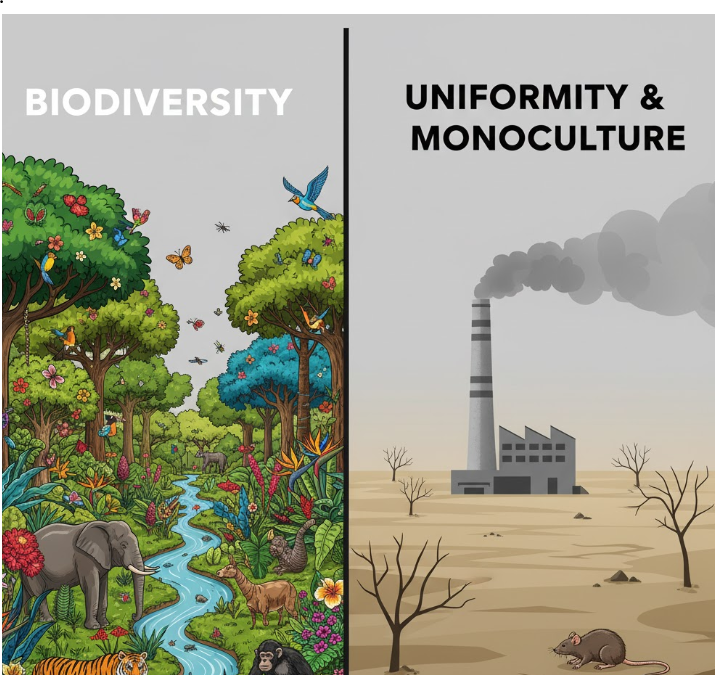
The function of antonyms extends beyond simple opposition; they contribute to the overall coherence and effectiveness of language by adding depth and complexity to expression. In various contexts, antonyms are used to create emphasis, highlight differences, and convey contrasting perspectives.
Structural Breakdown of Antonym Pairs
Antonym pairs often exhibit specific structural patterns that reflect their opposing meanings. These patterns can involve prefixes, suffixes, or root words that indicate negation or contrast.
Understanding these structural elements can aid in identifying and comprehending antonyms more effectively. The structural relationship between antonyms can also influence their grammatical behavior and usage in sentences.
For example, adding prefixes like ‘un-‘, ‘in-‘, ‘dis-‘, or ‘non-‘ to a word often creates its antonym (e.g., happy/unhappy, visible/invisible, agree/disagree, sense/nonsense). Likewise, suffixes can sometimes indicate an opposing meaning, although this is less common.
The root words themselves might have inherent opposite meanings, such as ‘good’ and ‘bad’.
Here’s a table illustrating some common structural patterns in antonym pairs:
| Prefix/Suffix | Original Word | Antonym |
|---|---|---|
| un- | Happy | Unhappy |
| in- | Visible | Invisible |
| dis- | Agree | Disagree |
| non- | Sense | Nonsense |
| -less | Care | Careless |
Types of Antonyms
Antonyms are not all created equal. They fall into distinct categories based on the nature of their opposition.
The three main types are complementary, gradable, and relational antonyms. Each type has its own characteristics and usage patterns.
Complementary Antonyms
Complementary antonyms are word pairs where the presence of one implies the absence of the other. There is no middle ground between them; it’s either one or the other. Examples include alive/dead, on/off, and true/false. If something is alive, it cannot be dead, and vice versa. These antonyms represent absolute opposites.
Gradable Antonyms
Gradable antonyms represent points on a continuum. They allow for degrees of comparison and intermediate states. Examples include hot/cold, big/small, and happy/sad. Something can be warm (between hot and cold), medium-sized (between big and small), or content (between happy and sad). These antonyms are relative and subjective.
Relational Antonyms
Relational antonyms describe a relationship from opposite perspectives. One word implies the existence of the other. Examples include teacher/student, buy/sell, and give/receive. You cannot have a teacher without a student, or a buyer without a seller. These antonyms are interdependent and describe reciprocal roles.
Multiple Antonyms
Some words can have multiple antonyms depending on the context. This is especially true for words with broad or nuanced meanings.
For example, the word “good” can have antonyms like “bad,” “evil,” or “poor,” depending on the specific context in which it is used. Recognizing multiple antonyms enhances vocabulary and allows for more precise communication.
Examples of Antonyms
To solidify your understanding of antonyms, let’s examine various examples categorized by type. These examples will illustrate the different ways antonyms function in language.
Complementary Antonym Examples
The following table provides examples of complementary antonyms, highlighting their absolute opposition:
| Word | Antonym |
|---|---|
| Alive | Dead |
| On | Off |
| True | False |
| Present | Absent |
| Single | Married |
| Male | Female |
| Pass | Fail |
| Open | Closed |
| Start | Finish |
| Exit | Enter |
| Push | Pull |
| Guilty | Innocent |
| Full | Empty |
| Accept | Reject |
| Arrive | Depart |
| Begin | End |
| Day | Night |
| Up | Down |
| In | Out |
| Even | Odd |
Gradable Antonym Examples
Gradable antonyms, as shown in the table below, allow for a spectrum of possibilities between the two extremes:
| Word | Antonym |
|---|---|
| Hot | Cold |
| Big | Small |
| Happy | Sad |
| Tall | Short |
| Fast | Slow |
| Good | Bad |
| Easy | Difficult |
| Bright | Dark |
| Rich | Poor |
| Strong | Weak |
| Loud | Quiet |
| Heavy | Light |
| Clean | Dirty |
| Old | Young |
| Wide | Narrow |
| Deep | Shallow |
| High | Low |
| Near | Far |
| Thick | Thin |
| Early | Late |
| Expensive | Cheap |
| Beautiful | Ugly |
| Interesting | Boring |
Relational Antonym Examples
Relational antonyms, illustrated in the following table, demonstrate interdependent relationships:
| Word | Antonym |
|---|---|
| Teacher | Student |
| Buy | Sell |
| Give | Receive |
| Doctor | Patient |
| Parent | Child |
| Lend | Borrow |
| Above | Below |
| Employer | Employee |
| Predator | Prey |
| Come | Go |
| Husband | Wife |
| Question | Answer |
Multiple Antonym Examples
The table below shows how a single word can have multiple antonyms based on context:
| Word | Antonym 1 | Antonym 2 | Antonym 3 |
|---|---|---|---|
| Good | Bad | Evil | Poor |
| Sharp | Dull | Blunt | |
| Wet | Dry | Arid | |
| Fast | Slow | Lazy | |
| Love | Hate | Loathe | |
| Order | Chaos | Disorder |
Usage Rules for Antonyms
Using antonyms correctly involves understanding their specific meanings and the contexts in which they are appropriate. While the basic principle is that antonyms have opposite meanings, there are nuances to consider.
It’s important to choose the antonym that best conveys the intended contrast.
For example, when describing temperature, “hot” and “cold” are direct antonyms. However, when describing personality, the antonym of “friendly” might be “unfriendly,” “hostile,” or “aloof,” depending on the specific context.
Selecting the right antonym enhances the clarity and precision of your writing or speech.
Additionally, be aware of idiomatic expressions and collocations. Some words have fixed antonyms in certain phrases.
For instance, the opposite of “black and white” (in the context of clarity) is “gray area,” not simply “colored area.”
Common Mistakes When Using Antonyms
One common mistake is using an antonym that doesn’t quite fit the context. For example, saying “The opposite of happy is angry” isn’t always accurate, as “sad” might be a more appropriate antonym in many situations.
Understanding the specific nuance of the word and its potential antonyms is crucial.
Another mistake is assuming that every word has a perfect antonym. Some words have no direct opposite, and attempting to force an antonym can lead to awkward or incorrect usage.
In such cases, it’s better to use a phrase or reword the sentence to express the intended contrast.
Here are some examples of common mistakes and their corrections:
| Incorrect | Correct | Explanation |
|---|---|---|
| The opposite of “up” is “front.” | The opposite of “up” is “down.” | “Front” is not a direct opposite of “up.” |
| He is very “disorganized,” so he must be “organized.” | He is very “disorganized,” so he must be “organized.” | This sentence is already correct. “Disorganized” is the opposite of “organized.” |
| The opposite of “expensive” is “free.” | The opposite of “expensive” is “cheap.” | While “free” implies no cost, “cheap” is the direct opposite in terms of price. |
Practice Exercises
Test your understanding of antonyms with these practice exercises. Each exercise focuses on different aspects of antonym usage.
Exercise 1: Identifying Antonyms
For each word, choose the best antonym from the options provided:
| Question | Options | Answer |
|---|---|---|
| 1. Hot | a) Warm b) Cold c) Spicy | b) Cold |
| 2. Happy | a) Joyful b) Sad c) Excited | b) Sad |
| 3. Start | a) Begin b) Finish c) Continue | b) Finish |
| 4. Big | a) Large b) Small c) Huge | b) Small |
| 5. Fast | a) Quick b) Slow c) Rapid | b) Slow |
| 6. Light | a) Bright b) Dark c) Heavy | c) Heavy |
| 7. Open | a) Shut b) Closed c) Unlocked | b) Closed |
| 8. Loud | a) Noisy b) Quiet c) Soft | b) Quiet |
| 9. Rich | a) Wealthy b) Poor c) Affluent | b) Poor |
| 10. True | a) Correct b) False c) Accurate | b) False |
Exercise 2: Completing Sentences with Antonyms
Fill in the blank with the antonym of the word in parentheses:
| Question | Answer |
|---|---|
| 1. The weather is very ________ today. (cold) | hot |
| 2. She was ________ after hearing the news. (happy) | sad |
| 3. The lesson was very ________. (easy) | difficult |
| 4. The room was very ________. (bright) | dark |
| 5. He is always ________. (late) | early |
| 6. The door was ________. (open) | closed |
| 7. The glass is ________. (full) | empty |
| 8. The road is very ________. (narrow) | wide |
| 9. The answer is ________. (false) | true |
| 10. He ________ the offer. (accepted) | rejected |
Exercise 3: Replacing Words with Antonyms
Rewrite each sentence by replacing the underlined word with its antonym:
| Question | Answer |
|---|---|
| 1. The coffee is very hot. | The coffee is very cold. |
| 2. She felt very happy. | She felt very sad. |
| 3. The task was very easy. | The task was very difficult. |
| 4. The room was very bright. | The room was very dark. |
| 5. He arrived early. | He arrived late. |
| 6. The door was open. | The door was closed. |
| 7. The glass is full. | The glass is empty. |
| 8. The road is very narrow. | The road is very wide. |
| 9. The statement is true. | The statement is false. |
| 10. He accepted the gift. | He rejected the gift. |
Advanced Topics in Antonym Usage
For advanced learners, exploring the use of antonyms in literature and rhetoric can provide deeper insights into their power and versatility.
Antonyms in Literature
Authors often use antonyms to create contrast, develop themes, and add complexity to their writing. The juxtaposition of opposing ideas can highlight conflicts, reveal character traits, and enhance the overall impact of a literary work.
For example, the use of light and darkness as antonyms can symbolize good and evil, knowledge and ignorance, or hope and despair.
Consider the famous opening line of Charles Dickens’ “A Tale of Two Cities”: “It was the best of times, it was the worst of times.” This immediate pairing of antonyms sets the stage for a story filled with contrasts and contradictions.
Antonyms in Rhetoric
In rhetoric, antonyms can be used to create emphasis, persuade an audience, and make arguments more compelling. By presenting opposing viewpoints or ideas, speakers can highlight the strengths of their own position and the weaknesses of their opponents’.
Antithesis, a rhetorical device that involves contrasting ideas in parallel structure, is a powerful way to use antonyms for persuasive effect.
For example, a politician might say, “We must choose between progress and stagnation, between hope and despair.” This use of antonyms creates a clear and memorable contrast, making the speaker’s message more impactful.
Frequently Asked Questions (FAQ)
Here are some frequently asked questions about antonyms:
- What is the difference between antonyms and synonyms?Antonyms are words with opposite meanings, while synonyms are words with similar meanings. Antonyms express contrast, while synonyms express similarity.
- Are there different types of antonyms?Yes, the main types of antonyms are complementary, gradable, and relational. Complementary antonyms are absolute opposites, gradable antonyms represent points on a continuum, and relational antonyms describe a relationship from opposite perspectives.
- Can a word have multiple antonyms?Yes, some words can have multiple antonyms depending on the context. The specific antonym that is most appropriate will depend on the nuance of the word and the intended meaning.
- How can I improve my vocabulary of antonyms?Reading widely, using a thesaurus, and practicing with antonym exercises can help you expand your vocabulary of antonyms. Pay attention to how antonyms are used in different contexts.
- Why is it important to learn about antonyms?Understanding antonyms enhances vocabulary, improves comprehension, and strengthens communication skills. Antonyms allow you to express contrast, add depth to your writing, and understand complex texts more effectively.
- What is an example of a complementary antonym?An example of a complementary antonym is “alive” and “dead.” Something cannot be both alive and dead at the same time.
- What is an example of a gradable antonym?An example of a gradable antonym is “hot” and “cold.” Something can be warm or cool, which are intermediate states between hot and cold.
- What is an example of a relational antonym?An example of a relational antonym is “teacher” and “student.” You cannot have a teacher without a student, and vice versa.
Conclusion
Mastering antonyms is a valuable skill that enhances vocabulary, comprehension, and communication. By understanding the different types of antonyms, their usage rules, and common mistakes to avoid, you can improve your ability to express contrast and add depth to your language.
Practice identifying and using antonyms in various contexts to solidify your understanding and expand your linguistic repertoire.
Remember that language learning is a continuous process. Keep exploring the nuances of antonyms and their role in enriching communication.
With consistent effort, you can unlock the full potential of antonyms and become a more effective and articulate communicator. Review the examples, complete the exercises, and continue to explore the fascinating world of words and their opposites.