Understanding antonyms is crucial for expanding vocabulary and enhancing precision in communication. This article focuses on the word “distinctive” and explores its various antonyms, providing a detailed explanation of their meanings, usage, and contexts.
Whether you’re an English language learner, a student preparing for exams, or simply someone who wants to improve their writing, this guide will equip you with the knowledge to effectively use antonyms of “distinctive” in your speech and writing.
Table of Contents
- Introduction
- Definition of “Distinctive”
- Structural Breakdown
- Antonyms of “Distinctive”
- Examples
- Usage Rules
- Common Mistakes
- Practice Exercises
- Advanced Topics
- FAQ
- Conclusion
Introduction
Mastering English vocabulary involves not only learning new words but also understanding their relationships with other words, particularly antonyms. Antonyms, or words with opposite meanings, are essential for expressing contrasting ideas and adding depth to your writing and speech.
This article delves into the antonyms of “distinctive,” a word that signifies uniqueness and recognizability. By exploring its opposites, we can better appreciate the nuances of language and improve our ability to communicate effectively.
This article is structured to provide a comprehensive understanding of “distinctive” and its antonyms, suitable for learners of all levels.
Definition of “Distinctive”
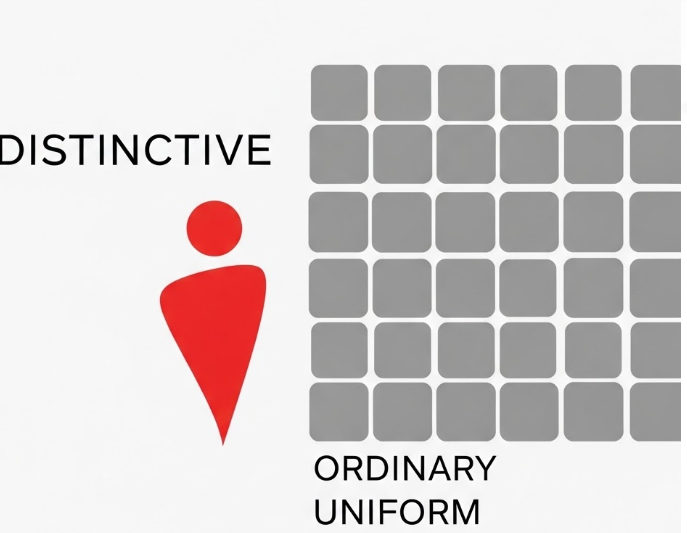
The word “distinctive” is an adjective that describes something that is easily recognizable because it is different from other things. It implies a quality or characteristic that sets something apart, making it unique and memorable.
“Distinctive” can refer to physical attributes, qualities, or characteristics. In essence, something that is distinctive stands out from the crowd.
This can be in a positive or neutral sense, simply indicating that it is easily identifiable.
The Oxford English Dictionary defines “distinctive” as “serving to distinguish; characteristic of one person or thing, and so serving to distinguish it from others.” This definition highlights the key aspect of differentiation and uniqueness that is inherent in the meaning of “distinctive.” It is often used to describe features that are particularly noticeable or remarkable.
Structural Breakdown
“Distinctive” is derived from the verb “distinguish,” which means to recognize or treat (someone or something) as different. The suffix “-ive” transforms the verb into an adjective, indicating a quality or tendency.
Therefore, “distinctive” describes something that has the quality of being distinguishable. Understanding the etymology of the word helps in grasping its core meaning and its relationship to other related terms.
The word is often used in descriptive writing to add vividness and detail. Consider how a writer might describe a character’s distinctive laugh or a building’s distinctive architecture.
These details contribute to a more complete and memorable image.
The word “distinctive” can be broken down as follows:
- Base word: Distinguish
- Suffix: -ive (forming an adjective)
- Meaning: Having the quality of being distinguishable
Antonyms of “Distinctive”
Antonyms of “distinctive” convey the opposite idea: a lack of uniqueness or recognizability. These antonyms can be broadly categorized into common and nuanced terms, each with slightly different shades of meaning.
Common Antonyms
These are the most frequently used and easily understood antonyms of “distinctive.” They generally indicate a lack of any special or distinguishing characteristics. Examples include: common, ordinary, typical, usual, and unremarkable.
Nuanced Antonyms
These antonyms offer a more subtle contrast to “distinctive,” often implying a lack of originality or a blending in with the surroundings. Examples include: generic, nondescript, indistinguishable, homogeneous, and uniform.
These words are useful when you want to convey a more specific sense of lacking unique qualities.
Examples
To fully understand the antonyms of “distinctive,” let’s examine them in context. The following tables provide examples of how these antonyms can be used in sentences, contrasting them with the use of “distinctive” itself.
Examples of Common Antonyms
This table showcases examples of sentences using common antonyms of “distinctive,” such as “common,” “ordinary,” “typical,” “usual,” and “unremarkable.” Each example provides a contrasting sentence using “distinctive” to highlight the difference in meaning.
| Antonym | Example Sentence (Antonym) | Example Sentence (Distinctive) |
|---|---|---|
| Common | The bird had a common appearance, blending in with the other sparrows. | The bird had a distinctive plumage, making it easy to spot. |
| Ordinary | The restaurant offered an ordinary menu, with nothing particularly special. | The restaurant offered a distinctive menu, featuring unique and innovative dishes. |
| Typical | The weather was typical for this time of year, with mild temperatures and occasional rain. | The weather was distinctive for this time of year, with unusually high temperatures and clear skies. |
| Usual | The meeting followed the usual format, with a review of the previous minutes. | The meeting followed a distinctive format, incorporating interactive workshops and group discussions. |
| Unremarkable | The building was unremarkable in its design, with no outstanding features. | The building was distinctive in its design, with its imposing height and striking architecture. |
| Common | The name “John Smith” is a very common name. | Her name was distinctive, and I’d never heard it before. |
| Ordinary | He led an ordinary life, working a 9-to-5 job and spending weekends at home. | She led a distinctive life, traveling the world and pursuing unconventional hobbies. |
| Typical | The plot of the movie was typical of the genre. | The movie had a distinctive plot that kept me guessing until the end. |
| Usual | It was the usual morning rush hour with heavy traffic. | It was a distinctive morning, marked by a beautiful sunrise and a sense of calm. |
| Unremarkable | The performance was unremarkable; nothing stood out. | The performance was distinctive; the lead actor gave a captivating performance. |
| Common | The style of the house was very common in that neighborhood. | The style of the house was distinctive, a unique blend of modern and Victorian architecture. |
| Ordinary | The meal was ordinary, nothing to write home about. | The meal was distinctive, a culinary masterpiece that I won’t forget. |
| Typical | The symptoms were typical of a common cold. | The symptoms were distinctive and pointed to a rare medical condition. |
| Usual | The usual crowd gathered at the park on Sunday afternoon. | A distinctive group assembled, each member dressed in elaborate costumes. |
| Unremarkable | The experience was unremarkable, soon forgotten. | The experience was distinctive, leaving a lasting impression on everyone involved. |
| Common | Common sense dictates that we should be prepared for any eventuality. | Distinctive leadership was required to navigate the crisis effectively. |
| Ordinary | The ordinary man on the street may not understand the complexities of economics. | The distinctive genius of the artist was evident in every brushstroke. |
| Typical | It was a typical day at the office, filled with meetings and emails. | It was a distinctive day, marked by a major company announcement. |
| Usual | The usual suspects were rounded up for questioning. | A distinctive set of experts was assembled to solve the problem. |
| Unremarkable | The candidate gave an unremarkable speech, failing to inspire the audience. | The candidate gave a distinctive speech, captivating the audience with his vision. |
| Common | He made a common mistake that many beginners make. | He had a distinctive style of playing the guitar, easily recognizable. |
| Ordinary | It was just an ordinary day at school, nothing special happened. | It was a distinctive day at school, the day they won the championship. |
| Typical | The food served at the restaurant was typical of the region. | The food served at the restaurant was distinctive, a fusion of different culinary traditions. |
| Usual | The usual procedure was followed in the investigation. | A distinctive approach was taken to solve the problem, yielding surprising results. |
| Unremarkable | The book was unremarkable, offering nothing new or original. | The book was distinctive, a groundbreaking work of literature. |
Examples of Nuanced Antonyms
This table focuses on nuanced antonyms such as “generic,” “nondescript,” “indistinguishable,” “homogeneous,” and “uniform.” These words offer a more subtle contrast to “distinctive,” often implying a lack of originality or a blending in with the surroundings.
| Antonym | Example Sentence (Antonym) | Example Sentence (Distinctive) |
|---|---|---|
| Generic | The store sold generic brands of cereal, lacking any unique flavors. | The store sold distinctive brands of cereal, each with its own unique flavor profile. |
| Nondescript | The building was nondescript, blending in with the other office buildings. | The building was distinctive, standing out with its unique architectural design. |
| Indistinguishable | The twins were indistinguishable from each other, making it difficult to tell them apart. | The twins had distinctive personalities, making it easy to tell them apart. |
| Homogeneous | The population of the town was largely homogeneous, with little cultural diversity. | The population of the town was remarkably distinctive, with a rich tapestry of cultural backgrounds. |
| Uniform | The soldiers wore uniform attire, making them appear as a single unit. | The team each wore distinctive outfits that reflected their unique personalities. |
| Generic | The design of the website was generic, lacking any unique branding elements. | The design of the website was distinctive, with a memorable logo and unique layout. |
| Nondescript | The car was nondescript, making it difficult to remember. | The car was distinctive, its bright color and unusual shape made it memorable. |
| Indistinguishable | The voices on the recording were indistinguishable, making it impossible to identify the speakers. | The voices on the recording were distinctive, each with a unique tone and accent. |
| Homogeneous | The product line was homogeneous, offering very little variety. | The product line was distinctive, each item carefully crafted with unique features. |
| Uniform | The houses in the development were uniform, all built to the same plan. | The houses in the development were distinctive, each with unique architectural details. |
| Generic | The music sounded generic, like a copy of many other pop songs. | The music sounded distinctive, incorporating unique sounds and rhythms. |
| Nondescript | The package was nondescript, with no markings to indicate its contents. | The package was distinctive, wrapped in colorful paper and tied with a ribbon. |
| Indistinguishable | The grains of sand on the beach were indistinguishable, all the same color and size. | The seashells on the beach were distinctive, each with its own unique shape and pattern. |
| Homogeneous | The group’s opinions were homogeneous, with everyone agreeing on the same points. | The group’s opinions were distinctive, reflecting a diversity of perspectives and experiences. |
| Uniform | The instructions were uniform across all the products, making them easy to follow. | The instructions were distinctive, tailored to the specific features of each product. |
| Generic | The flavor was generic, like any other artificial sweetener. | The flavor was distinctive, a complex blend of herbs and spices. |
| Nondescript | The crowd was nondescript, making it difficult to pick out individuals. | The crowd was distinctive, each person dressed in unique and eye-catching attire. |
| Indistinguishable | The files were indistinguishable, making it impossible to tell which was the most recent version. | The files were distinctive, each clearly labeled with the date and time of creation. |
| Homogeneous | The culture was homogeneous, with little variation in customs or traditions. | The culture was distinctive, a rich blend of influences from different regions. |
| Uniform | The rules were uniform for all participants, ensuring fairness and consistency. | The rules were distinctive, designed to address the specific challenges of the event. |
| Generic | The plot of the story was generic, following a predictable pattern. | The plot of the story was distinctive, full of unexpected twists and turns. |
| Nondescript | The building’s facade was nondescript, offering no clues about what lay inside. | The building’s facade was distinctive, adorned with intricate carvings and vibrant colors. |
| Indistinguishable | The footprints in the sand were indistinguishable after the tide came in. | The footprints in the sand were distinctive, clearly showing the size and shape of the feet. |
| Homogeneous | The team’s skill level was homogeneous, with no standout players. | The team’s skill level was distinctive, with each player excelling in a specific area. |
| Uniform | The lighting was uniform throughout the room, creating a consistent ambiance. | The lighting was distinctive, with spotlights highlighting different areas and creating dramatic effects. |
Usage Rules
When choosing an antonym for “distinctive,” consider the specific context and the nuance you want to convey. “Common,” “ordinary,” and “typical” are suitable when you want to emphasize a lack of uniqueness.
“Generic,” “nondescript,” and “indistinguishable” are more appropriate when you want to highlight a lack of originality or a blending in with the surroundings. The choice of antonym depends on the specific message you are trying to communicate.
Here are some general guidelines to follow:
- Use common and ordinary when referring to things that occur frequently or are not special.
- Use typical when referring to things that conform to a standard or pattern.
- Use generic when referring to things that lack a brand name or are not unique.
- Use nondescript when referring to things that are difficult to describe or distinguish.
- Use indistinguishable when referring to things that cannot be told apart.
- Use homogeneous when referring to things that are uniform in composition or character.
- Use uniform when referring to things that are identical or consistent.
Common Mistakes
One common mistake is using “unoriginal” as a direct antonym of “distinctive.” While “unoriginal” can be related, it specifically refers to a lack of originality, whereas “distinctive” encompasses a broader sense of uniqueness and recognizability. Another common error is using an antonym that doesn’t fit the context.
For example, using “uniform” when you mean “common” can lead to confusion. Choosing the right antonym requires careful consideration of the intended meaning.
Here are some examples of common mistakes and their corrections:
| Incorrect | Correct | Explanation |
|---|---|---|
| The painting was unoriginal, the opposite of distinctive. | The painting was generic, the opposite of distinctive. | “Generic” is a better antonym as it implies a lack of unique characteristics. |
| The uniforms were distinctive in their blandness. | The uniforms were unremarkable in their blandness. | “Unremarkable” better conveys the lack of any notable features. |
| The song was un-distinctive. | The song was ordinary. | “Un-distinctive” is not a commonly used word. |
Practice Exercises
Test your understanding of the antonyms of “distinctive” with the following exercises. Fill in the blanks with the most appropriate antonym from the list provided.
Choose from: common, ordinary, typical, generic, nondescript, indistinguishable, homogeneous, uniform.
Exercise 1:
- The restaurant’s decor was quite __________, with no particular theme or style.
- The flavor of the ice cream was __________, tasting like any other vanilla.
- The houses in the neighborhood were __________, all looking exactly the same.
- The symptoms of the illness were __________, making it difficult to diagnose.
- The book had a __________ plot, following a predictable storyline.
- The car was __________, easily overlooked in a parking lot.
- The accent was __________, making it impossible to place the speaker’s origin.
- The product was __________, lacking any unique features or branding.
- The day was __________, with nothing out of the ordinary happening.
- The bird had a __________ appearance, blending in with the surrounding foliage.
Answer Key:
- nondescript
- generic
- uniform
- common
- typical
- nondescript
- indistinguishable
- generic
- ordinary
- common
Exercise 2:
- His style of dress was __________, always wearing the same outfit.
- The city’s architecture was __________, lacking any unique landmarks.
- The taste of the coffee was __________, not standing out in any way.
- The sound of the music was __________, blending in with other background noise.
- The handwriting was __________, making it difficult to read.
- The opinions in the group were __________, with everyone agreeing.
- The experience was __________, leaving no lasting impression.
- The quality of the goods was __________, with little variation.
- The weather was __________, as it is for this time of year.
- The result of the experiment was __________, nothing unexpected occurred.
Answer Key:
- uniform
- nondescript
- ordinary
- common
- indistinguishable
- homogeneous
- unremarkable
- homogeneous
- typical
- typical
Exercise 3:
- The flavor of the soda was __________, like all the other colas.
- The landscape was __________, all flat fields and few trees.
- The design of the website was __________, with no unique features.
- The presentation was __________, lacking any memorable elements.
- The crowd was __________, with everyone dressed similarly.
- The result of the survey was __________, showing no significant trends.
- The performance was __________, without any standout moments.
- The artwork was __________, showing little originality.
- The routine was __________, always following the same steps.
- The solution was __________, similar to those used in other cases.
Answer Key:
- generic
- homogeneous
- generic
- unremarkable
- uniform
- typical
- unremarkable
- ordinary
- typical
- common
Advanced Topics
For advanced learners, exploring the connotations and subtle differences between the antonyms of “distinctive” can be a valuable exercise. Consider how the social or cultural context can influence the perception of distinctiveness and its opposites.
For instance, in some cultures, conformity may be valued more than individuality, making “uniform” a less negative term than in others. Additionally, delve into the use of these antonyms in figurative language, such as metaphors and similes, to add depth and complexity to your writing.
Furthermore, consider the role of context in determining the most appropriate antonym. The best antonym for “distinctive” will depend greatly on the specific situation and what aspect of distinctiveness you wish to negate.
For example, if you want to emphasize a lack of originality, “generic” or “unoriginal” may be the best choices. If you want to highlight a lack of visual distinction, “nondescript” or “indistinguishable” might be more suitable.
FAQ
- What is the difference between “common” and “ordinary” as antonyms of “distinctive”?“Common” refers to something that occurs frequently or is widely shared, whereas “ordinary” refers to something that is not special or remarkable. Both imply a lack of distinctiveness, but “common” emphasizes prevalence, while “ordinary” emphasizes lack of uniqueness.
- When should I use “generic” instead of “common”?Use “generic” when referring to something that lacks a specific brand name or unique characteristics, often implying a lower quality or lack of originality. “Common” is more general and simply indicates frequency.
- How does “nondescript” differ from “indistinguishable”?“Nondescript” describes something that is difficult to describe or distinguish because it lacks notable features. “Indistinguishable” means that two or more things cannot be told apart, even if they have some features.
- Is “unoriginal” a direct antonym of “distinctive”?While “unoriginal” is related to the concept of distinctiveness, it specifically refers to a lack of originality. “Distinctive” encompasses a broader sense of uniqueness and recognizability, so “generic”, “common” or “ordinary” are often better antonyms.
- Can “unique” be used as a synonym for “distinctive”?Yes, “unique” and “distinctive” are often used interchangeably, as both imply something that is different from others. However, “unique” suggests being the only one of its kind, while “distinctive” suggests being easily recognizable due to its differences.
- How do I choose the best antonym for “distinctive” in a sentence?Consider the specific context and the nuance you want to convey. Think about what aspect of distinctiveness you want to negate: is it the uniqueness, the recognizability, or the originality? Choose the antonym that best fits the intended meaning.
- Are there any situations where using an antonym of “distinctive” could be considered offensive?Yes, if you use antonyms like “common” or “ordinary” to describe a person’s appearance, skills, or personality, it could be interpreted as insulting or dismissive. Always consider the potential impact of your words and choose them carefully.
- How can understanding antonyms of “distinctive” improve my writing?Understanding antonyms allows you to express contrasting ideas with greater precision and clarity. It also enhances your vocabulary and enables you to add depth and complexity to your writing, making it more engaging and impactful.
Conclusion
Mastering the antonyms of “distinctive” is an essential step in expanding your English vocabulary and improving your communication skills. By understanding the nuances of words like “common,” “ordinary,” “generic,” and “nondescript,” you can express a wider range of ideas and add depth to your writing and speech.
Remember to consider the context and the specific meaning you want to convey when choosing an antonym.
Continue practicing with the exercises provided and exploring the advanced topics to further enhance your understanding. With consistent effort, you’ll be able to use these antonyms confidently and effectively in various situations.
Keep in mind that language learning is a continuous journey, and every new word or concept you master brings you closer to fluency and precision.