Understanding the nuances of trust is crucial for effective communication and building strong relationships. While being trustful is often seen as a positive trait, recognizing its antonyms – the words that describe a lack of trust – is equally important.
This knowledge allows us to navigate complex social situations with greater awareness and precision. This article delves into the various antonyms of “trustful,” exploring their meanings, contexts, and how they are used in the English language.
Whether you are an English language learner or a seasoned writer, this guide will help you expand your vocabulary and refine your understanding of trust and its opposites.
This comprehensive exploration will examine words like distrustful, suspicious, skeptical, cynical, and more, providing clear definitions, illustrative examples, and practical exercises. By understanding these terms, you can better express your thoughts and feelings about situations where trust is lacking, and communicate more effectively in both personal and professional settings.
This article will benefit students, writers, and anyone interested in enhancing their understanding of English grammar and vocabulary.
Table of Contents
- Introduction
- Defining “Trustful” and Its Antonyms
- Structural Breakdown of Antonyms
- Types and Categories of Antonyms
- Examples of Antonyms in Use
- Usage Rules and Considerations
- Common Mistakes
- Practice Exercises
- Advanced Topics
- Frequently Asked Questions
- Conclusion
Defining “Trustful” and Its Antonyms
The word “trustful” describes a state of being willing to believe in the honesty and reliability of others. It implies a positive expectation and a sense of security in interpersonal relationships. A trustful person tends to give others the benefit of the doubt and is open to believing what they are told.
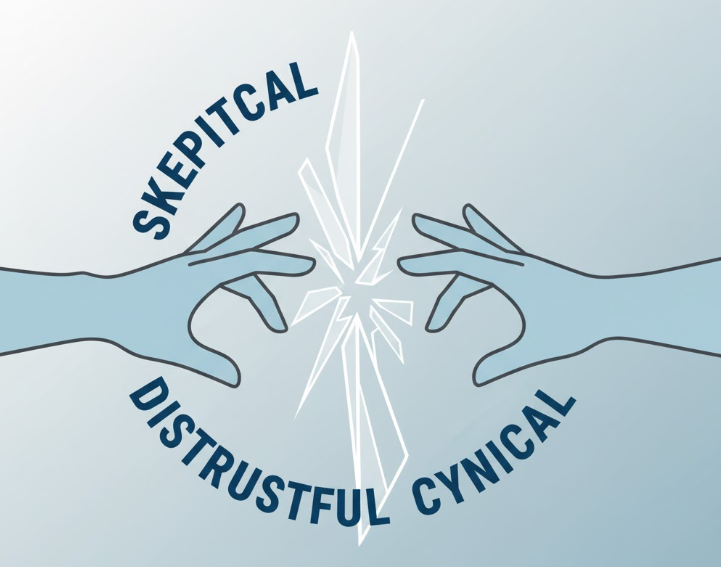
However, the opposite of trustful encompasses a range of attitudes and beliefs that reflect a lack of confidence in others. These antonyms include words like distrustful, suspicious, skeptical, cynical, wary, dubious, leery, and mistrustful. Each of these words carries a slightly different connotation, reflecting varying degrees of doubt and apprehension. Understanding these nuances is crucial for precise communication.
These antonyms can be classified as adjectives that describe a person’s attitude, belief, or behavior regarding the reliability and honesty of others. They function to convey a lack of confidence, a questioning spirit, or a negative expectation about the intentions or actions of those around them.
The context in which these words are used significantly impacts their meaning. For example, “skeptical” might be appropriate in a scientific discussion, while “distrustful” might be more suitable in a personal relationship.
Structural Breakdown of Antonyms
The antonyms of “trustful” are generally formed using prefixes and suffixes that negate or modify the meaning of the root word. For instance, the prefix “dis-” in “distrustful” indicates negation, effectively reversing the meaning of “trustful.” Similarly, “mis-” in “mistrustful” implies a negative or incorrect form of trust.
Understanding these prefixes and suffixes can help learners decipher the meanings of unfamiliar words and expand their vocabulary.
The suffix “-ful” in “trustful” indicates a state of being full of trust. Therefore, antonyms often lack this suffix or replace it with suffixes that convey doubt or caution.
For example, “suspicious” ends with “-ious,” which describes a quality or characteristic, but one associated with doubt rather than confidence. The root words themselves often carry connotations of doubt or uncertainty, such as “skeptic” and “cynic,” which are then transformed into adjectives by adding suffixes like “-al.”
Many of these words function as adjectives, modifying nouns to describe a person, action, or situation. They can be used both attributively (before the noun, e.g., “a suspicious person”) and predicatively (after a linking verb, e.g., “the person is suspicious”).
The grammatical structure remains consistent, but the emphasis and nuance can shift depending on the context.
Types and Categories of Antonyms
Distrustful
Distrustful implies a general lack of trust in others. It suggests a belief that people are not honest or reliable. This term often arises from past experiences or a pessimistic outlook on human nature. A distrustful person may be hesitant to share personal information or rely on others for help.
Suspicious
Suspicious suggests a feeling that something is wrong or that someone is behaving dishonestly. It often arises from specific circumstances or behaviors that raise doubts. A suspicious person may be watchful and questioning, looking for evidence to confirm their doubts. It implies a state of active doubt and scrutiny.
Skeptical
Skeptical indicates a questioning attitude towards claims or statements. It suggests a need for evidence and a reluctance to accept things at face value. Skepticism is often associated with critical thinking and a desire for factual accuracy. A skeptical person may challenge assumptions and demand proof before accepting an idea as true.
Cynical
Cynical describes a belief that people are motivated by selfishness and that good intentions are rare. It suggests a pessimistic view of human nature and a lack of faith in institutions or ideals. A cynical person may express scorn or mockery towards those who seem naive or idealistic. Cynicism often arises from disillusionment and disappointment.
Wary
Wary means cautious and careful, especially when dealing with someone or something potentially dangerous or harmful. It implies a sense of alertness and a desire to avoid being tricked or hurt. A wary person may be hesitant to take risks or trust strangers. Wariness is often a response to past experiences or a perceived threat.
Dubious
Dubious suggests uncertainty or doubt about the truth or quality of something. It can refer to a person’s character, a claim, or a situation. A dubious person or situation is one that is questionable or unreliable. This term often implies a lack of confidence in the outcome or validity of something.
Leery
Leery is similar to wary, but often implies a more visceral feeling of unease or suspicion. It suggests a gut feeling that something is not right. A leery person may be hesitant to approach or engage with someone or something that makes them uncomfortable. Leeriness is often based on intuition or past experiences.
Mistrustful
Mistrustful is very similar to distrustful, emphasizing a lack of trust. It suggests a feeling of unease and doubt about someone’s honesty or reliability. A mistrustful person tends to be cautious and skeptical, often questioning the motives of others. The terms are often interchangeable, though “distrustful” is slightly more common.
Examples of Antonyms in Use
Understanding how these antonyms are used in context is essential for mastering their nuances. The following tables provide a range of examples, categorized for clarity.
The table below lists examples which use “Distrustful” and “Suspicious” in sentences. These examples showcase how the words are used to describe people’s attitudes and feelings in various scenarios.
| Word | Example Sentence |
|---|---|
| Distrustful | After being betrayed, she became distrustful of everyone. |
| Distrustful | The dog was distrustful of strangers, barking at anyone who approached. |
| Distrustful | He was distrustful of the politician’s promises, remembering past deceptions. |
| Distrustful | The company became distrustful of its partners after the data breach. |
| Distrustful | His distrustful nature made it difficult for him to form close relationships. |
| Distrustful | She had a distrustful feeling about the new employee. |
| Distrustful | The villagers were distrustful of the government’s intentions. |
| Distrustful | He remained distrustful even after she apologized. |
| Distrustful | The investor was distrustful of the high-risk venture. |
| Distrustful | She gave him a distrustful look. |
| Suspicious | The detective was suspicious of the suspect’s alibi. |
| Suspicious | She had a suspicious feeling that she was being followed. |
| Suspicious | The neighbors became suspicious when they saw strange cars parked outside the house. |
| Suspicious | He eyed the stranger with a suspicious gaze. |
| Suspicious | The police found the circumstances surrounding the death suspicious. |
| Suspicious | She was suspicious of his sudden generosity. |
| Suspicious | The dog gave a suspicious sniff at the package. |
| Suspicious | The company’s accounting practices were suspicious. |
| Suspicious | He had a suspicious lump in his throat. |
| Suspicious | The cat eyed the new kitten with a suspicious stare. |
| Suspicious | Her explanation sounded suspicious to the experienced investigator. |
This table focuses on “Skeptical” and “Cynical,” demonstrating how these words are used to describe attitudes towards information and human nature.
| Word | Example Sentence |
|---|---|
| Skeptical | The scientist remained skeptical of the new findings until more data was available. |
| Skeptical | She was skeptical of his claims of innocence. |
| Skeptical | The journalist approached the story with a skeptical mindset. |
| Skeptical | He raised a skeptical eyebrow at her suggestion. |
| Skeptical | The audience was skeptical of the politician’s promises. |
| Skeptical | She remained skeptical about the existence of ghosts. |
| Skeptical | The professor was skeptical of the student’s excuse. |
| Skeptical | He had a skeptical look on his face. |
| Skeptical | The reviewers were skeptical of the movie’s plot. |
| Skeptical | She adopted a skeptical stance towards the new policy. |
| Cynical | His cynical outlook on life made him difficult to be around. |
| Cynical | She had become cynical after years of disappointment. |
| Cynical | The writer’s cynical tone was evident in his articles. |
| Cynical | He made a cynical remark about the company’s motives. |
| Cynical | The old man had a cynical view of the world. |
| Cynical | She laughed with a cynical edge in her voice. |
| Cynical | The play offered a cynical commentary on society. |
| Cynical | He had a cynical smirk on his face. |
| Cynical | The film presented a cynical portrayal of politics. |
| Cynical | Her cynical attitude was a defense mechanism. |
This table illustrates the usage of “Wary,” “Dubious,” “Leery,” and “Mistrustful,” showcasing how these terms describe different levels of caution and doubt.
| Word | Example Sentence |
|---|---|
| Wary | The hikers were wary of the wildlife in the forest. |
| Wary | She was wary of accepting help from strangers. |
| Wary | He approached the negotiations with a wary attitude. |
| Wary | The cat was wary of the new puppy. |
| Wary | She gave a wary glance at the dark alley. |
| Wary | The investors were wary of the volatile market. |
| Wary | He was wary of the company’s promises. |
| Wary | The soldiers were wary of an ambush. |
| Wary | She had a wary expression on her face. |
| Wary | The dog remained wary even after being offered a treat. |
| Dubious | The company’s claims about its product were dubious. |
| Dubious | He had a dubious reputation in the community. |
| Dubious | The evidence presented in court was dubious. |
| Dubious | She gave him a dubious look. |
| Dubious | The politician’s past actions were dubious. |
| Dubious | The quality of the merchandise was dubious. |
| Dubious | He expressed dubious feelings about the project. |
| Dubious | The source of the information was dubious. |
| Dubious | She had a dubious feeling about the whole situation. |
| Dubious | The legitimacy of the document was dubious. |
| Leery | I am leery of doing business with that company. |
| Leery | He was leery of walking alone at night. |
| Leery | She was leery of trusting him again. |
| Leery | The dog was leery of the thunderstorm. |
| Leery | He felt leery about the whole situation. |
| Leery | She gave a leery glance at the stranger. |
| Leery | The kids were leery of the abandoned house. |
| Leery | I’m always leery of deals that seem too good to be true. |
| Leery | He looked leery before answering the question. |
| Leery | She had a leery feeling about the upcoming meeting. |
| Mistrustful | After being lied to repeatedly, he became mistrustful of everyone. |
| Mistrustful | The government was mistrustful of the rebel groups. |
| Mistrustful | She was mistrustful of his sudden change of heart. |
| Mistrustful | The company was mistrustful of the competitor’s claims. |
| Mistrustful | He had a mistrustful nature. |
| Mistrustful | She felt mistrustful of the new technology. |
| Mistrustful | The public was mistrustful of the politician’s motives. |
| Mistrustful | He remained mistrustful despite her apologies. |
| Mistrustful | The community became mistrustful of the police. |
| Mistrustful | She gave him a mistrustful glare. |
Usage Rules and Considerations
When using antonyms of “trustful,” it is crucial to consider the specific context and the intended nuance. While many of these words share a general meaning of lacking trust, they differ in the reasons for and the intensity of that lack of trust.
For example, “skeptical” is appropriate when questioning claims or information, while “distrustful” is more suitable when describing a general lack of faith in someone’s honesty.
The choice of word can also depend on the level of formality. “Leery” is more informal than “wary” and might be more appropriate in casual conversation.
Similarly, “cynical” carries a stronger negative connotation than “skeptical” and should be used carefully to avoid sounding overly critical or pessimistic. Understanding these nuances is key to effective communication.
Context is also vital when determining whether to use an antonym of “trustful.” In situations where trust is warranted, expressing distrust can be seen as rude or offensive. However, in situations where there is a history of deception or a clear reason for doubt, expressing caution or skepticism is not only appropriate but also necessary.
Balance is essential in choosing the right word to accurately convey your feelings without causing unnecessary offense.
Common Mistakes
One common mistake is using “suspicious” and “skeptical” interchangeably. While both words imply doubt, “suspicious” suggests a feeling that something is wrong or dishonest, while “skeptical” suggests a need for evidence before accepting a claim.
For example:
- Incorrect: She was suspicious of the scientific theory.
- Correct: She was skeptical of the scientific theory.
Another common mistake is using “cynical” when “skeptical” is more appropriate. “Cynical” implies a belief that people are motivated by selfishness, while “skeptical” simply suggests a need for evidence.
For example:
- Incorrect: He was cynical of the politician’s promises, demanding proof.
- Correct: He was skeptical of the politician’s promises, demanding proof.
Finally, confusing “distrustful” and “mistrustful” is easy, as they are very similar. However, it’s important to remember that while they are often interchangeable, “distrustful” is slightly more common and generally preferred.
For example:
- Acceptable: She was mistrustful of his intentions.
- Preferred: She was distrustful of his intentions.
Practice Exercises
Test your understanding of the antonyms of “trustful” with these exercises. Choose the best word from the options provided to complete each sentence.
| Question | Options | Answer |
|---|---|---|
| 1. After being deceived multiple times, he became ______ of everyone he met. | a) skeptical b) distrustful c) cynical d) wary | b) distrustful |
| 2. The detective grew ______ when the suspect’s story kept changing. | a) skeptical b) distrustful c) suspicious d) cynical | c) suspicious |
| 3. The scientist remained ______ of the new theory until more evidence was presented. | a) wary b) cynical c) suspicious d) skeptical | d) skeptical |
| 4. Years of political corruption had made him ______ of all politicians. | a) wary b) cynical c) suspicious d) skeptical | b) cynical |
| 5. The traveler was ______ of accepting drinks from strangers in the bar. | a) skeptical b) distrustful c) wary d) cynical | c) wary |
| 6. The company’s financial statements looked ______, raising concerns among investors. | a) wary b) dubious c) suspicious d) cynical | b) dubious |
| 7. I’m always ______ of people who seem too eager to please. | a) skeptical b) leery c) cynical d) suspicious | b) leery |
| 8. She was naturally ______ of anyone offering unsolicited advice. | a) skeptical b) distrustful c) mistrustful d) cynical | c) mistrustful |
| 9. He gave a ______ look at the stranger lurking in the shadows. | a) skeptical b) leery c) cynical d) suspicious | b) leery |
| 10. The manager was ______ of the employee’s excuse for being late. | a) wary b) dubious c) suspicious d) cynical | c) suspicious |
Complete the following sentences with the appropriate antonym of “trustful”.
| Question | Answer |
|---|---|
| 1. Being too ______ can make you vulnerable to scams. | trustful |
| 2. After the scandal, the public became increasingly ______ of the government. | distrustful |
| 3. The detective’s ______ nature helped him uncover hidden truths. | suspicious |
| 4. A healthy dose of ______ is necessary when evaluating information online. | skepticism |
| 5. His ______ remarks revealed a deep-seated bitterness. | cynical |
| 6. It’s wise to be ______ when walking alone in a dark alley. | wary |
| 7. The politician’s promises seemed ______ given his past record. | dubious |
| 8. I felt ______ about accepting the job offer without a proper contract. | leery |
| 9. She remained ______ of his motives, even after his apology. | mistrustful |
| 10. His ______ attitude made it difficult for him to form lasting relationships. | distrustful |
Advanced Topics
At an advanced level, understanding the antonyms of “trustful” involves recognizing the psychological and sociological implications of distrust. For example, chronic distrust can be a symptom of certain personality disorders or a consequence of traumatic experiences.
Societal levels of trust can also impact economic growth and political stability. Exploring these connections provides a deeper understanding of the role of trust in human behavior and social structures.
Furthermore, analyzing literature and historical texts can reveal how different authors and cultures have portrayed distrust and skepticism. Examining the motivations and consequences of distrust in these contexts can enhance critical thinking skills and provide valuable insights into human nature. Consider, for instance, Shakespeare’s depiction of Iago in Othello, a master manipulator who exploits Othello’s trust and plants seeds of suspicion, leading to tragedy.
Another advanced topic is the study of propaganda and misinformation. Understanding how these techniques are used to manipulate public opinion and erode trust in institutions is essential for informed citizenship.
Analyzing the language and strategies used in propaganda can help individuals develop critical thinking skills and resist manipulation.
Frequently Asked Questions
- What is the difference between “distrustful” and “suspicious”?While both words imply a lack of trust, “distrustful” describes a general feeling of unease and doubt about someone’s honesty, while “suspicious” suggests a feeling that something is wrong or that someone is behaving dishonestly in a specific situation. “Distrustful” is a broader, more general attitude, whereas “suspicious” is often triggered by specific events or behaviors.
- When should I use “skeptical” instead of “cynical”?“Skeptical” is appropriate when you need evidence or proof before accepting a claim or idea. “Cynical,” on the other hand, implies a belief that people are motivated by selfishness and that good intentions are rare. Use “skeptical” when you’re questioning information and “cynical” when you’re questioning motives.
- Are “distrustful” and “mistrustful” interchangeable?Yes, “distrustful” and “mistrustful” are largely interchangeable and have very similar meanings. Both describe a lack of trust. However, “distrustful” is slightly more common in contemporary usage.
- What is the difference between “wary” and “leery”?Both “wary” and “leery” describe caution, but “leery” often implies a stronger, more visceral feeling of unease or suspicion. “Wary” suggests a general carefulness, while “leery” suggests a gut feeling that something is not right.
- How can I avoid sounding too negative when using antonyms of “trustful”?Be mindful of your tone and context. Use qualifiers like “somewhat” or “slightly” to soften the impact. Explain your reasons for being distrustful, suspicious, or skeptical, rather than simply stating your feelings. This shows that your attitude is based on reason rather than prejudice.
- Is it ever good to be distrustful?Yes, in certain situations, a healthy dose of distrust can be beneficial. For example, being distrustful of unsolicited offers or promises can protect you from scams and exploitation. Distrust can also motivate you to seek evidence and verify information, leading to more informed decisions.
- How does culture influence the level of trust people have?Cultural norms and values significantly influence trust. Some cultures emphasize collectivism and place a high value on trust within the community, while others prioritize individualism and may be more skeptical of outsiders. Historical experiences, such as periods of political instability or corruption, can also shape a culture’s level of trust.
- Can distrust be overcome?Yes, distrust can be overcome, but it requires effort and commitment from all parties involved. Open and honest communication, consistent behavior, and a willingness to address past grievances are essential steps. Building trust takes time and requires demonstrating reliability and integrity over the long term.
Conclusion
Mastering the antonyms of “trustful” is crucial for nuanced communication and a deeper understanding of human relationships. By recognizing the subtle differences between words like distrustful, suspicious, skeptical, and cynical, you can express your thoughts and feelings with greater precision.
These skills are invaluable for effective communication in personal and professional settings.
Remember that context is key when choosing the right word. Consider the reasons for your lack of trust, the intensity of your feelings, and the potential impact of your words on others.
By practicing these skills and paying attention to the nuances of language, you can enhance your communication skills and build stronger, more meaningful relationships. Continuous learning and application are essential for mastering any aspect of grammar and vocabulary.