Mastering alternative ways to express well wishes for someone’s vacation is crucial for effective and engaging communication. While “Enjoy your vacation” is perfectly acceptable, it can become repetitive.
Expanding your vocabulary with varied expressions adds nuance, personality, and cultural sensitivity to your interactions. This article explores a rich array of alternatives, providing definitions, structural breakdowns, usage rules, and practical examples.
Whether you’re a student, a professional, or simply someone looking to enhance your communication skills, this guide will equip you with the tools to wish others a wonderful vacation in style.
This article caters to a wide range of learners, from those with a basic understanding of English grammar to advanced speakers seeking to refine their expressive abilities. By delving into various phrases and expressions, we’ll uncover the subtle differences in meaning and context, allowing you to choose the most appropriate and impactful way to convey your well wishes.
Table of Contents
- Introduction
- Definition: Alternative Vacation Wishes
- Structural Breakdown of Common Phrases
- Types and Categories of Vacation Wishes
- Examples of Alternative Vacation Wishes
- Usage Rules and Considerations
- Common Mistakes to Avoid
- Practice Exercises
- Advanced Topics: Idiomatic Expressions
- Frequently Asked Questions
- Conclusion
Definition: Alternative Vacation Wishes
Alternative vacation wishes encompass a variety of expressions used to convey positive sentiments and good tidings to someone embarking on a trip or holiday. These phrases go beyond the standard “Enjoy your vacation” and aim to provide a more personalized, thoughtful, or contextually relevant message.
They can express hopes for relaxation, adventure, safety, or simply a pleasant experience. The goal is to show genuine interest and care for the person’s well-being and happiness during their time away.
These expressions can be classified based on their function: general well wishes, specific activity wishes (related to the vacation), safety wishes, relaxation wishes, and return wishes. Each category serves a slightly different purpose and can be used depending on the specific context and your relationship with the person traveling.
Structural Breakdown of Common Phrases
Understanding the structure of these phrases allows for greater flexibility and creativity in expressing your well wishes. Many of these expressions follow a basic pattern, which can be modified to suit different situations.
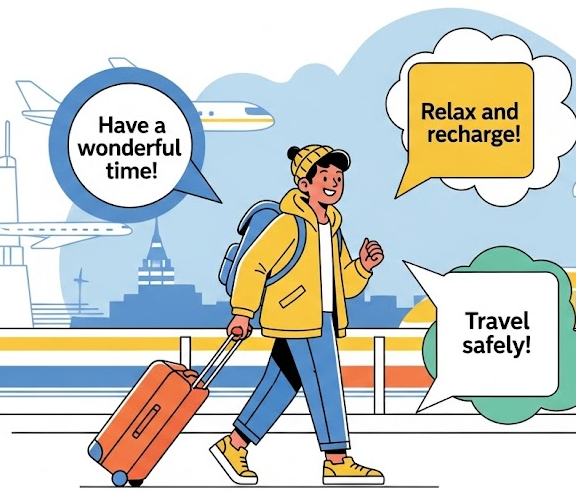
A common structure involves an imperative verb (e.g., “Have,” “Take,” “Make”) followed by a noun phrase describing the desired experience (e.g., “a wonderful time,” “care,” “the most of”). This structure is direct and conveys a clear wish for the recipient’s enjoyment or well-being.
For example, “Have a great trip!” follows this structure.
Another structure uses subjunctive mood or conditional clauses to express hopes or desires. For example, “I hope you have a relaxing vacation” uses “I hope” followed by a clause in the subjunctive mood.
Similarly, “Wishing you a fantastic getaway” uses a present participle (“Wishing”) to introduce the sentiment.
Finally, some expressions incorporate idiomatic language or colloquialisms, adding a more informal and personal touch. These often require a deeper understanding of cultural context and may not be appropriate in all situations.
Types and Categories of Vacation Wishes
Vacation wishes can be broadly categorized based on the specific sentiment they convey. Understanding these categories allows you to choose the most appropriate expression for the situation.
General Well Wishes
These are broad expressions of goodwill suitable for most situations. They focus on wishing the person a positive overall experience without specifying any particular aspect of the vacation.
These are your go-to phrases when you want to be polite and wish someone well without knowing the specifics of their trip.
Specific Activities
These wishes are tailored to the activities the person is likely to engage in during their vacation. They show that you’ve paid attention to their plans and are genuinely interested in their experience.
For example, if someone is going skiing, you might wish them “Happy skiing!” or “Hope you hit the slopes!”
Safety and Well-being
These expressions emphasize the importance of safety and well-being during the trip. They are particularly appropriate when the person is traveling to a potentially dangerous location or engaging in risky activities.
These wishes express care and concern for the person’s welfare.
Relaxation and Rejuvenation
These wishes focus on the importance of rest and relaxation during the vacation. They are suitable for people who are stressed or overworked and need a break.
These wishes are especially thoughtful for those who need to unwind and recharge.
Safe Return Wishes
These expressions focus on wishing the person a safe journey home after their vacation. They are a thoughtful way to conclude the conversation and show that you care about their well-being until the very end.
These are often used at the very end of your conversation, just before they leave.
Examples of Alternative Vacation Wishes
The following tables provide a comprehensive list of alternative vacation wishes, categorized by type. Each table includes a variety of expressions, ranging from formal to informal, to suit different contexts and relationships.
General Well Wishes Examples
This table showcases various general well wishes that you can use to express your goodwill for someone’s vacation. These are versatile phrases suitable for a variety of contexts.
| Expression | Context/Formality |
|---|---|
| Have a wonderful time! | General/Informal |
| Have a great trip! | General/Informal |
| Enjoy your break! | General/Informal |
| Wishing you a fantastic getaway! | General/Slightly Formal |
| Hope you have a memorable vacation! | General/Neutral |
| I hope you have a fantastic time! | General/Neutral |
| Have a blast! | Informal/Friendly |
| Have the time of your life! | Informal/Enthusiastic |
| May your vacation be filled with joy! | Formal/Sincere |
| Wishing you all the best on your trip! | Formal/Polite |
| Bon voyage! | Formal/Traditional |
| Have a lovely holiday! | General/British English |
| Hope you enjoy every minute! | General/Enthusiastic |
| Wishing you sunshine and happiness! | General/Poetic |
| May your vacation be everything you hoped for! | General/Sincere |
| Have a truly amazing vacation! | General/Enthusiastic |
| I hope your vacation is everything you imagined! | General/Thoughtful |
| Have a rejuvenating vacation! | General/Wellness-focused |
| Wishing you a well-deserved break! | General/Appreciative |
| Have a swell vacation! | Informal/Vintage |
| Enjoy your time off! | General/Simple |
| Make the most of your vacation! | General/Encouraging |
| Here’s to a wonderful vacation! | General/Celebratory |
| Have a super vacation! | Informal/Enthusiastic |
| I’m sure you’ll have a great time! | General/Confident |
| Go and have some fun! | Informal/Encouraging |
Specific Activities Examples
This table provides examples of vacation wishes tailored to specific activities. These are great for showing you’re aware of the person’s plans and are interested in their experiences.
| Expression | Context |
|---|---|
| Happy skiing! | If they are going skiing |
| Enjoy the beach! | If they are going to the beach |
| Have fun exploring! | If they are going sightseeing |
| Hope you catch some waves! | If they are going surfing |
| Enjoy the hiking trails! | If they are going hiking |
| Have a great time camping! | If they are going camping |
| Enjoy the local cuisine! | If they are a foodie |
| Hope you see some amazing wildlife! | If they are going on a safari |
| Have fun learning about the history! | If they are visiting historical sites |
| Enjoy the nightlife! | If they are planning to party |
| May your golf game be strong! | If they are going golfing |
| Have a fantastic time diving! | If they are going scuba diving |
| Enjoy the music scene! | If they are attending concerts |
| Hope you get some amazing photos! | If they enjoy photography |
| Have a wonderful time wine tasting! | If they are visiting vineyards |
| Enjoy the art galleries! | If they are visiting art galleries |
| Have fun at the theme park! | If they are going to a theme park |
| Hope you find some great souvenirs! | If they enjoy shopping |
| Enjoy the museums! | If they are visiting museums |
| Have a blast at the festival! | If they are attending a festival |
| Hope you conquer that mountain! | If they are going mountain climbing |
| Enjoy the spa treatments! | If they are going to a spa |
| Have a relaxing time fishing! | If they are going fishing |
| Hope you find some hidden gems! | If they are exploring new places |
| Enjoy the boat tour! | If they are going on a boat tour |
Safety and Well-being Examples
This table presents expressions that focus on safety and well-being during the vacation. Use these when the person is traveling to potentially risky locations or engaging in dangerous activities.
| Expression | Context |
|---|---|
| Travel safely! | General/All situations |
| Have a safe trip! | General/All situations |
| Take care of yourself! | General/All situations |
| Stay safe out there! | General/All situations |
| Be careful! | General/All situations |
| Wishing you a safe journey! | Formal/All situations |
| Look after yourself! | General/British English |
| Keep well! | General/Formal |
| Drive safely! | If they are driving |
| Fly safe! | If they are flying |
| Stay hydrated! | If they are going somewhere hot |
| Protect yourself from the sun! | If they are going somewhere sunny |
| Be aware of your surroundings! | If they are traveling to an unfamiliar place |
| Keep your valuables safe! | If they are traveling to a touristy area |
| Let someone know your itinerary! | If they are traveling alone |
| Be mindful of local customs! | If they are traveling to a different culture |
| Don’t forget your travel insurance! | General/Practical |
| Stay healthy! | General/All situations |
| Wishing you good health throughout your trip! | Formal/Sincere |
| Be cautious and have fun! | General/Balanced |
Relaxation and Rejuvenation Examples
This table offers expressions that emphasize rest and relaxation during the vacation. Use these for people who are stressed or overworked and need a break.
| Expression | Context |
|---|---|
| Relax and recharge! | General/Encouraging |
| Get some well-deserved rest! | General/Appreciative |
| Unwind and enjoy! | General/Encouraging |
| Take it easy! | Informal/Encouraging |
| Pamper yourself! | General/Self-care focused |
| Enjoy the downtime! | General/Relaxation focused |
| Rejuvenate your mind and body! | General/Wellness focused |
| Let your worries melt away! | General/Poetic |
| Have a stress-free vacation! | General/Desired outcome |
| Return feeling refreshed! | General/Hoping for rejuvenation |
| Breathe in the fresh air and relax! | If they are going to a natural setting |
| Disconnect and unwind! | If they need a digital detox |
| Enjoy the peace and quiet! | If they are going somewhere tranquil |
| Have a truly restful break! | General/Emphasizing rest |
| Come back feeling brand new! | Informal/Encouraging rejuvenation |
| Let go and enjoy the moment! | General/Mindfulness focused |
| Recharge your batteries! | Informal/Energetic |
| Sleep in and relax! | General/Encouraging rest |
| Indulge in some self-care! | General/Self-care focused |
| Just relax and be present! | General/Mindfulness focused |
Safe Return Wishes Examples
This table provides expressions that focus on wishing the person a safe journey home after their vacation. These wishes are a thoughtful way to conclude the conversation.
| Expression | Context |
|---|---|
| Have a safe journey home! | General/Formal |
| Safe travels back! | General/Informal |
| Return safely! | General/Direct |
| Wishing you a safe return! | General/Formal |
| Hope you get home safe! | General/Informal |
| See you when you get back! | General/Casual |
| Welcome back when you return! | General/Anticipatory |
| Travel safely on your way home! | General/Emphasizing safety |
| Look forward to hearing about your trip! | General/Expressing interest |
| Drive carefully on the way back! | If they are driving |
| Fly safely back home! | If they are flying |
| Hope your return journey is smooth! | General/Wishing for ease |
| Wishing you a smooth and safe journey back! | General/Formal and thorough |
| May your trip home be uneventful! | General/Wishing for a calm journey |
| Looking forward to your safe arrival! | General/Anticipatory and caring |
| Glad you had a good time, travel safely! | General/Acknowledging their enjoyment and wishing them well |
| Safe travels, can’t wait to hear all about it! | General/Informal and enthusiastic |
| Wishing you a peaceful journey back home! | General/Wishing for tranquility |
| Hope you arrive home rested and happy! | General/Wishing for well-being |
| Looking forward to your safe return and stories! | General/Expressing anticipation |
Usage Rules and Considerations
While many of these expressions are interchangeable, it’s important to consider the context and your relationship with the person. Formal situations may require more polite and respectful language, while informal settings allow for more casual and friendly expressions.
Cultural sensitivity is also crucial. Some expressions may be more common or appropriate in certain cultures than others.
Be mindful of potential cultural differences and adapt your language accordingly.
Consider the recipient’s personality and preferences. Some people may appreciate humorous or lighthearted expressions, while others may prefer more sincere and heartfelt wishes.
Tailor your language to suit their individual style.
Finally, pay attention to your tone of voice and body language. Your nonverbal cues can significantly impact the meaning and effectiveness of your message.
Ensure that your words and actions align to convey genuine care and goodwill.
Common Mistakes to Avoid
One common mistake is using overly casual or slang expressions in formal situations. This can come across as disrespectful or unprofessional.
For example, saying “Have a rad vacay!” to your boss would likely be inappropriate.
Another mistake is using generic expressions without considering the specific context of the vacation. This can make your wishes seem insincere or impersonal.
For example, simply saying “Have a good time!” without acknowledging their specific plans.
Misusing idioms or colloquialisms can also lead to confusion or miscommunication. Ensure you understand the meaning and proper usage of an expression before using it.
For example, using “Break a leg!” which is used for performances, would be odd when wishing someone a relaxing vacation.
Correct vs. Incorrect Examples:
| Incorrect | Correct | Explanation |
|---|---|---|
| “Have a rad vacay!” (to your boss) | “Have a wonderful vacation!” | “Rad vacay” is too informal for a professional setting. |
| “Have a good time!” (without knowing their plans) | “Enjoy exploring the historical sites!” (knowing they are visiting historical sites) | The corrected version is more specific and shows genuine interest. |
| “Break a leg!” (when wishing someone a relaxing vacation) | “Relax and recharge!” | “Break a leg” is an idiom for performances, not relaxation. |
| “Have a safe trip, don’t die!” | “Have a safe trip!” | Adding ‘don’t die’ is morbid and inappropriate, even if intended as a joke. |
| “Hope you have a good one!” (without any enthusiasm) | “Hope you have a fantastic vacation!” (said with a smile) | Enthusiasm and sincerity matter; the second option is better delivered with positive body language. |
Practice Exercises
Test your understanding of alternative vacation wishes with these practice exercises. Choose the most appropriate expression for each scenario.
Exercise 1: General Well Wishes
| Scenario | Possible Answers | Correct Answer |
|---|---|---|
| Your friend is going on a cruise. | a) Have a safe trip! b) Have a blast! c) Enjoy the buffet! | b) Have a blast! |
| Your colleague is taking a week off to relax. | a) Get some work done! b) Relax and recharge! c) Stay busy! | b) Relax and recharge! |
| Your neighbor is going on a road trip. | a) Drive safely! b) Get there fast! c) Speed safely! | a) Drive safely! |
| Your family member is going on a trip to Europe. | a) Have a lovely holiday! b) Get lost! c) Spend all your money! | a) Have a lovely holiday! |
| Your classmate is going to Disneyland. | a) Study hard! b) Have fun at the theme park! c) Be boring! | b) Have fun at the theme park! |
| Your hairdresser is going to Hawaii. | a) Have a terrible time! b) Wishing you sunshine and happiness! c) Stay inside! | b) Wishing you sunshine and happiness! |
| Your accountant is taking a week off. | a) Wishing you a well-deserved break! b) Do some overtime! c) Work hard! | a) Wishing you a well-deserved break! |
| Your dog is going to the kennel for a vacation. | a) Have a ruff time! b) Be a bad dog! c) Stay sad! | a) Have a ruff time! |
| Your teacher is going on a sabbatical. | a) Enjoy your time off! b) Grade papers! c) Miss us terribly! | a) Enjoy your time off! |
| Your barista is going to Italy. | a) Enjoy the local cuisine! b) Drink only water! c) Never eat pizza! | a) Enjoy the local cuisine! |
Exercise 2: Specific Activities & Safety
| Scenario | Possible Answers | Correct Answer |
|---|---|---|
| Your friend is going skiing in the Alps. | a) Happy skiing! b) Hope you break a leg! c) Stay inside! | a) Happy skiing! |
| Your colleague is going to the beach in Mexico. | a) Enjoy the beach! b) Avoid the sun! c) Stay pale! | a) Enjoy the beach! |
| Your neighbor is going hiking in the mountains. | a) Enjoy the hiking trails! b) Get lost! c) Fall off a cliff! | a) Enjoy the hiking trails! |
| Your family member is going scuba diving in the Great Barrier Reef. | a) Have a fantastic time diving! b) Drown! c) Avoid the water! | a) Have a fantastic time diving! |
| Your classmate is going camping in Yellowstone. | a) Have a great time camping! b) Get eaten by a bear! c) Forget your tent! | a) Have a great time camping! |
| Your hairdresser is going to Africa on a safari. | a) Hope you see some amazing wildlife! b) Get attacked by a lion! c) Stay inside! | a) Hope you see some amazing wildlife! |
| Your accountant is going hiking in the Amazon rainforest. | a) Stay hydrated! b) Get dehydrated! c) Forget to drink water! | a) Stay hydrated! |
| Your dog is going to a dog park. | a) Have fun and stay safe! b) Get bitten! c) Run away! | a) Have fun and stay safe! |
| Your teacher is going rock climbing in Yosemite. | a) Be careful! b) Fall off! c) Don’t use ropes! | a) Be careful! |
| Your barista is going backpacking across Europe. | a) Keep your valuables safe! b) Get robbed! c) Be careless! | a) Keep your valuables safe! |
Advanced Topics: Idiomatic Expressions
Idiomatic expressions add a layer of complexity and nuance to vacation wishes. These phrases often have a figurative meaning that differs from the literal interpretation of the words.
Mastering these expressions requires a deeper understanding of cultural context and linguistic subtleties.
For example, “Have a whale of a time!” is an idiom that means “Have a very enjoyable time.” The phrase doesn’t literally involve whales but rather uses the image of a large and impressive whale to convey the idea of a great experience.
Another example is “Hit the road!” which means “Start your journey.” This idiom is commonly used when someone is about to depart on a trip, particularly a road trip.
Using idiomatic expressions can make your vacation wishes more engaging and memorable, but it’s crucial to use them correctly and appropriately. Misusing idioms can lead to confusion or miscommunication, so it’s best to err on the side of caution if you’re unsure.
Frequently Asked Questions
Here are some frequently asked questions about alternative vacation wishes:
Q1: Is it always necessary to say something other than “Enjoy your vacation?”
A: No, “Enjoy your vacation” is perfectly acceptable in most situations. However, using alternative expressions can add variety, personalization, and cultural sensitivity to your communication, making it more engaging and impactful.
Q2: How do I choose the most appropriate expression for a given situation?
A: Consider the context, your relationship with the person, and their personality. Formal situations may require more polite language, while informal settings allow for more casual expressions.
Tailor your language to suit the individual.
Q3: Are there any expressions I should avoid using?
A: Avoid overly casual or slang expressions in formal situations. Also, avoid expressions that could be interpreted as negative or insensitive.
Be mindful of cultural differences and potential misinterpretations.
Q4: What if I don’t know the person’s vacation plans?
A: In this case, stick to general well wishes such as “Have a wonderful time!” or “Wishing you a fantastic getaway!” These expressions are suitable for most situations and convey positive sentiments without requiring specific knowledge of the trip.
Q5: How important is tone of voice and body language when expressing vacation wishes?
A: Tone of voice and body language are crucial. Your nonverbal cues can significantly impact the meaning and effectiveness of your message.
Ensure that your words and actions align to convey genuine care and goodwill. Smile, make eye contact, and speak with a warm and sincere tone.
Q6: Can I use humor when wishing someone a good vacation?
A: Yes, humor can be appropriate, but it depends on your relationship with the person and their sense of humor. Avoid jokes that could be offensive or insensitive.
Lighthearted and playful expressions can be a great way to add a personal touch.
Q7: Is it better to be specific or general when offering vacation wishes?
A: It depends on the context. If you know the person’s plans, being specific shows that you’ve paid attention and are genuinely interested in their experience.
If you don’t know their plans, general well wishes are perfectly fine.
Q8: What are some alternatives to “Have a safe trip!”?
A: Some alternatives include “Travel safely!”, “Wishing you a safe journey!”, “Take care of yourself!”, and “Stay safe out there!” The best choice depends on the context and your relationship with the person.
Conclusion
Mastering alternative ways to say “Enjoy your vacation” is a valuable skill that enhances your communication abilities and allows you to express genuine care and goodwill. By understanding the different types of vacation wishes, usage rules, and common mistakes, you can choose the most appropriate and impactful expression for any situation.
Remember to consider the context, your relationship with the person, and their personality when selecting your words. Pay attention to your tone of voice and body language to convey sincerity and enthusiasm.
With practice and attention to detail, you can confidently wish others a wonderful vacation in style.
Continue to expand your vocabulary and explore new expressions. The more options you have, the better equipped you’ll be to communicate effectively and build strong relationships.
Happy wishing!