Expressing a lack of knowledge is a common occurrence in everyday conversation. While “I don’t know” is perfectly acceptable, relying on it exclusively can make your speech sound repetitive and limit your ability to convey nuanced meanings.
This article explores a wide range of alternative phrases and expressions that allow you to indicate uncertainty, ignorance, or a lack of information in a more sophisticated and engaging manner. Mastering these alternatives will significantly enhance your communication skills, making you a more articulate and confident English speaker.
This guide is beneficial for English language learners of all levels, from beginners looking to expand their basic vocabulary to advanced speakers aiming to refine their expressive abilities.
By the end of this article, you will be equipped with a diverse collection of phrases to express “I don’t know,” understand their subtle differences, and confidently use them in various contexts.
Table of Contents
- Introduction
- What Does “I Don’t Know” Really Mean?
- Structural Breakdown of “I Don’t Know”
- Types and Categories of Alternatives
- Examples of Alternatives
- Usage Rules and Considerations
- Common Mistakes to Avoid
- Practice Exercises
- Advanced Topics
- Frequently Asked Questions
- Conclusion
What Does “I Don’t Know” Really Mean?
The phrase “I don’t know” is a fundamental expression in the English language used to indicate a lack of knowledge or information about a particular subject. It’s a simple yet versatile phrase that can be used in a wide range of contexts, from casual conversations to formal discussions.
However, its simplicity can sometimes limit its effectiveness in conveying the specific nuances of your uncertainty or lack of information.
At its core, “I don’t know” signifies that the speaker does not possess the answer to a question or is unaware of a particular fact or situation. It can also imply a lack of understanding or comprehension.
The phrase functions as a direct and honest admission of ignorance, preventing the speaker from providing inaccurate or misleading information. It can be used in response to direct questions, hypothetical scenarios, or general inquiries.
The phrase itself is a declarative statement, consisting of a subject (“I”), a negative auxiliary verb (“don’t”), and a main verb (“know”). The auxiliary verb “don’t” is a contraction of “do not,” indicating negation.
The verb “know” signifies the possession of knowledge or information. Thus, the phrase literally translates to “I do not possess the knowledge” or “I am not aware.”
Structural Breakdown of “I Don’t Know”
Understanding the structure of “I don’t know” is crucial for appreciating its simplicity and the possibilities for creating alternative expressions. The phrase follows a basic subject-verb-object structure, although the “object” in this case is implied rather than explicitly stated.
Here’s a breakdown:
- Subject: I – The person speaking.
- Auxiliary Verb: do – Used to form the negative.
- Negative Particle: not – Indicates negation (contracted to “n’t”).
- Main Verb: know – Signifies possession of knowledge.
The contraction “don’t” is a common feature of informal English. In more formal settings, you might use the full form, “do not know,” although it’s generally considered less natural in everyday conversation.
The tense of the verb “know” is present simple, indicating a current state of not knowing.
Alternatives to “I don’t know” often involve replacing the verb “know” with synonyms or using different grammatical structures to express the same basic meaning. For example, you could replace “know” with “have any idea,” “am certain,” or “can say for sure,” each of which carries a slightly different nuance.
Types and Categories of Alternatives
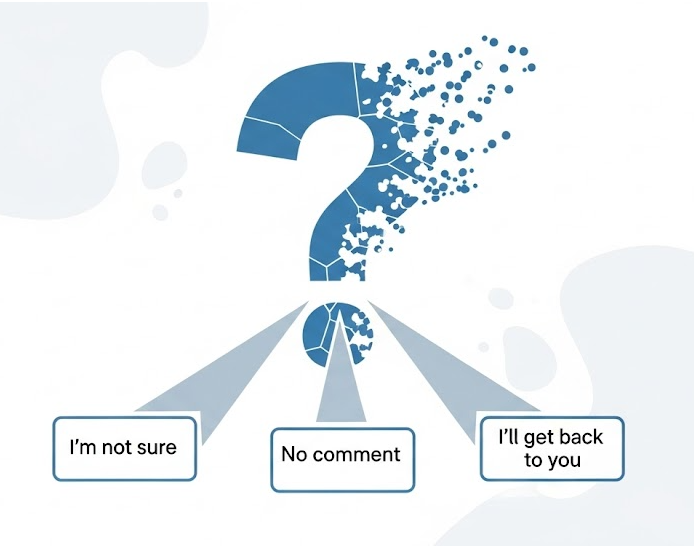
There are many ways to express a lack of knowledge beyond simply saying “I don’t know.” These alternatives can be categorized based on the specific nuance they convey. Understanding these categories will help you choose the most appropriate phrase for a given situation.
Expressions of Uncertainty
These phrases suggest that you are not completely sure about something, even if you have some information or a general idea. They imply a degree of doubt or hesitation.
Admissions of Ignorance
These phrases are more direct admissions that you have no knowledge or information about a particular topic. They are suitable when you are completely clueless or uninformed.
Expressions of Speculation or Guessing
These phrases indicate that you are offering a guess or making an assumption, but you are not certain about the accuracy of your statement. They often involve hedging or qualifying language.
Indicating a Lack of Specific Information
These phrases specify that you lack a particular piece of information, even if you have some general knowledge about the subject. They are useful when you need to be precise about what you don’t know.
Evasive or Indirect Responses
These phrases are used when you want to avoid answering a question directly, either because you don’t want to reveal your ignorance or because you have other reasons for being evasive. They often involve deflecting the question or changing the subject.
Examples of Alternatives
This section provides a comprehensive list of alternative phrases for “I don’t know,” categorized according to the types discussed above. Each category includes a variety of options, ranging from informal to formal, and from direct to indirect.
Uncertainty Examples
These examples illustrate phrases that express uncertainty or doubt. They are suitable when you have some information but are not completely sure.
The following table provides a list of phrases to express uncertainty, alongside example sentences demonstrating their usage.
| Phrase | Example Sentence |
|---|---|
| I’m not sure. | “Is this the right way to go?” “I’m not sure; let’s check the map.” |
| I’m not certain. | “Are you coming to the party?” “I’m not certain yet; it depends on my schedule.” |
| I have no idea. | “Where did I leave my keys?” “I have no idea; you had them last.” |
| I haven’t a clue. | “What’s the answer to this riddle?” “I haven’t a clue; it’s too difficult.” |
| I’m not really sure about that. | “Do you think this plan will work?” “I’m not really sure about that; there are some potential problems.” |
| I’m not entirely sure. | “Is he the right person for the job?” “I’m not entirely sure; we need to consider other candidates.” |
| I couldn’t say for sure. | “Will it rain tomorrow?” “I couldn’t say for sure; the weather forecast is unreliable.” |
| It’s hard to say. | “How long will this project take?” “It’s hard to say; it depends on many factors.” |
| I’m not in a position to say. | “Can you tell me about the company’s future plans?” “I’m not in a position to say; that information is confidential.” |
| I can’t say for certain. | “Will they accept our offer?” “I can’t say for certain; it depends on their priorities.” |
| That’s a good question. | “Why did they make that decision?” “That’s a good question; I’m not sure of the answer myself.” |
| Beats me. | “Where did he go?” “Beats me; he just disappeared.” |
| Your guess is as good as mine. | “What’s going to happen next?” “Your guess is as good as mine; anything could happen.” |
| Who knows? | “Will we ever find a solution to this problem?” “Who knows? Maybe someday.” |
| I’m not the best person to ask. | “Can you help me with this technical issue?” “I’m not the best person to ask; you should talk to the IT department.” |
| I’m not qualified to answer that. | “What are the long-term economic implications?” “I’m not qualified to answer that; you should consult an economist.” |
| I’m not privy to that information. | “What’s the secret ingredient in this recipe?” “I’m not privy to that information; it’s a closely guarded secret.” |
| That’s beyond my knowledge. | “Can you explain quantum physics?” “That’s beyond my knowledge; I’m not a physicist.” |
| I have no idea whatsoever. | “What is the meaning of life?” “I have no idea whatsoever; it’s a philosophical question.” |
| I’m drawing a blank. | “What was the name of that movie?” “I’m drawing a blank; I can’t remember.” |
| I’m at a loss. | “How do we solve this problem?” “I’m at a loss; I’ve tried everything.” |
| Search me. | “Where did I put my glasses?” “Search me; I haven’t seen them.” |
| I can’t recall. | “What time did the meeting start?” “I can’t recall; check your calendar.” |
Ignorance Examples
These phrases are direct admissions of ignorance. They are suitable when you have absolutely no knowledge of the subject.
The following table provides a list of phrases to admit ignorance, alongside example sentences demonstrating their usage.
| Phrase | Example Sentence |
|---|---|
| I have no clue. | “What’s the capital of Kyrgyzstan?” “I have no clue; my geography is terrible.” |
| I don’t have the faintest idea. | “How does this machine work?” “I don’t have the faintest idea; I’m not an engineer.” |
| I haven’t the slightest idea. | “What are they talking about?” “I haven’t the slightest idea; it sounds like gibberish.” |
| I’m completely in the dark. | “What’s going on with this project?” “I’m completely in the dark; nobody has told me anything.” |
| It’s all Greek to me. | “Can you explain this computer code?” “It’s all Greek to me; I don’t understand programming.” |
| I’m totally ignorant about that. | “What’s the theory of relativity?” “I’m totally ignorant about that; I never studied physics.” |
| I know nothing about that. | “What’s the latest news in the stock market?” “I know nothing about that; I don’t follow the stock market.” |
| That’s news to me. | “Did you hear they’re closing the factory?” “That’s news to me; I had no idea.” |
| I’m not familiar with that. | “Have you read this book?” “I’m not familiar with that; I haven’t heard of it.” |
| That’s outside my area of expertise. | “Can you advise me on this legal matter?” “That’s outside my area of expertise; you should consult a lawyer.” |
| I’m not up to speed on that. | “What’s the current status of the negotiations?” “I’m not up to speed on that; I haven’t been following them closely.” |
| I’m not informed about that. | “What’s the latest policy change?” “I’m not informed about that; I need to read the memo.” |
| I’m unaware of that. | “Did you know the meeting was canceled?” “I’m unaware of that; nobody told me.” |
| I wasn’t aware of that. | “Apparently, there’s a dress code.” “I wasn’t aware of that; thanks for letting me know.” |
| I have no prior knowledge of that. | “Can you explain this historical event?” “I have no prior knowledge of that; I need to do some research.” |
| That’s a mystery to me. | “Why did he quit his job?” “That’s a mystery to me; he seemed happy here.” |
| I’m clueless. | “How do you use this software?” “I’m clueless; can you show me?” |
| I’m at a complete loss. | “What’s the solution to this puzzle?” “I’m at a complete loss; I can’t figure it out.” |
| It escapes me. | “What’s her name?” “It escapes me; I can’t remember.” |
| I’m not the right person to ask about that. | “Can you explain the company’s financial strategy?” “I’m not the right person to ask about that; you should talk to the CFO.” |
| That’s not something I know about. | “What’s the difference between these two models?” “That’s not something I know about; I’m not a product specialist.” |
| I’m not versed in that area. | “Can you translate this document?” “I’m not versed in that area; I don’t speak that language.” |
| I’m not sure I can answer that. | “What is the meaning of life?” “I’m not sure I can answer that; that’s a philosophical question.” |
Speculation Examples
These phrases indicate that you are offering a guess or making an assumption, but you are not certain. They often involve hedging language.
The following table provides a list of phrases to express speculation, alongside example sentences demonstrating their usage.
| Phrase | Example Sentence |
|---|---|
| I can only guess. | “Why did he leave so abruptly?” “I can only guess; maybe he had a family emergency.” |
| I’m just speculating, but… | “What’s going to happen with the company?” “I’m just speculating, but I think they might be considering a merger.” |
| My best guess is… | “How long will it take to finish this project?” “My best guess is about two weeks.” |
| If I had to guess, I’d say… | “Who’s going to win the election?” “If I had to guess, I’d say the incumbent.” |
| I’m only hazarding a guess, but… | “What’s the reason for the delay?” “I’m only hazarding a guess, but I suspect it’s due to technical difficulties.” |
| It’s anyone’s guess. | “When will the pandemic end?” “It’s anyone’s guess; nobody knows for sure.” |
| I wouldn’t like to say. | “Do you think he’ll get the job?” “I wouldn’t like to say; it’s a very competitive field.” |
| I’m not at liberty to say. | “Can you tell me about the new product?” “I’m not at liberty to say; it’s confidential information.” |
| Perhaps… | “Will it rain tomorrow?” “Perhaps; the forecast is uncertain.” |
| Maybe… | “Is he coming to the party?” “Maybe; I haven’t heard from him.” |
| Possibly… | “Could this be the solution?” “Possibly; it’s worth trying.” |
| It could be… | “Why is the traffic so bad?” “It could be an accident.” |
| It might be… | “What’s causing the problem?” “It might be a software bug.” |
| I reckon… | “How much will it cost?” “I reckon it will cost around $100.” |
| I suppose… | “Will they agree to our terms?” “I suppose so; they seem motivated to reach a deal.” |
| Presumably… | “Is he still working on the project?” “Presumably; I haven’t heard otherwise.” |
| Likely… | “Will the meeting be productive?” “Likely; everyone is well-prepared.” |
| Probably… | “Will they be on time?” “Probably; they’re usually punctual.” |
| I imagine… | “What will the weather be like tomorrow?” “I imagine it will be sunny.” |
| I’m guessing… | “How much does that cost?” “I’m guessing around 50 dollars.” |
Lack of Information Examples
These phrases specify that you lack a particular piece of information, even if you have some general knowledge.
The following table provides a list of phrases to indicate a lack of specific information, alongside example sentences demonstrating their usage.
| Phrase | Example Sentence |
|---|---|
| I don’t have the details. | “What time does the meeting start?” “I don’t have the details; check with the secretary.” |
| I’m not sure of the exact number. | “How many employees work here?” “I’m not sure of the exact number; it’s around 500.” |
| I can’t remember the specific date. | “When did that event happen?” “I can’t remember the specific date; it was sometime in 2010.” |
| I don’t know the full story. | “What really happened between them?” “I don’t know the full story; I only heard rumors.” |
| I don’t have all the facts. | “Can you give me a complete overview?” “I don’t have all the facts; I’m still gathering information.” |
| I’m not sure about the specifics. | “What are the exact terms of the agreement?” “I’m not sure about the specifics; you’ll have to read the contract.” |
| I don’t have that information at hand. | “What’s his phone number?” “I don’t have that information at hand; I’ll have to look it up.” |
| I’d have to look that up. | “What’s the population of Brazil?” “I’d have to look that up; I don’t know it off the top of my head.” |
| I’ll have to check. | “Is the office open on Saturday?” “I’ll have to check; I’m not sure of the weekend hours.” |
| I’m not at my computer right now. | “Can you send me the file?” “I’m not at my computer right now; I’ll send it when I get back.” |
| I don’t have access to that. | “Can you see the confidential report?” “I don’t have access to that; it’s restricted to senior management.” |
| I can’t give you that information. | “What’s his salary?” “I can’t give you that information; it’s confidential.” |
| That’s confidential. | “What’s the company’s profit margin?” “That’s confidential; I can’t disclose that.” |
| I’m not authorized to say. | “What’s the project’s budget?” “I’m not authorized to say; you’ll have to ask the project manager.” |
| I’m not supposed to know that. | “What are they planning for the future?” “I’m not supposed to know that; it’s a secret.” |
| That’s need-to-know information. | “Why were those employees fired?” “That’s need-to-know information; you don’t need to know.” |
| I’m not at liberty to divulge that information. | “What’s the secret ingredient?” “I’m not at liberty to divulge that information; it’s a trade secret.” |
| I’m unable to disclose that. | “What’s the code to the safe?” “I’m unable to disclose that; only authorized personnel have access.” |
| That’s classified. | “What’s the government’s plan?” “That’s classified; I can’t share it with you.” |
| Let me check that for you. | “What is the arrival time of the flight?” “Let me check that for you.” |
Evasive Examples
These phrases are used when you want to avoid answering a question directly, often to deflect or change the subject.
The following table provides a list of evasive phrases, alongside example sentences demonstrating their usage.
| Phrase | Example Sentence |
|---|---|
| I’d rather not say. | “How much money do you make?” “I’d rather not say; it’s a personal matter.” |
| That’s a loaded question. | “Are you happy with your job?” “That’s a loaded question; there are many factors to consider.” |
| Let’s just say… | “Was the meeting successful?” “Let’s just say there’s room for improvement.” |
| No comment. | “Did you commit the crime?” “No comment; I’m invoking my right to remain silent.” |
| I’m not going to answer that. | “Are you planning to resign?” “I’m not going to answer that; it’s a private decision.” |
| I’d prefer not to discuss that. | “What’s your opinion on this controversial topic?” “I’d prefer not to discuss that; it’s too sensitive.” |
| That’s beside the point. | “Why are you asking me this?” “That’s beside the point; the important thing is…” |
| Let’s move on. | “What happened last night?” “Let’s move on; it’s in the past.” |
| That’s not important right now. | “What about this other issue?” “That’s not important right now; let’s focus on the main problem.” |
| I’ll get back to you on that. | “Can you answer this question?” “I’ll get back to you on that; I need to think about it.” |
| I’ll look into it. | “Can you solve this problem?” “I’ll look into it; I’ll see what I can do.” |
| That’s something to consider. | “Should we invest in this company?” “That’s something to consider; we need to do more research.” |
| That’s a matter of opinion. | “Is this the best solution?” “That’s a matter of opinion; others may disagree.” |
| It depends. | “Will this work?” “It depends; it depends on many factors.” |
| That’s a complex issue. | “Why is the economy struggling?” “That’s a complex issue; there are many contributing factors.” |
| I’m not at liberty to say at this time. | “What’s the company’s next big move?” “I’m not at liberty to say at this time.” |
| Time will tell. | “Will this new strategy be successful?” “Time will tell.” |
| We’ll see. | “Will they accept our offer?” “We’ll see.” |
| I’m not sure I’m the right person to ask. | “What are the company’s long-term plans?” “I’m not sure I’m the right person to ask.” |
| Why do you ask? | “Do you know about the secret project?” “Why do you ask?” |
Usage Rules and Considerations
While the alternatives to “I don’t know” offer a richer and more nuanced way to express a lack of knowledge, it’s important to use them appropriately. Consider the context, your relationship with the person you’re speaking to, and the specific meaning you want to convey.
- Formality: Some phrases are more formal than others. “I’m not in a position to say” is more formal than “Beats me.” Choose phrases that are appropriate for the situation.
- Directness: Some phrases are more direct than others. “I have no clue” is more direct than “I’m not sure.” Consider whether you want to be blunt or more subtle.
- Specificity: Some phrases indicate a lack of specific information, while others indicate a general lack of knowledge. Choose phrases that accurately reflect your situation.
- Intonation: Your tone of voice can significantly affect the meaning of a phrase. A sarcastic tone can make even a polite phrase sound rude.
- Body Language: Your body language should match your words. If you say “I’m not sure” while shrugging your shoulders, you’ll convey a stronger sense of uncertainty.
Knowing when to use “I don’t know” is also important. In some situations, it’s the most honest and appropriate response.
Don’t try to use a fancy alternative if it’s not genuine or if it might be misinterpreted.
Common Mistakes to Avoid
Even with a good understanding of the alternatives to “I don’t know,” learners can sometimes make mistakes. Here are some common errors to avoid:
- Using formal phrases in informal settings: Saying “I’m not in a position to say” to a friend is overly formal and might sound pretentious.
- Using informal phrases in formal settings: Saying “Beats me” to your boss is disrespectful and unprofessional.
- Using evasive phrases when a direct answer is expected: If someone asks you a straightforward question, avoiding the answer can seem suspicious or dishonest.
- Misinterpreting the meaning of a phrase: Make sure you understand the nuances of each phrase before using it.
- Overusing the same alternative: Just like overusing “I don’t know,” relying on the same alternative can make your speech sound repetitive.
Here are some examples of common mistakes, along with corrections:
| Incorrect | Correct | Explanation |
|---|---|---|
| “I’m not at liberty to say, dude.” | “I’m not at liberty to say.” | “Dude” is too informal for this phrase. |
| “I have no idea, sir!” (said sarcastically) | “I don’t know, sir.” | Sarcasm can make a polite phrase sound rude. |
| “It escapes me the capital of France.” | “The capital of France escapes me.” OR “I can’t remember the capital of France.” | Incorrect word order. |
| “I’m not knowing.” | “I don’t know.” | Incorrect verb tense. |
Practice Exercises
Test your understanding of the alternatives to “I don’t know” with these practice exercises.
Exercise 1: Choose the best alternative.
For each question, choose the best alternative to “I don’t know” from the options provided.
| Question | Options | Answer |
|---|---|---|
| “What’s the answer to this math problem?” | a) Beats me. b) I’m not sure of the exact number. c) I’m not at liberty to say. | a) Beats me. |
| “What’s the company’s secret strategy?” | a) It’s anyone’s guess. b) I’m not at liberty to say. c) I’m not sure. | b) I’m not at liberty to say. |
| “How many people attended the conference?” | a) I’ll get back to you on that. b) I’m not sure of the exact number. c) Who knows? | b) I’m not sure of the exact number. |
| “Will it rain tomorrow?” | a) I have no clue. b) I’m just speculating, but… c) It’s hard to say. | c) It’s hard to say. |
| “Why did he quit his job?” | a) That’s a mystery to me. b) I’m not sure of the specifics. c) I’m not going to answer that. | a) That’s a mystery to me. |
| “Are you planning to run for office?” | a) No comment. b) I’m not informed about that. c) I’m not qualified to answer that. | a) No comment. |
| “What’s the capital of Australia?” | a) I’m drawing a blank. b) Let me check that for you. c) I’m not up to speed on that. | a) I’m drawing a blank. |
| “How does this complicated machine work?” | a) It’s all Greek to me. b) I’m not sure. c) That’s beyond my knowledge. | a) It’s all Greek to me. |
| “What do you think will happen next year in politics?” | a) I am not sure. b) I’m just speculating but… c)I’m not qualified to answer that. | b) I’m just speculating but… |
Exercise 2: Fill in the blank.
Complete each sentence with an appropriate alternative to “I don’t know.”
- “What’s the answer to question number 5?” “_____________, I haven’t even looked at it yet.”
- “Do you think they’ll approve our proposal?” “_____________; it depends on their budget.”
- “What’s the secret ingredient in this sauce?” “_____________; it’s a closely guarded recipe.”
- “How many employees does the company have?” “_____________, but I can find out for you.”
- “Why is he always late?” “_____________; maybe he has a long commute.”
Answers:
- I have no idea
- It depends
- I’m not at liberty to say
- I’m not sure of the exact number
- I’m just speculating
Advanced Topics
For advanced learners, consider these more nuanced aspects of expressing a lack of knowledge:
- Combining phrases: You can combine phrases to create more complex and nuanced expressions. For example, “I’m not sure of the details, but my best guess is…”
- Using rhetorical questions: You can use rhetorical questions to express uncertainty or ignorance. For example, “Who knows what the future holds?”
- Implying a lack of knowledge: You can imply that you don’t know something without explicitly saying it. For example, “That’s an interesting question” (implying that you don’t have an answer).
- Cultural differences: The appropriate way to express a lack of knowledge can vary depending on the culture. In some cultures, it’s considered rude to admit ignorance, while in others, it’s seen as a sign of honesty.
- Using humor: In some situations, you can use humor to deflect a question you don’t want to answer. However, be careful not to offend anyone.
Frequently Asked Questions
Is it ever okay to just say “I don’t know”?
Yes, absolutely! “I don’t know” is a perfectly acceptable and honest response in many situations.
It’s especially appropriate when you genuinely have no information or when using an alternative might seem pretentious or evasive.
How can I avoid saying “I don’t know” too often?
The key is to be prepared and proactive. If you anticipate being asked about a particular topic, do some research beforehand.
Also, try to expand your general knowledge and stay informed about current events.
What if I’m asked a question that I should know the answer to?
Admit that you should know the answer and apologize for your lack of knowledge. For example, you could say, “I should know that, but I’m drawing a blank right now.
I’ll look it up and get back to you.”
How can I politely say “I don’t know” without sounding stupid?
Use phrases that indicate a lack of specific information or that deflect the question in a respectful way. For example, “I don’t have the details at hand, but I can find out for you” or “That’s a complex issue, and I’d need more information to give you a proper answer.”
Are there any situations where I should never say “I don’t know”?
In certain professional contexts, such as when you’re expected to be an expert, repeatedly saying “I don’t know” can undermine your credibility. In these situations, try to offer related information or explain why you don’t have the answer.
Conclusion
Mastering the art of expressing a lack of knowledge is a valuable skill that can enhance your communication abilities in various settings. By expanding your vocabulary with the alternatives presented in this article, you can convey uncertainty, ignorance, or a lack of information in a more nuanced and engaging manner.
Remember to consider the context, your relationship with the person you’re speaking to, and the specific meaning you want to convey. With practice and attention to detail, you can confidently navigate conversations and express yourself effectively, even when you don’t have all the answers.