
Adjectives are the building blocks of descriptive language, adding depth and detail to our sentences. When discussing China, a country rich in history, culture, and diversity, a wide array of adjectives can help paint a vivid and accurate picture.
This article will explore various types of adjectives used to describe China, providing examples, usage rules, and practice exercises to enhance your understanding and fluency. Whether you are a student, a traveler, or simply interested in learning more about China, this guide will equip you with the tools to express yourself effectively and precisely.
By mastering the use of adjectives related to China, you will not only improve your English grammar but also gain a deeper appreciation for the nuances of Chinese culture and society. This article is designed for English language learners of all levels, from beginners to advanced speakers, offering a structured and comprehensive approach to mastering this important aspect of descriptive language.
Table of Contents
- Introduction
- What are Adjectives?
- Structural Breakdown of Adjectives
- Types of Adjectives for Describing China
- Examples of Adjectives Describing China
- Usage Rules for Adjectives
- Common Mistakes with Adjectives
- Practice Exercises
- Advanced Topics: Comparative and Superlative Adjectives
- Frequently Asked Questions (FAQ)
- Conclusion
What are Adjectives?
An adjective is a word that modifies or describes a noun or pronoun. It provides more information about the noun, such as its qualities, characteristics, or attributes.
Adjectives answer questions like “What kind?”, “Which one?”, “How many?”, or “How much?” They play a crucial role in making our language more descriptive and engaging. Without adjectives, our sentences would be bland and lack detail.
Adjectives can be classified based on their function and the type of information they provide. Some common types include descriptive adjectives (e.g., beautiful, large), quantitative adjectives (e.g., few, many), demonstrative adjectives (e.g., this, that), and possessive adjectives (e.g., my, your). Understanding these different types is essential for using adjectives correctly and effectively.
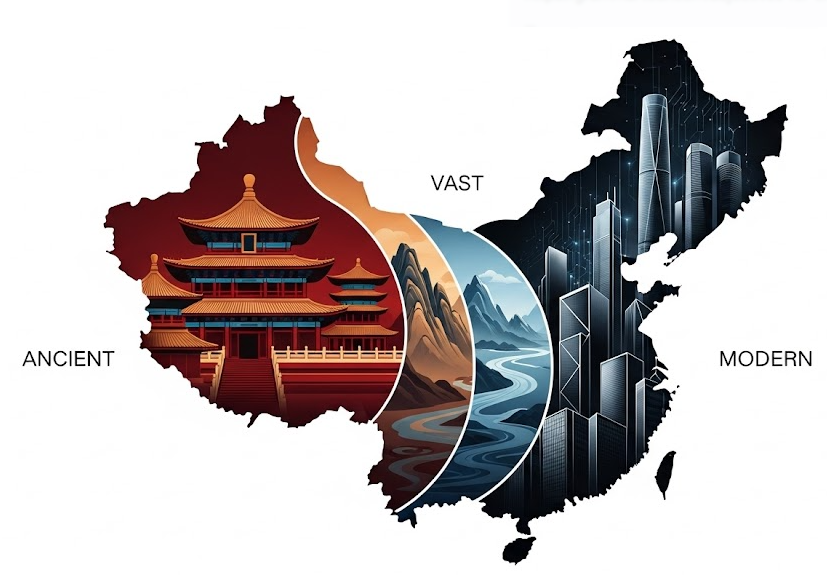
In the context of describing China, adjectives are particularly important for conveying the country’s vastness, its rich cultural heritage, and its complex social and economic landscape. By using a variety of adjectives, we can create a nuanced and accurate portrayal of China.
Structural Breakdown of Adjectives
Adjectives typically precede the noun they modify (attributive position), as in “a beautiful landscape.” However, they can also follow a linking verb (predicative position), such as be, seem, become, as in “The landscape is beautiful.” This structural flexibility allows adjectives to be used in various ways to enhance sentence construction.
Adjectives can also be modified by adverbs, which add further detail to the adjective. For example, in the phrase “a very ancient city,” the adverb “very” intensifies the adjective “ancient.” Understanding how adverbs and adjectives interact can significantly improve the precision of your descriptions.
Furthermore, adjectives can be formed from nouns or verbs by adding suffixes such as –al, –able, –ful, –ous, –ive, and –ic. For example, the noun “culture” can be transformed into the adjective “cultural,” and the verb “create” can become the adjective “creative.” This process, known as derivation, expands the range of adjectives available for describing various aspects of China.
Types of Adjectives for Describing China
When describing China, different types of adjectives can be used to highlight specific aspects of the country. Below are some key categories of adjectives, along with examples.
Descriptive Adjectives
Descriptive adjectives provide details about the qualities or characteristics of a noun. They help create a vivid image in the reader’s mind.
When describing China, these adjectives can relate to its scenery, people, or culture.
For example, you could describe the Great Wall as majestic or the Forbidden City as grand. The Yangtze River could be described as long and winding, while the Terracotta Army could be called ancient and impressive.
National Adjectives
National adjectives refer to the nationality or origin of something. In the case of China, the most common national adjective is “Chinese.” However, other adjectives can be used to describe specific regions or ethnic groups within China.
For example, you might refer to “Chinese cuisine” or “Chinese art.” You could also use more specific adjectives like “Tibetan monasteries” or “Cantonese dialects” to highlight regional variations.
Cultural Adjectives
Cultural adjectives describe aspects related to China’s culture, traditions, and customs. These adjectives are essential for conveying the richness and diversity of Chinese culture.
Examples include “traditional Chinese medicine,” “Confucian values,” and “calligraphic art.” These adjectives help to contextualize and enrich descriptions of Chinese cultural practices.
Geographical Adjectives
Geographical adjectives relate to the physical features, regions, and landscapes of China. Given China’s vast and diverse geography, these adjectives are particularly useful for describing its natural beauty.
You might describe the Gobi Desert as “arid” or the Himalayas as “mountainous.” The coastal regions could be described as “tropical” or “temperate,” depending on the specific location.
Historical Adjectives
Historical adjectives describe events, periods, or figures from China’s past. These adjectives are crucial for understanding China’s long and complex history.
Examples include “ancient dynasties,” “imperial palaces,” and “revolutionary movements.” These adjectives provide historical context and depth to descriptions of China.
Economic Adjectives
Economic adjectives describe aspects related to China’s economy, industry, and trade. These adjectives are particularly relevant in the context of China’s rapid economic growth and global influence.
You might describe China as an “emerging market,” a “manufacturing hub,” or a “global economic power.” These adjectives reflect China’s current economic status and its role in the world economy.
Examples of Adjectives Describing China
This section provides a detailed list of adjectives categorized by their type, along with example sentences to illustrate their usage. Understanding how to use these adjectives in context is crucial for effective communication.
The following tables provide examples of various adjectives used to describe China, categorized by type. Each table includes at least 20 examples to provide a comprehensive overview.
Table 1: Descriptive Adjectives for China
| Adjective | Example Sentence |
|---|---|
| Vast | China is a vast country with diverse landscapes. |
| Ancient | The ancient history of China is fascinating. |
| Beautiful | The beautiful scenery in Guilin attracts many tourists. |
| Bustling | Shanghai is a bustling city with a vibrant economy. |
| Crowded | The markets in Beijing are often crowded with shoppers. |
| Diverse | China’s culture is incredibly diverse, with many ethnic groups. |
| Exotic | The exotic flavors of Sichuan cuisine are well-known. |
| Fertile | The fertile plains of the Yangtze River Delta are ideal for agriculture. |
| Grand | The Forbidden City is a grand example of imperial architecture. |
| Historic | Xi’an is a historic city, once the capital of China. |
| Impressive | The Great Wall is an impressive feat of engineering. |
| Lively | The nightlife in Hong Kong is lively and exciting. |
| Majestic | The mountains of Tibet are majestic and awe-inspiring. |
| Modern | Shenzhen is a modern city known for its technological innovation. |
| Picturesque | The picturesque villages in Yunnan province are a delight to visit. |
| Rich | China has a rich cultural heritage. |
| Scenic | The Three Gorges Dam area offers scenic views. |
| Sprawling | Beijing is a sprawling metropolis. |
| Traditional | Many people still practice traditional Chinese medicine. |
| Unique | The Terracotta Army is a unique archaeological find. |
| Vibrant | The art scene in China is incredibly vibrant. |
| Wonderful | Visiting China is a wonderful experience. |
| Dynamic | China’s economy is incredibly dynamic. |
| Authentic | Experiencing the local customs offers an authentic glimpse into Chinese life. |
| Charming | The old water towns are incredibly charming. |
Table 2: Cultural Adjectives for China
| Adjective | Example Sentence |
|---|---|
| Confucian | Confucian principles still influence Chinese society. |
| Taoist | Taoist philosophy emphasizes harmony with nature. |
| Buddhist | Many Buddhist temples can be found throughout China. |
| Calligraphic | Calligraphic art is highly valued in Chinese culture. |
| Culinary | China has a rich culinary tradition. |
| Filial | Filial piety is a core Confucian value. |
| Herbal | Herbal remedies are commonly used in traditional medicine. |
| Martial | Martial arts are a significant part of Chinese culture. |
| Operatic | Beijing Opera is a famous operatic tradition. |
| Patriotic | There is a strong sense of patriotic pride in China. |
| Ritualistic | Many Chinese festivals involve ritualistic practices. |
| Spiritual | Many Chinese people have a strong spiritual connection to nature. |
| Theatrical | Chinese opera is a theatrical art form. |
| Ancestral | Ancestral worship is an important part of Chinese tradition. |
| Ceremonial | Tea ceremonies are ceremonial events. |
| Folkloric | Chinese New Year is filled with folkloric traditions. |
| Hanfu | The Hanfu clothing is a revival of traditional dress. |
| Lunar | The Lunar New Year is a major celebration. |
| Mythological | Chinese dragons are mythological creatures. |
| Nomadic | Nomadic cultures exist in regions like Inner Mongolia. |
| Pagoda-style | The temple was built in a pagoda-style. |
| Qipao | The Qipao is a classic Chinese dress. |
| Silk-weaving | Silk-weaving is a traditional art form. |
| Tea-drinking | Tea-drinking culture is very important in China. |
| Yin-Yang | The Yin-Yang symbol represents balance. |
Table 3: Geographical and Historical Adjectives for China
| Adjective | Example Sentence |
|---|---|
| Coastal | Coastal cities like Shanghai are major economic hubs. |
| Mountainous | The mountainous regions of Tibet are sparsely populated. |
| Rural | Many rural areas still rely on agriculture. |
| Urban | Urban centers are experiencing rapid growth. |
| Western | The western regions of China are less developed. |
| Eastern | The eastern regions are heavily populated. |
| Northern | The northern areas have cold winters. |
| Southern | The southern areas have subtropical climates. |
| Ancient | The ancient Silk Road passed through China. |
| Imperial | The imperial dynasty ruled for centuries. |
| Medieval | Medieval Chinese history is full of significant events. |
| Modern | Modern Chinese history began in the 20th century. |
| Prehistoric | Prehistoric settlements have been found in China. |
| Revolutionary | The revolutionary period changed China drastically. |
| Ming | The Ming dynasty left a lasting legacy. |
| Qing | The Qing Dynasty was the last imperial dynasty of China. |
| Tang | Tang Dynasty poetry is famous. |
| Yuan | The Yuan dynasty was founded by Kublai Khan. |
| Song | The Song Dynasty was a golden age for art. |
| Neolithic | Neolithic cultures flourished in ancient China. |
| Eurasian | The Silk Road was a major Eurasian trade route. |
| Geopolitical | China plays a significant geopolitical role. |
| Hydrological | The hydrological system of the Yangtze River is important. |
| Isothermal | The isothermal zones affect agriculture. |
| Loess | The loess plateau is a unique geological feature. |
Usage Rules for Adjectives
Adjectives typically precede the noun they modify, but they can also follow linking verbs such as be, seem, appear, become, and look. Understanding this placement is crucial for constructing grammatically correct sentences. For example:
- Attributive Position: The ancient city is beautiful. (Adjective before the noun)
- Predicative Position: The city is ancient. (Adjective after the linking verb)
When using multiple adjectives, the order generally follows a specific pattern: opinion, size, age, shape, color, origin, material, and purpose. This order is not rigid, but it provides a useful guideline for creating natural-sounding sentences.
For example:
- A beautiful (opinion) large (size) ancient (age) Chinese (origin) vase.
Coordinate adjectives, which modify the noun equally, are separated by commas. These adjectives can be reordered without changing the meaning of the sentence. For example:
- The city is large, bustling, and modern.
However, if the adjectives are not coordinate, they should not be separated by commas. For example:
- The ancient Chinese culture is fascinating. (No comma between ancient and Chinese because they don’t independently modify culture)
Common Mistakes with Adjectives
One common mistake is misplacing adjectives, which can lead to confusion or unnatural-sounding sentences. Ensure that adjectives are placed close to the nouns they modify.
- Incorrect: The tourist visited the temple ancient.
- Correct: The tourist visited the ancient temple.
Another common mistake is using adjectives incorrectly as adverbs. Remember that adjectives modify nouns, while adverbs modify verbs, adjectives, or other adverbs.
- Incorrect: He speaks Chinese fluent.
- Correct: He speaks Chinese fluently.
Using commas incorrectly with adjectives is also a frequent error. Remember to use commas between coordinate adjectives but not between non-coordinate adjectives.
- Incorrect: The city is large, modern Chinese.
- Correct: The city is large, modern, Chinese. (If “modern” and “Chinese” are both considered equal descriptions)
- Correct: The large modern Chinese city. (If “modern” modifies “Chinese city”)
Finally, be mindful of adjective order when using multiple adjectives. While the order is not always fixed, following the general guideline (opinion, size, age, shape, color, origin, material, purpose) can help you create more natural-sounding sentences.
Practice Exercises
Test your knowledge of adjectives with these practice exercises. Each exercise focuses on different aspects of adjective usage, from identifying adjectives to constructing sentences with appropriate adjectives.
Exercise 1: Identifying Adjectives
Identify the adjectives in the following sentences:
| Question | Answer |
|---|---|
| 1. The ancient Great Wall is a popular tourist attraction. | ancient, Great, popular |
| 2. She bought a beautiful Chinese silk scarf. | beautiful, Chinese, silk |
| 3. The bustling city of Shanghai is known for its modern architecture. | bustling, modern |
| 4. He enjoyed the spicy Sichuan cuisine. | spicy, Sichuan |
| 5. The mountainous region of Tibet is breathtaking. | mountainous, breathtaking |
| 6. The long Yangtze River is vital for transportation. | long, Yangtze, vital |
| 7. The historic Forbidden City is a UNESCO World Heritage site. | historic, Forbidden, UNESCO, World, Heritage |
| 8. The rural villages maintain traditional customs. | rural, traditional |
| 9. The fertile plains support agriculture. | fertile |
| 10. The tall skyscrapers dominate the skyline. | tall |
Exercise 2: Filling in the Blanks
Fill in the blanks with appropriate adjectives to describe China:
| Question | Answer |
|---|---|
| 1. China is a ______ country with a rich history. | vast/large |
| 2. The ______ cuisine of China is known worldwide. | Chinese |
| 3. The ______ mountains of China are home to diverse wildlife. | mountainous |
| 4. The ______ cities of China are centers of innovation. | modern |
| 5. The ______ traditions of China are still practiced today. | ancient/traditional |
| 6. The ______ landscapes of Guilin are famous. | beautiful/scenic |
| 7. China has a ______ economy. | dynamic/growing |
| 8. The ______ art of calligraphy is highly respected. | Chinese |
| 9. The ______ Silk Road connected China to the West. | ancient |
| 10. China is a ______ country. | patriotic |
Exercise 3: Sentence Construction
Construct sentences using the following adjectives to describe China:
| Adjective | Example Sentence |
|---|---|
| Impressive | The impressive Terracotta Army is a major tourist attraction. |
| Cultural | China’s cultural heritage is incredibly diverse. |
| Economic | China’s economic growth has transformed the country. |
| Historical | The historical sites in Beijing are fascinating. |
| Geographical | China’s geographical diversity is stunning. |
| Traditional | Many people still adhere to traditional Chinese values. |
| Modern | Shanghai is a modern city with innovative architecture. |
| Bustling | The bustling markets in Chengdu are a sensory experience. |
| Serene | The serene gardens in Suzhou are a peaceful escape. |
| Vibrant | The vibrant nightlife in Hong Kong is world-renowned. |
Advanced Topics: Comparative and Superlative Adjectives
Comparative adjectives are used to compare two things, while superlative adjectives are used to compare three or more things. These forms are essential for expressing degrees of comparison.
Most adjectives form the comparative by adding –er or using “more” and the superlative by adding –est or using “most.” However, some adjectives have irregular comparative and superlative forms. For example:
- Good: better (comparative), best (superlative)
- Bad: worse (comparative), worst (superlative)
- Far: farther/further (comparative), farthest/furthest (superlative)
When comparing aspects of China, you might say:
- Shanghai is more modern than Beijing.
- The Great Wall is the most famous landmark in China.
- The climate in the south is warmer than in the north.
Understanding these forms allows for more nuanced and precise descriptions of China and its various attributes.
Frequently Asked Questions (FAQ)
Here are some frequently asked questions about using adjectives to describe China:
- What is the correct order of adjectives when describing something in China?The general order is: opinion, size, age, shape, color, origin, material, and purpose. For example, “a beautiful large ancient Chinese silk scarf.” However, this order is flexible and can be adjusted based on context and emphasis.
- How do I know when to use a comma between adjectives?Use commas between coordinate adjectives, which independently modify the noun and can be reordered without changing the meaning. Do not use commas between non-coordinate adjectives, where one adjective modifies the combination of the following adjectives and the noun.
- What is the difference between “Chinese” and “China’s”?“Chinese” is a national adjective describing something related to China (e.g., Chinese culture). “China’s” is a possessive adjective indicating ownership or association (e.g., China’s economy).
- Can I use multiple adjectives of the same type?Yes, you can use multiple adjectives of the same type, but be mindful of creating redundancy or unnatural-sounding sentences. Choose adjectives that provide distinct and valuable information.
- How can I improve my vocabulary of adjectives for describing China?Read books, articles, and travel guides about China. Pay attention to the adjectives used and note their meanings and contexts. Practice using these adjectives in your own writing and speaking.
- Are there any adjectives that should be avoided when describing China?Avoid using adjectives that are overly general, vague, or potentially offensive. Be sensitive to cultural nuances and avoid stereotypes. Focus on using accurate and respectful language.
- What are some common mistakes to avoid when using adjectives to describe China?Avoid misplacing adjectives, using adjectives as adverbs, and using commas incorrectly. Be mindful of adjective order and avoid using adjectives that are culturally insensitive.
- How can I use adjectives to make my descriptions of China more vivid and engaging?Use a variety of adjectives that appeal to the senses, such as sight, sound, smell, taste, and touch. Provide specific details and avoid clichés. Use strong and evocative language to create a lasting impression.
Conclusion
Mastering the use of adjectives to describe China is a valuable skill for anyone interested in the country, its culture, and its people. By understanding the different types of adjectives, their usage rules, and common mistakes to avoid, you can express yourself more effectively and accurately.
This comprehensive guide has provided you with the tools and knowledge to enhance your descriptive language and deepen your appreciation for the nuances of Chinese culture and society.
Remember to practice regularly, read extensively, and pay attention to the language used by native speakers. With dedication and effort, you can develop a rich vocabulary of adjectives and become a confident and articulate communicator about all things China.
Keep exploring, keep learning, and keep describing!