Understanding the nuances of the English language involves mastering the use of adjectives to describe various actions and expressions. A grin, a facial expression indicating happiness or amusement, can be described using a rich variety of adjectives that add depth and detail to our communication.
This article provides a comprehensive guide to adjectives for “grin,” exploring their definitions, usage, and examples. Whether you’re an English language learner, a writer seeking to enhance your descriptive skills, or simply someone interested in expanding your vocabulary, this guide will equip you with the knowledge to effectively describe a grin in various contexts.
Table of Contents
- Introduction
- Definition of Grin
- Structural Breakdown: Adjectives and Grins
- Types and Categories of Adjectives for Grin
- Examples of Adjectives for Grin
- Usage Rules for Adjectives Describing Grins
- Common Mistakes When Using Adjectives for Grin
- Practice Exercises
- Advanced Topics
- Frequently Asked Questions (FAQ)
- Conclusion
Definition of Grin
A grin is a broad smile, typically one expressing amusement, pleasure, or approval. It’s a facial expression that involves the upturning of the corners of the mouth. While a smile can be subtle, a grin is usually more pronounced and noticeable. The word “grin” can also be used as a verb, meaning to smile widely.
Understanding the nuances of a grin requires considering the context and the emotions behind it. A grin can convey various feelings, from genuine happiness to hidden intentions.
Therefore, the adjectives used to describe a grin play a crucial role in conveying the specific emotion or characteristic associated with it.
Structural Breakdown: Adjectives and Grins
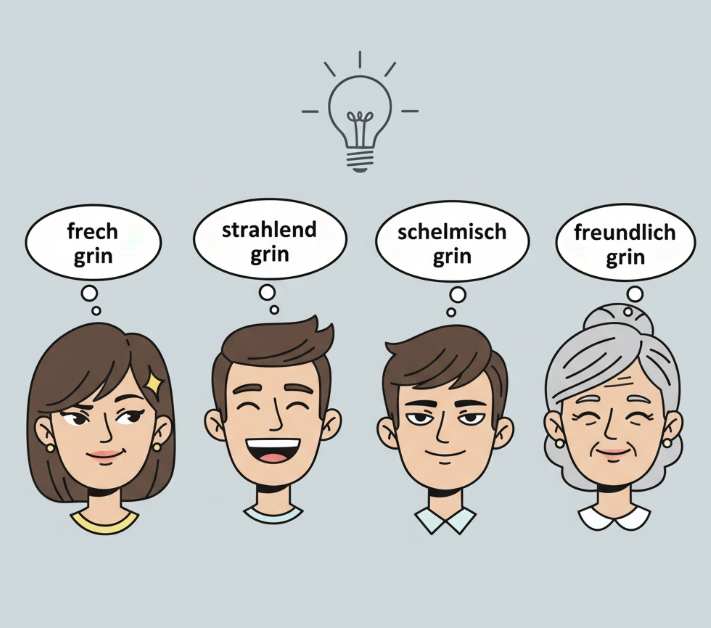
In English grammar, adjectives are used to modify nouns or pronouns, providing more detail about them. When describing a grin, adjectives typically precede the noun “grin” or follow a linking verb (such as “is,” “seems,” or “appears”) to describe the quality of the grin.
The basic structure is as follows:
- Adjective + Grin: For example, “a cheerful grin”
- Subject + Linking Verb + Adjective: For example, “His grin was cheerful“
Adjectives can be simple (e.g., happy), compound (e.g., self-satisfied), or participial (e.g., beaming). The choice of adjective depends on the specific nuance you want to convey.
Types and Categories of Adjectives for Grin
Grins can be categorized based on the emotion or intention they convey. Here are some common categories of grins and corresponding adjectives:
Adjectives Describing Happy Grins
These adjectives describe grins that express joy, pleasure, or contentment. Examples include:
- Cheerful
- Beaming
- Radiant
- Joyful
- Delighted
- Ecstatic
- Grinning
- Merry
Adjectives Describing Mischievous Grins
These adjectives describe grins that suggest playfulness, trickery, or a hidden agenda. Examples include:
- Wicked
- Impish
- Naughty
- Playful
- Teasing
- Roguish
- Sly
- Knowing
Adjectives Describing Nervous Grins
These adjectives describe grins that indicate anxiety, discomfort, or apprehension. Examples include:
- Timid
- Anxious
- Apprehensive
- Uneasy
- Forced
- Weak
- Strained
- Hesitant
Adjectives Describing Sly Grins
These adjectives describe grins that suggest secrecy, cunning, or hidden intentions. Examples include:
- Cunning
- Secretive
- Devious
- Guarded
- Knowing
- Wily
- Artful
- Scheming
Adjectives Describing Genuine Grins
These adjectives describe grins that are authentic, heartfelt, and sincere. Examples include:
- Sincere
- Heartfelt
- Authentic
- Warm
- Real
- True
- Honest
- Unfeigned
Adjectives Describing Forced Grins
These adjectives describe grins that are artificial, insincere, or put on to conceal true feelings. Examples include:
- Artificial
- Insincere
- Strained
- Unconvincing
- Phony
- Fake
- Superficial
- Obligatory
Examples of Adjectives for Grin
The following tables provide examples of how different adjectives can be used to describe various types of grins. Each table focuses on a specific category of grin and includes multiple examples to illustrate the usage of different adjectives.
Happy Grin Examples
This table showcases examples of adjectives used to describe happy grins, conveying feelings of joy, pleasure, and contentment.
| Adjective | Example Sentence |
|---|---|
| Cheerful | She greeted me with a cheerful grin. |
| Beaming | His face lit up with a beaming grin when he heard the news. |
| Radiant | A radiant grin spread across her face as she accepted the award. |
| Joyful | The children wore joyful grins as they opened their presents. |
| Delighted | He gave a delighted grin upon receiving the gift. |
| Ecstatic | An ecstatic grin stretched across her face after winning the competition. |
| Grinning | He was grinning from ear to ear after the victory. |
| Merry | A merry grin played on his lips as he told the joke. |
| Blissful | She had a blissful grin after the relaxing vacation. |
| Contented | A contented grin appeared on his face as he watched the sunset. |
| Jubilant | The team wore jubilant grins after winning the championship. |
| Festive | A festive grin adorned her face during the holiday party. |
| Gleeful | The child let out a gleeful grin as he rode the carousel. |
| Sunny | A sunny grin brightened her face despite the rainy weather. |
| Lighthearted | He offered a lighthearted grin, easing the tension in the room. |
| Upbeat | She gave an upbeat grin, ready to tackle the day. |
| Elated | An elated grin was plastered on his face after the proposal. |
| Glad | He offered a glad grin to his friend. |
| Sparkling | Her eyes accompanied her sparkling grin. |
| Gracious | She gave a gracious grin to the host. |
Mischievous Grin Examples
This table provides examples of using adjectives to describe mischievous grins, which suggest playfulness, trickery, or a hidden agenda.
| Adjective | Example Sentence |
|---|---|
| Wicked | A wicked grin spread across his face as he planned the prank. |
| Impish | She had an impish grin that suggested she was up to no good. |
| Naughty | A naughty grin crept onto his face as he reached for the forbidden cookie. |
| Playful | He gave her a playful grin before splashing her with water. |
| Teasing | A teasing grin appeared on her face as she revealed the surprise. |
| Roguish | The pirate captain sported a roguish grin as he surveyed his loot. |
| Sly | He flashed a sly grin, hinting at a secret plan. |
| Knowing | She gave him a knowing grin, indicating that she understood his intentions. |
| Cheeky | A cheeky grin appeared on his face as he made the bold statement. |
| Crafty | He displayed a crafty grin while negotiating the deal. |
| Elfish | An elfish grin suggested he was about to play a trick. |
| Mischievous | A mischievous grin lit up his eyes as he planned the surprise party. |
| Impudent | He wore an impudent grin after getting away with his prank. |
| Teasing | A teasing grin was on her face when she tickled him. |
| Waggish | He had a waggish grin as he delivered the punchline. |
| Saucy | A saucy grin crept across her face when she flirted. |
| Devious | A devious grin was hard to miss. |
| Sneaky | He had a sneaky grin. |
| Tricky | A tricky grin was on his face. |
| Conniving | A conniving grin was apparent. |
Nervous Grin Examples
This table demonstrates how to use adjectives to describe nervous grins, indicating anxiety, discomfort, or apprehension.
| Adjective | Example Sentence |
|---|---|
| Timid | She offered a timid grin as she stepped onto the stage. |
| Anxious | An anxious grin flickered across his face during the interview. |
| Apprehensive | He managed an apprehensive grin before the roller coaster plunged. |
| Uneasy | An uneasy grin betrayed her true feelings about the situation. |
| Forced | He gave a forced grin to mask his nervousness. |
| Weak | A weak grin was all he could muster as he faced the challenge. |
| Strained | A strained grin appeared on her face as she tried to remain composed. |
| Hesitant | He offered a hesitant grin before answering the difficult question. |
| Awkward | An awkward grin stretched across his face during the uncomfortable silence. |
| Self-conscious | A self-conscious grin appeared as she realized her mistake. |
| Wary | He shot a wary grin to his friend. |
| Fidgety | He had a fidgety grin. |
| Tense | A tense grin appeared on her face. |
| Nervous | She gave a nervous grin to the crowd. |
| Uncertain | He had an uncertain grin. |
| Edgy | An edgy grin was apparent. |
| Uncomfortable | She wore an uncomfortable grin. |
| Stiff | A stiff grin was on his face. |
| Taut | A taut grin appeared. |
| Faltering | He gave a faltering grin. |
Sly Grin Examples
This table demonstrates how to use adjectives to describe sly grins, which suggest secrecy, cunning, or hidden intentions.
| Adjective | Example Sentence |
|---|---|
| Cunning | A cunning grin revealed his elaborate plan. |
| Secretive | He offered a secretive grin, hinting at something unknown. |
| Devious | A devious grin played on his lips as he plotted his next move. |
| Guarded | He gave a guarded grin, careful not to reveal too much. |
| Knowing | She shot him a knowing grin, indicating she understood his secret. |
| Wily | A wily grin suggested he had outsmarted everyone. |
| Artful | He displayed an artful grin while negotiating the terms. |
| Scheming | A scheming grin suggested he was up to something. |
| Calculating | A calculating grin was on his face. |
| Sly | He gave a sly grin to his accomplice. |
| Underhand | An underhand grin was apparent. |
| Insidious | An insidious grin. |
| Duplicitous | A duplicitous grin. |
| Crooked | A crooked grin. |
| Shifty | A shifty grin. |
| Surreptitious | A surreptitious grin. |
| Guileful | A guileful grin. |
| Cagey | He had a cagey grin. |
| Furtive | A furtive grin. |
| Conspiratorial | A conspiratorial grin. |
Genuine Grin Examples
This table showcases examples of adjectives used to describe genuine grins, conveying authenticity, sincerity, and heartfelt emotions.
| Adjective | Example Sentence |
|---|---|
| Sincere | He offered a sincere grin, showing his true appreciation. |
| Heartfelt | A heartfelt grin radiated from her face as she thanked her supporters. |
| Authentic | An authentic grin revealed the depth of his joy. |
| Warm | She greeted him with a warm grin, making him feel welcome. |
| Real | A real grin transformed his face, showing his genuine happiness. |
| True | A true grin sparkled in her eyes as she reminisced. |
| Honest | He gave an honest grin, conveying his sincerity. |
| Unfeigned | An unfeigned grin showed his genuine delight. |
| Candid | He gave a candid grin to the interviewer. |
| Open | She gave an open grin. |
| Frank | He offered a frank grin. |
| Natural | A natural grin. |
| Earnest | An earnest grin. |
| Wholehearted | A wholehearted grin. |
| Unpretended | An unpretended grin. |
| Simple | A simple grin. |
| Pure | A pure grin. |
| Truehearted | He had a truehearted grin. |
| Genuinen | A genuinen grin. |
| Unreserved | A unreserved grin. |
Forced Grin Examples
This table provides examples of using adjectives to describe forced grins, indicating artificiality, insincerity, or an attempt to conceal true feelings.
| Adjective | Example Sentence |
|---|---|
| Artificial | He offered an artificial grin, masking his disappointment. |
| Insincere | An insincere grin failed to hide her true feelings. |
| Strained | A strained grin suggested she was struggling to stay positive. |
| Unconvincing | An unconvincing grin did little to reassure anyone. |
| Phony | He flashed a phony grin for the cameras. |
| Fake | A fake grin concealed her anger. |
| Superficial | A superficial grin hid his lack of interest. |
| Obligatory | He gave an obligatory grin at the end of the presentation. |
| Plastic | A plastic grin. |
| Feigned | He wore a feigned grin. |
| Mock | A mock grin. |
| Simulated | A simulated grin. |
| Contrived | A contrived grin. |
| Put-on | A put-on grin. |
| Shallow | A shallow grin. |
| Empty | An empty grin. |
| Hollow | A hollow grin. |
| Inauthentic | He had a inauthentic grin. |
| Counterfeit | A counterfeit grin. |
| Sham | A sham grin. |
Usage Rules for Adjectives Describing Grins
When using adjectives to describe grins, it’s important to follow standard English grammar rules:
- Adjective Placement: Adjectives typically precede the noun they modify. For example: “a broad grin.” However, they can also follow a linking verb. For example: “His grin was broad.”
- Multiple Adjectives: You can use multiple adjectives to describe a grin, but be mindful of the order. Generally, the order follows a pattern: opinion, size, age, shape, color, origin, material, and purpose. For example: “a delighted, wide grin.”
- Hyphenated Adjectives: Compound adjectives are often hyphenated when they precede the noun. For example: “a self-satisfied grin.” When they follow a linking verb, they usually don’t need a hyphen. For example: “His grin was self-satisfied.”
- Context is Key: The choice of adjective should align with the context and the emotion you want to convey. Consider the character’s personality, the situation, and the overall tone of your writing.
Common Mistakes When Using Adjectives for Grin
Here are some common mistakes to avoid when using adjectives to describe grins:
| Incorrect | Correct | Explanation |
|---|---|---|
| “She had a happily grin.” | “She had a happy grin.” | Adverbs (happily) cannot modify nouns (grin); adjectives (happy) should be used. |
| “His grin was brightly.” | “His grin was bright.” | Adverbs (brightly) describe verbs or adverbs, not linking verbs + nouns. Use an adjective (bright). |
| “A grin widely.” | “A wide grin.” | The adjective (wide) must come before the noun (grin). |
| “The grin self satisfied.” | “The self-satisfied grin.” | Compound adjectives (self-satisfied) should be hyphenated when preceding the noun. |
| “A very genuinely grin.” | “A very genuine grin.” | Adverbs (genuinely) cannot modify nouns (grin); adjectives (genuine) should be used. |
Practice Exercises
Test your understanding of adjectives for “grin” with these practice exercises. Choose the best adjective to complete each sentence.
| Question | Correct Answer |
|---|---|
| 1. He gave a ______ grin after successfully pulling off the prank. (wicked, sincere) | wicked |
| 2. Her ______ grin showed how delighted she was with the surprise. (joyful, nervous) | joyful |
| 3. A ______ grin stretched across his face as he tried to hide his discomfort. (strained, radiant) | strained |
| 4. The ______ grin hinted at the secret he was keeping. (sly, cheerful) | sly |
| 5. A ______ grin lit up her face when she saw her friends. (genuine, forced) | genuine |
| 6. His ______ grin didn’t fool anyone; they knew he was upset. (artificial, authentic) | artificial |
| 7. She had a ______ grin that made everyone feel welcome. (warm, devious) | warm |
| 8. He gave a ______ grin as he stepped up to the podium. (hesitant, beaming) | hesitant |
| 9. A ______ grin showed his love for her. (heartfelt, wicked) | heartfelt |
| 10. The ______ grin suggested he had a plan. (crafty, honest) | crafty |
Advanced Topics
For advanced learners, consider these more complex aspects of using adjectives for “grin”:
- Figurative Language: Explore using metaphors and similes to describe grins. For example, “His grin was as wide as the Cheshire Cat’s.”
- Subtlety and Nuance: Pay attention to the subtle differences between similar adjectives. For example, “sly” vs. “cunning” vs. “devious.”
- Cultural Context: Be aware that the interpretation of a grin can vary across cultures. An adjective that works in one culture might not be appropriate in another.
- Show, Don’t Tell: Instead of simply stating “He had a happy grin,” describe the physical characteristics of the grin and the context surrounding it to show the reader the emotion. For example, “His eyes crinkled at the corners, and his lips stretched wide, revealing a row of pearly white teeth in a happy grin.”
Frequently Asked Questions (FAQ)
- What is the difference between a smile and a grin?A smile is a general expression of happiness or friendliness, often subtle. A grin is a broader, more pronounced smile that typically conveys amusement, pleasure, or approval. A grin is usually more noticeable and expressive than a simple smile.
- Can an adjective be used to describe the absence of a grin?Yes, you can use adjectives to describe the absence of a grin. For example, “a grinless expression” or “a solemn face where a grin should have been.” These descriptions emphasize the lack of a grin and can convey emotions such as sadness, seriousness, or disapproval.
- How can I choose the most appropriate adjective for “grin” in my writing?Consider the context, the character’s emotions, and the overall tone of your writing. Ask yourself what specific emotion or characteristic you want to convey. Use a thesaurus to explore different options and consider the nuances of each adjective before making your final choice.
- Are there any adjectives that should be avoided when describing a grin?Avoid adjectives that are too vague or generic, such as “good” or “nice.” Also, be careful with adjectives that have negative connotations unless you specifically intend to convey a negative emotion. For instance, using “evil” to describe a grin should be reserved for situations where you want to emphasize malevolence.
- How do I use multiple adjectives to describe a grin effectively?When using multiple adjectives, follow the general order of adjectives in English: opinion, size, age, shape, color, origin, material, and purpose. Also, ensure that the adjectives complement each other and create a cohesive image. Avoid using too many adjectives, as it can make your writing sound cluttered.
- Can I use adverbs to describe a grin?No, adverbs cannot directly describe a grin. Adverbs modify verbs, adjectives, or other adverbs, not nouns. To describe a grin, use adjectives. For example, instead of “He grinned happily,” say “He had a happy grin.”
- What are some less common but effective adjectives for describing a grin?Some less common but effective adjectives include: beatific (expressing sublime happiness), enigmatic (mysterious and puzzling), rapturous (filled with great joy), and smug (showing excessive pride or self-satisfaction). These adjectives can add depth and originality to your writing.
- How does cultural context affect the interpretation of a grin and the choice of adjectives?The interpretation of a grin can vary significantly across cultures. In some cultures, a wide grin may be seen as friendly and welcoming, while in others, it may be considered inappropriate or even offensive. Be mindful of these cultural differences when choosing adjectives to describe a grin, especially when writing about characters from different cultural backgrounds.
Conclusion
Mastering the art of describing a grin with precise and evocative adjectives can significantly enhance your communication skills and add depth to your writing. By understanding the different types of grins and the nuances of various adjectives, you can effectively convey the emotions and intentions behind this common facial expression.
Remember to consider the context, follow usage rules, and avoid common mistakes to ensure your descriptions are accurate and impactful.
This comprehensive guide has provided you with a solid foundation for using adjectives for “grin.” Continue to practice and explore different adjectives to refine your descriptive abilities and enrich your vocabulary. With dedication and attention to detail, you can confidently and effectively describe a grin in any situation.