Understanding how to use adjectives to describe leopards is crucial for enhancing your descriptive writing and improving your overall command of the English language. Adjectives help us paint a vivid picture of these magnificent creatures, allowing readers to visualize their unique characteristics.
This article delves into the various types of adjectives suitable for describing leopards, providing numerous examples and practical exercises to solidify your understanding. Whether you’re a student, writer, or simply an animal enthusiast, this guide will equip you with the tools necessary to describe leopards with precision and flair.
This comprehensive guide covers everything from basic descriptive adjectives to more advanced vocabulary, ensuring that you can effectively communicate the nuances of a leopard’s appearance, behavior, and habitat. By mastering the concepts presented here, you’ll not only enrich your vocabulary but also gain a deeper appreciation for the power of language in capturing the essence of the natural world.
Table of Contents
- Definition of Adjectives
- Structural Breakdown of Adjective Use
- Types of Adjectives
- Examples of Adjectives for Leopards
- Usage Rules for Adjectives
- Common Mistakes with Adjectives
- Practice Exercises
- Advanced Topics: Figurative Language
- Frequently Asked Questions
- Conclusion
Definition of Adjectives
An adjective is a word that modifies a noun or pronoun, providing more information about its qualities, characteristics, or state. Adjectives add detail and specificity to our language, making it more descriptive and engaging.
They answer questions like “What kind?”, “Which one?”, “How many?”, or “How much?” when referring to the noun they modify.
Adjectives can be classified based on their function and the type of information they convey. Understanding these classifications helps in choosing the most appropriate adjective for a given context.
Some common types include descriptive adjectives, quantitative adjectives, demonstrative adjectives, possessive adjectives, and interrogative adjectives. Each type plays a distinct role in shaping the meaning of a sentence.
Classification of Adjectives
- Descriptive Adjectives: Describe the qualities or characteristics of a noun (e.g., spotted leopard).
- Quantitative Adjectives: Indicate the quantity or amount of a noun (e.g., few leopards).
- Demonstrative Adjectives: Point out specific nouns (e.g., this leopard).
- Possessive Adjectives: Show ownership or belonging (e.g., its spots).
- Interrogative Adjectives: Used in questions to ask about nouns (e.g., which leopard?).
Structural Breakdown of Adjective Use
Adjectives typically appear before the noun they modify (attributive position) or after a linking verb (predicative position). The placement of an adjective can sometimes influence the emphasis or meaning of a sentence.
Understanding these structural rules is essential for effective communication.
In the attributive position, the adjective directly precedes the noun, creating a close association between the two. For example, “a swift leopard” clearly indicates the leopard’s speed. In the predicative position, the adjective follows a linking verb such as “is,” “are,” “was,” or “were,” describing the subject of the sentence. For instance, “The leopard is agile” describes the leopard’s agility.
Attributive vs. Predicative Adjectives
- Attributive: The adjective comes before the noun (e.g., stealthy hunter).
- Predicative: The adjective comes after a linking verb (e.g., The leopard is powerful).
Types of Adjectives
There are several types of adjectives, each serving a different purpose in describing nouns. Focusing on descriptive, behavioral, and habitat-related adjectives will be particularly useful when describing leopards.
Descriptive Adjectives
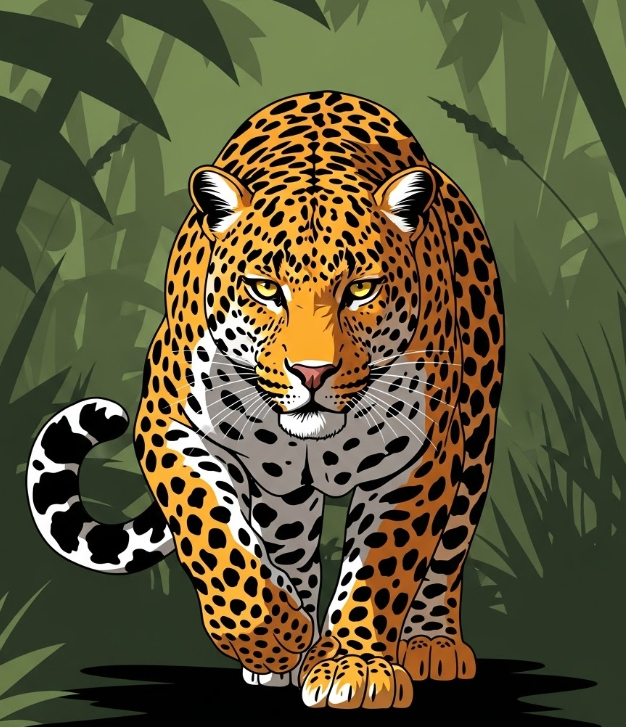
These adjectives describe the physical appearance of the leopard, such as its color, size, and distinctive markings. Examples include: spotted, golden, muscular, sleek, and lithe.
Behavioral Adjectives
These adjectives describe the leopard’s behavior and temperament. Examples include: stealthy, agile, ferocious, cautious, and nocturnal.
Habitat-Related Adjectives
These adjectives describe the leopard’s habitat and its adaptation to its environment. Examples include: arboreal, camouflaged, adaptable, resilient, and territorial.
Examples of Adjectives for Leopards
This section provides a comprehensive list of adjectives that can be used to describe leopards, categorized for clarity and ease of use. Each category highlights different aspects of the leopard, from its physical attributes to its behavior and habitat.
The following tables provide a wide array of adjectives to describe leopards, categorized by their function. Each table offers at least 20-30 examples to enhance your vocabulary and descriptive writing skills.
Physical Appearance Adjectives
This table lists adjectives that describe the leopard’s physical attributes, such as its coat, size, and build. Understanding these adjectives will help you paint a vivid picture of the leopard’s appearance.
| Adjective | Example Sentence |
|---|---|
| Spotted | The spotted coat of the leopard provides excellent camouflage. |
| Golden | A golden leopard basked in the afternoon sun. |
| Muscular | Its muscular build allows the leopard to climb trees with ease. |
| Sleek | The sleek fur of the leopard felt smooth to the touch. |
| Lithe | The lithe leopard moved gracefully through the tall grass. |
| Powerful | A powerful feline, the leopard is a formidable predator. |
| Elegant | The elegant leopard seemed to glide through the forest. |
| Graceful | Its graceful movements were mesmerizing to watch. |
| Large | This large leopard dominated its territory. |
| Small | Even a small leopard is a capable hunter. |
| Agile | The agile leopard leaped across the ravine. |
| Sturdy | Its sturdy legs provided the power for long chases. |
| Tawny | The leopard’s tawny fur blended with the dry savanna. |
| Dark | A dark leopard, almost black, prowled in the shadows. |
| Beautiful | The beautiful leopard was a sight to behold. |
| Magnificent | This magnificent creature roamed freely. |
| Striking | Its striking appearance made it easily recognizable. |
| Impressive | The leopard’s impressive size commanded respect. |
| Compact | Its compact body was perfectly adapted for climbing. |
| Well-built | The well-built leopard exuded strength and power. |
| Athletic | The athletic leopard effortlessly scaled the rocky terrain. |
| Muscled | Its muscled frame rippled beneath its spotted coat. |
| Streamlined | The streamlined body shape of the leopard enhanced its speed. |
| Trim | The trim physique of the leopard allowed for quick movements. |
| Sculpted | Its body appeared sculpted, a testament to its predatory prowess. |
Behavioral Characteristic Adjectives
This table focuses on adjectives that describe the leopard’s behavior and personality traits. These adjectives will help you convey the leopard’s nature and actions.
| Adjective | Example Sentence |
|---|---|
| Stealthy | The stealthy leopard stalked its prey through the underbrush. |
| Agile | An agile predator, the leopard could easily navigate the trees. |
| Ferocious | The ferocious leopard defended its kill from scavengers. |
| Cautious | A cautious leopard approached the waterhole, alert for danger. |
| Nocturnal | As a nocturnal hunter, the leopard was most active at night. |
| Solitary | The solitary leopard preferred to hunt alone. |
| Territorial | A territorial animal, the leopard fiercely guarded its domain. |
| Predatory | The predatory leopard was always on the lookout for its next meal. |
| Alert | The alert leopard scanned its surroundings for any sign of danger. |
| Vigilant | Always vigilant, the leopard remained watchful. |
| Cunning | The cunning leopard used its intelligence to outsmart its prey. |
| Resourceful | A resourceful hunter, the leopard adapted to various environments. |
| Independent | The independent leopard thrived in its solitary lifestyle. |
| Powerful | A powerful hunter, the leopard could take down large prey. |
| Wild | The wild leopard roamed free in its natural habitat. |
| Untamed | An untamed creature, the leopard was a symbol of freedom. |
| Fierce | The fierce leopard was a formidable adversary. |
| Bold | The bold leopard fearlessly approached its target. |
| Swift | The swift leopard chased after its prey. |
| Clever | The clever leopard devised innovative hunting strategies. |
| Adaptable | The adaptable leopard thrived in diverse environments. |
| Skilled | The skilled leopard was a master of its hunting techniques. |
| Patient | The patient leopard waited silently for the opportune moment. |
| Determined | The determined leopard pursued its prey relentlessly. |
| Tenacious | The tenacious leopard held onto its kill with unwavering grip. |
Habitat & Environment Adjectives
This table includes adjectives that describe the leopard’s habitat and its relationship with its environment. These adjectives will help you contextualize the leopard within its natural surroundings.
| Adjective | Example Sentence |
|---|---|
| Arboreal | The arboreal leopard often rests in the branches of trees. |
| Camouflaged | The camouflaged leopard blended seamlessly with its surroundings. |
| Adaptable | An adaptable creature, the leopard can survive in various habitats. |
| Resilient | The resilient leopard thrives even in harsh conditions. |
| Territorial | A territorial animal, the leopard marks its boundaries clearly. |
| Savanna | The savanna leopard prowled through the tall grasses. |
| Forest | The forest leopard found refuge in the dense foliage. |
| Jungle | The jungle leopard navigated the thick undergrowth with ease. |
| Mountainous | The mountainous terrain provided a challenging habitat. |
| Rocky | The rocky landscape offered excellent vantage points. |
| African | The African leopard is a symbol of the continent’s wildlife. |
| Asian | The Asian leopard faces unique conservation challenges. |
| Wild | The wild habitat is essential for the leopard’s survival. |
| Natural | The natural environment provides everything the leopard needs. |
| Remote | The remote regions offer a sanctuary for these animals. |
| Isolated | The isolated populations face greater risks. |
| Protected | The protected areas ensure the leopard’s safety. |
| Diverse | The diverse ecosystem supports a variety of wildlife. |
| Tropical | The tropical forests are home to many leopards. |
| Subtropical | The subtropical regions provide a suitable climate. |
| Temperate | The temperate zones offer a different set of challenges. |
| Dry | The dry savanna tested the leopard’s resilience. |
| Lush | The lush jungle provided ample cover. |
| Dense | The dense forest offered a refuge for the elusive leopard. |
| Open | The open plains required different hunting strategies. |
Usage Rules for Adjectives
Adjectives must agree in number and gender with the nouns they modify in some languages, but English adjectives do not change form. However, there are rules regarding the order of adjectives when multiple adjectives are used to describe the same noun.
The general order of adjectives in English is: opinion, size, age, shape, color, origin, material, and purpose. This order is not always strictly followed, but it provides a useful guideline for creating natural-sounding sentences.
Order of Adjectives
When using multiple adjectives, follow this general order:
- Opinion
- Size
- Age
- Shape
- Color
- Origin
- Material
- Purpose
For example: “a beautiful (opinion) large (size) old (age) African (origin) leopard.”
Common Mistakes with Adjectives
One common mistake is using adjectives that don’t accurately describe the noun. For example, describing a leopard as “docile” would be inaccurate, as they are generally wild and untamed animals.
Another mistake is incorrect adjective order when using multiple adjectives.
Another frequent error is confusing adjectives with adverbs. Adjectives modify nouns, while adverbs modify verbs, adjectives, or other adverbs.
Using the wrong form can significantly alter the meaning of a sentence.
Correct vs. Incorrect Examples
This table highlights common mistakes and provides correct alternatives.
| Incorrect | Correct | Explanation |
|---|---|---|
| The leopard is docile. | The leopard is fierce. | “Docile” is inaccurate for a wild animal like a leopard. |
| A large beautiful leopard. | A beautiful large leopard. | Opinion adjectives usually come before size adjectives. |
| The leopard hunts quick. | The leopard hunts quickly. | “Quick” is an adjective; “quickly” is the correct adverb to modify the verb “hunts.” |
| The spotted fur it was beautiful. | Its spotted fur was beautiful. | Correct possessive pronoun and sentence structure. |
| Leopard is fast animal. | The leopard is a fast animal. | Use of the article ‘a’ is needed for singular, countable nouns. |
| The leopard, he is stealthy. | The leopard is stealthy. | Avoid redundant pronouns. |
Practice Exercises
Test your understanding with these practice exercises. Each exercise focuses on different aspects of adjective use.
Provide appropriate adjectives to complete the sentences.
Exercise 1: Fill in the Blanks
Complete the following sentences with appropriate adjectives to describe leopards.
| Question | Answer |
|---|---|
| 1. The ________ leopard stalked its prey. | Stealthy |
| 2. Its coat was ________ with dark spots. | Spotted |
| 3. The ________ leopard climbed the tree. | Agile |
| 4. A ________ hunter, the leopard is a top predator. | Ferocious |
| 5. The ________ leopard rested in the shade. | Tired |
| 6. The ________ terrain was no match for the leopard. | Rocky |
| 7. The leopard has a ________ build, perfect for hunting. | Muscular |
| 8. The ________ leopard blended into the forest. | Camouflaged |
| 9. The leopard is a ________ and powerful animal. | Wild |
| 10. The ________ leopard defended its territory. | Territorial |
Exercise 2: Adjective Order
Rewrite the following phrases with the adjectives in the correct order.
| Question | Answer |
|---|---|
| 1. large beautiful old leopard | Beautiful large old leopard |
| 2. spotted African young leopard | Young African spotted leopard |
| 3. agile black small leopard | Small agile black leopard |
| 4. fierce wild young leopard | Wild fierce young leopard |
| 5. golden muscular big leopard | Muscular big golden leopard |
| 6. sleek Asian young leopard | Young Asian sleek leopard |
| 7. powerful old African leopard | Old African powerful leopard |
| 8. untamed small black leopard | Small black untamed leopard |
| 9. cautious young spotted leopard | Young spotted cautious leopard |
| 10. adaptable big strong leopard | Strong big adaptable leopard |
Exercise 3: Identifying Adjectives
Underline the adjectives in the following sentences.
| Question | Answer |
|---|---|
| 1. The stealthy leopard stalked its unsuspecting prey. | The stealthy leopard stalked its unsuspecting prey. |
| 2. The leopard has a spotted coat. | The leopard has a spotted coat. |
| 3. It is an agile and powerful animal. | It is an agile and powerful animal. |
| 4. The territorial leopard marked its boundaries. | The territorial leopard marked its boundaries. |
| 5. The wild leopard roamed the savanna. | The wild leopard roamed the savanna. |
| 6. The nocturnal hunter was rarely seen during the day. | The nocturnal hunter was rarely seen during the day. |
| 7. The leopard is known for its fierce nature. | The leopard is known for its fierce nature. |
| 8. The golden fur shimmered in the sunlight. | The golden fur shimmered in the sunlight. |
| 9. The young leopard explored its surroundings. | The young leopard explored its surroundings. |
| 10. It is a beautiful and magnificent creature. | It is a beautiful and magnificent creature. |
Advanced Topics: Figurative Language
Using adjectives in figurative language can add depth and creativity to your descriptions. Similes and metaphors can be particularly effective in conveying the essence of a leopard’s characteristics.
For example, “The leopard moved like a shadow” uses a simile to emphasize its stealth.
Personification, attributing human qualities to the leopard, can also create a vivid and engaging image. For instance, “The leopard seemed to contemplate its next move” gives the animal a sense of intelligence and deliberation.
Examples of Figurative Language
- Simile: The leopard moved like a shadow, silent and unseen.
- Metaphor: The leopard is a golden arrow, swift and deadly.
- Personification: The leopard seemed to contemplate its next move, its eyes filled with cunning.
Frequently Asked Questions
This section addresses common questions about using adjectives to describe leopards.
- What are some common adjectives to describe a leopard’s appearance?Common adjectives include spotted, golden, sleek, muscular, lithe, and tawny. These adjectives help to paint a vivid picture of the leopard’s physical attributes.
- How can I describe a leopard’s behavior using adjectives?You can use adjectives such as stealthy, agile, ferocious, cautious, nocturnal, and territorial to describe a leopard’s behavior and temperament.
- What adjectives can I use to describe a leopard’s habitat?Adjectives like arboreal, camouflaged, adaptable, resilient, savanna, forest, and mountainous can be used to describe the leopard’s habitat and its adaptation to its environment.
- Is there a specific order for using multiple adjectives in a sentence?Yes, the general order is opinion, size, age, shape, color, origin, material, and purpose. For example, “a beautiful large old African leopard.”
- What are some common mistakes to avoid when using adjectives?Avoid using inaccurate adjectives (e.g., describing a leopard as “docile”), using incorrect adjective order, and confusing adjectives with adverbs.
- How can I make my descriptions more creative and engaging?Use figurative language such as similes, metaphors, and personification to add depth and creativity to your descriptions. For example, “The leopard moved like a shadow.”
- Can adjectives be used to describe a leopard’s personality?Yes, adjectives like cunning, resourceful, independent, and fierce can be used to describe a leopard’s personality traits.
- How can I improve my vocabulary for describing animals like leopards?Read widely, pay attention to descriptive language in books and articles, and practice using new adjectives in your own writing. Use a thesaurus to find synonyms and expand your vocabulary.
Conclusion
Mastering the use of adjectives to describe leopards is a valuable skill that enhances your descriptive writing and expands your vocabulary. By understanding the different types of adjectives, their structural placement, and the rules governing their use, you can effectively communicate the nuances of a leopard’s appearance, behavior, and habitat.
Remember to practice using a variety of adjectives and to pay attention to the order in which they are used. With consistent effort and attention to detail, you can create vivid and engaging descriptions that capture the essence of these magnificent creatures.
Keep exploring, learning, and refining your skills to become a more confident and articulate writer.