The ocean, a vast and mysterious realm, captivates us with its beauty and power. To truly capture its essence in writing, we need a rich vocabulary of adjectives.
Understanding how to use adjectives effectively when describing oceans enhances our ability to convey vivid imagery and precise details. This article explores a wide range of adjectives suitable for describing oceans, covering their meanings, usage, and common pitfalls.
Whether you’re a student, writer, or simply an ocean enthusiast, this guide will equip you with the tools to paint compelling word pictures of the world’s oceans.
Table of Contents
- Introduction
- Definition of Adjectives for Oceans
- Structural Breakdown
- Types and Categories of Ocean Adjectives
- Examples of Ocean Adjectives in Use
- Usage Rules for Ocean Adjectives
- Common Mistakes When Using Ocean Adjectives
- Practice Exercises
- Advanced Topics
- Frequently Asked Questions
- Conclusion
Definition of Adjectives for Oceans
Adjectives used to describe oceans are words that modify nouns related to the ocean, providing greater detail and specificity. These adjectives can describe various characteristics, such as the ocean’s size, color, condition, location, and the emotions it evokes.
They play a crucial role in creating vivid imagery and conveying precise information about the ocean in writing and speech.
Adjectives, in general, are a fundamental part of speech in English grammar. They function to describe or modify nouns or pronouns. They add detail, specify qualities, and provide a clearer picture of the subject being discussed. In the context of oceans, adjectives help us move beyond simply stating “the ocean” to describing a turbulent ocean, a vast ocean, or an azure ocean. This enhances communication and allows for more nuanced and evocative descriptions.
These adjectives help create a more detailed and nuanced understanding or image of the ocean. Without adjectives, our descriptions would be bland and lack the depth needed to convey the true essence of the oceanic environment. Consider the difference between “the ocean” and “the stormy ocean.” The latter immediately conjures a more vivid and dramatic image.
Structural Breakdown
The structure of adjective usage in sentences is relatively straightforward. Adjectives typically precede the noun they modify, although they can also follow a linking verb.
Understanding these basic structures helps ensure correct and effective usage.
1. Adjective + Noun: This is the most common structure. The adjective directly precedes the noun it modifies. For example: “The deep ocean” or “The tropical waters.”
2. Linking Verb + Adjective: In this structure, the adjective follows a linking verb (such as is, are, was, were, seems, appears, becomes) and describes the subject of the sentence. For example: “The ocean is vast“ or “The water seems calm.”
3. Coordinate Adjectives: When using multiple adjectives to describe a noun, separate them with commas if they are coordinate (i.e., they modify the noun independently). If they are not coordinate (i.e., one adjective modifies the other), do not use a comma. For example: “The deep, blue ocean” (coordinate) versus “The dark blue ocean” (non-coordinate).
Understanding these structural elements is crucial for constructing grammatically correct and descriptive sentences about the ocean. Pay attention to adjective placement and the use of commas with coordinate adjectives.
Types and Categories of Ocean Adjectives
Adjectives for oceans can be categorized based on the type of characteristic they describe. This categorization helps in selecting the most appropriate adjective to convey a specific aspect of the ocean.
Descriptive Adjectives
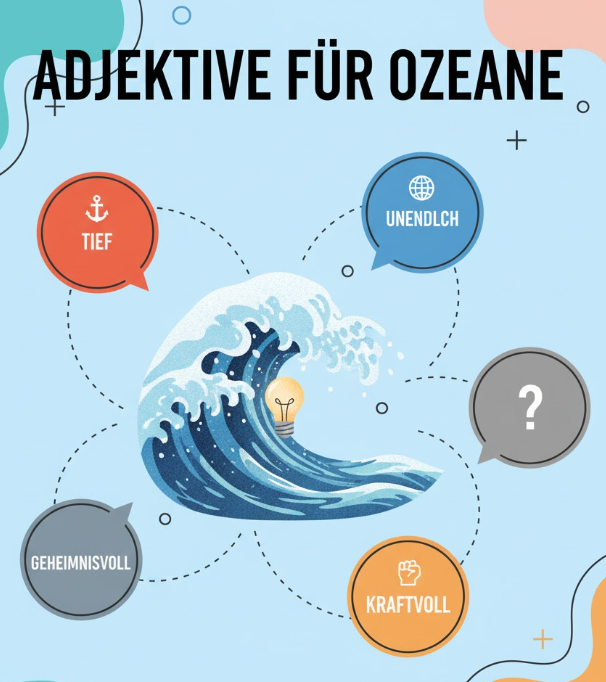
These adjectives describe general qualities or characteristics of the ocean, providing a broad sense of its nature. They often appeal to the senses and evoke imagery. Examples include: beautiful, majestic, serene, turbulent, and mysterious.
Size Adjectives
These adjectives describe the size or extent of the ocean or its features. They provide a sense of scale and proportion. Examples include: vast, immense, limitless, deep, and shallow.
Color Adjectives
These adjectives describe the color of the ocean water or its surroundings. They add visual detail and can evoke specific moods. Examples include: blue, azure, emerald, turquoise, and murky.
Condition Adjectives
These adjectives describe the physical condition or state of the ocean, such as its temperature, movement, or clarity. Examples include: calm, stormy, frigid, warm, and clear.
Location Adjectives
These adjectives describe the ocean’s location or its relationship to other geographical features. Examples include: coastal, offshore, pelagic, subtropical, and arctic.
Weather-Related Adjectives
These adjectives describe weather phenomena associated with the ocean. Examples include: windy, foggy, stormy, rainy and sunny.
Emotional Adjectives
These adjectives describe the feelings or emotions that the ocean evokes. Examples include: peaceful, intimidating, awe-inspiring, haunting, and invigorating.
Examples of Ocean Adjectives in Use
To illustrate the usage of these adjectives, let’s examine specific examples categorized by the type of adjective.
Descriptive Adjective Examples
Descriptive adjectives help create a more vivid picture of the ocean by appealing to our senses and emotions. The table below provides examples of how these adjectives can be used in sentences.
| Adjective | Example Sentence |
|---|---|
| Beautiful | The beautiful ocean shimmered under the morning sun. |
| Majestic | The majestic ocean stretched out before us, an endless expanse of blue. |
| Serene | The serene ocean provided a calming backdrop to our meditation. |
| Turbulent | The turbulent ocean crashed against the rocks with immense force. |
| Mysterious | The mysterious ocean depths hold secrets yet to be discovered. |
| Vast | The vast ocean seemed to go on forever. |
| Calm | The calm ocean reflected the clear blue sky. |
| Rough | The rough ocean made sailing difficult. |
| Choppy | The choppy ocean splashed against the boat. |
| Invigorating | The invigorating ocean breeze filled our lungs. |
| Picturesque | The picturesque ocean view was breathtaking. |
| Scenic | The scenic ocean drive was a highlight of our trip. |
| Untamed | The untamed ocean is a reminder of nature’s power. |
| Wild | The wild ocean roared during the storm. |
| Dramatic | The dramatic ocean cliffs plunged into the sea. |
| Peaceful | The peaceful ocean lulled us to sleep. |
| Tranquil | The tranquil ocean was perfect for swimming. |
| Dark | The dark ocean hid many secrets. |
| Deep | The deep ocean is home to many unique creatures. |
| Shallow | The shallow ocean waters were teeming with life. |
| Endless | The endless ocean is a source of wonder. |
| Boundless | The boundless ocean inspires exploration. |
| Infinite | The infinite ocean is a symbol of freedom. |
Size Adjective Examples
Size adjectives give us a sense of the scale and magnitude of the ocean and its features. Consider these examples to understand their application.
| Adjective | Example Sentence |
|---|---|
| Vast | The vast ocean stretches from horizon to horizon. |
| Immense | The immense ocean holds a seemingly infinite amount of water. |
| Limitless | The limitless ocean inspires dreams of exploration. |
| Deep | The deep ocean trenches are home to unique ecosystems. |
| Shallow | The shallow ocean waters near the coast are ideal for snorkeling. |
| Extensive | The extensive ocean floor is largely unmapped. |
| Wide | The wide ocean separated the continents. |
| Broad | The broad ocean currents influence global climate. |
| Large | The large ocean waves crashed against the shore. |
| Gigantic | The gigantic ocean liners sailed across the Atlantic. |
| Huge | The huge ocean swells were a surfer’s dream. |
| Enormous | The enormous ocean’s impact on the planet is undeniable. |
| Substantial | The substantial ocean area is still unexplored. |
| Massive | The massive ocean depths are home to bizarre creatures. |
| Considerable | The considerable ocean current affected our course. |
| Grand | The grand ocean view from the cliff was stunning. |
| Colossal | The colossal ocean waves threatened the small fishing boats. |
| Voluminous | The voluminous ocean contains a vast amount of marine life. |
| Sizeable | The sizeable ocean area is protected as a marine reserve. |
| Great | The great ocean is a source of inspiration for artists. |
Color Adjective Examples
Color adjectives add visual richness to descriptions of the ocean. Here are some examples of how they can be used effectively.
| Adjective | Example Sentence |
|---|---|
| Blue | The blue ocean sparkled under the clear sky. |
| Azure | The azure ocean waters were crystal clear. |
| Emerald | The emerald ocean near the coast teemed with life. |
| Turquoise | The turquoise ocean of the Caribbean is breathtaking. |
| Murky | The murky ocean depths hid many secrets. |
| Green | The green ocean near the shore indicated the presence of algae. |
| Clear | The clear ocean water allowed us to see the coral reef. |
| Dark | The dark ocean at night was both mysterious and beautiful. |
| Pale | The pale ocean reflected the overcast sky. |
| Crimson | The crimson ocean sunset painted the sky with vibrant colors. |
| Gray | The gray ocean mirrored the stormy weather. |
| White | The white ocean foam crashed against the rocks. |
| Black | The black ocean depths were unexplored. |
| Golden | The golden ocean shimmered in the sunlight. |
| Silver | The silver ocean reflected the moonlight. |
| Aquamarine | The aquamarine ocean was inviting and refreshing. |
| Indigo | The indigo ocean was deep and mysterious. |
| Sapphire | The sapphire ocean was a jewel of the earth. |
| Teal | The teal ocean was unique and beautiful. |
| Navy | The navy ocean was dark and imposing. |
Condition Adjective Examples
Condition adjectives describe the physical state of the ocean, such as its temperature, movement, and clarity. These adjectives are essential for providing a comprehensive picture of the ocean’s current state.
| Adjective | Example Sentence |
|---|---|
| Calm | The calm ocean allowed for easy sailing. |
| Stormy | The stormy ocean made the journey treacherous. |
| Frigid | The frigid ocean waters of the Arctic are home to unique wildlife. |
| Warm | The warm ocean currents support a diverse range of marine life. |
| Clear | The clear ocean water made snorkeling a delight. |
| Rough | The rough ocean made the boat rock violently. |
| Choppy | The choppy ocean made it difficult to navigate. |
| Icy | The icy ocean was a challenge for the explorers. |
| Still | The still ocean reflected the sunset perfectly. |
| Murky | The murky ocean made it hard to see below the surface. |
| Turbulent | The turbulent ocean waters were dangerous to swimmers. |
| Restless | The restless ocean never sleeps. |
| Placid | The placid ocean was perfect for a relaxing swim. |
| Mild | The mild ocean breezes were refreshing. |
| Temperate | The temperate ocean climate supported a variety of species. |
| Brisk | The brisk ocean air invigorated us. |
| Frozen | The frozen ocean was a sight to behold. |
| Swirling | The swirling ocean currents were unpredictable. |
| Raging | The raging ocean was a force of nature. |
| Foaming | The foaming ocean waves crashed on the beach. |
Usage Rules for Ocean Adjectives
Using adjectives correctly involves understanding their placement and agreement with the nouns they modify. Here are some key rules to follow:
1. Placement: As mentioned earlier, adjectives usually precede the noun they modify. However, they can also follow a linking verb.
2. Order of Adjectives: When using multiple adjectives, there is a general order to follow, although it’s not a strict rule. The order is typically: opinion, size, physical quality, shape, age, color, origin, material, type, and purpose. For example: “a beautiful, large, clear, blue ocean.” While this sounds a bit unnatural, understanding the order helps in more complex descriptions.
3. Coordinate Adjectives: Remember to use commas between coordinate adjectives. These are adjectives that independently modify the noun. If the adjectives build on each other, do not use a comma. For example, “a cold, salty ocean” (coordinate) versus “a dark green ocean” (non-coordinate).
4. Articles: Use the appropriate article (a, an, or the) before the adjective-noun phrase. The choice depends on whether the noun is specific or general, and on the sound of the adjective. For example: “a calm ocean” versus “the vast ocean.”
5. Avoiding Redundancy: Be careful not to use redundant adjectives. For example, saying “blue ocean water” is somewhat redundant because oceans are typically blue. Instead, consider more specific or descriptive adjectives.
Common Mistakes When Using Ocean Adjectives
Even experienced writers can make mistakes when using adjectives. Here are some common errors to watch out for:
1. Misplaced Adjectives: Placing an adjective in the wrong position can change the meaning of the sentence or make it grammatically incorrect.
- Incorrect: The swimmer saw a dangerous quickly shark.
- Correct: The swimmer quickly saw a dangerous shark.
2. Incorrect Order of Adjectives: While not always a strict rule, using the incorrect order of adjectives can sound awkward.
- Awkward: The blue large ocean.
- Better: The large blue ocean.
3. Overuse of Adjectives: Using too many adjectives can make your writing cluttered and less impactful. Choose adjectives carefully and use them sparingly.
- Too Many Adjectives: The vast, blue, deep, mysterious ocean.
- Better: The vast, mysterious ocean.
4. Redundancy: Using adjectives that repeat the same information is unnecessary and weakens your writing.
- Redundant: The blue ocean water.
- Better: The blue ocean.
5. Incorrect Use of Articles: Using the wrong article (a, an, or the) can make your writing sound unnatural.
- Incorrect: A immense ocean.
- Correct: An immense ocean.
Practice Exercises
Test your understanding of ocean adjectives with these practice exercises. Choose the best adjective to complete each sentence.
| Question | Answer |
|---|---|
| 1. The ______ ocean stretched out before them, an endless expanse of blue. (vast, small, tiny) | vast |
| 2. The ______ ocean waves crashed against the shore during the storm. (calm, turbulent, peaceful) | turbulent |
| 3. The ______ ocean waters of the Caribbean are a popular tourist destination. (frigid, warm, icy) | warm |
| 4. The ______ ocean depths are home to many strange and mysterious creatures. (shallow, deep, clear) | deep |
| 5. The ______ ocean breeze was refreshing on the hot summer day. (stuffy, invigorating, stale) | invigorating |
| 6. The ______ ocean was perfect for a relaxing swim. (placid, rough, choppy) | placid |
| 7. The ______ ocean sunset painted the sky with vibrant colors. (crimson, gray, pale) | crimson |
| 8. The ______ ocean currents affected the ship’s course. (swirling, still, frozen) | swirling |
| 9. The ______ ocean view from the cliff was breathtaking. (picturesque, ordinary, dull) | picturesque |
| 10. The ______ ocean is a source of wonder and inspiration. (endless, finite, limited) | endless |
Exercise 2: Rewrite the following sentences using more descriptive adjectives for the ocean.
| Original Sentence | Rewritten Sentence |
|---|---|
| 1. The ocean was big. | The immense ocean stretched beyond the horizon. |
| 2. The water was blue. | The azure water sparkled under the sunlight. |
| 3. The ocean was rough. | The turbulent ocean churned with powerful waves. |
| 4. The ocean was cold. | The frigid ocean sent shivers down our spines. |
| 5. The ocean was dark. | The mysterious, dark ocean hid countless secrets. |
| 6. The ocean was calm. | The placid ocean reflected the sky like a mirror. |
| 7. The ocean was clear. | The crystal-clear ocean revealed the vibrant coral reef below. |
| 8. The ocean was stormy. | The raging, stormy ocean threatened the coastal town. |
| 9. The ocean was deep. | The profound, deep ocean held untold mysteries. |
| 10. The ocean was wide. | The broad ocean separated the two continents. |
Advanced Topics
For advanced learners, exploring more nuanced aspects of adjective usage can further enhance their writing skills. This includes understanding figurative language and idiomatic expressions related to the ocean.
1. Figurative Language: Using metaphors, similes, and personification can add depth and creativity to your descriptions. For example, “The ocean roared like a lion” (simile) or “The ocean is a restless giant” (metaphor).
2. Idiomatic Expressions: Many idiomatic expressions use ocean-related terms. Understanding these expressions can add color and authenticity to your writing. Examples include “a drop in the ocean” (a small amount) and “lost at sea” (confused or disoriented).
3. Contextual Usage: The best adjectives to use will depend on the specific context. Consider the purpose of your writing and the audience you are trying to reach. A scientific report will require different adjectives than a piece of creative writing.
4. Subjunctive Mood: While less common, the subjunctive mood can be used to express hypothetical or conditional statements about the ocean. For example, “If the ocean were calmer, we could sail further.”
Frequently Asked Questions
Here are some frequently asked questions about using adjectives to describe oceans:
1. What is the best way to choose the right adjective for an ocean description?
Consider the specific aspect of the ocean you want to emphasize. Think about its size, color, condition, location, and the emotions it evokes.
Choose adjectives that accurately and vividly convey these characteristics. Use a thesaurus to explore synonyms and related terms.
2. Can I use multiple adjectives to describe the same ocean?
Yes, you can use multiple adjectives, but be mindful of overuse. Choose adjectives that complement each other and provide a more complete picture of the ocean.
Remember the order of adjectives and use commas appropriately for coordinate adjectives.
3. How can I avoid using clichés when describing the ocean?
Avoid overused adjectives and phrases. Instead, try to find fresh and original ways to describe the ocean.
Use sensory details and figurative language to create unique and memorable descriptions. Research specific aspects of the ocean that interest you and incorporate that knowledge into your writing.
4. Are there any adjectives that should be avoided when describing oceans?
Avoid adjectives that are vague or overused, such as “nice” or “good.” Also, avoid adjectives that are redundant or contradictory. Choose adjectives that are specific, descriptive, and appropriate for the context.
5. How do I know if I’m using too many adjectives in my writing?
Read your writing aloud and listen to how it sounds. If the adjectives feel overwhelming or distracting, try to reduce their number.
Focus on using strong nouns and verbs, and let the adjectives enhance rather than dominate your descriptions.
6. What are some good resources for finding more ocean-related adjectives?
Use a thesaurus to find synonyms and related terms. Read books and articles about the ocean to see how other writers describe it.
Pay attention to sensory details when you are near the ocean and make note of the words that come to mind. Online dictionaries can provide definitions and examples of adjective usage.
7. How can I improve my vocabulary of ocean adjectives?
Read widely, focusing on books and articles about the ocean, marine biology, and coastal environments. Make a list of new adjectives you encounter and look up their definitions and usage.
Practice using these adjectives in your own writing and speech. Consider taking a class or workshop on creative writing or descriptive language.
8. Is it okay to use made-up adjectives to describe the ocean?
While you can use made-up adjectives for creative effect, use them sparingly and ensure they are easily understood within the context. They should add something unique to your description without confusing the reader.
Conclusion
Mastering the use of adjectives for oceans significantly enhances your ability to describe this vast and complex environment. By understanding the different types of adjectives, their structural placement, and common usage rules, you can create vivid and compelling descriptions that capture the essence of the ocean.
Remember to avoid common mistakes, practice regularly, and continue to expand your vocabulary. The ocean is a world of endless possibilities, and with the right adjectives, you can bring its wonders to life through your words.
The key takeaways from this article include the importance of choosing specific and descriptive adjectives, understanding the correct order of adjectives, and avoiding redundancy and overuse. By applying these principles, you can elevate your writing and create a more immersive and engaging experience for your readers.
Keep exploring, keep writing, and let the ocean inspire your creativity!