
Understanding adjectives used to describe “play” can significantly enrich your English vocabulary and improve your ability to convey the nuances of playful activities. Adjectives add depth and color to our descriptions, making them more vivid and engaging.
Whether you’re discussing children’s games, sports competitions, or theatrical performances, the right adjectives can transform a simple statement into a compelling narrative. This article offers a comprehensive guide to adjectives for play, covering their definitions, types, usage rules, common mistakes, and advanced applications.
This guide is designed for English language learners, educators, writers, and anyone seeking to improve their descriptive abilities. By mastering these adjectives, you can communicate more effectively and expressively about the multifaceted world of play.
Table of Contents
- Definition of Adjectives for Play
- Structural Breakdown
- Types and Categories of Adjectives for Play
- Examples of Adjectives for Play
- Usage Rules for Adjectives
- Common Mistakes with Adjectives for Play
- Practice Exercises
- Advanced Topics
- Frequently Asked Questions (FAQ)
- Conclusion
Definition of Adjectives for Play
Adjectives for play are descriptive words that modify nouns related to play, such as games, sports, performances, or even the act of playing itself. These adjectives provide additional information about the characteristics, qualities, or attributes of the play being described.
They help to paint a more detailed and vivid picture, allowing the reader or listener to better understand the nature of the activity. Adjectives can describe the intensity, emotional impact, fairness, skill level, or overall atmosphere of the play.
In grammatical terms, adjectives for play function just like any other adjective. They typically precede the noun they modify (e.g., “an exciting game”) or follow a linking verb to describe the subject (e.g., “The play was hilarious“). Understanding how to use these adjectives effectively is crucial for precise and engaging communication.
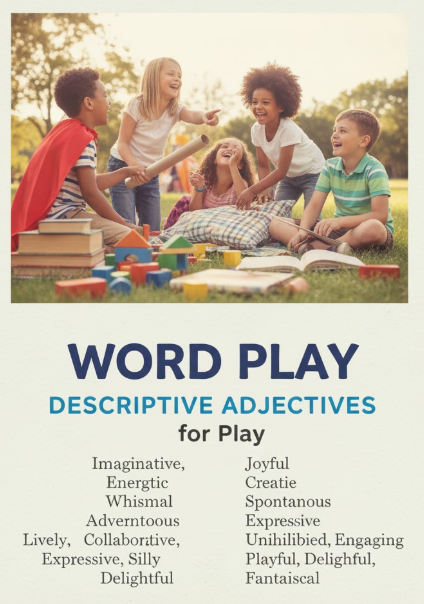
Structural Breakdown
The structure of adjectives for play is straightforward. They usually appear before the noun they modify, following the standard adjective-noun order in English.
However, they can also be used after linking verbs like “is,” “are,” “was,” “were,” “seems,” “appears,” and “becomes” to describe the subject of the sentence.
Here are the basic structural patterns:
- Adjective + Noun: thrilling match, competitive sport, creative game
- Subject + Linking Verb + Adjective: The performance was captivating, The game is challenging, The match seemed endless.
Adjectives can also be modified by adverbs to further refine their meaning. For example, “a very exciting game,” or “an incredibly skillful play.”
Types and Categories of Adjectives for Play
Adjectives for play can be categorized based on the specific aspect of play they describe. Understanding these categories can help you choose the most appropriate adjective for a given situation.
Adjectives Describing the Nature of Play
These adjectives describe the fundamental characteristics or essence of the play. They can indicate whether the play is enjoyable, complex, or simple.
- Fun: enjoyable and amusing
- Entertaining: providing amusement or enjoyment
- Engaging: captivating and holding one’s attention
- Stimulating: encouraging new ideas or creativity
- Relaxing: reducing stress and promoting calmness
- Simple: easy to understand or do
- Complex: intricate and difficult to understand
- Traditional: following established customs or beliefs
- Modern: relating to the present or recent times
- Creative: involving imagination and originality
Adjectives Describing the Intensity of Play
These adjectives describe the level of energy, excitement, or competition involved in the play.
- Intense: highly concentrated or forceful
- Exciting: causing great enthusiasm and eagerness
- Thrilling: causing a feeling of excitement and pleasure
- Competitive: involving a strong desire to win
- Energetic: showing great activity and vitality
- Vigorous: carried out forcefully and actively
- Fast-paced: moving or progressing quickly
- Slow-paced: moving or progressing slowly
- Gentle: mild and delicate
- Fierce: marked by extreme intensity or violence
Adjectives Describing the Atmosphere of Play
These adjectives describe the overall mood, environment, or ambiance of the play.
- Joyful: full of happiness and delight
- Festive: relating to a celebration or holiday
- Playful: lighthearted and amusing
- Serious: solemn or thoughtful
- Friendly: kind and amicable
- Hostile: unfriendly and aggressive
- Calm: peaceful and tranquil
- Chaotic: completely disordered and confused
- Supportive: providing encouragement and help
- Tense: causing anxiety or nervousness
Adjectives Describing Skill in Play
These adjectives describe the level of proficiency, expertise, or talent demonstrated during the play.
- Skilled: having or showing skill
- Talented: having a natural aptitude or skill
- Expert: having comprehensive knowledge or skill
- Adept: very skilled or proficient
- Proficient: competent or skilled in doing or using something
- Masterful: showing great skill or artistry
- Amateur: engaging in an activity for pleasure rather than professional gain
- Novice: a person new to or inexperienced in a field or situation
- Clumsy: awkward in movement or handling things
- Graceful: elegant and refined in movement
Adjectives Describing Fairness in Play
These adjectives describe the degree to which the play adheres to rules, principles of justice, or ethical standards.
- Fair: just and impartial
- Unfair: not just or impartial
- Equitable: fair and impartial
- Just: based on or behaving according to what is morally right and fair
- Impartial: treating all rivals or disputants equally
- Biased: unfairly prejudiced for or against someone or something
- Honest: free of deceit; truthful and sincere
- Dishonest: behaving or prone to behave in an untrustworthy or fraudulent way
- Ethical: morally good or correct
- Unethical: not morally correct
Adjectives Describing Emotional Impact of Play
These adjectives describe the feelings or emotions that the play evokes in participants or observers.
- Joyful: causing great happiness
- Sad: causing sorrow or unhappiness
- Exciting: causing great enthusiasm and eagerness
- Frustrating: causing annoyance or irritation
- Inspiring: filling someone with the ability or desire to do or create things
- Motivating: providing someone with a reason for doing something
- Disappointing: failing to fulfill someone’s hopes or expectations
- Fulfilling: causing someone to feel satisfied or happy
- Amusing: causing laughter or enjoyment
- Tiring: causing one to feel drained of energy or enthusiasm
Examples of Adjectives for Play
The following tables provide examples of adjectives used to describe play in various contexts. Each table focuses on a specific category of adjectives, illustrating their usage with example sentences.
The following table presents examples of adjectives that describe the inherent nature of play, highlighting how they modify nouns related to play.
| Adjective | Example Sentence |
|---|---|
| Fun | The children had a fun game of tag in the park. |
| Entertaining | The school play was an entertaining performance for the whole family. |
| Engaging | The new video game offers an engaging experience with its intricate storyline. |
| Stimulating | Chess is a stimulating game that challenges your strategic thinking. |
| Relaxing | A gentle game of croquet can be a relaxing way to spend an afternoon. |
| Simple | Even a simple game of catch can be enjoyable. |
| Complex | The rules of the board game were surprisingly complex. |
| Traditional | They played a traditional game of marbles during the summer festival. |
| Modern | The app offers a modern twist on classic puzzle games. |
| Creative | Building with LEGOs encourages creative play. |
| Imaginative | Children engaged in imaginative role-playing during recess. |
| Educational | The museum offers educational games for children of all ages. |
| Interactive | The exhibit featured an interactive play area. |
| Theatrical | The drama club put on a theatrical performance. |
| Whimsical | The children enjoyed a whimsical play about fairies and goblins. |
| Absorbing | The novel contained an absorbing play of wits between the two main characters. |
| Inventive | The students presented an inventive play at the science fair. |
| Captivating | The audience was mesmerized by the captivating play of light and shadow on the stage. |
| Unique | The artist created a unique play of colors in her latest painting. |
| Novel | The company introduced a novel play of words in their advertising campaign. |
| Amusing | The comedian delivered an amusing play on current events. |
| Delightful | The children’s choir presented a delightful play of carols during the holiday season. |
| Enchanting | The ballet featured an enchanting play of music and dance. |
| Fascinating | The documentary offered a fascinating play of historical footage and expert interviews. |
| Stimulating | The professor led a stimulating play of ideas during the seminar. |
The following table demonstrates how adjectives can be used to describe the intensity of play, adding depth to descriptions of games and activities.
| Adjective | Example Sentence |
|---|---|
| Intense | The basketball game was an intense competition that went into overtime. |
| Exciting | The roller coaster ride was an exciting experience. |
| Thrilling | Skydiving is a thrilling activity for adrenaline junkies. |
| Competitive | Chess tournaments can be very competitive. |
| Energetic | The children engaged in energetic play during recess. |
| Vigorous | The team displayed a vigorous effort throughout the match. |
| Fast-paced | Ice hockey is a fast-paced sport. |
| Slow-paced | Golf is a slow-paced game that requires patience. |
| Gentle | A gentle game of catch is perfect for a relaxing afternoon. |
| Fierce | The rivalry between the two teams led to a fierce competition. |
| Passionate | The actors delivered a passionate performance on stage. |
| Ardent | The fans showed their ardent support for the team. |
| Heated | The debate turned into a heated exchange of opinions. |
| Dynamic | The orchestra presented a dynamic play of symphonic music. |
| Vivacious | The dancer showcased a vivacious play of movement during the performance. |
| Animated | The storyteller regaled the children with an animated play of characters and voices. |
| Robust | The athlete displayed a robust play of strength and endurance. |
| Strenuous | The trek involved a strenuous play of physical effort and determination. |
| Intrepid | The explorers embarked on an intrepid play of adventure and discovery. |
| Audacious | The entrepreneur launched an audacious play of innovation and risk-taking. |
| Forceful | The lawyer presented a forceful play of arguments in the courtroom. |
| Determined | The athlete showed a determined play of resilience during the marathon. |
| Relentless | The detective pursued a relentless play of investigation in the crime case. |
| Aggressive | The hockey team demonstrated an aggressive play of offense during the game. |
| Vigorous | The dancers performed a vigorous play of steps during the ballet. |
The following table lists adjectives describing the atmosphere of play, enhancing descriptions with specific moods and feelings.
| Adjective | Example Sentence |
|---|---|
| Joyful | The birthday party had a joyful atmosphere. |
| Festive | The holiday parade created a festive mood in the town. |
| Playful | The puppies were engaging in playful antics. |
| Serious | The chess players maintained a serious demeanor during the match. |
| Friendly | The community center provides a friendly environment for seniors. |
| Hostile | The political debate took on a hostile tone. |
| Calm | The yoga class created a calm and peaceful atmosphere. |
| Chaotic | The playground was chaotic with children running around. |
| Supportive | The team members offered each other supportive encouragement. |
| Tense | The final minutes of the game were tense and nail-biting. |
| Relaxed | The picnic had a relaxed and casual atmosphere. |
| Lively | The street festival was a lively and vibrant event. |
| Tranquil | The park offered a tranquil escape from the city. |
| Electric | The concert had an electric atmosphere with the crowd cheering. |
| Serene | The meditation session created a serene and peaceful ambiance. |
| Cheerful | The holiday gathering had a cheerful and merry vibe. |
| Jubilant | The team celebrated their victory with a jubilant atmosphere. |
| Melancholy | The farewell party had a melancholy and wistful atmosphere. |
| Mysterious | The haunted house created a mysterious and eerie ambiance. |
| Romantic | The candlelight dinner had a romantic and intimate atmosphere. |
| Solemn | The memorial service had a solemn and respectful atmosphere. |
| Spirited | The students participated in the rally with a spirited and enthusiastic atmosphere. |
| Subdued | The library maintained a subdued and quiet atmosphere. |
| Upbeat | The dance class had an upbeat and energetic atmosphere. |
| Vibrant | The art exhibition showcased a vibrant and colorful atmosphere. |
Usage Rules for Adjectives
Using adjectives effectively requires understanding a few basic rules. These rules ensure clarity and precision in your descriptions.
- Placement: Adjectives usually come before the noun they modify. For example: “a beautiful painting,” not “a painting beautiful.”
- Linking Verbs: After linking verbs (is, are, was, were, seems, etc.), adjectives describe the subject. For example: “The play is interesting.”
- Coordinate Adjectives: When using multiple adjectives to describe a noun, separate them with commas if they are coordinate (i.e., they independently modify the noun). For example: “a talented, dedicated athlete.” If they are not coordinate, do not use a comma. For example: “a small wooden box.”
- Order of Adjectives: When using multiple non-coordinate adjectives, follow a general order: opinion, size, age, shape, color, origin, material, purpose. For example: “a beautiful large old round blue French silk scarf.”
- Avoid Overuse: Using too many adjectives can make your writing cumbersome. Choose adjectives that add significant meaning and avoid redundancy.
Common Mistakes with Adjectives for Play
Even experienced writers can make mistakes when using adjectives. Here are some common pitfalls to avoid:
- Misplaced Adjectives: Placing an adjective in the wrong position can change the meaning of the sentence. For example, “Only skilled players can win” is different from “Skilled players only can win.”
- Incorrect Adjective Forms: Using the wrong form of an adjective (e.g., confusing comparative and superlative forms) can lead to errors. For example, “more better” should be “better.”
- Redundant Adjectives: Using adjectives that repeat the same meaning is unnecessary. For example, “a very unique performance” is redundant because “unique” means one of a kind.
- Subjective vs. Objective Adjectives: Confusing subjective adjectives (based on personal opinion) with objective adjectives (based on facts) can weaken your writing. For example, saying “the play was good” is less informative than saying “the play was well-acted and directed.”
- Overusing Adjectives: Cluttering your writing with too many adjectives can make it difficult to read. Use adjectives sparingly and choose them carefully.
Practice Exercises
Test your understanding of adjectives for play with these exercises. Fill in the blanks with the most appropriate adjective from the word bank provided.
Exercise 1: Choose the best adjective to complete each sentence.
Word Bank: exciting, relaxing, complex, fair, creative
- The new board game has a __________ set of rules that take time to learn.
- Yoga is a __________ activity that helps reduce stress.
- The children designed a __________ game using recycled materials.
- The roller coaster ride was an __________ experience.
- Everyone agreed that the referee made a __________ call.
Answers:
- The new board game has a complex set of rules that take time to learn.
- Yoga is a relaxing activity that helps reduce stress.
- The children designed a creative game using recycled materials.
- The roller coaster ride was an exciting experience.
- Everyone agreed that the referee made a fair call.
Exercise 2: Rewrite the following sentences, adding a suitable adjective to enhance the description.
- The game was fun.
- The performance was impressive.
- The competition was intense.
- The play was enjoyable.
- The match was exciting.
Possible Answers:
- The delightful game was fun.
- The masterful performance was impressive.
- The fierce competition was intense.
- The captivating play was enjoyable.
- The thrilling match was exciting.
Advanced Topics
For those looking to delve deeper, here are some advanced topics related to adjectives for play:
- Figurative Language: Using adjectives in metaphors and similes to create vivid imagery.
- Adjective Clauses: Incorporating adjective clauses to provide more detailed descriptions.
- Adjective Order: Mastering the nuances of adjective order in complex sentences.
- Contextual Usage: Understanding how the context of play influences the choice of adjectives.
- Cultural Nuances: Recognizing how cultural differences affect the perception and description of play.
Frequently Asked Questions (FAQ)
What is the difference between an adjective and an adverb?
An adjective modifies a noun, while an adverb modifies a verb, adjective, or another adverb. For example, “a skillful player” (adjective) vs. “The player performed skillfully” (adverb).
Can an adjective modify a pronoun?
Yes, adjectives can modify pronouns. For example: “Lucky you!” or “Poor him!”
How do I avoid overusing adjectives in my writing?
Focus on using strong nouns and verbs that convey specific meanings. Choose adjectives that add unique and necessary information, and revise your writing to eliminate redundancies.
What is a predicate adjective?
A predicate adjective follows a linking verb and describes the subject of the sentence. For example, in the sentence “The game is exciting,” “exciting” is a predicate adjective.
Conclusion
Mastering adjectives for play can significantly enhance your ability to describe and discuss various forms of play with precision and flair. By understanding the different types of adjectives, their usage rules, and common pitfalls, you can communicate more effectively and expressively.
Whether you are writing a novel, composing a review, or simply engaging in conversation, the right adjectives can bring your descriptions to life and captivate your audience. Continue to practice and explore the rich vocabulary of adjectives to elevate your language skills and deepen your appreciation for the multifaceted world of play.