Understanding antonyms is crucial for mastering the nuances of the English language. Antonyms not only enrich our vocabulary but also improve our ability to express contrasting ideas effectively.
This article delves into the antonyms of “winter,” exploring various words and phrases that capture the essence of warmer seasons and opposing concepts. Whether you’re an ESL student, a seasoned writer, or simply someone looking to expand your linguistic repertoire, this guide will provide you with a thorough understanding of winter’s opposites and how to use them correctly.
Table of Contents
- Introduction
- Definition of Antonyms and Winter
- Structural Breakdown
- Types and Categories of Winter Antonyms
- Examples of Winter Antonyms
- Usage Rules for Winter Antonyms
- Common Mistakes
- Practice Exercises
- Advanced Topics
- FAQ
- Conclusion
Definition of Antonyms and Winter
An antonym is a word that has the opposite meaning of another word. Antonyms are fundamental in language as they allow us to express contrast, difference, and opposition. They help create balance and clarity in communication, enabling us to articulate complex ideas with precision.
Winter, in the Northern Hemisphere, is the coldest season of the year, typically spanning from December to February. It is characterized by low temperatures, snow, ice, and shorter days. Figuratively, “winter” can also represent a period of decline, hardship, or inactivity.
Structural Breakdown
Understanding the structural elements of antonyms helps in recognizing and using them effectively. Antonyms can be formed through various means, including:
- Prefixes: Adding prefixes like “un-,” “in-,” “dis-,” or “non-” can create antonyms (e.g., happy/unhappy, active/inactive).
- Suffixes: While less common, suffixes can sometimes indicate opposition (e.g., -less as in “careful” vs. “careless”).
- Independent Words: Many antonyms are simply different words with opposite meanings (e.g., hot/cold, day/night).
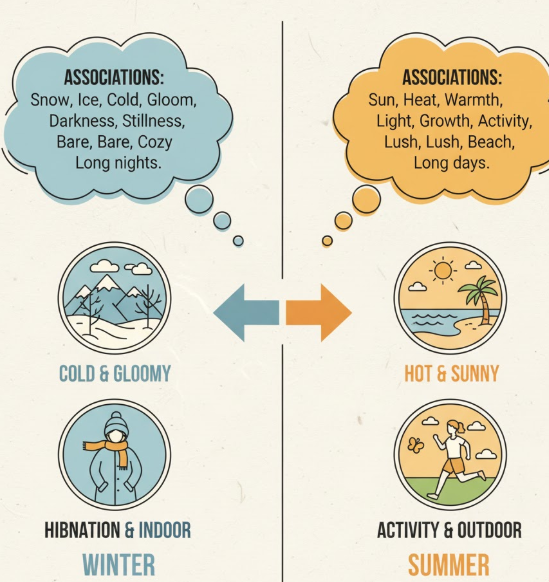
In the case of “winter,” the structural breakdown isn’t about modifying the word itself but rather identifying words and concepts that inherently stand in opposition to its core characteristics—coldness, darkness, and dormancy.
Types and Categories of Winter Antonyms
The antonyms of winter can be categorized into several types, each reflecting a different aspect of its opposite. These categories include seasonal, weather-related, feelings and activities, and figurative antonyms.
Seasonal Antonyms
Seasonal antonyms refer to the seasons that directly oppose winter in terms of temperature, daylight, and overall climate. The primary seasonal antonyms are summer, spring, and autumn (or fall).
Weather-Related Antonyms
Weather-related antonyms focus on specific weather conditions that contrast with the cold, icy, and snowy conditions typical of winter. Examples include heat, sunshine, warmth, dryness (as opposed to snow or rain), and clear skies.
Antonyms Related to Feelings and Activities
This category includes words that describe feelings and activities that are the opposite of those associated with winter, such as energy, growth, activity, joy, and liveliness. Winter is often associated with dormancy and introspection, so these antonyms represent vibrancy and outward expression.
Figurative Antonyms
Figurative antonyms refer to abstract or symbolic oppositions to the concept of winter. For example, if “winter” represents a period of hardship or decline, antonyms might include prosperity, growth, success, renewal, and hope.
Examples of Winter Antonyms
To illustrate the different categories of winter antonyms, here are several examples organized by type.
Seasonal Examples
The following table provides examples of how seasonal antonyms contrast with winter in various contexts.
| Winter | Summer | Spring | Autumn (Fall) |
|---|---|---|---|
| Cold temperatures | Hot temperatures | Mild temperatures | Cool temperatures |
| Short days | Long days | Increasing daylight | Decreasing daylight |
| Dormant vegetation | Abundant vegetation | New growth | Harvest time |
| Snow and ice | Sunshine and warmth | Rain and blossoms | Falling leaves |
| Hibernation | Outdoor activities | Planting seeds | Gathering crops |
| Cozy indoors | Beach trips | Gardening | Pumpkin patches |
| Heavy clothing | Light clothing | Layers of clothing | Sweaters and jackets |
| Holiday season | Vacation season | Rebirth and renewal | Preparation for winter |
| Bare trees | Lush foliage | Blooming flowers | Colorful leaves |
| Limited outdoor activities | Swimming and hiking | Picnics and walks | Apple picking |
| Chapped lips | Sun-kissed skin | Fresh air | Crisp air |
| Frostbite | Sunburn | Allergies | Hayrides |
| Snowstorms | Heat waves | Rain showers | Windy days |
| Indoor heating | Air conditioning | Open windows | Bonfires |
| Comfort food (soups, stews) | Grilled food, salads | Fresh produce | Pumpkin spice everything |
| Skiing and snowboarding | Surfing and swimming | Biking and jogging | Hiking and camping |
| Ice skating | Beach volleyball | Frisbee in the park | Football games |
| Shorter workdays | Longer workdays | Balanced workdays | Moderate workdays |
| Reduced travel | Increased travel | Moderate travel | Moderate travel |
| Dark mornings | Bright mornings | Gradually brightening mornings | Gradually darkening mornings |
This table illustrates how each season contrasts with winter, highlighting differences in temperature, daylight, vegetation, and typical activities.
Weather-Related Examples
The following table provides examples of weather conditions that are antonyms to those typically found in winter.
| Winter Weather | Opposite Weather |
|---|---|
| Snow | Sunshine |
| Ice | Warm breeze |
| Freezing temperatures | Hot temperatures |
| Blizzard | Gentle rain |
| Frost | Humidity |
| Sleet | Dry heat |
| Overcast skies | Clear skies |
| Wind chill | Warm sunshine |
| Hail | Drizzle |
| Snowdrifts | Puddles |
| Icy roads | Dry pavement |
| Frozen lakes | Warm springs |
| Snowflakes | Raindrops |
| Whiteout conditions | Sunny days |
| Sub-zero temperatures | Tropical temperatures |
| Frozen pipes | Warm water |
| Icy winds | Balmy air |
| Snow-covered ground | Green grass |
| Frozen tundra | Lush rainforest |
| Dark, gloomy days | Bright, cheerful days |
| Shivering | Sweating |
| Layered clothing | Minimal clothing |
| Hot cocoa | Iced tea |
| Fireplace | Air conditioner |
| Static electricity | Moist air |
| Chapped skin | Tanned skin |
| Snow boots | Sandals |
| Winter coat | Sun dress |
| Snow shovel | Beach umbrella |
This table showcases how weather conditions provide direct opposites to typical winter phenomena, offering a clear contrast in climate and environment.
Examples Related to Feelings and Activities
The following table illustrates feelings and activities that contrast with the introspection and inactivity often associated with winter.
| Winter Associations | Opposite Feelings/Activities |
|---|---|
| Dormancy | Growth |
| Inactivity | Activity |
| Introspection | Extroversion |
| Hibernation | Exploration |
| Stagnation | Progress |
| Sadness | Joy |
| Loneliness | Community |
| Rest | Energy |
| Stillness | Movement |
| Contemplation | Action |
| Quiet | Liveliness |
| Reflection | Engagement |
| Reserve | Enthusiasm |
| Slowing down | Speeding up |
| Staying indoors | Going outdoors |
| Comfort food | Light meals |
| Heavy clothing | Light clothing |
| Long nights | Short nights |
| Limited sunlight | Abundant sunlight |
| Reduced social interaction | Increased social interaction |
| Limited physical activity | Increased physical activity |
| Dark colors | Bright colors |
| Heavy materials | Light materials |
| Closed windows | Open windows |
| Heaters on | Air conditioners on |
| Indoor hobbies | Outdoor hobbies |
| Reading by the fire | Swimming in the pool |
| Skiing | Surfing |
| Snowball fights | Water balloon fights |
This table demonstrates how feelings and activities can stand in contrast to the common associations of winter, representing a shift towards vibrancy and outward engagement.
Figurative Examples
The following table provides figurative antonyms, reflecting abstract oppositions to the concept of winter as a period of hardship or decline.
| Figurative Winter | Opposite Concepts |
|---|---|
| Hardship | Prosperity |
| Decline | Growth |
| Stagnation | Progress |
| Despair | Hope |
| Endings | Beginnings |
| Darkness | Light |
| Pessimism | Optimism |
| Failure | Success |
| Illness | Health |
| Poverty | Wealth |
| Loss | Gain |
| Weakness | Strength |
| Doubt | Confidence |
| Chaos | Order |
| Conflict | Peace |
| Isolation | Connection |
| Rigidity | Flexibility |
| Resistance | Acceptance |
| Destruction | Creation |
| Death | Life |
| Mourning | Celebration |
| Gloom | Cheerfulness |
| Discomfort | Comfort |
| Resistance | Resilience |
| Deterioration | Improvement |
| Adversity | Advantage |
| Setback | Breakthrough |
| Insecurity | Security |
| Vulnerability | Protection |
This table illustrates how “winter,” when used figuratively, can be contrasted with concepts representing positive change, growth, and improvement.
Usage Rules for Winter Antonyms
When using antonyms of “winter,” consider the context in which you are writing or speaking. The appropriate antonym will depend on whether you are referring to the literal season, weather conditions, feelings, or a figurative representation of winter.
- Seasonal Context: Use “summer,” “spring,” or “autumn” when discussing the time of year.
- Weather Context: Use terms like “heat,” “sunshine,” or “warmth” when focusing on weather conditions.
- Emotional/Activity Context: Choose words like “joy,” “energy,” or “activity” when describing feelings or actions.
- Figurative Context: Select antonyms like “prosperity,” “hope,” or “growth” when using “winter” metaphorically.
It’s also important to ensure that the antonym you choose accurately reflects the intended meaning and creates the desired contrast.
Common Mistakes
One common mistake is using a general antonym when a more specific one is needed. For example, using “good” as an antonym for a figurative “winter” representing hardship is too broad; “prosperity” or “success” would be more appropriate.
Another mistake is confusing synonyms with antonyms. Ensure that the word you are using truly has the opposite meaning and not just a similar one.
Here are some examples of common mistakes and their corrections:
| Incorrect | Correct | Explanation |
|---|---|---|
| “The winter of his career was followed by a period of niceness.” | “The winter of his career was followed by a period of prosperity.” | “Niceness” is too vague; “prosperity” better reflects the opposite of hardship. |
| “Winter is the opposite of cold.” | “Winter is the opposite of summer.” | “Cold” is a characteristic of winter, not its direct opposite as a season. |
| “The winter of my discontent turned into a time of okayness.” | “The winter of my discontent turned into a time of joy.” | “Okayness” doesn’t provide a strong enough contrast to “discontent”; “joy” is a better antonym. |
| “The icy winter was replaced by a warm chill.” | “The icy winter was replaced by a warm breeze.” | “Chill” is associated with cold, while “breeze” implies a gentle warmth. |
| “The winter of their relationship ended in a state of like.” | “The winter of their relationship ended in a state of love.” | “Like” is too weak; “love” provides a stronger contrast to a difficult period. |
Practice Exercises
Test your understanding of winter antonyms with the following exercises.
Exercise 1: Fill in the Blank
Choose the best antonym of “winter” from the options provided to complete each sentence.
| Question | Options | Answer |
|---|---|---|
| After a long __________, the flowers finally began to bloom. | a) winter b) spring c) autumn d) storm | b) spring |
| The __________ sun warmed our faces after the cold winter months. | a) freezing b) burning c) gentle d) warm | d) warm |
| The __________ of his life brought him joy and success, unlike the previous winter of hardship. | a) autumn b) cold c) spring d) summer | d) summer |
| Instead of the usual winter __________ , the animals were full of energy and activity. | a) hibernation b) exploration c) migration d) celebration | a) hibernation |
| The landscape transformed from a winter wasteland to a __________ paradise. | a) frozen b) barren c) lush d) desolate | c) lush |
| After the __________ of discontent, they found a new beginning filled with hope. | a) summer b) spring c) winter d) autumn | c) winter |
| The __________ weather made it perfect for swimming, a stark contrast to the winter’s chill. | a) frigid b) tropical c) snowy d) icy | b) tropical |
| Instead of winter’s stillness, there was a sense of constant __________ in the air. | a) quiet b) movement c) rest d) peace | b) movement |
| The trees, once bare in winter, were now covered in __________ foliage. | a) sparse b) dense c) frozen d) wilted | b) dense |
| The atmosphere was filled with __________ , a stark contrast to the winter’s gloom. | a) cheerfulness b) sadness c) darkness d) silence | a) cheerfulness |
Exercise 2: Matching
Match the winter term with its best antonym.
| Winter Term | Antonym |
|---|---|
| 1. Cold | a) Growth |
| 2. Dormancy | b) Joy |
| 3. Sadness | c) Warmth |
| 4. Darkness | d) Activity |
| 5. Inactivity | e) Light |
Answers:
- 1 – c
- 2 – a
- 3 – b
- 4 – e
- 5 – d
Exercise 3: Sentence Completion
Complete the following sentences using an appropriate antonym of “winter.”
| Question | Answer |
|---|---|
| After the long winter months, the arrival of __________ was a welcome change. | spring |
| The __________ sun provided warmth and comfort, a stark contrast to winter’s chill. | summer |
| The figurative __________ in his life ended, and a time of prosperity began. | winter |
| The landscape transformed from a barren winter scene into a __________ paradise. | lush |
| Instead of the usual winter stillness, there was a sense of constant __________ in the air. | movement |
| The trees, once bare in winter, were now covered in __________ foliage. | dense |
| The atmosphere was filled with __________ , a stark contrast to the winter’s gloom. | cheerfulness |
| The __________ of discontent gave way to a period of happiness and success. | winter |
| The __________ weather made it perfect for swimming, a stark contrast to the winter’s chill. | tropical |
| After months of winter’s darkness, the __________ days were a refreshing change. | bright |
Advanced Topics
For advanced learners, exploring the nuances of antonyms in literature and figurative language can provide a deeper understanding. Authors often use the contrast between “winter” and its antonyms to create powerful imagery and convey complex themes.
Additionally, studying the etymology of antonyms can reveal interesting insights into the evolution of language and the cultural associations of different seasons and concepts.
FAQ
Q1: What is the main antonym of winter?
A1: The main seasonal antonym of winter is summer, as it represents the opposite end of the temperature and daylight spectrum.
Q2: Can “spring” also be considered an antonym of winter?
A2: Yes, spring is also an antonym of winter. While it is not the direct opposite in terms of temperature, it represents a transition from cold to warm and from dormancy to growth, making it a valid opposite.
Q3: What are some weather-related antonyms of winter?
A3: Weather-related antonyms of winter include heat, sunshine, warmth, dryness, and clear skies. These terms describe conditions that are the opposite of the cold, icy, and snowy weather typical of winter.
Q4: How can “winter” be used figuratively, and what are its antonyms in that context?
A4: Figuratively, “winter” can represent a period of hardship, decline, or inactivity. In this context, antonyms might include prosperity, growth, success, renewal, and hope.
Q5: Why is it important to understand antonyms in English?
A5: Understanding antonyms is crucial for enhancing vocabulary, improving comprehension, and expressing contrasting ideas effectively. It allows for more precise and nuanced communication.
Q6: What is the difference between an antonym and a synonym?
A6: An antonym is a word with the opposite meaning of another word, while a synonym is a word with a similar meaning.
Q7: How can I improve my understanding and use of antonyms?
A7: To improve your understanding of antonyms, read widely, use a thesaurus, practice using antonyms in sentences, and pay attention to how antonyms are used in different contexts.
Q8: Are there any prefixes or suffixes that can help create antonyms of “winter”?
A8: No, there are no common prefixes or suffixes that can be directly added to “winter” to create an antonym. The antonyms of winter are typically different words that represent opposite seasons, weather conditions, or concepts.
Conclusion
Mastering the antonyms of “winter” enhances your ability to express contrast and nuance in the English language. By understanding the seasonal, weather-related, emotional, and figurative opposites of winter, you can enrich your vocabulary and communicate more effectively.
Practice using these antonyms in various contexts to solidify your understanding and improve your overall language skills. Remember that the key to mastering antonyms lies in consistent practice and a keen awareness of context.