Understanding and using adjectives that convey respect is crucial for effective and nuanced communication. These adjectives not only enhance the clarity of your message but also demonstrate your awareness and sensitivity towards others.
This article provides a comprehensive guide to adjectives of respect, covering their definitions, usage, and common mistakes. Whether you’re an English language learner or a native speaker looking to refine your vocabulary, this guide will help you master the art of expressing respect through language.
Table of Contents
- Introduction
- Definition of Adjectives of Respect
- Structural Breakdown
- Types and Categories of Adjectives of Respect
- Examples of Adjectives of Respect
- Usage Rules for Adjectives of Respect
- Common Mistakes When Using Adjectives of Respect
- Practice Exercises
- Advanced Topics
- Frequently Asked Questions
- Conclusion
Introduction
In the realm of effective communication, expressing respect is as crucial as conveying information. Adjectives play a pivotal role in this process, adding layers of meaning and emotion to our language.
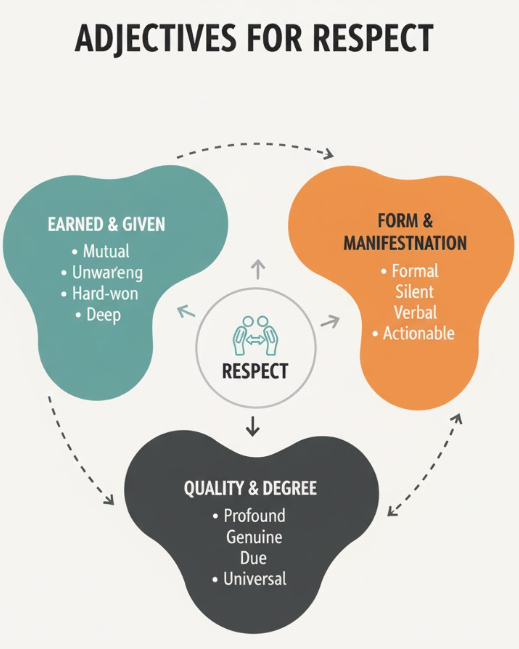
Adjectives of respect are words that describe qualities or attributes that demonstrate honor, admiration, consideration, or deference towards someone or something. Mastering these adjectives is essential for building strong relationships, fostering positive interactions, and navigating social situations with grace.
This article explores the nuances of these powerful words, helping you to use them effectively in your daily life.
This guide is designed to provide a comprehensive understanding of adjectives of respect. We will define the concept, explore different types and categories, provide numerous examples, outline usage rules, address common mistakes, and offer practice exercises to reinforce your learning.
Whether you are writing a formal letter, delivering a speech, or simply engaging in everyday conversation, this knowledge will empower you to communicate with greater sensitivity and impact. By understanding the subtle differences between these adjectives, you can more accurately convey your feelings and intentions, fostering stronger connections with those around you.
Definition of Adjectives of Respect
Adjectives of respect are descriptive words used to attribute qualities that show honor, esteem, consideration, admiration, or deference. These adjectives are used to modify nouns, providing additional information about the noun’s qualities in a way that expresses respect.
They are essential tools for conveying politeness, admiration, and reverence in various contexts. Understanding their function and proper usage is vital for effective communication.
The primary function of adjectives of respect is to express a positive evaluation or acknowledgement of someone’s worth, status, or achievements. They contribute significantly to the tone and impact of your message, making it more persuasive, empathetic, and meaningful.
These adjectives can be used in formal and informal settings, depending on the specific word and context. For instance, “venerable” might be more appropriate in a formal speech, while “thoughtful” could be used in a casual conversation.
Structural Breakdown
The structure of sentences using adjectives of respect is generally straightforward. These adjectives typically precede the noun they modify, enhancing the noun’s attributes with a respectful connotation.
The placement and usage can vary based on sentence construction, but the core principle remains consistent: to add a layer of respect to the described noun.
Here’s a basic structural pattern:
[Adjective of Respect] + [Noun] + [Verb] + [Additional Information]
For example:
- Respected leader addresses the audience.
- Honorable judge rendered a fair verdict.
- Thoughtful gesture was greatly appreciated.
In more complex sentences, adjectives of respect can be part of a series of adjectives or included in descriptive phrases. They can also be used with linking verbs to describe qualities or states of being.
The key is to ensure the adjective is clearly connected to the noun it modifies and that the overall sentence conveys the intended respectful meaning.
For instance:
- He is a distinguished and admired professor.
- Her actions were seen as considerate and compassionate.
- The award was a well-deserved recognition of his efforts.
Types and Categories of Adjectives of Respect
Adjectives of respect can be categorized based on the specific type of respect they convey. Here are some main categories:
Adjectives Denoting Honor and Esteem
These adjectives emphasize the high regard, admiration, and respect held for someone or something due to their achievements, position, or character. They often imply a sense of admiration and high moral standing.
Adjectives Denoting Consideration and Politeness
These adjectives highlight the thoughtfulness, kindness, and empathy shown towards others. They emphasize the importance of being mindful of other people’s feelings and needs.
Adjectives Denoting Admiration and Awe
These adjectives express a deep sense of wonder, amazement, and appreciation for someone or something. They often reflect a recognition of exceptional qualities or achievements.
Adjectives Denoting Deference and Submission
These adjectives convey respect through humility, obedience, and willingness to yield to the judgment or authority of others. They often imply a recognition of someone’s superior knowledge, experience, or status.
Examples of Adjectives of Respect
To illustrate the usage of adjectives of respect, here are examples categorized by the types discussed earlier. These examples will help you understand how to use these adjectives in different contexts.
Examples of Adjectives Denoting Honor and Esteem
The following table provides examples of adjectives that denote honor and esteem, along with example sentences.
| Adjective | Example Sentence |
|---|---|
| Honorable | The honorable senator dedicated his life to public service. |
| Respected | The respected professor is known for her groundbreaking research. |
| Distinguished | He is a distinguished scholar in the field of astrophysics. |
| Venerable | The venerable old oak tree has stood for centuries. |
| Esteemed | The esteemed author received numerous awards for her novels. |
| Illustrious | The city has an illustrious history of art and culture. |
| Revered | The revered leader inspired millions with his message of peace. |
| Noble | He displayed noble qualities of courage and selflessness. |
| Upright | The upright citizen always followed the law and helped others. |
| Worthy | He is a worthy candidate for the position of CEO. |
| Eminent | The eminent scientist made numerous contributions to the field. |
| Grand | The grand ceremony honored the war veterans. |
| Righteous | The righteous king ruled his kingdom with justice and compassion. |
| Valiant | The valiant knight rescued the princess from the dragon. |
| Lauded | The lauded artist’s work was displayed in galleries worldwide. |
| Creditable | The company achieved a creditable performance despite the economic downturn. |
| Exalted | The exalted position of leadership comes with great responsibility. |
| Hallowed | The hallowed grounds of the battlefield are now a memorial. |
| Sacred | The sacred text is revered by followers of the religion. |
| Time-honored | The time-honored tradition is still practiced today. |
| Regal | The queen had a regal presence at the coronation. |
| August | The august assembly convened to discuss important matters. |
| Patriarchal | The patriarchal figure was respected as the head of the family. |
| Matriarchal | The matriarchal figure was revered as the heart of the family. |
| Magisterial | The judge’s magisterial rulings were respected by all. |
| Sainted | The sainted figure was known for their selfless devotion. |
Examples of Adjectives Denoting Consideration and Politeness
The following table provides examples of adjectives that denote consideration and politeness, along with example sentences.
| Adjective | Example Sentence |
|---|---|
| Thoughtful | It was a thoughtful gesture to bring flowers to the hospital. |
| Kind | The kind woman volunteered at the local soup kitchen. |
| Compassionate | The compassionate doctor dedicated his life to helping others. |
| Considerate | She is a considerate friend who always listens to my problems. |
| Courteous | The courteous waiter provided excellent service. |
| Gracious | She was a gracious host, making everyone feel welcome. |
| Polite | It is important to be polite when meeting someone for the first time. |
| Empathetic | The empathetic therapist helped her clients work through their issues. |
| Tactful | He was tactful in addressing the sensitive issue. |
| Diplomatic | The diplomatic negotiator successfully resolved the conflict. |
| Understanding | She was understanding of my situation and offered support. |
| Patient | The patient teacher worked with the struggling student. |
| Benevolent | The benevolent ruler provided for the welfare of his people. |
| Altruistic | Her altruistic actions were motivated by a desire to help others. |
| Humanitarian | The humanitarian organization provided aid to the refugees. |
| Charitable | The charitable foundation donated money to various causes. |
| Tolerant | The tolerant society embraced diversity and inclusion. |
| Forgiving | She was forgiving of his mistakes and offered him a second chance. |
| Gentle | The gentle nurse cared for the patients with tenderness. |
| Sympathetic | She was sympathetic to my loss and offered condolences. |
| Solicitous | The solicitous host made sure everyone had everything they needed. |
| Kindhearted | The kindhearted neighbor always helped those in need. |
| Caring | She is a caring friend who always puts others first. |
| Humane | The humane treatment of animals is essential. |
| Philanthropic | The philanthropic donor supported numerous charities. |
Examples of Adjectives Denoting Admiration and Awe
The following table provides examples of adjectives that denote admiration and awe, along with example sentences.
| Adjective | Example Sentence |
|---|---|
| Admirable | His dedication to his work is truly admirable. |
| Impressive | The athlete’s performance was incredibly impressive. |
| Remarkable | She achieved remarkable success at a young age. |
| Wonderful | It was a wonderful experience to travel to Europe. |
| Amazing | The magician performed an amazing trick. |
| Extraordinary | The artist’s talent is extraordinary. |
| Stunning | The view from the mountaintop was stunning. |
| Magnificent | The palace was a magnificent work of architecture. |
| Spectacular | The fireworks display was spectacular. |
| Awesome | The power of the waterfall was awesome. |
| Astounding | The discovery was truly astounding. |
| Incredible | The acrobat’s performance was incredible. |
| Prodigious | His prodigious talent was evident from a young age. |
| Miraculous | The recovery was considered miraculous. |
| Sublime | The music was absolutely sublime. |
| Breathtaking | The scenery was breathtaking. |
| Wondrous | The world is full of wondrous things to discover. |
| Splendid | The party was a splendid affair. |
| Glorious | The sunrise was a glorious sight. |
| Divine | The taste of the dessert was divine. |
| Transcendent | The experience was transcendent, beyond words. |
| Matchless | His skills were matchless among his peers. |
| Unparalleled | The beauty of the landscape was unparalleled. |
| Unsurpassed | Her achievements were unsurpassed in the field. |
| Incomparable | The artist’s style was incomparable to any other. |
Examples of Adjectives Denoting Deference and Submission
The following table provides examples of adjectives that denote deference and submission, along with example sentences.
| Adjective | Example Sentence |
|---|---|
| Obedient | The obedient dog followed his owner’s commands. |
| Respectful | The students were respectful of their teacher. |
| Submissive | The submissive employee followed the company’s policies. |
| Compliant | The compliant patient followed the doctor’s orders. |
| Deferential | He was deferential to his elders. |
| Acquiescent | She was acquiescent to their demands. |
| Reverent | They were reverent during the religious ceremony. |
| Humble | He was humble despite his achievements. |
| Modest | She was modest about her accomplishments. |
| Yielding | He was yielding to her wishes. |
| Amenable | She was amenable to their suggestions. |
| Subservient | The subservient role did not suit his ambitions. |
| Docile | The docile animal was easy to train. |
| Tractable | The tractable child was well-behaved. |
| Obsequious | His obsequious behavior was seen as insincere. |
| Suplicant | The suplicant beggar asked for alms. |
| Unassertive | Her unassertive nature made it difficult for her to voice her opinions. |
| Complaisant | He was complaisant and always eager to please. |
| Subordinate | The subordinate officer followed the commands of his superior. |
| Vassal | The vassal pledged loyalty to the king. |
| Servile | His servile attitude was off-putting to many. |
Usage Rules for Adjectives of Respect
Using adjectives of respect effectively requires understanding the specific nuances of each word and the context in which it is used. Here are some key rules to follow:
- Context Matters: Choose adjectives that are appropriate for the situation. A formal setting may call for words like “venerable” or “esteemed,” while a casual conversation might be better suited for “thoughtful” or “kind.”
- Specificity: Select adjectives that accurately reflect the qualities you wish to highlight. Consider the specific achievements, character traits, or actions that warrant respect.
- Avoid Overuse: Using too many adjectives of respect can make your language sound insincere or exaggerated. Use them judiciously to maintain their impact.
- Cultural Sensitivity: Be aware of cultural differences in the interpretation of respect. Some adjectives may carry different connotations in different cultures.
- Clarity: Ensure that the adjective clearly modifies the intended noun. Avoid ambiguity that could confuse the meaning of your sentence.
For example, instead of saying “He is a good person,” you could say “He is a compassionate individual” to convey a deeper sense of respect and admiration for his empathy and kindness. Similarly, instead of saying “She is a successful leader,” you might say “She is a distinguished leader” to emphasize her exceptional achievements and high standing.
Common Mistakes When Using Adjectives of Respect
Even experienced English speakers sometimes make mistakes when using adjectives of respect. Here are some common errors to avoid:
- Using Incorrect Synonyms: Choosing the wrong synonym can change the meaning or tone of your message. For example, using “submissive” instead of “respectful” can convey a negative connotation of weakness or subservience.
- Overusing Adjectives: Cluttering your sentences with too many adjectives can dilute their impact and make your writing sound unnatural. Choose the most relevant and impactful adjectives instead.
- Misunderstanding Connotations: Some adjectives have subtle connotations that can be easily missed. For example, “obsequious” implies excessive flattery and insincerity, while “humble” suggests genuine modesty.
- Ignoring Context: Using formal adjectives in informal settings can sound awkward or pretentious. Similarly, using casual adjectives in formal settings can be disrespectful.
Here are some examples of common mistakes and their corrections:
| Incorrect | Correct | Explanation |
|---|---|---|
| He is a submissive leader. | He is a respectful leader. | “Submissive” implies weakness, while “respectful” implies valuing others’ opinions. |
| She is a very, very, very kind person. | She is a compassionate person. | Avoid overuse of adverbs; choose a stronger adjective. |
| He was obsequious to the manager. | He was respectful to the manager. | “Obsequious” implies insincerity, while “respectful” implies genuine regard. |
| That was a cool speech by the venerable professor. | That was an impressive speech by the venerable professor. | “Cool” is too informal for describing a venerable professor’s speech. |
Practice Exercises
Test your understanding of adjectives of respect with the following exercises.
Exercise 1: Fill in the Blanks
Choose the most appropriate adjective of respect from the list to complete each sentence. (Honorable, Thoughtful, Admirable, Deferential, Esteemed)
- The ______ judge presided over the trial with fairness and integrity.
- It was a ______ gesture to remember her birthday with a card and a gift.
- His dedication to his community is truly ______.
- The young intern was ______ to the senior executives, always showing respect for their experience.
- The ______ professor is a leading expert in her field.
Exercise 2: Sentence Rewriting
Rewrite each sentence using a more specific adjective of respect.
- He is a good doctor.
- She is a successful artist.
- It was a nice thing to do.
- He is a great leader.
- She is a kind person.
- The old tree stood tall.
- He is a famous writer.
- The show was very good.
- The meal was tasty.
- He is a well-known politician.
Exercise 3: Error Correction
Identify and correct the errors in the following sentences.
- He is a submissive president.
- She is a very, very polite person.
- The venerable comedian told cool jokes.
- He was obsequious to his friends.
- That was a remarkable bad performance.
- The respectful old man sat on the porch.
- She is a wonderful awful singer.
- He is a thoughtful obnoxious person.
- The kind terrible boss yelled at his employees.
- It was a admirable crime.
Answer Key:
Exercise 1:
- Honorable
- Thoughtful
- Admirable
- Deferential
- Esteemed
Exercise 2: (Example Answers)
- He is a compassionate doctor.
- She is a distinguished artist.
- It was a thoughtful thing to do.
- He is an honorable leader.
- She is a benevolent person.
- The venerable tree stood tall.
- He is an illustrious writer.
- The show was magnificent.
- The meal was divine.
- He is an esteemed politician.
Exercise 3:
- He is a respectful president.
- She is a gracious person.
- The venerable comedian told amusing jokes.
- He was respectful to his friends.
- That was a remarkably skilled performance.
- The revered old man sat on the porch.
- She is a wonderfully talented singer.
- He is a thoughtful and considerate person.
- The cruel boss yelled at his employees.
- It was an egregious crime.
Advanced Topics
For advanced learners, exploring the etymology and historical context of adjectives of respect can provide deeper insights into their usage and connotations. Additionally, analyzing how these adjectives are used in literature, speeches, and other forms of communication can enhance your understanding of their persuasive power.
Studying rhetorical devices such as hyperbole and understatement can also help you use adjectives of respect more effectively.
Another advanced topic is the use of adjectives of respect in cross-cultural communication. Different cultures may have varying expectations and interpretations of respect, so it is essential to be aware of these differences when communicating with people from different backgrounds.
For example, some cultures may place a greater emphasis on formality and deference, while others may value directness and informality. Understanding these cultural nuances can help you avoid misunderstandings and build stronger relationships.
Frequently Asked Questions
Here are some frequently asked questions about adjectives of respect:
- What are adjectives of respect?Adjectives of respect are descriptive words used to convey honor, esteem, consideration, admiration, or deference towards someone or something. They modify nouns to express a positive evaluation or acknowledgment of worth.
- Why are adjectives of respect important?They are important for effective communication, building strong relationships, fostering positive interactions, and navigating social situations with grace. They help convey politeness, admiration, and reverence.
- Can you give some examples of adjectives of respect?Examples include honorable, respected, thoughtful, kind, admirable, impressive, deferential, and obedient.
- How do I use adjectives of respect correctly?Choose adjectives that are appropriate for the context, specific to the qualities you wish to highlight, and avoid overuse. Be mindful of cultural sensitivity and ensure clarity in your sentences.
- What are some common mistakes to avoid?Avoid using incorrect synonyms, overusing adjectives, misunderstanding connotations, and ignoring context. Be careful to select the adjective that accurately reflects the intended meaning and tone.
- How can I improve my use of adjectives of respect?Practice using them in different contexts, study examples from literature and speeches, and seek feedback from native English speakers. Pay attention to the nuances of each adjective and its cultural implications.
- Are there any adjectives of respect that should be avoided?Adjectives like “obsequious” and “servile” should be used with caution, as they can imply insincerity or excessive subservience. It’s important to choose adjectives that convey genuine respect without being demeaning or patronizing.
- How do adjectives of respect differ across cultures?Different cultures may have varying expectations and interpretations of respect, so some adjectives may carry different connotations in different cultures. Be aware of these differences when communicating with people from different backgrounds to avoid misunderstandings.
Conclusion
Mastering adjectives of respect is an invaluable skill for anyone seeking to communicate effectively and build meaningful relationships. By understanding the nuances of these words, you can express your feelings and intentions more accurately, fostering stronger connections with those around you.
This guide has provided a comprehensive overview of adjectives of respect, covering their definitions, types, usage rules, common mistakes, and practice exercises.
Remember to choose your words carefully, considering the context, specificity, and cultural implications of each adjective. Avoid overuse and be mindful of connotations.
With practice and attention to detail, you can master the art of expressing respect through language, enhancing your communication skills and enriching your interactions with others. Keep practicing and refining your knowledge of these powerful adjectives to become a more effective and empathetic communicator.