Understanding the adjectives that aptly describe a mentor is crucial for recognizing and appreciating the qualities that make a mentor effective. This article delves into the world of adjectives used to characterize mentors, exploring their meanings, usage, and importance in various contexts.
Whether you are seeking a mentor, aspiring to be one, or simply interested in enhancing your understanding of English grammar, this guide will provide valuable insights and practical examples. This comprehensive exploration will benefit students, professionals, and anyone looking to improve their descriptive vocabulary.
Table of Contents
- Introduction
- Definition of Adjectives for Mentors
- Structural Breakdown
- Types and Categories of Adjectives for Mentors
- Examples of Adjectives for Mentors
- Usage Rules for Adjectives for Mentors
- Common Mistakes
- Practice Exercises
- Advanced Topics
- FAQ
- Conclusion
Definition of Adjectives for Mentors
Adjectives for mentors are descriptive words that modify nouns or pronouns, specifically used to characterize the qualities, attributes, or characteristics of an individual serving as a mentor. These adjectives help to paint a vivid picture of the mentor’s personality, skills, and the impact they have on their mentees. They are essential for effective communication when discussing or describing a mentor’s role and influence. These adjectives can range from describing personality traits to specific skills and the overall impact the mentor has on the mentee’s development.
Adjectives serve the fundamental purpose of adding detail and specificity to our language. When discussing mentors, using precise adjectives can clarify the specific qualities that make a mentor effective and valuable.
It allows for a more nuanced understanding of the mentor-mentee relationship and the mentor’s contributions.
Structural Breakdown
Adjectives typically precede the noun they modify, but they can also follow a linking verb (such as “is,” “are,” “was,” “were,” “seems,” “appears,” “becomes”). The structure is generally straightforward: Adjective + Noun or Noun + Linking Verb + Adjective. Understanding this basic structure helps in correctly placing and using adjectives in sentences.
Here’s how the structure typically works:
- Attributive Position: The adjective comes before the noun it modifies. Example: “The experienced mentor provided invaluable guidance.“
- Predicative Position: The adjective follows a linking verb and describes the subject. Example: “The mentor is supportive.“
In some cases, multiple adjectives can modify a single noun, adding layers of description. For example: “The wise, patient, and understanding mentor helped me navigate my career.” The order of these adjectives can sometimes follow certain conventions, but generally, adjectives of opinion precede adjectives of fact.
Types and Categories of Adjectives for Mentors
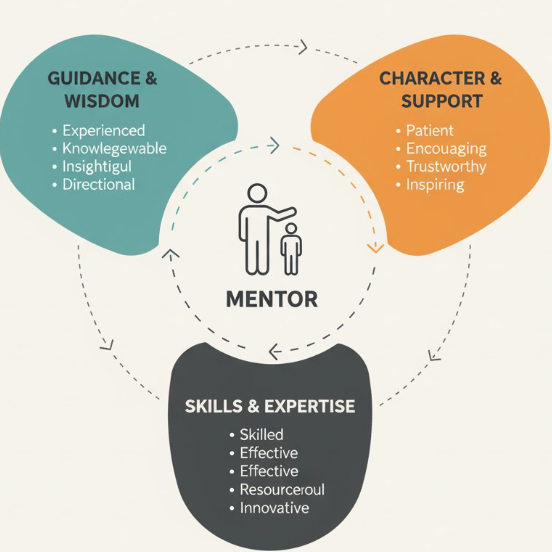
Adjectives for mentors can be categorized based on the aspect they describe: character, skills, or impact. This categorization helps in selecting the most appropriate adjectives to convey the desired meaning.
Each category provides a different lens through which to view and describe the mentor’s attributes.
Character Adjectives
Character adjectives describe the inherent personality traits and moral qualities of a mentor. These are fundamental to building trust and rapport in the mentoring relationship. Examples include: patient, empathetic, understanding, supportive, encouraging, honest, ethical, fair, compassionate, kind.
A mentor with strong character traits creates a safe and nurturing environment for the mentee to grow. These adjectives highlight the importance of integrity and positive personal attributes in a mentoring role.
Skill Adjectives
Skill adjectives describe the specific abilities and expertise that a mentor possesses. These adjectives focus on the mentor’s competence and capabilities. Examples include: knowledgeable, experienced, insightful, resourceful, strategic, analytical, communicative, articulate, skilled, proficient.
These adjectives are crucial for highlighting the mentor’s ability to provide practical guidance and support. They emphasize the mentor’s expertise and their capacity to impart valuable knowledge and skills.
Impact Adjectives
Impact adjectives describe the effect a mentor has on their mentee’s growth and development. These adjectives focus on the positive outcomes of the mentoring relationship. Examples include: influential, transformative, empowering, motivational, inspiring, guiding, developmental, constructive, helpful, valuable.
These adjectives underscore the mentor’s ability to positively shape the mentee’s trajectory and foster their personal and professional growth. They highlight the lasting effects of a successful mentoring relationship.
Examples of Adjectives for Mentors
The following tables provide examples of adjectives for mentors, categorized by character, skills, and impact. Each table includes a wide range of adjectives with example sentences to illustrate their usage.
Examples of Character Adjectives
The following table provides examples of character adjectives that describe a mentor’s personality and moral qualities. These adjectives are essential for highlighting the trust and rapport that a mentor builds with their mentee.
| Adjective | Example Sentence |
|---|---|
| Patient | The patient mentor took the time to explain complex concepts in a clear and understandable way. |
| Empathetic | An empathetic mentor understands the challenges and frustrations a mentee might face. |
| Understanding | The understanding mentor listened without judgment and offered helpful advice. |
| Supportive | A supportive mentor provides encouragement and guidance during difficult times. |
| Encouraging | The encouraging mentor instilled confidence in the mentee’s abilities. |
| Honest | An honest mentor provides constructive feedback, even if it’s difficult to hear. |
| Ethical | The ethical mentor always acted with integrity and upheld the highest standards. |
| Fair | A fair mentor treats all mentees with equal respect and consideration. |
| Compassionate | The compassionate mentor showed genuine concern for the mentee’s well-being. |
| Kind | A kind mentor creates a positive and nurturing environment. |
| Respectful | The respectful mentor valued the mentee’s opinions and perspectives. |
| Open-minded | An open-minded mentor is receptive to new ideas and approaches. |
| Positive | The positive mentor maintained an optimistic outlook, even in challenging situations. |
| Caring | A caring mentor demonstrated genuine concern for the mentee’s personal and professional growth. |
| Dedicated | The dedicated mentor invested significant time and effort in the mentee’s development. |
| Genuine | A genuine mentor is authentic and sincere in their interactions. |
| Reliable | The reliable mentor consistently followed through on commitments. |
| Trustworthy | A trustworthy mentor maintained confidentiality and acted with integrity. |
| Approachable | The approachable mentor made it easy for the mentee to ask questions and seek guidance. |
| Considerate | A considerate mentor took the mentee’s feelings and circumstances into account. |
| Selfless | The selfless mentor prioritized the mentee’s needs and development above their own. |
| Gracious | A gracious mentor was always thankful and appreciative of the mentee’s efforts. |
| Polite | The polite mentor treated everyone with courtesy and respect. |
| Thoughtful | A thoughtful mentor provided insightful advice and guidance. |
Examples of Skill Adjectives
The following table provides examples of skill adjectives that describe a mentor’s abilities and expertise. These adjectives are important for highlighting the mentor’s competence and capabilities in guiding their mentee.
| Adjective | Example Sentence |
|---|---|
| Knowledgeable | The knowledgeable mentor shared valuable insights based on years of experience. |
| Experienced | An experienced mentor offered practical advice based on their own career journey. |
| Insightful | The insightful mentor helped the mentee see things from a new perspective. |
| Resourceful | A resourceful mentor connected the mentee with valuable contacts and opportunities. |
| Strategic | The strategic mentor helped the mentee develop a long-term career plan. |
| Analytical | An analytical mentor helped the mentee break down complex problems into manageable steps. |
| Communicative | The communicative mentor clearly articulated expectations and provided regular feedback. |
| Articulate | An articulate mentor expressed ideas in a clear and persuasive manner. |
| Skilled | The skilled mentor demonstrated expertise in their field through practical examples. |
| Proficient | A proficient mentor offered guidance based on deep knowledge of the subject matter. |
| Adaptable | The adaptable mentor adjusted their approach to meet the mentee’s changing needs. |
| Innovative | An innovative mentor encouraged the mentee to think outside the box and explore new ideas. |
| Creative | The creative mentor helped the mentee develop unique solutions to challenges. |
| Technical | A technical mentor provided guidance on specific software or technologies. |
| Organized | The organized mentor helped the mentee manage their time and prioritize tasks. |
| Efficient | An efficient mentor helped the mentee streamline their workflow and improve productivity. |
| Practical | The practical mentor offered realistic advice based on real-world experience. |
| Astute | A astute mentor provided keen insights and observations. |
| Experienced | The experienced mentor shared valuable lessons from their own career path. |
| Well-versed | A well-versed mentor was knowledgeable about a wide range of topics. |
| Specialized | The specialized mentor provided expert guidance in a specific area of expertise. |
| Seasoned | A seasoned mentor offered wisdom gained from years of experience. |
| Competent | The competent mentor demonstrated the ability to handle complex tasks effectively. |
| Effective | A effective mentor helped the mentee achieve their goals. |
Examples of Impact Adjectives
The following table provides examples of impact adjectives that describe the effect a mentor has on their mentee’s growth and development. These adjectives highlight the positive outcomes of the mentoring relationship.
| Adjective | Example Sentence |
|---|---|
| Influential | The influential mentor shaped the mentee’s career path in a profound way. |
| Transformative | A transformative mentor helped the mentee undergo significant personal and professional growth. |
| Empowering | The empowering mentor instilled confidence and independence in the mentee. |
| Motivational | A motivational mentor inspired the mentee to pursue their goals with passion and determination. |
| Inspiring | The inspiring mentor served as a role model for the mentee. |
| Guiding | A guiding mentor provided direction and support throughout the mentee’s journey. |
| Developmental | The developmental mentor fostered the mentee’s skills and abilities. |
| Constructive | A constructive mentor provided feedback that helped the mentee improve. |
| Helpful | The helpful mentor offered practical assistance and support. |
| Valuable | A valuable mentor provided insights and guidance that were essential to the mentee’s success. |
| Encouraging | The encouraging mentor boosted the mentee’s confidence and motivation. |
| Positive | A positive mentor created a supportive environment for growth and learning. |
| Strengthening | The strengthening mentor helped the mentee overcome weaknesses and build on strengths. |
| Advancing | A advancing mentor helped the mentee progress in their career. |
| Beneficial | The beneficial mentor provided advice and guidance that significantly improved the mentee’s performance. |
| Enriching | A enriching mentor broadened the mentee’s perspective and knowledge. |
| Catalytic | The catalytic mentor accelerated the mentee’s growth and development. |
| Transforming | A transforming mentor helped the mentee undergo a significant change in their life or career. |
| Aiding | The aiding mentor provided support and assistance during challenging times. |
| Supporting | A supporting mentor offered encouragement and guidance to help the mentee achieve their goals. |
| Uplifting | The uplifting mentor inspired the mentee to reach their full potential. |
| Motivating | A motivating mentor instilled a sense of purpose and drive in the mentee. |
| Leading | The leading mentor guided the mentee towards success. |
| Promoting | A promoting mentor helped the mentee advance in their career. |
Usage Rules for Adjectives for Mentors
When using adjectives to describe mentors, it’s essential to follow certain usage rules to ensure clarity and accuracy. These rules govern the placement, order, and agreement of adjectives with the nouns they modify.
Here are some key usage rules:
- Placement: Adjectives usually precede the noun they modify (e.g., “the knowledgeable mentor“). However, they can also follow a linking verb (e.g., “the mentor is supportive“).
- Order: When using multiple adjectives, there is a general order to follow: opinion, size, age, shape, color, origin, material, and purpose. For example: “a helpful, experienced mentor” (opinion before age/experience).
- Agreement: Adjectives in English do not change form to agree with the noun they modify in number or gender. This makes their usage relatively straightforward compared to languages like Spanish or French.
- Compound Adjectives: These are formed when two or more words are joined to act as a single adjective. They are often hyphenated (e.g., “a well-respected mentor“).
It’s also important to consider the context when selecting adjectives. The most appropriate adjective will depend on the specific qualities you want to emphasize and the overall message you want to convey.
Common Mistakes
Even experienced English speakers sometimes make mistakes when using adjectives. Here are some common errors to avoid when describing mentors:
| Incorrect | Correct | Explanation |
|---|---|---|
| The mentor is more better. | The mentor is better. | Avoid using “more” with comparative adjectives ending in “-er.” |
| The most supportive mentor I ever had. | The most supportive mentor I have ever had. | Include the auxiliary verb “have” to complete the present perfect tense. |
| A experienced mentor. | An experienced mentor. | Use “an” before words that begin with a vowel sound. |
| The mentor is very support. | The mentor is very supportive. | Use the correct adjective form (“supportive” instead of “support”). |
| He is a good mentor, and she is good too. | He is a good mentor, and she is a good mentor too. / He is a good mentor, and she is as well. | To avoid ambiguity, repeat the noun or use a substitute phrase. |
| The mentor is influence. | The mentor is influential. | Use the correct adjective form (“influential” instead of “influence”). |
| Mentor good. | The mentor is good. | Ensure the sentence has a subject and a verb. |
| The mentor, he is kind. | The mentor is kind. | Avoid unnecessary pronoun repetition. |
| The mentor is most kindest. | The mentor is the kindest. | Avoid double superlatives (“most” and “-est”). |
| The mentor is help. | The mentor is helpful. | Use the correct adjective form (“helpful” instead of “help”). |
By being aware of these common mistakes, you can improve the accuracy and clarity of your descriptions of mentors.
Practice Exercises
Test your understanding of adjectives for mentors with the following exercises. Choose the most appropriate adjective to complete each sentence.
Exercise 1: Choose the correct adjective from the options provided.
| Question | Options | Answer |
|---|---|---|
| 1. The _______ mentor provided guidance and support. | (a) patience (b) patient (c) patiently | (b) patient |
| 2. She is an _______ mentor, always willing to help. | (a) encourage (b) encouraging (c) encouragement | (b) encouraging |
| 3. The _______ mentor shared his vast knowledge with the mentee. | (a) knowledge (b) knowledgeable (c) knowingly | (b) knowledgeable |
| 4. A _______ mentor can transform a mentee’s career. | (a) transform (b) transforming (c) transformation | (b) transforming |
| 5. The _______ mentor helped the mentee develop a strategic plan. | (a) strategy (b) strategic (c) strategically | (b) strategic |
| 6. The _______ mentor was always there to listen without judgment. | (a) understand (b) understanding (c) understandably | (b) understanding |
| 7. He is a very _______ mentor who always gives valuable advice. | (a) help (b) helpful (c) helpfully | (b) helpful |
| 8. The _______ mentor inspired the mentee to reach their full potential. | (a) inspire (b) inspiring (c) inspiration | (b) inspiring |
| 9. She is an _______ mentor, known for her ethical standards. | (a) ethic (b) ethical (c) ethically | (b) ethical |
| 10. The _______ mentor provided constructive criticism to help the mentee improve. | (a) construct (b) constructive (c) construction | (b) constructive |
Exercise 2: Fill in the blanks with appropriate adjectives to describe a mentor.
| Question | Answer |
|---|---|
| 1. A good mentor is often described as _______ and _______. | Patient, understanding |
| 2. An _______ mentor can provide _______ insights. | Experienced, valuable |
| 3. The mentor’s _______ advice was truly _______. | Strategic, helpful |
| 4. A _______ mentor is _______ to the mentee’s needs. | Supportive, attentive |
| 5. The _______ mentor was also very _______. | Knowledgeable, resourceful |
| 6. The mentor’s _______ approach made the mentee feel _______. | Empowering, confident |
| 7. It’s important for a mentor to be both _______ and _______. | Honest, fair |
| 8. The mentor’s _______ guidance was _______. | Inspirational, transformative |
| 9. A _______ mentor offers _______ support. | Caring, genuine |
| 10. The mentor’s _______ nature made them _______. | Approachable, reliable |
Advanced Topics
For advanced learners, exploring more nuanced aspects of adjectives for mentors can further refine their understanding and usage. This includes delving into the subtle differences between synonyms, the use of figurative language, and the impact of cultural context.
Here are some advanced topics to consider:
- Synonym Nuances: Understanding the subtle differences between similar adjectives (e.g., “helpful” vs. “beneficial,” “supportive” vs. “encouraging”) can allow for more precise and impactful descriptions.
- Figurative Language: Using metaphors and similes to describe a mentor’s qualities can add depth and creativity to your writing. For example, “The mentor was a guiding light in my career.“
- Cultural Context: The perception of what makes a “good” mentor can vary across cultures. Being aware of these cultural nuances is important for effective communication in a global context.
- Combining Adjectives: Using multiple adjectives to create a more detailed picture of a mentor requires careful consideration of order and flow. For example, “a wise and compassionate mentor.”
Exploring these advanced topics can help you develop a more sophisticated understanding of adjectives and their power to convey meaning.
FAQ
Here are some frequently asked questions about adjectives for mentors:
- What are the most important adjectives to describe a mentor?
The most important adjectives depend on the context and the specific qualities you want to emphasize. However, some universally valued adjectives include patient, understanding, knowledgeable, supportive, and inspiring. - How do I choose the right adjective to describe a mentor?
Consider the specific qualities and impact of the mentor. Think about their personality, skills, and the effect they have on their mentees. Choose adjectives that accurately reflect these aspects. - Can I use multiple adjectives to describe a mentor?
Yes, using multiple adjectives can provide a more detailed and nuanced description. However, be mindful of the order and flow of the adjectives to ensure clarity. - What is the difference between “helpful” and “beneficial” when describing a mentor?
While both adjectives describe positive impact, “helpful” suggests providing assistance or support, while “beneficial” implies producing a favorable result or advantage. A mentor can be helpful by offering advice, and their guidance can be beneficial to the mentee’s career. - Are there any adjectives to avoid when describing a mentor?
Avoid adjectives that are vague, negative, or overly subjective. Focus on adjectives that are specific, positive, and based on observable qualities or actions. - How can I improve my vocabulary of adjectives for mentors?
Read widely, pay attention to how adjectives are used in context, and use a thesaurus to explore synonyms and related words. Practice using new adjectives in your writing and speaking. - Is it important to use strong adjectives when recommending a mentor?
Yes, using strong and descriptive adjectives can make your recommendation more compelling and persuasive. It helps to highlight the mentor’s unique qualities and the value they bring to the mentoring relationship. - How do character adjectives impact the mentor-mentee relationship?
Character adjectives emphasize the trustworthiness, empathy, and integrity of the mentor. These qualities are crucial for building a strong and positive relationship, fostering trust, and creating a safe space for the mentee to learn and grow.
Conclusion
Mastering the art of using adjectives to describe mentors is a valuable skill for anyone involved in mentoring, whether as a mentor, mentee, or simply an observer. By understanding the different types of adjectives and their proper usage, you can effectively communicate the qualities and impact of a mentor.
This knowledge enhances your ability to appreciate and recognize the contributions of mentors in various contexts.
Remember to consider the context, choose adjectives that accurately reflect the mentor’s attributes, and avoid common mistakes. With practice and attention to detail, you can confidently and effectively use adjectives to describe the invaluable role of mentors in shaping lives and careers.
Continuous learning and application are key to mastering this aspect of English grammar.