Learning to say “Have a nice day” in Italian is more than just a polite phrase; it’s a gateway to understanding Italian culture and etiquette. Knowing how to properly wish someone well in Italian demonstrates respect and friendliness, enriching your interactions and opening doors to deeper connections.
This article provides a comprehensive guide to the various ways of expressing this sentiment, covering grammar, usage, and cultural nuances. Anyone interested in learning Italian, from beginners to advanced learners, will find this guide invaluable for enhancing their conversational skills and cultural awareness.
Table of Contents
- Introduction
- Definition of “Have a Nice Day” in Italian
- Structural Breakdown of Key Phrases
- Types and Categories of Expressions
- Examples of “Have a Nice Day” in Italian
- Usage Rules and Etiquette
- Common Mistakes to Avoid
- Practice Exercises
- Advanced Topics: Nuances and Subtleties
- Frequently Asked Questions
- Conclusion
Introduction
Expressing well wishes is a fundamental aspect of any language, and Italian is no exception. Knowing how to say “Have a nice day” in Italian not only allows you to be polite but also provides insight into the cultural values of Italy. The phrase, or its variations, are commonly used in everyday interactions, from casual encounters at the local caffè to formal business settings. Mastering these expressions will significantly improve your communication skills and help you navigate social situations with confidence.
This article aims to provide a detailed and practical guide to saying “Have a nice day” in Italian. We will explore the various ways to express this sentiment, considering both formal and informal contexts, as well as regional differences.
Through clear explanations, numerous examples, and practical exercises, you will gain a solid understanding of how to use these phrases correctly and effectively. Whether you are a beginner or an advanced learner, this guide will help you enhance your Italian language skills and cultural competence.
Definition of “Have a Nice Day” in Italian
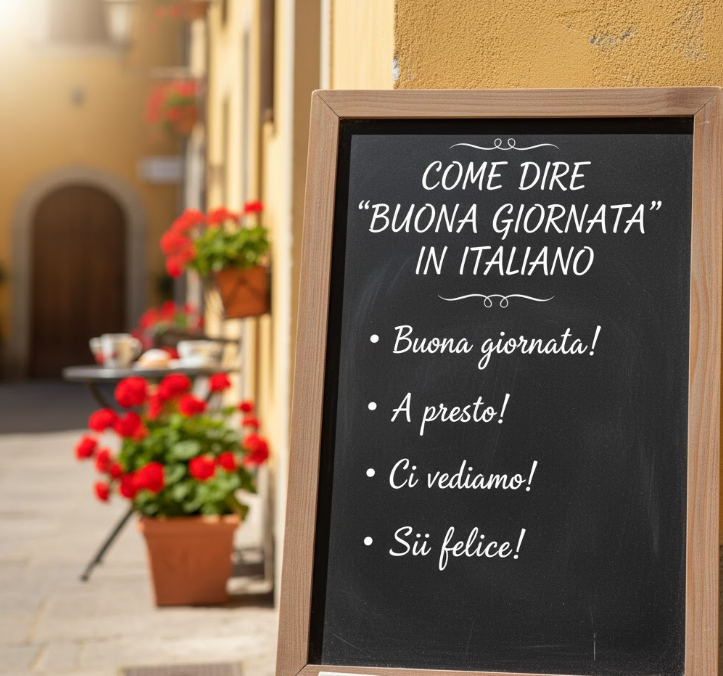
The most common and direct translation of “Have a nice day” in Italian is “Buona giornata.” This phrase is widely used and generally appropriate for most situations. However, Italian offers several other ways to convey the same sentiment, each with its own nuances and level of formality. Understanding these variations allows you to choose the most appropriate expression for the context and your relationship with the person you are addressing.
“Buona giornata” is composed of two words: “buona,” which means “good” or “nice,” and “giornata,” which means “day.” It functions as a farewell wish, expressing the hope that the person you are addressing will have a pleasant day. While “Buona giornata” is the most straightforward translation, other expressions such as “Passa una buona giornata” (Have a good day – literally “Spend a good day”) or “Le auguro una buona giornata” (I wish you a good day) add subtle variations in emphasis and formality.
Structural Breakdown of Key Phrases
To fully understand and use the various ways to say “Have a nice day” in Italian, it’s essential to break down the structural elements of the key phrases. This involves understanding the grammatical roles of each word and how they combine to form a meaningful expression.
- Buona giornata: Buona is the feminine singular form of the adjective buono (good), and giornata is a feminine noun meaning “day.” The adjective precedes the noun, which is common in Italian.
- Buon pomeriggio: Similar to “Buona giornata,” buon is a shortened (and masculine) form of buono, and pomeriggio is a masculine noun meaning “afternoon.”
- Buona serata: Serata is a feminine noun meaning “evening.”
- Passa una buona giornata: Passa is the imperative form of the verb passare (to spend), una is the indefinite article “a,” buona is the adjective “good,” and giornata is the noun “day.”
- Le auguro una buona giornata: Le auguro means “I wish you” (formal), una is the indefinite article “a,” buona is the adjective “good,” and giornata is the noun “day.”
Understanding these structural elements allows you to adapt and modify the phrases to suit different contexts and express similar sentiments. For example, you can replace giornata with other time-related nouns like settimana (week) or fine settimana (weekend) to wish someone a good week or weekend.
Types and Categories of Expressions
Italian offers a range of expressions to convey the sentiment of “Have a nice day,” each with its own level of formality and appropriateness for different situations. Understanding these categories is crucial for effective communication.
Formal Expressions
Formal expressions are used when addressing someone you don’t know well, someone older than you, or someone in a position of authority. These expressions are polite and respectful, and they are essential for professional settings and interactions with strangers.
Examples of formal expressions include:
- Le auguro una buona giornata: I wish you a good day (formal).
- La ringrazio e le auguro una buona giornata: Thank you and I wish you a good day (formal).
- Si goda la giornata: Enjoy your day (formal).
Informal Expressions
Informal expressions are used when addressing friends, family members, or close colleagues. These expressions are more casual and relaxed, reflecting a closer relationship.
Examples of informal expressions include:
- Buona giornata: Have a nice day.
- Passa una buona giornata: Have a good day.
- Divertiti!: Have fun! (often used with “Buona giornata”).
Regional Variations
Like many languages, Italian has regional variations in vocabulary and expressions. While “Buona giornata” is widely understood throughout Italy, some regions may have their own preferred ways of expressing the same sentiment.
For example, in some parts of Italy, you might hear:
- Stai bene!: Be well! (can be used as a farewell).
- A rivederci!: Goodbye! (often used with “Buona giornata”).
Examples of “Have a Nice Day” in Italian
To fully grasp the nuances of saying “Have a nice day” in Italian, it’s helpful to examine a variety of examples in different contexts. The following tables provide examples of general, formal, and informal expressions, along with their English translations and contextual notes.
General Examples
These are examples of how to use the phrase “Buona giornata” in daily life. It’s a very versatile and useful phrase.
The following table demonstrates the phrase in different scenarios.
| Italian Phrase | English Translation | Context |
|---|---|---|
| Buona giornata! | Have a nice day! | General greeting or farewell. |
| Buona giornata, signora! | Have a nice day, madam! | Addressing a woman formally. |
| Buona giornata a tutti! | Have a nice day everyone! | Addressing a group of people. |
| Grazie, buona giornata anche a lei! | Thank you, have a nice day to you too! | Responding to someone who wished you a nice day. |
| Buona giornata e arrivederci! | Have a nice day and goodbye! | Ending a conversation or transaction. |
| Spero che tu abbia una buona giornata! | I hope you have a good day! | Expressing hope for someone’s day. |
| Le auguro una buona giornata! | I wish you a good day! (formal) | Formal way to wish someone well. |
| Buona giornata! Ci vediamo domani. | Have a nice day! See you tomorrow. | Saying goodbye with plans to meet again. |
| Buona giornata! Fai attenzione. | Have a nice day! Be careful. | Adding a note of caution. |
| Buona giornata! E grazie ancora. | Have a nice day! And thank you again. | Expressing gratitude along with well wishes. |
| “Buona giornata!” mi disse il barista. | “Have a nice day!” the barista said to me. | Illustrating a typical usage in a cafe. |
| Dopo la riunione, ci siamo detti “Buona giornata!” | After the meeting, we said “Have a nice day!” to each other. | Example of using the phrase after a meeting. |
| Ricordati di dire “Buona giornata!” quando te ne vai. | Remember to say “Have a nice day!” when you leave. | Reminder to use the phrase appropriately. |
| Se qualcuno ti dice “Buona giornata!”, rispondi con un sorriso. | If someone says “Have a nice day!” to you, respond with a smile. | Advising on how to respond to the phrase. |
| “Buona giornata!” è un modo gentile per salutare qualcuno. | “Have a nice day!” is a polite way to greet someone. | Highlighting the politeness of the phrase. |
| Non dimenticare di dire “Buona giornata!” al postino. | Don’t forget to say “Have a nice day!” to the postman. | Suggesting a specific scenario for usage. |
| “Buona giornata!” è una frase comune in Italia. | “Have a nice day!” is a common phrase in Italy. | Emphasizing the commonality of the phrase. |
| Anche se è una giornata piovosa, puoi comunque dire “Buona giornata!”. | Even if it’s a rainy day, you can still say “Have a nice day!”. | Illustrating that the phrase is appropriate in any weather. |
| Quando esci dal negozio, dì “Buona giornata!” al commesso. | When you leave the store, say “Have a nice day!” to the shop assistant. | Providing another specific scenario. |
| “Buona giornata!” è un modo per mostrare gentilezza. | “Have a nice day!” is a way to show kindness. | Stressing the kindness aspect of the phrase. |
Formal Examples
These are examples of formal ways to say “Have a nice day” in Italian. These are best used when speaking to someone you don’t know very well, or someone older than you.
The following table provides formal examples of the phrase.
| Italian Phrase | English Translation | Context |
|---|---|---|
| Le auguro una buona giornata, signor Rossi. | I wish you a good day, Mr. Rossi. | Addressing someone by their last name in a formal setting. |
| La ringrazio e le auguro una buona giornata, dottore. | Thank you and I wish you a good day, doctor. | Showing respect to a professional. |
| Si goda la giornata, signora. | Enjoy your day, madam. | A more refined and formal way to wish someone well. |
| Le porgo i miei migliori auguri per una buona giornata. | I offer you my best wishes for a good day. | A very formal and polite expression. |
| Spero che possa trascorrere una buona giornata, signorina. | I hope you can have a good day, miss. | Expressing hope for a pleasant day in a formal context. |
| Le auguro una proficua giornata lavorativa. | I wish you a productive work day. | Specifically wishing someone well in a work setting. |
| Le porgo i miei cordiali saluti e le auguro una buona giornata. | I offer you my cordial greetings and wish you a good day. | A very respectful and formal farewell. |
| Ringraziandola per la sua attenzione, le auguro una buona giornata. | Thanking you for your attention, I wish you a good day. | Expressing gratitude before wishing someone well. |
| Le auguro che la sua giornata sia piena di soddisfazioni. | I hope that your day is full of satisfaction. | Wishing someone a fulfilling day in a formal way. |
| In attesa di risentirla presto, le auguro una buona giornata. | Looking forward to hearing from you soon, I wish you a good day. | Used in formal correspondence or phone calls. |
| “Le auguro una buona giornata” disse il direttore al cliente. | “I wish you a good day” the director said to the client. | Illustrating formal usage in a business context. |
| Dopo la presentazione, il relatore concluse con “Le auguro una buona giornata”. | After the presentation, the speaker concluded with “I wish you a good day”. | Example of using the phrase in a formal speech. |
| È importante dire “Le auguro una buona giornata” in contesti formali. | It’s important to say “I wish you a good day” in formal contexts. | Highlighting the importance of formal usage. |
| Quando parli con il tuo capo, dì “Le auguro una buona giornata”. | When you speak with your boss, say “I wish you a good day”. | Providing a specific scenario for formal usage. |
| “Le auguro una buona giornata” è più formale di “Buona giornata”. | “I wish you a good day” is more formal than “Have a good day”. | Emphasizing the difference in formality. |
| Non dimenticare di dire “Le auguro una buona giornata” al professore. | Don’t forget to say “I wish you a good day” to the professor. | Suggesting a specific scenario for formal usage. |
| “Le auguro una buona giornata” è un modo per mostrare rispetto. | “I wish you a good day” is a way to show respect. | Stressing the respect aspect of the phrase. |
| Anche se non conosci bene la persona, usa “Le auguro una buona giornata”. | Even if you don’t know the person well, use “I wish you a good day”. | Illustrating the appropriate usage with strangers. |
| Quando parli con un cliente, dì “Le auguro una buona giornata!”. | When you speak with a client, say “I wish you a good day!”. | Providing another specific scenario. |
| “Le auguro una buona giornata” è un modo gentile per salutare qualcuno in ufficio. | “I wish you a good day” is a polite way to greet someone in the office. | Highlighting the politeness of the phrase in a professional setting. |
Informal Examples
These are examples of informal ways to say “Have a nice day” in Italian. They are best used when speaking to friends and family.
The following table shows the phrase is an informal setting.
| Italian Phrase | English Translation | Context |
|---|---|---|
| Buona giornata, ciao! | Have a nice day, bye! | Casual farewell. |
| Passa una buona giornata! | Have a good day! | Informal way to wish someone well. |
| Divertiti e buona giornata! | Have fun and have a nice day! | Combining well wishes with encouragement to have fun. |
| Buona giornata, a presto! | Have a nice day, see you soon! | Expressing anticipation of seeing someone again. |
| Ci sentiamo, buona giornata! | We’ll talk, have a nice day! | Ending a phone call or conversation with a promise to reconnect. |
| Buona giornata! Goditi il sole! | Have a nice day! Enjoy the sun! | Adding a specific wish related to the weather. |
| Buona giornata! Fatti sentire! | Have a nice day! Let me know how it goes! | Encouraging someone to share their experiences. |
| Buona giornata! Un abbraccio! | Have a nice day! A hug! | Adding a warm and affectionate touch. |
| Buona giornata! Riposati! | Have a nice day! Get some rest! | Wishing someone rest and relaxation. |
| Buona giornata! E non fare tardi! | Have a nice day! And don’t be late! | Adding a playful reminder. |
| “Buona giornata!” disse Marco alla sua amica. | “Have a nice day!” Marco said to his friend. | Illustrating informal usage between friends. |
| Dopo la chiacchierata, si sono salutati con “Buona giornata!”. | After the chat, they said goodbye with “Have a nice day!”. | Example of using the phrase after a conversation. |
| È normale dire “Buona giornata!” tra amici. | It’s normal to say “Have a nice day!” among friends. | Highlighting the normality of informal usage. |
| Quando parli con tua sorella, dì “Buona giornata!”. | When you speak with your sister, say “Have a nice day!”. | Providing a specific scenario for informal usage. |
| “Buona giornata!” è più informale di “Le auguro una buona giornata”. | “Have a nice day!” is more informal than “I wish you a good day”. | Emphasizing the difference in formality. |
| Non dimenticare di dire “Buona giornata!” ai tuoi genitori. | Don’t forget to say “Have a nice day!” to your parents. | Suggesting a specific scenario for informal usage. |
| “Buona giornata!” è un modo per mostrare affetto. | “Have a nice day!” is a way to show affection. | Stressing the affection aspect of the phrase. |
| Anche se hai fretta, puoi comunque dire “Buona giornata!”. | Even if you are in a hurry, you can still say “Have a nice day!”. | Illustrating that the phrase is appropriate even when rushed. |
| Quando saluti un amico, dì “Buona giornata!”. | When you greet a friend, say “Have a nice day!”. | Providing another specific scenario. |
| “Buona giornata!” è un modo amichevole per salutare qualcuno. | “Have a nice day!” is a friendly way to greet someone. | Highlighting the friendliness of the phrase. |
| Buona giornata! A dopo! | Have a nice day! See you later! | Combining well wishes with anticipation of seeing someone later. |
| Buona giornata! Ci vediamo stasera! | Have a nice day! See you tonight! | Expressing plans to meet up later in the day. |
| Buona giornata! Tanti saluti! | Have a nice day! Best regards! | Adding warm wishes to the farewell. |
Usage Rules and Etiquette
Using “Have a nice day” in Italian correctly involves understanding the appropriate context, level of formality, and cultural nuances. Here are some guidelines to help you use these expressions effectively:
- Formality: Choose formal expressions like “Le auguro una buona giornata” when addressing someone you don’t know well, someone older than you, or someone in a position of authority. Use informal expressions like “Buona giornata” when speaking to friends, family, or close colleagues.
- Time of Day: While “Buona giornata” is generally used during the day, you can use “Buon pomeriggio” (Have a good afternoon) in the afternoon and “Buona serata” (Have a good evening) in the evening.
- Regional Differences: Be aware of regional variations in vocabulary and expressions. If you are unsure, “Buona giornata” is a safe and widely understood option.
- Response: When someone wishes you a nice day, a polite response is “Grazie, buona giornata anche a lei/te” (Thank you, have a nice day to you too).
- Context: Consider the context of the conversation or interaction. If you are ending a business meeting, a more formal expression is appropriate. If you are saying goodbye to a friend, a casual expression is fine.
Furthermore, it’s important to maintain a positive and friendly tone when using these expressions. A smile and genuine well wishes can go a long way in making a positive impression.
Common Mistakes to Avoid
Even with a good understanding of the grammar and usage rules, it’s easy to make mistakes when learning a new language. Here are some common mistakes to avoid when saying “Have a nice day” in Italian:
| Incorrect | Correct | Explanation |
|---|---|---|
| Buona giornata | “Buono” needs to agree in gender with “giornata” (feminine). | |
| Le auguro una buona giornata | The indefinite article “una” is required before “buona.” | |
| Passa una buona giornata | “Passa” is the imperative form of the verb “passare.” | |
| Buona giornata | “Giorno” means “day” but “giornata” is more appropriate in this context. | |
| Le auguro una buona giornata | Using “ti” (informal) with a stranger is impolite; use “le” (formal). |
By being aware of these common mistakes, you can avoid them and use the expressions correctly and confidently.
Practice Exercises
To solidify your understanding of how to say “Have a nice day” in Italian, complete the following exercises. Choose the most appropriate expression for each scenario, considering the level of formality and the context.
- You are saying goodbye to a close friend. What do you say?
- a) Le auguro una buona giornata.
- b) Buona giornata!
- c) Si goda la giornata.
- You are ending a phone call with your boss. What do you say?
- a) Buona giornata!
- b) Le auguro una buona giornata.
- c) Ciao!
- You are leaving a store and want to thank the shop assistant. What do you say?
- a) Grazie, buona giornata!
- b) Grazie, le auguro una buona giornata!
- c) Ciao!
- You are talking to a professor after class. What do you say?
- a) Buona giornata!
- b) Le auguro una buona giornata, professore!
- c) Ciao!
- You are saying goodbye to your neighbor, who is older than you. What do you say?
- a) Buona giornata!
- b) Le auguro una buona giornata, signora!
- c) Ciao!
- You are ending a conversation with a client. What do you say?
- a) Buona giornata!
- b) Le auguro una buona giornata.
- c) Ci vediamo!
- You are speaking to a group of people at a conference. What do you say?
- a) Buona giornata a tutti!
- b) Le auguro una buona giornata a tutti!
- c) Ciao a tutti!
- You want to encourage a friend to have fun during the day. What do you say?
- a) Buona giornata! Divertiti!
- b) Le auguro una buona giornata! Divertiti!
- c) Divertiti!
- You are saying goodbye to a family member. What do you say?
- a) Buona giornata!
- b) Le auguro una buona giornata.
- c) Ciao!
- Someone wishes you a nice day. How do you respond?
- a) Grazie!
- b) Grazie, buona giornata anche a lei/te!
- c) Ciao!
Answer Key: 1. b, 2. b, 3. b, 4. b, 5. b, 6. b, 7. a, 8. a, 9. a, 10. b
Advanced Topics: Nuances and Subtleties
For advanced learners, understanding the nuances and subtleties of saying “Have a nice day” in Italian can further enhance your communication skills. This includes exploring regional variations, idiomatic expressions, and the cultural context in which these phrases are used.
- Regional Variations: Research regional dialects and expressions to gain a deeper understanding of the local culture. For example, in some regions, you might hear “Saluti!” (Greetings!) used as a farewell.
- Idiomatic Expressions: Explore idiomatic expressions that convey similar sentiments. For example, “In bocca al lupo!” (Into the wolf’s mouth!) is a common way to wish someone good luck.
- Cultural Context: Understand the cultural values and norms that influence communication. Italians often place a high value on politeness and respect, so using formal expressions appropriately is crucial.
By delving into these advanced topics, you can gain a more nuanced and sophisticated understanding of Italian language and culture.
Frequently Asked Questions
- What is the most common way to say “Have a nice day” in Italian?
The most common way is “Buona giornata.” It’s versatile and suitable for most situations. - Is “Buona giornata” formal or informal?
“Buona giornata” is generally considered informal, but it’s acceptable in many situations. For more formal settings, use “Le auguro una buona giornata.” - Can I use “Buona giornata” at any time of the day?
Yes, “Buona giornata” is generally used during the day. However, you can use “Buon pomeriggio” in the afternoon and “Buona serata” in the evening. - How do I respond when someone says “Buona giornata” to me?
A polite response is “Grazie, buona giornata anche a lei/te!” (Thank you, have a nice day to you too!). Use “lei” for formal situations and “te” for informal. - What is the difference between “Buon giorno” and “Buona giornata”?
“Buon giorno” means “Good morning” and is used as a greeting. “Buona giornata” means “Have a nice day” and is used as a farewell. - Is it rude to say “Ciao” instead of “Buona giornata”?
“Ciao” is an informal greeting or farewell and is fine to use with friends and family. However, it’s not appropriate in formal settings. - Are there regional variations in how people say “Have a nice day” in Italy?
Yes, there are regional variations. While “Buona giornata” is widely understood, some regions may have their own preferred expressions. - How do I make “Buona giornata” sound more enthusiastic?
You can add an exclamation point (“Buona giornata!”) and say it with a smile and a friendly tone. You could also add “davvero” (really) to emphasize your sincerity: “Buona giornata davvero!”
Conclusion
Mastering the art of saying “Have a nice day” in Italian is a valuable skill for any language learner. By understanding the various expressions, their levels of formality, and the cultural context in which they are used, you can communicate more effectively and build stronger relationships with Italian speakers.
Remember to practice using these phrases in different situations and pay attention to the responses you receive. With time and effort, you will become more confident and fluent in expressing well wishes in Italian.
This article has provided a comprehensive guide to saying “Have a nice day” in Italian. By reviewing the definitions, structural breakdowns, examples, usage rules, and practice exercises, you have gained a solid foundation in this essential aspect of Italian communication.
Continue to explore the nuances of the language and culture, and don’t be afraid to experiment with different expressions. With dedication and practice, you will become a proficient and confident Italian speaker.