Learning how to greet someone is fundamental to any language acquisition, and French is no exception. Knowing how to ask “How are you?” allows you to initiate conversations, show politeness, and build relationships.
This article provides a comprehensive guide to the various ways of asking “How are you?” in French, covering different levels of formality, common expressions, and potential responses. Whether you are a beginner or an advanced learner, this guide will equip you with the necessary knowledge to navigate social interactions confidently in French.
This article is designed for anyone learning French, from absolute beginners to intermediate learners looking to refine their conversational skills. By understanding the nuances of French greetings, you can enhance your communication skills and make a positive impression on native speakers.
Table of Contents
- Introduction
- Definition: Asking “How Are You?” in French
- Structural Breakdown of Common Phrases
- Types of Greetings: Formal vs. Informal
- Examples of Asking “How Are You?”
- Usage Rules and Etiquette
- Common Mistakes to Avoid
- Practice Exercises
- Advanced Topics: Nuances and Subtleties
- FAQ: Frequently Asked Questions
- Conclusion
Definition: Asking “How Are You?” in French
Asking “How are you?” in French involves more than just a direct translation. It requires understanding the level of formality appropriate for the situation and the person you are addressing.
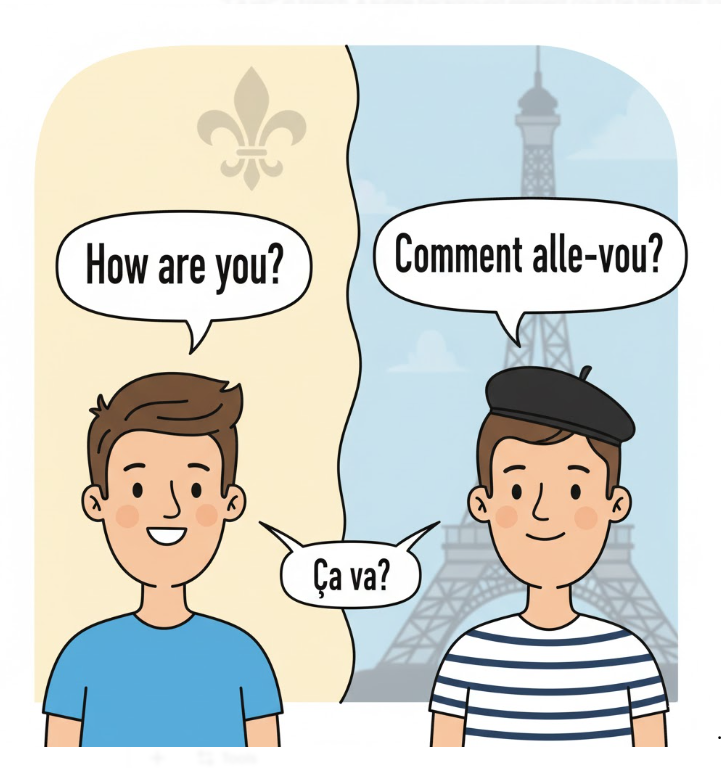
The most common translations include “Comment allez-vous?” (formal) and “Comment vas-tu?” (informal). These phrases serve as a polite inquiry about someone’s well-being, similar to “How are you?” in English.
However, the choice between the formal and informal versions is crucial for demonstrating respect and establishing the right tone.
The function of these phrases extends beyond a simple greeting. They act as conversation starters, showing genuine interest in the other person.
In many French-speaking cultures, it’s considered impolite to skip these initial greetings and jump straight into the main topic of conversation. Therefore, mastering these expressions is essential for effective communication and building positive relationships.
The context in which you use these phrases is also important. In professional settings or when addressing someone older or of higher status, the formal “Comment allez-vous?” is always preferred.
In contrast, “Comment vas-tu?” is suitable for friends, family members, and close acquaintances. Using the wrong form can be perceived as disrespectful or overly familiar.
Structural Breakdown of Common Phrases
Let’s break down the structure of the two most common phrases:
- Comment allez-vous? (Formal)
- Comment: How
- allez: Conjugated form of the verb aller (to go), used here to mean “are” in the context of well-being. This is the “vous” form.
- vous: You (formal/plural)
- Comment vas-tu? (Informal)
- Comment: How
- vas: Conjugated form of the verb aller (to go), used here to mean “are” in the context of well-being. This is the “tu” form.
- tu: You (informal/singular)
The verb aller is crucial in these phrases. It’s an irregular verb, meaning its conjugation doesn’t follow a standard pattern. Here’s a quick overview of the conjugation of aller in the present tense:
- Je vais (I go/am going)
- Tu vas (You go/are going – informal)
- Il/Elle/On va (He/She/One goes/is going)
- Nous allons (We go/are going)
- Vous allez (You go/are going – formal/plural)
- Ils/Elles vont (They go/are going)
Notice how the form of aller changes depending on the subject pronoun. This is a fundamental aspect of French grammar and essential for constructing grammatically correct sentences.
Types of Greetings: Formal vs. Informal
The distinction between formal and informal greetings is paramount in French. Using the appropriate form demonstrates respect and cultural sensitivity.
Here’s a more detailed look at the differences:
Formal Greetings
Formal greetings are used when addressing someone you don’t know well, someone older than you, or someone in a position of authority (e.g., your boss, a teacher, a government official). The key characteristic of formal greetings is the use of the pronoun vous.
Examples of formal greetings include:
- Comment allez-vous? (How are you?)
- Bonjour, Monsieur/Madame. Comment allez-vous? (Good morning/afternoon, Sir/Madam. How are you?)
- Enchanté(e) de faire votre connaissance. (Pleased to meet you.)
Informal Greetings
Informal greetings are used with friends, family members, and close acquaintances. They are characterized by the use of the pronoun tu.
Examples of informal greetings include:
- Comment vas-tu? (How are you?)
- Salut! Comment ça va? (Hi! How’s it going?)
- Ça va? (How’s it going?)
Choosing the right greeting depends on the relationship you have with the person you’re addressing. When in doubt, it’s always safer to use the formal greeting.
You can switch to the informal form if the other person suggests it.
Examples of Asking “How Are You?”
Here are some extensive examples of asking “How are you?” in French, categorized by formality and situation.
Formal Examples
This table provides a wide range of formal greetings, showcasing different ways to inquire about someone’s well-being in a professional or respectful context. These examples are perfect for interactions with superiors, elders, or individuals you don’t know well.
| French Phrase | English Translation | Context |
|---|---|---|
| Comment allez-vous, Monsieur Dubois? | How are you, Mr. Dubois? | Addressing a male colleague or acquaintance |
| Comment allez-vous, Madame Dupont? | How are you, Mrs. Dupont? | Addressing a female colleague or acquaintance |
| Bonjour, Monsieur. Comment allez-vous aujourd’hui? | Good morning, Sir. How are you today? | Greeting a male superior in the morning |
| Bonjour, Madame. Comment allez-vous aujourd’hui? | Good morning, Madam. How are you today? | Greeting a female superior in the morning |
| Bonsoir, Monsieur. Comment allez-vous ce soir? | Good evening, Sir. How are you this evening? | Greeting a male superior in the evening |
| Bonsoir, Madame. Comment allez-vous ce soir? | Good evening, Madam. How are you this evening? | Greeting a female superior in the evening |
| Je suis ravi(e) de vous revoir. Comment allez-vous depuis notre dernière rencontre? | I’m delighted to see you again. How have you been since our last meeting? | Reconnecting with someone after a period of time |
| J’espère que vous allez bien. | I hope you are well. | Expressing hope for someone’s well-being |
| Comment vous portez-vous? | How are you doing? (Formal and slightly old-fashioned) | A more traditional way of asking “How are you?” |
| Avez-vous passé une bonne journée, Monsieur/Madame? | Have you had a good day, Sir/Madam? | Asking about someone’s day |
| Comment se passe votre journée, Monsieur/Madame? | How is your day going, Sir/Madam? | Inquiring about the progress of someone’s day |
| J’espère que tout va bien pour vous. | I hope everything is going well for you. | Expressing a general wish for someone’s well-being |
| Comment se déroulent vos projets? | How are your projects going? | Inquiring about someone’s work or personal projects (formal) |
| Comment se porte votre famille? | How is your family? | Asking about someone’s family (formal) |
| J’espère que vous êtes en bonne santé. | I hope you are in good health. | Expressing concern for someone’s health |
| Comment vous sentez-vous aujourd’hui? | How are you feeling today? | Asking about someone’s health |
| Comment allez-vous depuis la dernière fois qu’on s’est vus? | How have you been since the last time we saw each other? | Asking about their well-being since the last meeting |
| J’espère que vous n’êtes pas trop fatigué(e). | I hope you are not too tired. | Expressing concern for their tiredness |
| Comment se passe votre semaine? | How is your week going? | Asking about their week |
| J’espère que vous avez passé un bon week-end. | I hope you had a good weekend. | Asking about their weekend |
| Comment s’est passé votre voyage? | How was your trip? | Asking about their recent trip |
| J’espère que vous avez bien dormi. | I hope you slept well. | Expressing hope that they slept well |
| Comment trouvez-vous le temps aujourd’hui? | How do you find the weather today? (formal) | Asking about their opinion on the weather |
| J’espère que vous avez apprécié votre repas. | I hope you enjoyed your meal. | Expressing hope that they enjoyed their meal |
| Comment se passe votre travail? | How is your work going? | Asking about their work |
| J’espère que vous avez passé une bonne soirée. | I hope you had a good evening. | Expressing hope that they had a good evening |
Informal Examples
This table provides a comprehensive collection of informal greetings suitable for friends, family, and close acquaintances. These examples demonstrate the relaxed and casual nature of informal French conversations.
| French Phrase | English Translation | Context |
|---|---|---|
| Comment vas-tu? | How are you? | A standard informal greeting |
| Salut! Comment ça va? | Hi! How’s it going? | A very common and casual greeting |
| Ça va? | How’s it going? / Are you okay? | A shortened, informal greeting |
| Quoi de neuf? | What’s new? | Asking if anything interesting has happened |
| Quoi de beau? | What’s beautiful? / What’s good? | Asking if anything interesting has happened (more playful) |
| Alors, quoi de neuf? | So, what’s new? | A more emphatic version of “Quoi de neuf?” |
| Tu vas bien? | Are you doing well? | Asking if someone is doing well |
| Ça roule? | Is it rolling? / How’s it going? | A very informal and slangy greeting |
| Comment tu te sens? | How are you feeling? | Asking about someone’s well-being or health |
| Bien ou bien? | Good or good? / How’s it going? | A playful and informal way to ask “How are you?” |
| Salut! Tu deviens quoi? | Hi! What are you up to? | Asking what someone has been doing |
| Comment s’est passée ta journée? | How was your day? | Asking about someone’s day |
| Qu’est-ce que tu deviens? | What are you becoming? / What have you been up to? | Asking what someone has been doing recently |
| Alors, raconte! | So, tell me! / What’s up? | Encouraging someone to share news or stories |
| T’es en forme? | Are you in good shape? / Are you feeling good? | Asking if someone is feeling well and energetic |
| Comment va la vie? | How’s life going? | Asking about someone’s general well-being and experiences |
| Ça gaze? | Is it gassing? / How’s it going? | A very informal and slangy greeting (less common) |
| Comment va ta famille? | How is your family? | Asking about someone’s family |
| Ça boume? | Is it booming? / How’s it going? | A very informal and slangy greeting (less common) |
| Comment tu te portes? | How are you doing? (Informal) | A less common, more “old-fashioned” informal greeting |
| Quoi de neuf depuis la dernière fois? | What’s new since last time? | Asking about new events since the last meeting |
| Comment ça se passe? | How is it going? | Asking about the general state of things |
| Alors, on se raconte quoi? | So, what are we telling each other? / What’s up? | Encouraging conversation and sharing of news |
| Tu bosses bien? | Are you working well? | Asking about their work (informal) |
| T’es au taquet? | Are you on top of things? | Asking if they are handling things well |
| Comment va le moral? | How is the morale? / How are you feeling emotionally? | Asking about their emotional state |
Regional Variations
While the phrases “Comment allez-vous?” and “Comment vas-tu?” are widely understood across French-speaking regions, some variations and local expressions exist. These variations often add a touch of regional flavor to the conversation.
This table highlights some regional variations of “How are you?” in French, providing insights into the diverse ways people greet each other across different French-speaking regions. These variations can add a unique touch to your conversations and demonstrate your familiarity with local customs.
| French Phrase | Region | English Translation | Notes |
|---|---|---|---|
| Comment ça va chez vous? | Quebec, Canada | How’s it going with you? | A common expression in Quebec, emphasizing the “at your place” aspect. |
| Ça va-tu? | Quebec, Canada | How’s it going? | A shortened and very informal version, typical of Quebec French. |
| Comment tu va ben? | Quebec, Canada | How are you doing well? | A more emphatic way of asking how someone is. |
| Ça boume en Belgique? | Belgium | Is it booming in Belgium? / How’s it going? | A playful variation, referencing the local context. |
| Comment ça broute? | Switzerland | How’s it grazing? / How’s it going? | A Swiss French expression, using “brouter” (to graze) metaphorically. |
| Alors, on fait aller? | France (General) | So, are we making it go? / How’s it going? | A common expression to inquire about well-being. |
| Comment va la forme? | France (General) | How’s the shape? / How are you doing? | Referring to someone’s physical condition or overall state. |
Usage Rules and Etiquette
Using the correct form of “How are you?” in French goes beyond grammar; it involves understanding social etiquette. Here are some key rules to keep in mind:
- Formality: Always use “Comment allez-vous?” with people you don’t know well, older individuals, or those in positions of authority. Switch to “Comment vas-tu?” only when invited to do so.
- Context: Consider the setting. A business meeting calls for formal greetings, while a casual gathering with friends allows for informal expressions.
- Responses: Be prepared to respond appropriately. Common responses include “Je vais bien, merci” (I’m fine, thank you) or “Ça va bien” (It’s going well).
- Follow-up: It’s polite to follow up with “Et vous?” (And you?) to show reciprocal interest in the other person’s well-being.
- Body Language: Combine your verbal greeting with appropriate body language, such as a handshake (formal) or a cheek kiss (informal, in many French-speaking cultures).
Understanding these rules will help you navigate social interactions smoothly and avoid potential misunderstandings.
Common Mistakes to Avoid
Even experienced learners make mistakes. Here are some common errors to watch out for:
This table highlights common mistakes learners make when asking “How are you?” in French, providing both incorrect and corrected examples to help you avoid these pitfalls.
| Incorrect | Correct | Explanation |
|---|---|---|
| Comment est-ce que tu vas? (Formal) | Comment allez-vous? (Formal) | Using “est-ce que” makes the formal question sound awkward. |
| Comment allez-tu? (Addressing your boss) | Comment allez-vous, Monsieur/Madame? (Addressing your boss) | Using the informal “tu” with a superior is disrespectful. |
| Ça va?, Monsieur | Bonjour, Monsieur. Comment allez-vous? | Using a shortened informal greeting with a person of higher status. |
| Je suis bien. Et vous? | Je vais bien, merci. Et vous? | “Je suis bien” means “I am well” in a general sense, not in response to “How are you?”. |
| Comment vas vous? | Comment vas-tu? / Comment allez-vous? | Incorrect conjugation of “aller”. |
| Quoi de neuf, Madame? | Bonjour Madame. Comment allez-vous? | Using informal greetings with a person of higher status |
| Ça va bien, et toi? (Formal situation) | Ça va bien, et vous? (Formal situation) | Using the informal ‘toi’ in a formal setting. |
By being aware of these common mistakes, you can improve your accuracy and fluency in French.
Practice Exercises
Test your understanding with these practice exercises. Choose the correct form of “How are you?” in each situation.
This section provides a series of practice exercises designed to reinforce your understanding of how to ask “How are you?” in French. Each question presents a scenario, and you must choose the most appropriate greeting based on the context and relationship between the speakers.
| Question | Correct Answer | Explanation |
|---|---|---|
| You are meeting your professor for the first time. What do you say? | Bonjour, Professeur. Comment allez-vous? | Formal greeting appropriate for a professor. |
| You are greeting your best friend. What do you say? | Salut! Comment ça va? | Informal greeting for a close friend. |
| You are talking to a colleague you know well. What do you say? | Salut! Comment vas-tu? | Informal greeting suitable for a close colleague. |
| You are greeting the president of the company. What do you say? | Bonjour, Monsieur le Président. Comment allez-vous? | Highly formal greeting for a high-ranking official. |
| You are meeting a new neighbor who is older than you. What do you say? | Bonjour, Monsieur/Madame. Comment allez-vous? | Formal greeting appropriate for an older neighbor you’ve just met. |
| You are chatting with your sibling. What do you say? | Salut! Ça va? | Very informal greeting for a sibling. |
| You are emailing a potential client. What do you write? | Bonjour, Monsieur/Madame. J’espère que vous allez bien. | Formal and polite greeting for a client. |
| You see a friend you haven’t seen in years. What do you say? | Salut! Quoi de neuf? | Informal greeting for reconnecting with a friend. |
| You are greeting a shopkeeper. What do you say? | Bonjour, Monsieur/Madame. Comment allez-vous? | Formal greeting for a service professional. |
| You are talking to a child in your family. What do you say? | Salut! Comment vas-tu? | Informal greeting for a child. |
Exercise 2: Translate the following sentences into French, using the appropriate level of formality.
| English Sentence | Correct French Translation |
|---|---|
| How are you, Mr. Smith? | Comment allez-vous, Monsieur Smith? |
| Hi! How’s it going? (to a friend) | Salut! Comment ça va? |
| I hope you are well, Madam. | J’espère que vous allez bien, Madame. |
| What’s new? (to a close friend) | Quoi de neuf? |
| How are you feeling today? (formal) | Comment vous sentez-vous aujourd’hui? |
| How’s life going? (informal) | Comment va la vie? |
| How are you doing, Professor? | Comment allez-vous, Professeur? |
| Are you okay? (informal) | Ça va? |
| How’s your day going, Sir? | Comment se passe votre journée, Monsieur? |
| What have you been up to? (informal) | Qu’est-ce que tu deviens? |
Exercise 3: Fill in the blanks with the correct form of “aller”.
| French Sentence | Correct Answer |
|---|---|
| Comment _____ -vous? (formal) | allez |
| Comment _____ -tu? (informal) | vas |
| Je _____ bien, merci. | vais |
| Nous _____ bien. | allons |
| Ils _____ bien. | vont |
| Elle _____ bien. | va |
| Tu _____ au cinéma? | vas |
| Vous _____ au restaurant? | allez |
| Je _____ faire les courses. | vais |
| Nous _____ voyager en France. | allons |
Advanced Topics: Nuances and Subtleties
For advanced learners, exploring the nuances and subtleties of French greetings can add depth to your understanding. Here are some advanced topics to consider:
- Implied Meaning: Sometimes, “Comment allez-vous?” is used as a mere formality, with little expectation of a detailed response. In other cases, it can be a genuine inquiry about someone’s well-being.
- Regional Accents: Pay attention to regional accents, which can affect pronunciation and intonation. This will help you better understand and be understood by native speakers from different regions.
- Cultural Context: Research the cultural norms of different French-speaking countries. For example, the number of cheek kisses exchanged as a greeting varies from region to region.
- Figurative Language: Explore idiomatic expressions related to well-being, such as “Avoir le moral” (to have good morale) or “Être en pleine forme” (to be in great shape).
Mastering these advanced topics will elevate your French language skills and allow you to communicate with greater confidence and cultural sensitivity.
FAQ: Frequently Asked Questions
Here are some frequently asked questions about asking “How are you?” in French:
- Is it always necessary to say “How are you?” when greeting someone in French?
While not always strictly necessary, it is generally considered polite to inquire about someone’s well-being when greeting them, especially in formal settings or when interacting with people you don’t know well. It shows consideration and respect.
- What is the best way to respond to “Comment allez-vous?”
A common and polite response is “Je vais bien, merci. Et vous?” (I’m fine, thank you. And you?). You can also say “Très bien, merci” (Very well, thank you) or “Pas mal” (Not bad), depending on how you are feeling.
- When is it appropriate to switch from “vous” to “tu”?
You should switch to “tu” only when the other person invites you to do so. They might say something like “Tu peux me tutoyer” (You can use “tu” with me) or simply start using “tu” themselves. Until then, it’s best to stick with “vous.”
- Are there any slang terms for “How are you?” in French?
Yes, there are several slang terms, such as “Ça roule?” or “Ça gaze?”. However, these are very informal and should only be used with close friends and acquaintances.
- How do I ask “How are you doing?” in French?
You can say “Comment vous portez-vous?” (formal) or “Comment tu te portes?” (informal). These phrases are slightly more formal than “Comment allez-vous?” and “Comment vas-tu?”, but they are still commonly used.
- Is it rude to ask “How are you?” if someone looks unwell?
It depends on the context and your relationship with the person. If you are close to them, it’s generally acceptable to ask if they are feeling okay. However, if you don’t know them well, it might be better to avoid commenting on their appearance and simply offer a general greeting.
- What if I don’t understand the response to “Comment allez-vous?”
Don’t be afraid to ask the person to repeat themselves or to speak more slowly. You can say “Pardon?” (Excuse me?) or “Pourriez-vous répéter, s’il vous plaît?” (Could you repeat that, please?).
- What if someone responds with something other than bien or mal?
French speakers may use a range of responses, like “Comme ci, comme ça” (So-so), “Pas terrible” (Not great), or “Super!” (Great!). Familiarize yourself with these common responses to better understand and engage in conversation.
Conclusion
Mastering the art of asking “How are you?” in French is a crucial step in your language learning journey. Understanding the nuances of formality, context, and regional variations will enable you to communicate effectively and build meaningful relationships with French speakers.
Remember to practice regularly, pay attention to native speakers, and don’t be afraid to make mistakes – they are a natural part of the learning process.
By incorporating the knowledge and tips presented in this article, you’ll be well-equipped to navigate social interactions in French with confidence and grace. Keep practicing, and soon you’ll be greeting people like a native!