Understanding antonyms is crucial for expanding vocabulary and enhancing communication skills. Antonyms, or words with opposite meanings, allow us to express contrasting ideas, add nuance to our writing, and comprehend complex texts more effectively.
This article provides a detailed exploration of antonyms, covering their definition, types, usage rules, common mistakes, and advanced applications. Whether you’re a student, writer, or language enthusiast, this guide will equip you with the knowledge and skills to master the art of using antonyms.
This comprehensive guide is designed for English language learners of all levels, from beginner to advanced. It offers clear explanations, numerous examples, and practical exercises to help you confidently use antonyms in your everyday communication.
By the end of this article, you’ll have a solid grasp of antonyms and their role in the English language.
Table of Contents
- Definition of Antonyms
- Structural Breakdown of Antonyms
- Types and Categories of Antonyms
- Examples of Antonyms
- Usage Rules for Antonyms
- Common Mistakes with Antonyms
- Practice Exercises
- Advanced Topics: Antonyms in Rhetoric and Literature
- Frequently Asked Questions (FAQ)
- Conclusion
Definition of Antonyms
An antonym is a word that has the opposite meaning of another word. Antonyms are essential for expressing contrast, providing alternative perspectives, and adding depth to language. The study of antonyms falls under the broader field of semantics, which deals with the meaning of words and their relationships to each other. Understanding antonyms allows for more precise and nuanced communication. They help to clarify meaning by highlighting differences and creating a sense of balance in writing and speech.
Antonyms can be nouns, verbs, adjectives, or adverbs. The relationship between two antonyms is known as antonymy. For example, “hot” and “cold” are antonyms, as are “up” and “down,” and “happy” and “sad.” Recognizing and using antonyms effectively is a key component of mastering vocabulary and improving overall language proficiency. Different kinds of antonyms exist, and recognizing these differences will help you use them correctly and effectively.
Structural Breakdown of Antonyms
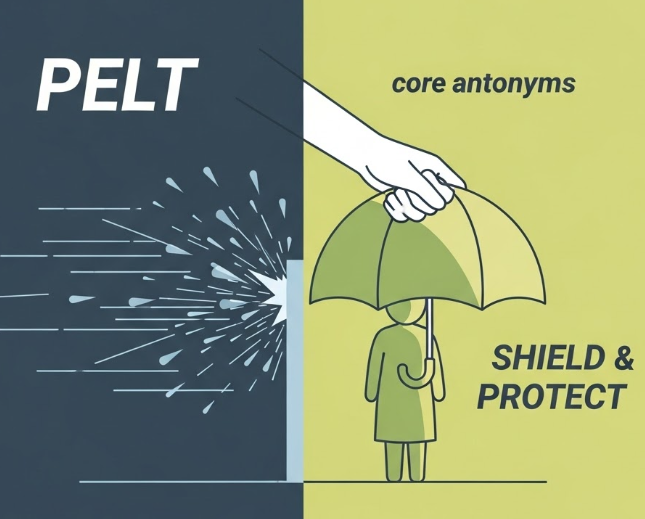
Antonyms can be formed in several ways, including:
- Adding Prefixes: Many antonyms are created by adding prefixes such as un-, in-, dis-, im-, or non- to a word. For example, happy becomes unhappy, visible becomes invisible, agree becomes disagree, possible becomes impossible, and sense becomes nonsense.
- Using Different Words: Some antonyms are entirely different words with no shared root or prefix. For example, good and bad, day and night, love and hate.
The choice of antonym depends on the context and the specific nuance you wish to convey. Understanding the structure of antonyms can aid in vocabulary building and improve comprehension of written and spoken language.
Recognizing patterns can make it easier to learn new words and their opposites.
Types and Categories of Antonyms
Antonyms are not all created equal; they fall into several categories based on the nature of their opposition. The main types of antonyms include complementary, gradable, relational, and reverse antonyms.
Understanding these distinctions is crucial for using antonyms accurately and effectively.
Complementary Antonyms
Complementary antonyms are word pairs where there is no middle ground. One word negates the other completely. If one is true, the other must be false, and vice versa. There is no spectrum or range of possibilities between them. Examples include dead and alive, on and off, true and false. Something cannot be both dead and alive at the same time; it must be one or the other.
These antonyms often represent binary states or conditions. They are straightforward and leave no room for ambiguity. For example, a switch is either on or off; there is no in-between state.
Gradable Antonyms
Gradable antonyms represent opposite ends of a spectrum or scale. There are intermediate degrees between the two words. Examples include hot and cold, big and small, happy and sad. Something can be lukewarm, or medium-sized, or content, which fall between the two extremes.
These antonyms allow for comparison and degrees of intensity. You can say something is “very hot” or “slightly cold,” indicating a position on the spectrum.
Gradable antonyms are commonly used in descriptive language to convey subtle differences in meaning.
Relational Antonyms
Relational antonyms describe a relationship from opposite perspectives. One word implies the existence of the other. Examples include buy and sell, teacher and student, give and receive. You can’t buy something without someone selling it, and you can’t be a teacher without having students.
These antonyms are interdependent and exist in a reciprocal relationship. They highlight the connection between two roles or actions.
Relational antonyms are often used to describe social or economic interactions.
Reverse Antonyms
Reverse antonyms indicate movement or a process in opposite directions. Examples include push and pull, enter and exit, increase and decrease. One word undoes the action of the other. These antonyms often involve a change of state or position.
They describe actions that are the inverse of each other. Understanding reverse antonyms can help clarify the sequence of events or the direction of change.
Examples of Antonyms
To further illustrate the different types of antonyms, here are several examples organized by category.
Complementary Antonym Examples
The following table provides examples of complementary antonyms, where one word completely negates the other.
| Word | Antonym |
|---|---|
| Alive | Dead |
| Present | Absent |
| On | Off |
| True | False |
| Male | Female |
| Single | Married |
| Pass | Fail |
| In | Out |
| Guilty | Innocent |
| Open | Closed |
| Begin | End |
| Day | Night |
| Light | Dark |
| Up | Down |
| Empty | Full |
| Exist | Cease |
| Start | Finish |
| Solid | Liquid |
| Permanent | Temporary |
| Major | Minor |
These examples demonstrate the clear and absolute opposition between complementary antonyms. There is no middle ground or spectrum of possibilities.
Gradable Antonym Examples
The following table provides examples of gradable antonyms, where there is a spectrum of possibilities between the two words.
| Word | Antonym |
|---|---|
| Hot | Cold |
| Big | Small |
| Happy | Sad |
| Tall | Short |
| Fast | Slow |
| Good | Bad |
| Easy | Difficult |
| Rich | Poor |
| Loud | Quiet |
| Bright | Dark |
| Heavy | Light |
| Wide | Narrow |
| Deep | Shallow |
| Strong | Weak |
| Clean | Dirty |
| Old | Young |
| Interesting | Boring |
| Beautiful | Ugly |
| Kind | Cruel |
| Generous | Stingy |
| Optimistic | Pessimistic |
| Courageous | Cowardly |
| Patient | Impatient |
These examples highlight the range of possibilities between gradable antonyms. You can modify them with adverbs like “very,” “slightly,” or “extremely” to indicate the degree of intensity.
Relational Antonym Examples
The following table provides examples of relational antonyms, where one word implies the existence of the other.
| Word | Antonym |
|---|---|
| Buy | Sell |
| Teacher | Student |
| Give | Receive |
| Doctor | Patient |
| Parent | Child |
| Husband | Wife |
| Employer | Employee |
| Lender | Borrower |
| Predator | Prey |
| Above | Below |
| Before | After |
| Cause | Effect |
| Front | Back |
| Leader | Follower |
| Winner | Loser |
| Author | Reader |
| Speaker | Listener |
These examples illustrate the interdependent relationship between relational antonyms. They describe interactions and roles that are connected.
Reverse Antonym Examples
The following table provides examples of reverse antonyms, where one word indicates the reverse action of the other.
| Word | Antonym |
|---|---|
| Push | Pull |
| Enter | Exit |
| Increase | Decrease |
| Ascend | Descend |
| Advance | Retreat |
| Inhale | Exhale |
| Build | Demolish |
| Arrive | Depart |
| Ignite | Extinguish |
| Open | Close |
| Fill | Empty |
| Expand | Contract |
| Tighten | Loosen |
| Add | Subtract |
| Remember | Forget |
| Wake up | Fall asleep |
| Turn on | Turn off |
These examples demonstrate the opposite direction or process indicated by reverse antonyms. They describe actions that undo each other.
Usage Rules for Antonyms
Using antonyms correctly involves understanding their specific meanings and the contexts in which they are appropriate. Here are some key usage rules:
- Choose the Right Type: Be mindful of the type of antonym you are using. Complementary antonyms require a binary choice, while gradable antonyms allow for a spectrum of possibilities. Relational antonyms must be used in the context of a relationship, and reverse antonyms should describe actions that are the inverse of each other.
- Consider Context: The appropriate antonym may vary depending on the context. For example, the antonym of “happy” might be “sad” in one context, but “angry” or “frustrated” in another.
- Avoid Absolutes: When using gradable antonyms, avoid making absolute statements. Instead, use modifiers to indicate the degree of intensity. For example, instead of saying “The water is cold,” say “The water is very cold” or “The water is slightly cold.”
- Use Parallel Structure: When using antonyms in parallel constructions, ensure that the grammatical structure is consistent. For example, “He is both intelligent and kind” is better than “He is intelligent and not cruel.”
Understanding these usage rules will help you use antonyms accurately and effectively in your writing and speech. Paying attention to context and nuance is essential for clear and precise communication.
Common Mistakes with Antonyms
Even experienced language users can make mistakes when using antonyms. Here are some common errors to avoid:
- Using the Wrong Type of Antonym: Confusing complementary and gradable antonyms is a common mistake. For example, saying “slightly dead” is incorrect because “dead” is a complementary antonym and cannot be modified.
- Incorrect Prefixation: Adding the wrong prefix to create an antonym is another common error. For example, “unpossible” is not a valid word; the correct antonym of “possible” is “impossible.”
- Ignoring Context: Failing to consider the context can lead to the selection of an inappropriate antonym. For example, using “sad” as the antonym of “excited” might be incorrect if the intended meaning is “calm.”
- Creating False Antonyms: Assuming that every word has a direct antonym can lead to errors. Some words have no clear opposite or require a more complex phrase to express the opposite meaning.
Here are some examples of common mistakes and their corrections:
| Incorrect | Correct | Explanation |
|---|---|---|
| slightly dead | nearly dead | “Dead” is a complementary antonym and cannot be modified with “slightly.” |
| unpossible | impossible | “Impossible” is the correct antonym of “possible.” |
| He was excited, so he was sad. | He was excited, so he was calm. | “Calm” is a more appropriate antonym of “excited” in this context. |
| The antonym of “table” is “chair.” | “Table” does not have a direct antonym. | Not all words have direct antonyms. |
By being aware of these common mistakes, you can avoid errors and use antonyms more effectively.
Practice Exercises
To solidify your understanding of antonyms, complete the following practice exercises.
Exercise 1: Identifying Antonyms
Identify the antonym of each word in the following list.
| Word | Antonym |
|---|---|
| Happy | |
| Fast | |
| Open | |
| Good | |
| Tall | |
| In | |
| Light | |
| Hot | |
| Start | |
| Buy |
Answer Key:
| Word | Antonym |
|---|---|
| Happy | Sad |
| Fast | Slow |
| Open | Closed |
| Good | Bad |
| Tall | Short |
| In | Out |
| Light | Dark |
| Hot | Cold |
| Start | Finish |
| Buy | Sell |
Exercise 2: Using Antonyms in Sentences
Complete each sentence with the antonym of the word in parentheses.
- The weather was very (cold), so we stayed inside.
- She is always (sad), and brings joy to everyone around her.
- The test was surprisingly (difficult).
- He decided to (sell) his old car.
- The door was (closed), so I couldn’t enter.
- The glass was (empty), so I refilled it.
- The music was too (loud), so I turned it down.
- The path was (narrow), making it hard to pass.
- She is a (student) at the local university.
- The project is set to (end) next week.
Answer Key:
- The weather was very hot, so we stayed inside.
- She is always happy, and brings joy to everyone around her.
- The test was surprisingly easy.
- He decided to buy his old car.
- The door was open, so I couldn’t enter.
- The glass was full, so I refilled it.
- The music was too quiet, so I turned it down.
- The path was wide, making it hard to pass.
- She is a teacher at the local university.
- The project is set to begin next week.
Exercise 3: Matching Antonyms
Match each word in Column A with its antonym in Column B.
| Column A | Column B |
|---|---|
| 1. Alive | A. Decrease |
| 2. Increase | B. Depart |
| 3. Arrive | C. Dead |
| 4. Love | D. Reject |
| 5. Accept | E. Hate |
| 6. Remember | F. Contract |
| 7. Expand | G. Forget |
Answer Key:
| Column A | Column B |
|---|---|
| 1. Alive | C. Dead |
| 2. Increase | A. Decrease |
| 3. Arrive | B. Depart |
| 4. Love | E. Hate |
| 5. Accept | D. Reject |
| 6. Remember | G. Forget |
| 7. Expand | F. Contract |
Advanced Topics: Antonyms in Rhetoric and Literature
Antonyms are powerful tools in rhetoric and literature, used to create contrast, emphasize meaning, and add depth to writing. They can be used to highlight the differences between characters, themes, or ideas.
Rhetorical devices such as antithesis rely heavily on the use of antonyms to create a balanced and impactful statement.
Antithesis is a rhetorical device in which two opposite ideas are put together in a sentence to achieve a contrasting effect. For example, “It was the best of times, it was the worst of times” (Charles Dickens, A Tale of Two Cities). The use of “best” and “worst” creates a strong contrast that emphasizes the tumultuous nature of the era. Another example is “Give every man thy ear, but few thy voice.” (Shakespeare, Hamlet). These examples demonstrate the power of antonyms to convey complex ideas in a concise and memorable way.
In literature, antonyms can be used to create irony, satire, or paradox. They can also be used to develop complex characters with conflicting traits.
For example, a character who is both brave and fearful might be more relatable and realistic than a character who is simply brave. The use of antonyms allows writers to explore the complexities of human nature and the world around us.
Understanding the use of antonyms in rhetoric and literature can enhance your appreciation of the written word and improve your own writing skills. By paying attention to the ways in which antonyms are used, you can gain a deeper understanding of the author’s message and the nuances of language.
Frequently Asked Questions (FAQ)
- What is the difference between antonyms and synonyms?Antonyms are words with opposite meanings, while synonyms are words with similar meanings. Antonyms are used to express contrast, while synonyms are used to provide alternative ways of saying the same thing. Understanding both antonyms and synonyms is essential for building a strong vocabulary and improving communication skills.
- Are there words that don’t have antonyms?Yes, many words do not have direct antonyms. These words often refer to specific objects, concepts, or actions that do not have a clear opposite. For example, words like “table,” “computer,” or “democracy” do not have antonyms. In some cases, you may need to use a phrase or a more complex description to express the opposite meaning.
- How can I improve my knowledge of antonyms?There are several ways to improve your knowledge of antonyms. One effective method is to read widely and pay attention to the ways in which antonyms are used in different contexts. You can also use online resources, such as dictionaries and thesauruses, to look up antonyms for specific words. Additionally, practicing with exercises and quizzes can help reinforce your understanding of antonyms.
- Can a word have multiple antonyms?Yes, a word can have multiple antonyms, depending on the context and the specific nuance you wish to convey. For example, the antonym of “happy” might be “sad,” “angry,” or “frustrated,” depending on the situation. Choosing the appropriate antonym requires careful consideration of the intended meaning.
- How are antonyms used in language learning?Antonyms are a valuable tool in language learning. They help learners expand their vocabulary by providing a direct contrast to known words. By learning antonyms, learners can quickly grasp the meaning of new words and improve their comprehension of written and spoken language. Antonyms also help learners develop a deeper understanding of the nuances of language and improve their ability to express complex ideas.
- What is the importance of understanding different types of antonyms?Understanding the different types of antonyms (complementary, gradable, relational, and reverse) is crucial for using them accurately and effectively. Each type of antonym has its own specific characteristics and usage rules. By understanding these distinctions, you can avoid common mistakes and use antonyms to express your ideas with greater precision and clarity. For example, it’s crucial to know that a complementary antonym like ‘dead’ cannot be modified with adverbs like ‘slightly,’ whereas a gradable antonym like ‘cold’ can be modified to say ‘slightly cold’.
- How can antonyms enhance writing skills?Antonyms enhance writing skills by adding depth, contrast, and clarity to writing. They allow writers to express complex ideas in a concise and impactful way. By using antonyms effectively, writers can create vivid imagery, develop compelling characters, and convey a wide range of emotions. Antonyms are especially useful in rhetorical devices such as antithesis, where they are used to create a balanced and memorable statement.
- Are there any online resources that can help me learn more about antonyms?Yes, there are many online resources that can help you learn more about antonyms. Online dictionaries and thesauruses, such as Merriam-Webster and Thesaurus.com, provide definitions and antonyms for a wide range of words. There are also numerous websites and apps that offer exercises, quizzes, and games to help you practice your antonym skills. Additionally, many language learning websites and forums provide valuable information and support for learners of all levels.
Conclusion
Mastering antonyms is an essential aspect of language proficiency. Understanding the different types of antonyms, their usage rules, and common mistakes can significantly improve your communication skills.
By incorporating antonyms into your vocabulary, you can express contrasting ideas, add nuance to your writing, and comprehend complex texts more effectively. Remember to choose the right type of antonym for the context, avoid absolute statements with gradable antonyms, and use parallel structure when using antonyms in parallel constructions.
Continue to practice identifying and using antonyms in your daily communication. Read widely, use online resources, and complete exercises to reinforce your understanding.
With consistent effort, you can master the art of using antonyms and enhance your overall language skills. Embrace the power of opposites to enrich your vocabulary and express yourself with greater clarity and precision.