Understanding how to express quantities, especially asking “how much,” is crucial for effective communication in any language. In French, this seemingly simple question requires careful consideration of grammar and context. Mastering the nuances of phrases like combien de and their variations will significantly improve your ability to ask about prices, quantities, and amounts accurately. This article provides a comprehensive guide to expressing “how much” in French, covering various scenarios, grammatical rules, common mistakes, and practical exercises. Whether you’re a beginner or an advanced learner, this guide will equip you with the knowledge and confidence to navigate these linguistic intricacies.
Table of Contents
- Introduction
- Definition of “How Much” in French
- Structural Breakdown of “Combien De”
- Types and Categories of “How Much” Expressions
- Examples of “How Much” in French
- Usage Rules for “Combien De”
- Common Mistakes When Using “Combien De”
- Practice Exercises
- Advanced Topics
- Frequently Asked Questions (FAQ)
- Conclusion
Introduction
Asking “how much” in French is more than a simple translation; it involves understanding the grammatical context and choosing the appropriate phrase. The most common way to express “how much” is using the phrase combien de, but its usage varies depending on whether you’re referring to countable or uncountable nouns. This article will unravel the complexities of combien de and other relevant expressions, providing you with a thorough understanding of how to inquire about quantities and prices in French. This skill is essential for everyday interactions, from shopping to discussing amounts and measurements. By mastering these concepts, you’ll enhance your fluency and accuracy in French.
Definition of “How Much” in French
The primary way to express “how much” in French is through the phrase combien de. This phrase is used to inquire about the quantity or amount of something. The literal translation of combien is “how much” or “how many,” and it is always followed by de (or d’ before a vowel sound) and then the noun being quantified. The structure remains consistent regardless of the noun’s gender, but the article (e.g., le, la, les) is dropped after de. The function of combien de is to act as an interrogative phrase, prompting information about a specific quantity. Understanding its grammatical role is fundamental to using it correctly in various contexts.
Structural Breakdown of “Combien De”
The structure of “combien de” is relatively straightforward, but understanding its components is key to accurate usage. The phrase consists of two main parts:
- Combien: This is the interrogative adverb meaning “how much” or “how many.”
- De: This preposition connects combien to the noun. It changes to d’ before a vowel sound.
The basic structure is: Combien de/d’ + [noun] + [verb]?. The verb often follows the noun, but word order can change, especially in questions, due to French sentence structure rules. The key is that “de” or “d'” is always present between “combien” and the noun.
Here’s a breakdown with examples:
- Combien de livres as-tu? (How many books do you have?)
- Combien d’eau bois-tu par jour? (How much water do you drink per day?)
Types and Categories of “How Much” Expressions
The usage of “combien de” varies depending on whether you’re dealing with countable or uncountable nouns, as well as whether you’re asking about a general quantity or a specific price.
With Countable Nouns
Countable nouns are those that can be counted individually (e.g., books, apples, cars). When asking about the quantity of countable nouns, “combien de” is followed directly by the noun in its plural form. For example: Combien de pommes veux-tu? (How many apples do you want?). The noun must be plural because you’re asking for more than one.
With Uncountable Nouns
Uncountable nouns, also known as mass nouns, cannot be counted individually (e.g., water, sugar, time). When asking about the quantity of uncountable nouns, “combien de” is followed directly by the noun. For example: Combien de sucre veux-tu? (How much sugar do you want?). Uncountable nouns are always singular.
Asking About Price
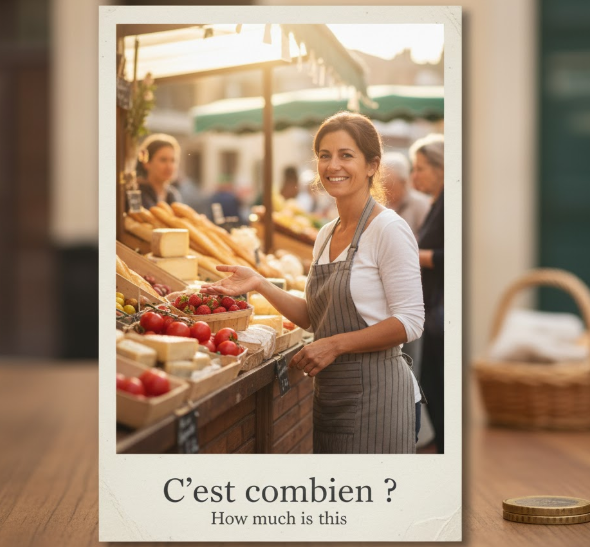
When asking about the price of something, you can use “combien coûte” or “c’est combien.” Combien coûte literally translates to “how much does it cost?” while c’est combien is a more informal way of asking “how much is it?”. For example: Combien coûte ce livre? (How much does this book cost?) or C’est combien, ce croissant? (How much is this croissant?).
Examples of “How Much” in French
To solidify your understanding, let’s explore various examples of using “combien de” in different contexts.
Examples with Countable Nouns
This table provides examples of using “combien de” with countable nouns. Note the plural form of the nouns.
| French | English |
|---|---|
| Combien de livres as-tu? | How many books do you have? |
| Combien de chats y a-t-il dans la maison? | How many cats are there in the house? |
| Combien de voitures avez-vous? | How many cars do you have? |
| Combien de frères et sœurs as-tu? | How many siblings do you have? |
| Combien de pays as-tu visités? | How many countries have you visited? |
| Combien de langues parles-tu? | How many languages do you speak? |
| Combien de films as-tu vus ce mois-ci? | How many movies have you seen this month? |
| Combien de concerts as-tu assistés? | How many concerts have you attended? |
| Combien de lettres as-tu écrites? | How many letters have you written? |
| Combien de courriels reçois-tu par jour? | How many emails do you receive per day? |
| Combien de téléphones portables possèdes-tu? | How many cell phones do you own? |
| Combien d’ordinateurs y a-t-il dans le bureau? | How many computers are there in the office? |
| Combien de stylos as-tu dans ton sac? | How many pens do you have in your bag? |
| Combien de crayons sont sur la table? | How many pencils are on the table? |
| Combien de cahiers utilises-tu par an? | How many notebooks do you use per year? |
| Combien de feuilles de papier veux-tu? | How many sheets of paper do you want? |
| Combien de chemises as-tu dans ta garde-robe? | How many shirts do you have in your wardrobe? |
| Combien de pantalons dois-tu laver? | How many pairs of pants do you need to wash? |
| Combien de chaussures as-tu achetées? | How many pairs of shoes have you bought? |
| Combien de montres possèdes-tu? | How many watches do you own? |
| Combien de bagues portes-tu? | How many rings are you wearing? |
| Combien de colliers as-tu? | How many necklaces do you have? |
| Combien de bracelets portes-tu? | How many bracelets are you wearing? |
| Combien de chapeaux as-tu? | How many hats do you have? |
| Combien de gants as-tu perdus? | How many gloves have you lost? |
| Combien d’écharpes as-tu tricotées? | How many scarves have you knitted? |
| Combien de paires de chaussettes as-tu? | How many pairs of socks do you have? |
| Combien de cravates possèdes-tu? | How many ties do you own? |
| Combien de costumes as-tu? | How many suits do you have? |
Examples with Uncountable Nouns
This table provides examples of using “combien de” with uncountable nouns. Note the singular form of the nouns.
| French | English |
|---|---|
| Combien d’eau veux-tu? | How much water do you want? |
| Combien de sucre mets-tu dans ton café? | How much sugar do you put in your coffee? |
| Combien de lait bois-tu chaque jour? | How much milk do you drink every day? |
| Combien de sel utilises-tu en cuisine? | How much salt do you use in cooking? |
| Combien de riz as-tu acheté? | How much rice did you buy? |
| Combien de farine faut-il pour cette recette? | How much flour is needed for this recipe? |
| Combien d’huile dois-je ajouter? | How much oil should I add? |
| Combien de beurre utilises-tu pour les gâteaux? | How much butter do you use for the cakes? |
| Combien de temps as-tu? | How much time do you have? |
| Combien d’argent as-tu dans ton portefeuille? | How much money do you have in your wallet? |
| Combien de patience faut-il? | How much patience is needed? |
| Combien d’énergie as-tu aujourd’hui? | How much energy do you have today? |
| Combien d’amour donnes-tu? | How much love do you give? |
| Combien de confiance as-tu en lui? | How much trust do you have in him? |
| Combien de courage faut-il pour ça? | How much courage does it take for that? |
| Combien d’espoir as-tu? | How much hope do you have? |
| Combien d’aide as-tu besoin? | How much help do you need? |
| Combien d’information as-tu reçue? | How much information have you received? |
| Combien de travail as-tu à faire? | How much work do you have to do? |
| Combien de chance avons-nous? | How much luck do we have? |
| Combien de café bois-tu par jour? | How much coffee do you drink per day? |
| Combien de thé prépares-tu? | How much tea are you making? |
| Combien de vin as-tu bu hier soir? | How much wine did you drink last night? |
| Combien de bière ont-ils commandé? | How much beer did they order? |
| Combien de jus d’orange veux-tu? | How much orange juice do you want? |
| Combien de soda as-tu dans le frigo? | How much soda do you have in the fridge? |
| Combien d’alcool y a-t-il dans ce cocktail? | How much alcohol is in this cocktail? |
| Combien de limonade puis-je vous servir? | How much lemonade can I serve you? |
| Combien d’essence as-tu dans le réservoir? | How much gasoline do you have in the tank? |
| Combien de gaz utilise-t-on pour le chauffage? | How much gas do we use for heating? |
Examples Asking About Price
This table provides examples of asking about prices using “combien coûte” and “c’est combien.”
| French | English |
|---|---|
| Combien coûte ce livre? | How much does this book cost? |
| C’est combien, ce croissant? | How much is this croissant? |
| Combien coûte cette robe? | How much does this dress cost? |
| C’est combien, le billet de train? | How much is the train ticket? |
| Combien coûte la location de cette voiture? | How much does it cost to rent this car? |
| C’est combien, une baguette? | How much is a baguette? |
| Combien coûte ce café? | How much does this coffee cost? |
| C’est combien, l’entrée au musée? | How much is the entrance to the museum? |
| Combien coûte un kilo de pommes? | How much does a kilo of apples cost? |
| C’est combien, la course en taxi? | How much is the taxi ride? |
| Combien coûte cette maison? | How much does this house cost? |
| C’est combien, le loyer mensuel? | How much is the monthly rent? |
| Combien coûte cet ordinateur? | How much does this computer cost? |
| C’est combien, cette télévision? | How much is this television? |
| Combien coûte ce téléphone portable? | How much does this cell phone cost? |
| C’est combien, cette paire de chaussures? | How much is this pair of shoes? |
| Combien coûte ce manteau? | How much does this coat cost? |
| C’est combien, ce pull? | How much is this sweater? |
| Combien coûte cette bague? | How much does this ring cost? |
| C’est combien, ce collier? | How much is this necklace? |
| Combien coûte cette voiture de sport? | How much does this sports car cost? |
| C’est combien, le plein d’essence? | How much is a full tank of gas? |
| Combien coûte cette montre? | How much does this watch cost? |
| C’est combien, cette bouteille de vin? | How much is this bottle of wine? |
| Combien coûte cette pizza? | How much does this pizza cost? |
| C’est combien, ce sandwich? | How much is this sandwich? |
| Combien coûte ce billet d’avion? | How much does this plane ticket cost? |
| C’est combien, une nuit à l’hôtel? | How much is one night at the hotel? |
| Combien coûte ce sac à main? | How much does this handbag cost? |
| C’est combien, ce parfum? | How much is this perfume? |
Usage Rules for “Combien De”
Using “combien de” correctly involves adhering to specific grammatical rules. These rules ensure that your questions are grammatically sound and easily understood.
Agreement Rules
While “combien de” doesn’t change its form, the noun that follows must agree in number (singular or plural) with what you’re quantifying. As previously mentioned, countable nouns are always plural after “combien de,” while uncountable nouns are always singular. For example: Combien de personnes sont venues? (How many people came?) vs. Combien de lait y a-t-il? (How much milk is there?).
Exceptions to the Rules
There are few exceptions to the rules governing “combien de,” but it’s important to be aware of them. One exception involves idiomatic expressions where the standard rules might not apply.
However, these are rare and usually learned through exposure to the language.
Formal vs. Informal Usage
The phrase “combien de” is generally suitable for both formal and informal contexts. However, when asking about price, “c’est combien” is more informal than “combien coûte.” In formal settings, it’s always safer to use “combien coûte” to maintain a polite and respectful tone.
Common Mistakes When Using “Combien De”
Learners often make common mistakes when using “combien de.” Recognizing these errors can help you avoid them and improve your accuracy.
Here are some common mistakes:
- Forgetting the “de”: Omitting “de” after “combien” is a frequent mistake. Incorrect: Combien livres as-tu? Correct: Combien de livres as-tu?
- Using singular nouns with countable items: Using the singular form of a countable noun after “combien de” is incorrect. Incorrect: Combien de livre as-tu? Correct: Combien de livres as-tu?
- Using plural nouns with uncountable items: Using the plural form of an uncountable noun after “combien de” is incorrect. Incorrect: Combien de laits veux-tu? Correct: Combien de lait veux-tu?
- Incorrect word order: While French word order can be flexible, ensure that “combien de” is followed by the noun.
This table highlights common mistakes and their corrections:
| Incorrect | Correct | Explanation |
|---|---|---|
| Combien livres as-tu? | Combien de livres as-tu? | Missing “de” after “combien.” |
| Combien de livre as-tu? | Combien de livres as-tu? | Using singular noun with countable items. |
| Combien de laits veux-tu? | Combien de lait veux-tu? | Using plural noun with uncountable items. |
| C’est combien ce? | C’est combien, ce croissant? | Missing the noun. |
Practice Exercises
Test your understanding with these practice exercises. Fill in the blanks with the correct form of “combien de” and the appropriate noun form.
Exercise 1: Countable Nouns
| Question | Answer |
|---|---|
| __________ frères as-tu? | Combien de frères as-tu? |
| __________ sœurs a-t-elle? | Combien de sœurs a-t-elle? |
| __________ amis as-tu invités? | Combien d’amis as-tu invités? |
| __________ étudiants sont dans la classe? | Combien d’étudiants sont dans la classe? |
| __________ chaises y a-t-il ici? | Combien de chaises y a-t-il ici? |
| __________ tables dois-je nettoyer? | Combien de tables dois-je nettoyer? |
| __________ stylos veux-tu? | Combien de stylos veux-tu? |
| __________ crayons sont cassés? | Combien de crayons sont cassés? |
| __________ livres avez-vous lus cette année? | Combien de livres avez-vous lus cette année? |
| __________ films as-tu regardés? | Combien de films as-tu regardés? |
Exercise 2: Uncountable Nouns
| Question | Answer |
|---|---|
| __________ eau bois-tu par jour? | Combien d’eau bois-tu par jour? |
| __________ sucre prends-tu dans ton thé? | Combien de sucre prends-tu dans ton thé? |
| __________ lait veux-tu dans ton café? | Combien de lait veux-tu dans ton café? |
| __________ beurre as-tu utilisé? | Combien de beurre as-tu utilisé? |
| __________ farine faut-il pour le gâteau? | Combien de farine faut-il pour le gâteau? |
| __________ sel as-tu mis dans la soupe? | Combien de sel as-tu mis dans la soupe? |
| __________ riz dois-je cuire? | Combien de riz dois-je cuire? |
| __________ huile dois-je ajouter? | Combien d’huile dois-je ajouter? |
| __________ temps as-tu? | Combien de temps as-tu? |
| __________ argent as-tu dans ton porte-monnaie? | Combien d’argent as-tu dans ton porte-monnaie? |
Exercise 3: Asking Price
| Question | Answer |
|---|---|
| __________ , ce pain? | C’est combien, ce pain? |
| __________ cette chemise? | Combien coûte cette chemise? |
| __________ le café, s’il vous plaît? | Combien coûte le café, s’il vous plaît? |
| __________ ces chaussures? | C’est combien, ces chaussures? |
| __________ cette voiture d’occasion? | Combien coûte cette voiture d’occasion? |
| __________ le kilo de tomates? | C’est combien le kilo de tomates? |
| __________ cette bague en or? | Combien coûte cette bague en or? |
| __________ le billet pour le concert? | C’est combien le billet pour le concert? |
| __________ cette maison? | Combien coûte cette maison? |
| __________ cette montre de luxe? | C’est combien cette montre de luxe? |
Advanced Topics
For advanced learners, exploring more complex aspects of expressing quantity in French can further refine your language skills.
Advanced Quantifiers
Beyond “combien de,” French offers a range of quantifiers to express amounts more precisely. These include phrases like beaucoup de (a lot of), peu de (few), trop de (too much), and assez de (enough). Understanding these quantifiers allows for more nuanced communication.
Examples:
- J’ai beaucoup de travail. (I have a lot of work.)
- Il y a peu de gens ici. (There are few people here.)
- Tu as trop de sucre dans ton café. (You have too much sugar in your coffee.)
- J’ai assez de temps pour finir. (I have enough time to finish.)
Idiomatic Expressions
French also features idiomatic expressions that involve quantity. These expressions often have figurative meanings and require a deeper understanding of French culture.
For example, “coûter les yeux de la tête” (to cost an arm and a leg) is an idiomatic way of saying something is very expensive.
Examples:
- Ça coûte les yeux de la tête. (That costs an arm and a leg.)
- Il a un tas d’argent. (He has a pile of money.)
Frequently Asked Questions (FAQ)
Here are some frequently asked questions about using “how much” in French.
- Q: What’s the difference between “combien de” and “c’est combien”?A: “Combien de” is used to ask about the quantity of something, while “c’est combien” is used to ask about the price. For example, “Combien de livres as-tu?” (How many books do you have?) vs. “C’est combien, ce croissant?” (How much is this croissant?).
- Q: Can I use “combien” without “de”?A: Generally, “combien” should be followed by “de” when asking “how much” or “how many.” However, “combien” can be used alone in certain contexts, such as “Combien?” as a short way to ask about price after an item has been presented. This is very informal.
- Q: How do I ask about the price of multiple items?A: You can use “combien coûtent” followed by the plural noun or “c’est combien,” followed by the plural noun. For example, “Combien coûtent ces pommes?” (How much do these apples cost?) or “C’est combien, ces pommes?”.
- Q: What if the noun starts with a vowel?A: If the noun starts with a vowel sound, “de” becomes “d’.” For example, “Combien d’eau veux-tu?” (How much water do you want?).
- Q: Is “combien de” formal or informal?A: “Combien de” is generally suitable for both formal and informal contexts. However, when asking about price, “combien coûte” is more formal than “c’est combien.”
- Q: How do I respond to the question “Combien de…?”A: You can respond with a specific number or quantity, or use quantifiers like “beaucoup” (a lot), “peu” (few), “assez” (enough), or “trop” (too much), depending on the context. For example, if someone asks “Combien de frères as-tu?”, you could respond “J’en ai deux” (I have two) or “J’en ai beaucoup” (I have many).
- Q: Can I use “combien de” with verbs?A: No, “combien de” is used to quantify nouns, not verbs. To quantify actions, you would use adverbs of frequency or quantity related to the verb. For example, “Combien de fois vas-tu au cinéma par mois?” (How many times do you go to the cinema per month?).
- Q: Are there regional variations in how “how much” is expressed?A: While “combien de” is widely used across French-speaking regions, some informal expressions or slang terms may vary. However, “combien de” and “combien coûte” are universally understood and accepted.
Conclusion
Mastering the art of asking “how much” in French involves understanding the nuances of “combien de” and its applications with countable and uncountable nouns, as well as knowing how to inquire about prices. By grasping the structural rules, avoiding common mistakes, and practicing regularly, you’ll significantly improve your ability to communicate effectively in French.
Whether you’re asking about the quantity of apples or the price of a croissant, the knowledge gained from this guide will empower you to navigate various real-world scenarios with confidence. Remember to pay attention to the context, noun agreement, and formality to ensure your questions are accurate and well-received.