Learning how to express your age in French is a fundamental skill, crucial for everyday conversations and building relationships. Unlike English, where we use the verb “to be,” French uses the verb avoir (to have) to express age. This difference can be tricky for English speakers, but with a clear understanding of the grammar and plenty of practice, it becomes second nature. This article provides a comprehensive guide to expressing age in French, covering everything from basic sentence structure to advanced nuances. This guide is perfect for beginners starting their French journey, intermediate learners seeking to refine their skills, and anyone aiming to communicate more effectively in French.
This article will delve into the intricacies of expressing age in French, offering clear explanations, numerous examples, and practical exercises to solidify your understanding. By mastering this essential grammar point, you’ll enhance your ability to communicate personal information and engage in more meaningful conversations with native French speakers. From understanding the verb avoir to navigating gender agreement and common mistakes, this guide will equip you with the knowledge and confidence to express your age fluently and accurately in French.
Table of Contents
- Introduction
- Definition: Expressing Age in French
- Structural Breakdown: Avoir + Age + Ans
- Variations: Expressing Age Ranges and Approximations
- Examples: Saying Your Age in Different Contexts
- Usage Rules: Agreement, Pronunciation, and Formalities
- Common Mistakes: Avoiding Errors in Expressing Age
- Practice Exercises: Test Your Knowledge
- Advanced Topics: Nuances and Idiomatic Expressions
- FAQ: Frequently Asked Questions
- Conclusion
Definition: Expressing Age in French
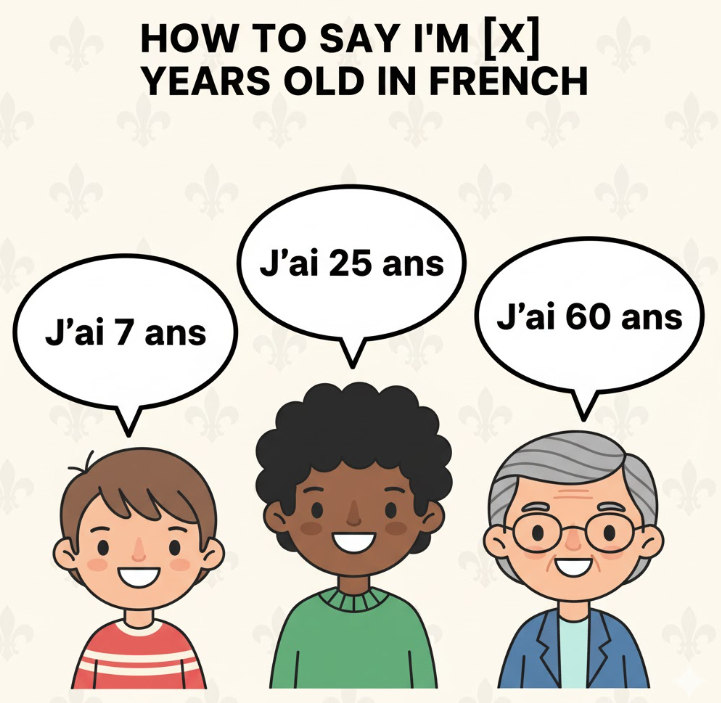
In French, expressing age involves using the verb avoir, which means “to have,” rather than the verb “to be” as in English. The basic structure is: Subject + avoir (conjugated) + number of years + ans. The word ans is the French word for “years.” Understanding this fundamental difference is crucial for accurately expressing age in French. The structure is rigid, but straightforward, making it relatively easy to master with practice.
The core concept revolves around viewing age as something one “has” rather than something one “is.” This is a key grammatical distinction between English and French, and it impacts how you construct sentences when discussing age. The verb avoir must be conjugated correctly according to the subject pronoun. Furthermore, the word ans is always plural, even when referring to one year (although this is rare when discussing age).
Structural Breakdown: Avoir + Age + Ans
The structure for stating age in French is quite specific. Let’s break it down step by step:
- Subject: The person whose age you are stating (e.g., Je, Tu, Il, Elle, Nous, Vous, Ils, Elles).
- Avoir (conjugated): The verb avoir conjugated to match the subject. Here’s a quick review of the conjugation:
- J’ai (I have)
- Tu as (You have – informal)
- Il/Elle/On a (He/She/One has)
- Nous avons (We have)
- Vous avez (You have – formal/plural)
- Ils/Elles ont (They have)
- Number of Years: The age in numerical form (e.g., vingt, trente, quarante).
- Ans: The word for “years.” It is always used in the plural, even if it’s implicitly one year (e.g., in the context of a baby’s age, although “mois” – months – is more common).
Therefore, the complete structure is: Subject + Avoir (conjugated) + Number of Years + Ans. For example, to say “I am 20 years old,” you would say “J’ai vingt ans.” This construction is consistent across all ages and subjects, making it a relatively straightforward grammatical rule to learn and apply.
Variations: Expressing Age Ranges and Approximations
While the basic structure remains consistent, there are variations for expressing age ranges or approximations:
Expressing Age Ranges
To express an age range, use the word entre (between) and et (and):
- Il a entre 20 et 25 ans. (He is between 20 and 25 years old.)
- Elle a entre 30 et 35 ans. (She is between 30 and 35 years old.)
Expressing Approximations
To express an approximate age, use words like environ (approximately), presque (almost), or une quarantaine de (around forty):
- Il a environ 40 ans. (He is approximately 40 years old.)
- Elle a presque 30 ans. (She is almost 30 years old.)
- Il a une quarantaine d’années. (He is around forty years old.) – Note the use of “années” here, which is a synonym for “ans” and is often used with approximations.
Using “Âgé(e)”
The adjective âgé(e) (old) can also be used. It agrees in gender and number with the subject. For example:
- Il est âgé de 50 ans. (He is 50 years old. – literally, He is old of 50 years.)
- Elle est âgée de 60 ans. (She is 60 years old. – literally, She is old of 60 years.)
Notice the use of de before the number of years when using âgé(e).
Examples: Saying Your Age in Different Contexts
Let’s explore various examples of expressing age in French. These examples cover different subjects, ages, and contexts.
Basic Examples
The following table provides basic examples of expressing age with different subject pronouns.
| Subject | French | English |
|---|---|---|
| Je | J’ai 25 ans. | I am 25 years old. |
| Tu | Tu as 30 ans. | You are 30 years old. (informal) |
| Il | Il a 40 ans. | He is 40 years old. |
| Elle | Elle a 50 ans. | She is 50 years old. |
| Nous | Nous avons 60 ans. | We are 60 years old. |
| Vous | Vous avez 70 ans. | You are 70 years old. (formal/plural) |
| Ils | Ils ont 80 ans. | They are 80 years old. (masculine/mixed) |
| Elles | Elles ont 90 ans. | They are 90 years old. (feminine) |
| On | On a 22 ans. | We are 22 years old. (informal) / One is 22 years old. |
| Je | J’ai 18 ans. | I am 18 years old. |
| Tu | Tu as 35 ans. | You are 35 years old. (informal) |
| Il | Il a 42 ans. | He is 42 years old. |
| Elle | Elle a 58 ans. | She is 58 years old. |
| Nous | Nous avons 65 ans. | We are 65 years old. |
| Vous | Vous avez 71 ans. | You are 71 years old. (formal/plural) |
| Ils | Ils ont 84 ans. | They are 84 years old. (masculine/mixed) |
| Elles | Elles ont 93 ans. | They are 93 years old. (feminine) |
| On | On a 27 ans. | We are 27 years old. (informal) / One is 27 years old. |
| Je | J’ai 29 ans. | I am 29 years old. |
Examples with Approximations
The following table provides examples of expressing approximate ages.
| French | English |
|---|---|
| Il a environ 30 ans. | He is approximately 30 years old. |
| Elle a presque 40 ans. | She is almost 40 years old. |
| Nous avons une cinquantaine d’années. | We are around fifty years old. |
| Vous avez à peu près 60 ans. | You are about 60 years old. (formal/plural) |
| Ils ont dans les 70 ans. | They are in their 70s. (masculine/mixed) |
| Elles ont une soixantaine d’années. | They are around sixty years old. (feminine) |
| J’ai environ 20 ans. | I am approximately 20 years old. |
| Il a à peu près 35 ans. | He is about 35 years old. |
| Elle a presque 45 ans. | She is almost 45 years old. |
| Nous avons une cinquantaine d’années. | We are around fifty years old. |
| Vous avez à peu près 65 ans. | You are about 65 years old. (formal/plural) |
| Ils ont dans les 75 ans. | They are in their 70s. (masculine/mixed) |
| Elles ont une soixantaine d’années. | They are around sixty years old. (feminine) |
| J’ai environ 22 ans. | I am approximately 22 years old. |
| Il a à peu près 37 ans. | He is about 37 years old. |
| Elle a presque 47 ans. | She is almost 47 years old. |
| Nous avons une cinquantaine d’années. | We are around fifty years old. |
| Vous avez à peu près 67 ans. | You are about 67 years old. (formal/plural) |
| Ils ont dans les 77 ans. | They are in their 70s. (masculine/mixed) |
| Elles ont une soixantaine d’années. | They are around sixty years old. (feminine) |
Examples with Age Ranges
The following table provides examples of expressing age ranges.
| French | English |
|---|---|
| Il a entre 20 et 25 ans. | He is between 20 and 25 years old. |
| Elle a entre 30 et 35 ans. | She is between 30 and 35 years old. |
| Nous avons entre 40 et 45 ans. | We are between 40 and 45 years old. |
| Vous avez entre 50 et 55 ans. | You are between 50 and 55 years old. (formal/plural) |
| Ils ont entre 60 et 65 ans. | They are between 60 and 65 years old. (masculine/mixed) |
| Elles ont entre 70 et 75 ans. | They are between 70 and 75 years old. (feminine) |
| Il a entre 26 et 31 ans. | He is between 26 and 31 years old. |
| Elle a entre 36 et 41 ans. | She is between 36 and 41 years old. |
| Nous avons entre 46 et 51 ans. | We are between 46 and 51 years old. |
| Vous avez entre 56 et 61 ans. | You are between 56 and 61 years old. (formal/plural) |
| Ils ont entre 66 et 71 ans. | They are between 66 and 71 years old. (masculine/mixed) |
| Elles ont entre 76 et 81 ans. | They are between 76 and 81 years old. (feminine) |
| Il a entre 19 et 24 ans. | He is between 19 and 24 years old. |
| Elle a entre 29 et 34 ans. | She is between 29 and 34 years old. |
| Nous avons entre 39 et 44 ans. | We are between 39 and 44 years old. |
| Vous avez entre 49 et 54 ans. | You are between 49 and 54 years old. (formal/plural) |
| Ils ont entre 59 et 64 ans. | They are between 59 and 64 years old. (masculine/mixed) |
| Elles ont entre 69 et 74 ans. | They are between 69 and 74 years old. (feminine) |
Examples Using “Âgé(e) de”
The following table provides examples using the construction âgé(e) de.
| Subject | French | English |
|---|---|---|
| Il | Il est âgé de 35 ans. | He is 35 years old. |
| Elle | Elle est âgée de 42 ans. | She is 42 years old. |
| Nous | Nous sommes âgés de 58 ans. | We are 58 years old. |
| Vous | Vous êtes âgés de 61 ans. | You are 61 years old. (plural, masculine or mixed group) |
| Vous | Vous êtes âgées de 61 ans. | You are 61 years old. (plural, feminine group) |
| Ils | Ils sont âgés de 73 ans. | They are 73 years old. |
| Elles | Elles sont âgées de 80 ans. | They are 80 years old. |
| Il | Il est âgé de 25 ans. | He is 25 years old. |
| Elle | Elle est âgée de 32 ans. | She is 32 years old. |
| Nous | Nous sommes âgés de 48 ans. | We are 48 years old. |
| Vous | Vous êtes âgés de 51 ans. | You are 51 years old. (plural, masculine or mixed group) |
| Vous | Vous êtes âgées de 51 ans. | You are 51 years old. (plural, feminine group) |
| Ils | Ils sont âgés de 63 ans. | They are 63 years old. |
| Elles | Elles sont âgées de 70 ans. | They are 70 years old. |
| Il | Il est âgé de 45 ans. | He is 45 years old. |
| Elle | Elle est âgée de 52 ans. | She is 52 years old. |
| Nous | Nous sommes âgés de 68 ans. | We are 68 years old. |
| Vous | Vous êtes âgés de 71 ans. | You are 71 years old. (plural, masculine or mixed group) |
| Vous | Vous êtes âgées de 71 ans. | You are 71 years old. (plural, feminine group) |
| Ils | Ils sont âgés de 83 ans. | They are 83 years old. |
| Elles | Elles sont âgées de 90 ans. | They are 90 years old. |
Usage Rules: Agreement, Pronunciation, and Formalities
Several rules govern the proper usage of expressing age in French:
Verb Agreement
The verb avoir must agree with the subject pronoun. This is a fundamental rule of French grammar. Ensure you conjugate avoir correctly based on who is being discussed.
The Word “Ans”
The word ans is always plural, even when the age is one year. For example, you would technically say “Il a un ans” to say “He is one year old” although it is far more common to say “Il a un an” or, if it’s a baby under one year of age, to express their age in months: “Il a six mois” (He is six months old).
Pronunciation
Pay attention to pronunciation, especially with numbers. Some numbers have silent letters or require liaison (linking sounds between words). For example, in “J’ai vingt ans,” the t in vingt is often silent, but it may be pronounced if followed by a word that starts with a vowel. However, it is not pronounced when followed by a consonant.
Formality
Use tu for informal situations (friends, family) and vous for formal situations (strangers, superiors). This distinction is crucial in French culture.
Asking Someone’s Age
To ask someone’s age, you would say: “Quel âge as-tu?” (informal) or “Quel âge avez-vous?” (formal). The response would then follow the structure we’ve been discussing.
Common Mistakes: Avoiding Errors in Expressing Age
English speakers often make common mistakes when expressing age in French. Here are some to avoid:
- Using être instead of avoir: This is the most common mistake. Remember, age is something you “have,” not something you “are.”
- Incorrect: Je suis 20 ans.
- Correct: J’ai 20 ans.
- Forgetting ans: Always include ans after the number of years.
- Incorrect: J’ai vingt.
- Correct: J’ai vingt ans.
- Incorrect verb conjugation: Ensure the verb avoir is correctly conjugated.
- Incorrect: Tu a 25 ans.
- Correct: Tu as 25 ans.
- Mispronouncing numbers: Pay attention to the pronunciation of French numbers.
- Incorrect pronunciation: Saying “dix-huit” (18) incorrectly.
- Correct pronunciation: Ensuring the correct pronunciation of “dix-huit.”
The following table provides examples of other common mistakes and their corrections.
| Mistake | Incorrect | Correct |
|---|---|---|
| Using “être” | Elle est 30 ans. | Elle a 30 ans. |
| Forgetting “ans” | Nous avons 40. | Nous avons 40 ans. |
| Incorrect conjugation | Ils a 50 ans. | Ils ont 50 ans. |
| Using “être” | Je suis 22 ans. | J’ai 22 ans. |
| Forgetting “ans” | Tu as 33. | Tu as 33 ans. |
| Incorrect conjugation | Il avons 44 ans. | Il a 44 ans. |
| Using “être” | Vous êtes 55 ans. | Vous avez 55 ans. |
| Forgetting “ans” | Elles ont 66. | Elles ont 66 ans. |
| Incorrect conjugation | On aies 77 ans. | On a 77 ans. |
| Using “être” | Il est 88 ans. | Il a 88 ans. |
| Forgetting “ans” | Nous avons 99. | Nous avons 99 ans. |
| Incorrect conjugation | Je est 10 ans. | J’ai 10 ans. |
Practice Exercises: Test Your Knowledge
Test your understanding with the following practice exercises. Translate the English sentences into French, expressing the age accurately.
Exercise 1
Translate the following sentences into French.
| Question | Answer |
|---|---|
| I am 32 years old. | J’ai 32 ans. |
| You are 28 years old. (informal) | Tu as 28 ans. |
| He is 45 years old. | Il a 45 ans. |
| She is 51 years old. | Elle a 51 ans. |
| We are 63 years old. | Nous avons 63 ans. |
| You are 72 years old. (formal) | Vous avez 72 ans. |
| They are 84 years old. (masculine) | Ils ont 84 ans. |
| They are 91 years old. (feminine) | Elles ont 91 ans. |
| One is 24 years old. | On a 24 ans. |
| I am almost 40 years old. | J’ai presque 40 ans. |
Exercise 2
Fill in the blanks with the correct form of avoir.
| Question | Answer |
|---|---|
| Je ____ 20 ans. | ai |
| Tu ____ 35 ans. | as |
| Il ____ 42 ans. | a |
| Elle ____ 58 ans. | a |
| Nous ____ 65 ans. | avons |
| Vous ____ 71 ans. | avez |
| Ils ____ 84 ans. | ont |
| Elles ____ 93 ans. | ont |
| On ____ 27 ans. | a |
| Je ____ environ 30 ans. | ai |
Exercise 3
Correct the following sentences.
| Question | Answer |
|---|---|
| Je suis 25 ans. | J’ai 25 ans. |
| Tu a 30 ans. | Tu as 30 ans. |
| Il est 40. | Il a 40 ans. |
| Elle a 50. | Elle a 50 ans. |
| Nous avons 60. | Nous avons 60 ans. |
| Vous êtes 70 ans. | Vous avez 70 ans. |
| Ils est 80 ans. | Ils ont 80 ans. |
| Elles a 90 ans. | Elles ont 90 ans. |
| On est 22 ans. | On a 22 ans. |
| J’ai presque 30. | J’ai presque 30 ans. |
Advanced Topics: Nuances and Idiomatic Expressions
Beyond the basics, some advanced topics can further refine your understanding:
Using “Quel âge… ?”
To ask someone’s age, use the phrase “Quel âge as-tu ?” (informal) or “Quel âge avez-vous ?” (formal). The structure is different from directly translating “How old are you?”
Expressing Age in Months
For babies and young children, age is often expressed in months (mois) instead of years. For example, “Il a six mois” (He is six months old).
Idiomatic Expressions
Certain idiomatic expressions involve age. For example, “avoir l’âge de raison” means “to be old enough to know better” or “to have reached the age of reason.”
“Vieillir” – To Grow Old
While this article focuses on stating the *age* one *has*, it’s worth noting the verb vieillir (to grow old). You might say, for example, “Je vieillis” (I am getting old) or “Il a bien vieilli” (He has aged well).
FAQ: Frequently Asked Questions
- Why do French speakers use avoir instead of être to express age?
French views age as a possession rather than a state of being. You “have” years, rather than “being” years old. This is a fundamental difference in how the language conceptualizes age.
- Is it rude to ask someone’s age in French?
Like in many cultures, asking someone’s age can be considered impolite, especially if you don’t know the person well. Use discretion and consider the context.
- How do I express age when talking about historical figures?
You still use avoir, but you might need to adjust the tense depending on the context. For example, “Il a eu 30 ans quand…” (He was 30 years old when…).
- What’s the difference between ans and années?
While both mean “years,” ans is generally used when stating a specific age, while années is often used with approximations or durations. For instance, “J’ai 20 ans” (I am 20 years old) vs. “Il a travaillé pendant 10 années” (He worked for 10 years).
- How do I say “in his/her twenties” in French?
You can say “dans la vingtaine” (in his/her twenties), “dans la trentaine” (in his/her thirties), and so on.
- What if I don’t know the exact age, but want to give an estimate?
Use expressions like “environ” (approximately), “à peu près” (about), or “dans les” (in the). For example, “Il a environ 50 ans” (He is approximately 50 years old).
- How do I express that someone looks younger than they are?
You can say something like “Il/Elle ne fait pas son âge” (He/She doesn’t look his/her age) or “Il/Elle paraît plus jeune” (He/She looks younger).
- Is there a way to avoid stating my exact age in French?
Yes, you can use vague terms like “Je suis d’un certain âge” (I am of a certain age) or simply avoid the topic
altogether.
Conclusion
Expressing age in French, while different from English, is a straightforward process once you understand the basic structure and common variations. By mastering the use of avoir, remembering to include ans, and practicing regularly, you can confidently and accurately communicate your age and the age of others in French. Remember to pay attention to verb agreement, pronunciation, and formality to ensure you’re speaking correctly and appropriately. With the knowledge and practice gained from this guide, you’ll be well-equipped to navigate conversations about age in French-speaking environments.
Continue practicing with different ages, subjects, and contexts to solidify your understanding. Don’t be afraid to make mistakes – they are a natural part of the learning process.
The more you practice, the more natural expressing age in French will become. Bonne chance!