Learning to say “What’s up” in German is more than just memorizing a phrase; it’s about understanding the nuances of informal communication in a new language. This skill enables you to engage in casual conversations, build rapport with native speakers, and navigate everyday social interactions with confidence.
This guide is designed for English speakers of all levels who are interested in learning German, from beginners who are just starting their language journey to more advanced learners who want to refine their conversational skills. By mastering the various ways to say “What’s up” in German, you’ll gain a deeper appreciation for the language and its cultural context.
This article will break down the common German equivalents of “What’s up,” exploring their meanings, usages, and the situations in which they are appropriate. We’ll also cover common mistakes to avoid and provide plenty of examples and practice exercises to help you internalize these phrases.
Whether you’re planning a trip to Germany, connecting with German-speaking friends, or simply expanding your linguistic horizons, this guide will equip you with the tools you need to communicate effectively and authentically.
Table of Contents
- Introduction
- Definition: “What’s Up” in German
- Structural Breakdown of Key Phrases
- Types and Categories of German Greetings
- Examples of “What’s Up” in German
- Usage Rules and Etiquette
- Common Mistakes to Avoid
- Practice Exercises
- Advanced Topics: Slang and Idiomatic Expressions
- Frequently Asked Questions
- Conclusion
Definition: “What’s Up” in German
The English phrase “What’s up?” is a versatile greeting and inquiry used to initiate conversation, express interest in someone’s well-being, or simply acknowledge their presence. In German, there isn’t a single, direct equivalent that captures all the nuances of “What’s up?” Instead, German offers a variety of phrases that convey similar meanings, each with its own specific context and level of formality.
Understanding these nuances is crucial for effective communication.
The most common translations can be grouped into general categories: greetings, inquiries about well-being, and expressions of curiosity about current events. The choice of phrase depends on the relationship between the speakers, the setting, and the desired level of formality.
For instance, you would use a different phrase when greeting a close friend compared to addressing a business acquaintance. The common phrases used include:
- Wie geht’s? (How’s it going?)
- Was gibt’s? (What’s up? / What’s new?)
- Was läuft? (What’s running? / What’s going on?)
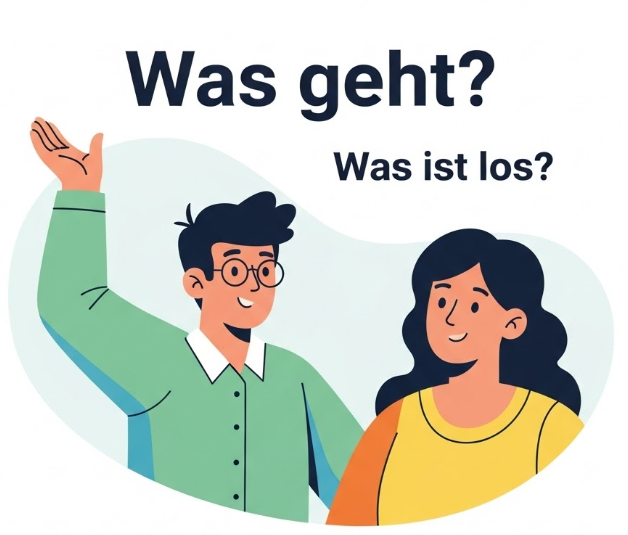
- Was ist los? (What’s the matter? / What’s wrong?)
- Na? (Well? / So?)
Each of these expressions carries a slightly different connotation, making it important to select the most appropriate option for the situation. For example, “Was ist los?” often implies that something might be wrong, while “Was gibt’s?” is a more general inquiry about news or updates.
“Wie geht’s?” is a common greeting similar to “How are you?” and “Na?” is a very informal greeting used among close friends.
Structural Breakdown of Key Phrases
Understanding the grammatical structure of these common phrases can help you use them correctly and confidently. Let’s break down each phrase:
- Wie geht’s?: This phrase is a shortened version of “Wie geht es dir?” Wie means “how,” geht is the third-person singular form of the verb gehen (to go), es is the impersonal pronoun “it,” and dir is the dative form of “you” (informal). The literal translation is “How does it go for you?”
- Was gibt’s?: Was means “what,” gibt is the third-person singular form of the verb geben (to give), and ‘s is a shortened form of es (it). The literal translation is “What does it give?” or “What is there?”
- Was läuft?: Was means “what,” and läuft is the third-person singular form of the verb laufen (to run). The literal translation is “What is running?” or “What’s going on?”
- Was ist los?: Was means “what,” ist is the third-person singular form of the verb sein (to be), and los is an adjective meaning “loose” or “going on.” The literal translation is “What is loose?” or “What’s going on?”
- Na?: This is an abbreviated and highly informal greeting. It doesn’t have a direct structural breakdown but implies a question like “What’s up?” or “What’s new?”
By understanding the individual components of these phrases, you can better grasp their meaning and usage. This also allows you to adapt them slightly to fit different contexts, although it’s generally best to stick to the standard forms, especially when you’re still learning.
Types and Categories of German Greetings
German greetings can be categorized based on their level of formality and the context in which they are used. Understanding these categories will help you choose the appropriate greeting for any situation.
Formal Greetings
Formal greetings are used in professional settings, when addressing people you don’t know well, or when showing respect to someone of higher status. These greetings are typically more polite and reserved.
- Guten Tag (Good day): This is a standard formal greeting used throughout the day.
- Guten Morgen (Good morning): Used in the morning until around 11:00 AM or noon.
- Guten Abend (Good evening): Used in the evening.
- Wie geht es Ihnen? (How are you? – formal): This is the formal version of “Wie geht’s?” and is used when addressing someone with “Sie” (formal you).
Informal Greetings
Informal greetings are used with friends, family, and people you know well. These greetings are more casual and relaxed.
- Hallo (Hello): A common and versatile greeting suitable for most informal situations.
- Wie geht’s? (How’s it going?): A standard informal greeting.
- Was gibt’s? (What’s up? / What’s new?): An informal way to ask what’s happening.
- Was läuft? (What’s running? / What’s going on?): Another informal way to ask what’s happening.
- Na? (Well? / So?): A very informal and abbreviated greeting.
Regional Variations
Like many languages, German has regional variations in its greetings. While the standard greetings are widely understood, knowing some regional alternatives can help you better understand and connect with people from different parts of Germany, Austria, and Switzerland.
- Servus (Hello / Goodbye – Southern Germany, Austria): A common informal greeting and farewell in Southern Germany and Austria.
- Grüezi (Hello – Switzerland): A common greeting in Switzerland.
- Moin (Hello – Northern Germany): Used in Northern Germany, particularly in the Hamburg area.
Examples of “What’s Up” in German
To fully understand how to use these phrases, let’s look at some examples in context.
“Wie geht’s?” Examples
“Wie geht’s?” is a versatile greeting that can be used in many informal situations. It’s similar to “How’s it going?” or “How are you?” in English.
The following table provides examples of how to use this phrase in various contexts.
| German | English Translation | Context |
|---|---|---|
| Wie geht’s dir? | How’s it going (to you)? | Informal, addressing one person |
| Wie geht es euch? | How’s it going (to you all)? | Informal, addressing multiple people |
| Wie geht es Ihnen? | How are you (formal)? | Formal, addressing one person using “Sie” |
| Hallo, wie geht’s? | Hello, how’s it going? | General informal greeting |
| Na, wie geht’s? | Well, how’s it going? | Very informal, among friends |
| Wie geht’s denn so? | So, how’s it going then? | Expressing genuine interest |
| Und, wie geht’s? | And, how’s it going? | Following up on a previous conversation |
| A: Lange nicht gesehen! Wie geht’s? B: Mir geht’s gut, danke. Und dir? | A: Long time no see! How’s it going? B: I’m doing well, thanks. And you? | Catching up with someone |
| Wie geht’s deiner Familie? | How’s your family doing? | Showing interest in someone’s family |
| Wie geht’s bei der Arbeit? | How’s it going at work? | Asking about someone’s work life |
| Wie geht es deinem Bruder? | How is your brother doing? | Asking about someone’s brother. |
| Wie geht es deiner Mutter? | How is your mother doing? | Asking about someone’s mother |
| Wie geht es deinem Vater? | How is your father doing? | Asking about someone’s father |
| Wie geht es deinen Kindern? | How are your children doing? | Asking about someone’s children. |
| Wie geht es deinem Haustier? | How is your pet doing? | Asking about someone’s pet. |
| A: Ich habe gehört, du warst krank. Wie geht’s jetzt? B: Viel besser, danke! | A: I heard you were sick. How are you now? B: Much better, thanks! | Checking on someone’s health |
| Wie geht’s deinem neuen Projekt? | How is your new project going? | Asking about a specific project. |
| Wie geht’s deinem Studium? | How is your study going? | Asking about studies. |
| Wie geht’s deinem Auto? | How is your car doing? | Humorous question to start a conversation. |
| Wie geht’s deinem Geschäft? | How is your business doing? | Asking about someone’s business. |
| Wie geht’s so? | How’s it going generally? | A casual greeting, like “How’s things?” |
| Wie geht’s heute? | How’s it going today? | Asking about someone’s current state of being. |
| A: Wir haben uns lange nicht gesehen! Wie geht’s dir? B: Alles gut, danke! | A: We haven’t seen each other in a long time! How’s it going? B: Everything’s good, thanks! | Emphasizing the length of time since last meeting. |
| Wie geht’s mit der neuen Wohnung? | How’s it going with the new apartment? | Asking about a specific situation (new apartment). |
| Wie geht’s mit dem Umzug? | How’s it going with the move? | Asking about a specific situation (moving). |
| Wie geht’s mit der Arbeitssuche? | How’s it going with the job search? | Asking about a specific situation (job search). |
“Was gibt’s?” Examples
“Was gibt’s?” is similar to “What’s up?” or “What’s new?” in English. It’s a casual way to ask what’s happening or if there’s any news.
The following table provides examples of how to use this phrase.
| German | English Translation | Context |
|---|---|---|
| Was gibt’s Neues? | What’s new? | Asking for any recent updates |
| Na, was gibt’s? | Well, what’s up? | Very informal, among friends |
| Was gibt’s denn so? | So, what’s up then? | Expressing casual curiosity |
| Was gibt’s heute? | What’s up today? | Asking about the plans for the day |
| Was gibt’s im Fernsehen? | What’s on TV? | Asking about television programs |
| Was gibt’s zum Abendessen? | What’s for dinner? | Asking about the dinner plans. |
| A: Was gibt’s? B: Nicht viel, nur das Übliche. | A: What’s up? B: Not much, just the usual. | Typical response to “Was gibt’s?” |
| Was gibt’s Neues von der Arbeit? | What’s new from work? | Asking about work-related news |
| Was gibt’s von deiner Familie? | What’s up with your family? | Asking about family news |
| Was gibt’s bei dir? | What’s up with you? | Asking about the person’s life or situation |
| Was gibt’s in der Stadt? | What’s up in the city? | Asking about events or happenings in the city |
| Was gibt’s an Neuigkeiten? | What news is there? | Asking for news. |
| Was gibt’s Spannendes? | What’s exciting? | Looking for interesting news. |
| Was gibt’s Interessantes? | What’s interesting? | Looking for interesting news. |
| Was gibt’s Wichtiges? | What’s important? | Looking for important news. |
| Was gibt’s Neues in deinem Leben? | What’s new in your life? | Asking for recent updates about someone’s life. |
| Was gibt’s im Garten? | What’s up in the garden? | A casual, context-specific question. |
| Was gibt’s im Büro? | What’s up in the office? | A casual, context-specific question. |
| Was gibt’s in der Schule? | What’s up in the school? | A casual, context-specific question. |
| Was gibt’s im Verein? | What’s up in the club? | A casual, context-specific question. |
| Was gibt’s zu erzählen? | What’s there to tell? | Asking if there are any stories. |
| Was gibt’s zu berichten? | What’s there to report? | Asking if there are any reports. |
| Was gibt’s Neues von deinem Projekt? | What’s new from your project? | Asking for updates on a specific project. |
| Was gibt’s Neues von deinem Urlaub? | What’s new from your vacation? | Asking for updates on a vacation. |
| Was gibt’s Neues von deiner Reise? | What’s new from your travel? | Asking for updates on a travel. |
“Was läuft?” Examples
“Was läuft?” is similar to “What’s going on?” or “What’s happening?” in English. It’s a more informal and slangy way to ask about events or activities.
The following table provides examples of how to use this phrase.
| German | English Translation | Context |
|---|---|---|
| Was läuft heute Abend? | What’s going on tonight? | Asking about evening plans |
| Was läuft so? | What’s going on? | General informal inquiry |
| Na, was läuft? | Well, what’s going on? | Very informal, among friends |
| Was läuft denn? | So, what’s going on then? | Expressing casual curiosity |
| A: Was läuft? B: Nicht viel, alles wie immer. | A: What’s going on? B: Not much, everything as usual. | Typical response to “Was läuft?” |
| Was läuft in der Stadt? | What’s going on in the city? | Asking about events or activities in the city |
| Was läuft bei dir so? | What’s going on with you? | Asking about the person’s life or situation |
| Was läuft im Kino? | What’s playing at the cinema? | Asking about movies |
| Was läuft im Theater? | What’s playing at the theater? | Asking about theater performances |
| Was läuft im Radio? | What’s playing on the radio? | Asking about music or programs on the radio |
| Was läuft im Internet? | What’s going on on the internet? | Asking about trends or news online |
| Was läuft in der Party? | What’s going on in the party? | Asking about events or activities in the party |
| Was läuft in der Schule? | What’s going on in the school? | Asking about events or activities in the school |
| Was läuft in der Arbeit? | What’s going on in the work? | Asking about events or activities in the work |
| Was läuft in der Firma? | What’s going on in the Company? | Asking about events or activities in the Company |
| Was läuft bei der neuen Software? | What’s going on with the new software? | Asking about progress or issues with software |
| Was läuft bei der neuen App? | What’s going on with the new app? | Asking about progress or issues with app |
| Was läuft bei dem neuen Projekt? | What’s going on with the new project? | Asking about progress or issues with project |
| Was läuft bei dem neuen Auto? | What’s going on with the new car? | Asking about progress or issues with car |
| Was läuft bei dem neuen Haus? | What’s going on with the new house? | Asking about progress or issues with house |
| Was läuft gerade? | What’s running right now? | Asking about the current situation. |
| Was läuft im Moment? | What’s running at the moment? | Asking about the current situation. |
“Was ist los?” Examples
“Was ist los?” translates to “What’s the matter?” or “What’s wrong?” in English. It’s used when you sense that something might be amiss or when someone seems upset.
The following table provides examples of how to use this phrase.
| German | English Translation | Context |
|---|---|---|
| Was ist denn los? | What’s the matter then? | Expressing concern |
| Ist etwas los? | Is something the matter? | Asking if something is wrong |
| Was ist mit dir los? | What’s wrong with you? | Asking someone directly if they’re upset |
| Was ist hier los? | What’s going on here? | Asking about a commotion or unusual situation |
| A: Du siehst traurig aus. Was ist los? B: Ich habe schlechte Nachrichten bekommen. | A: You look sad. What’s the matter? B: I received bad news. | Expressing concern and asking for information |
| Was ist mit dem Auto los? | What’s wrong with the car? | Asking about a problem with the car |
| Was ist mit dem Computer los? | What’s wrong with the computer? | Asking about a problem with the computer |
| Was ist mit dem Projekt los? | What’s wrong with the project? | Asking about a problem with the project |
| Was ist mit dem Essen los? | What’s wrong with the food? | Asking about a problem with the food |
| Was ist mit dem Wetter los? | What’s wrong with the weather? | Asking about bad weather |
| Was ist los, warum bist du so still? | What’s the matter, why are you so quiet? | Asking about unexpected silence. |
| Was ist los, warum weinst du? | What’s the matter, why are you crying? | Asking about tears. |
| Was ist los, warum bist du so wütend? | What’s the matter, why are you so angry? | Asking about unexpected anger. |
| Was ist los, warum bist du so nervös? | What’s the matter, why are you so nervous? | Asking about unexpected nervousness. |
| Was ist los, warum bist du so aufgeregt? | What’s the matter, why are you so excited? | Asking about unexpected excitement. |
| Was ist los mit deinem Bein? | What’s wrong with your leg? | Asking about an apparent injury. |
| Was ist los mit deinem Arm? | What’s wrong with your arm? | Asking about an apparent injury. |
| Was ist los mit deinem Auge? | What’s wrong with your eye? | Asking about an apparent injury. |
| Was ist los mit deinem Hals? | What’s wrong with your neck? | Asking about an apparent injury. |
| Was ist los mit deinem Rücken? | What’s wrong with your back? | Asking about an apparent injury. |
“Na?” Examples
“Na?” is a very short and informal greeting, similar to saying “Well?” or “So?” in English. It’s typically used among close friends and family.
The following table provides examples of how to use this phrase.
| German | English Translation | Context |
|---|---|---|
| Na? Alles klar? | Well? Everything alright? | Asking if everything is okay |
| Na? Wie geht’s? | Well? How’s it going? | Combining “Na?” with “Wie geht’s?” |
| Na? Was machst du so? | Well? What are you up to? | Combining “Na?” with “Was machst du so?” |
| A: Na? B: Na, alles gut bei dir? | A: Well? B: Well, everything good with you? | Reciprocal “Na?” greeting |
| Na, lange nicht gesehen! | Well, long time no see! | Using “Na?” when seeing someone after a long time |
| Na, mein Freund? | Well, my friend? | Using ‘Na’ to greet a friend. |
| Na, meine Freundin? | Well, my friend? | Using ‘Na’ to greet a friend. |
| Na, mein Lieber? | Well, my dear? | Using ‘Na’ to greet a dear person. |
| Na, mein Schatz? | Well, my treasure? | Using ‘Na’ to greet a treasure person. |
| Na, was gibt’s? | Well, what’s up? | Combining “Na?” with “Was gibt’s?” |
Usage Rules and Etiquette
Using these phrases correctly involves understanding the social context and relationship with the person you’re addressing. Here are some general rules to keep in mind:
- Formality: Use formal greetings like “Guten Tag” and “Wie geht es Ihnen?” in professional settings or when addressing people you don’t know well. Use informal greetings like “Hallo,” “Wie geht’s?,” “Was gibt’s?,” “Was läuft?,” and “Na?” with friends, family, and people you know well.
- Context: “Was ist los?” is best used when you suspect something is wrong. Avoid using it casually as a general greeting.
- Regional Variations: Be aware of regional variations in greetings. Using “Servus” in Northern Germany might sound odd, while using “Moin” in Bavaria might be unfamiliar.
- Responses: Be prepared to respond appropriately to these greetings. Common responses include “Mir geht’s gut” (I’m doing well), “Nicht viel” (Not much), and “Alles klar” (Everything’s alright).
Common Mistakes to Avoid
Here are some common mistakes that English speakers make when using these phrases:
| Incorrect | Correct | Explanation |
|---|---|---|
| Was ist los? (as a general greeting) | Wie geht’s? / Was gibt’s? | “Was ist los?” implies something is wrong and shouldn’t be used as a general greeting. |
| Wie geht es dir? (to a formal acquaintance) | Wie geht es Ihnen? | “Wie geht es dir?” is informal and should only be used with people you know well. |
| Na? (to a stranger) | Hallo / Guten Tag | “Na?” is very informal and should only be used with close friends and family. |
| Was läuft? (in a formal meeting) | Wie geht es Ihnen? | “Was läuft?” is too informal for a formal setting. |
Practice Exercises
Test your understanding with these practice exercises.
- Question: You meet a friend on the street. Which greeting is most appropriate?
Options: a) Guten Tag b) Wie geht’s? c) Wie geht es Ihnen? d) Was ist los?
Answer: b) Wie geht’s?
- Question: You notice your colleague looks upset. Which question is most appropriate?
Options: a) Was gibt’s? b) Was läuft? c) Was ist los? d) Na?
Answer: c) Was ist los?
- Question: You are in a formal meeting. How do you greet your boss?
Options: a) Hallo b) Na? c) Guten Tag d) Was läuft?
Answer: c) Guten Tag
- Question: You are with a group of friends. Which greeting is most appropriate?
Options: a) Guten Tag b) Wie geht’s? c) Wie geht es Ihnen? d) Servus
Answer: b) Wie geht’s?
- Question: You are in North Germany. Which greeting is most appropriate?
Options: a) Guten Tag b) Wie geht’s? c) Moin d) Servus
Answer: c) Moin
- Question: You are in South Germany. Which greeting is most appropriate?
Options: a) Guten Tag b) Wie geht’s? c) Moin d) Servus
Answer: d) Servus
- Question: You want to ask what’s new in someone’s life in a very informal manner. Which phrase do you use?
Options: a) Wie geht es Ihnen? b) Was gibt’s? c) Na? d) Was ist los?
Answer: c) Na?
- Question: Translate: “What’s going on tonight?”
Options: a) Was gibt’s heute Abend? b) Was läuft heute Abend? c) Was ist los heute Abend? d) Wie geht’s heute Abend?
Answer: b) Was läuft heute Abend?
- Question: You haven’t seen your friend in a long time. What do you say after ‘Na?’?
Options: a) Wie geht es Ihnen? b) Was ist los? c) Lange nicht gesehen! d) Guten Tag
Answer: c) Lange nicht gesehen!
- Question: You see someone crying. What do you ask?
Options: a) Was gibt’s? b) Was läuft? c) Was ist los, warum weinst du? d) Na?
Answer: c)
Was ist los, warum weinst du?
Advanced Topics: Slang and Idiomatic Expressions
Once you’re comfortable with the basic phrases, you can explore more advanced and idiomatic expressions. These expressions often add color and personality to your conversations.
- Alles fit? (Everything fit?): Similar to “Everything okay?” or “Are you alright?”
- Wie stehen die Sterne? (How are the stars standing?): A playful way of asking “How’s it going?” or “What’s new?”
- Was geht ab? (What’s going off?): A slangy way to ask “What’s up?” or “What’s happening?”
- Was macht die Welt? (What’s the world doing?): A philosophical way to ask “What’s new?” or “What’s going on?”
These expressions are more informal and should be used with caution, especially when you’re not sure about the social context. However, mastering them can make your German sound more natural and fluent.
Frequently Asked Questions
Can I use “Was ist los?” as a general greeting?
No, “Was ist los?” is best used when you suspect something is wrong. It’s not appropriate as a general greeting.
Is “Na?” appropriate in formal situations?
No, “Na?” is very informal and should only be used with close friends and family.
What’s the difference between “Wie geht’s?” and “Wie geht es Ihnen?”
“Wie geht’s?” is informal and used with people you know well. “Wie geht es Ihnen?” is formal and used in professional settings or when addressing people you don’t know well.
How do I respond when someone asks me “Was gibt’s?”
Common responses include “Nicht viel” (Not much), “Nichts Besonderes” (Nothing special), or you can share some news or updates about your life.
Are there any regional differences in how people say “What’s up?” in German?
Yes, there are regional variations. For example, “Servus” is common in Southern Germany and Austria, while “Moin” is used in Northern Germany.
Conclusion
Learning how to say “What’s up” in German involves understanding the nuances of various phrases and choosing the appropriate one for the context. By mastering “Wie geht’s?,” “Was gibt’s?,” “Was läuft?,” “Was ist los?,” and “Na?,” you’ll be well-equipped to engage in casual conversations and build rapport with native speakers.
Remember to consider the level of formality, the regional variations, and the specific situation when selecting your greeting. With practice and attention to detail, you’ll be able to communicate effectively and authentically in German.