Learning how to express affection is a crucial part of mastering any language. In Italian, saying “I like you” involves understanding different nuances and levels of affection, as well as the grammatical structures required to convey your feelings accurately.
This article will guide you through the various ways to express “I like you” in Italian, from casual appreciation to deeper romantic feelings. Whether you’re a beginner or an advanced learner, this comprehensive guide will provide you with the knowledge and tools to communicate your feelings effectively.
This topic is essential for anyone looking to build genuine connections with Italian speakers. It goes beyond simple vocabulary and delves into the cultural context of expressing emotions.
Understanding these nuances will not only improve your language skills but also enhance your ability to form meaningful relationships. This guide is designed for language learners of all levels, from those just starting their Italian journey to more advanced speakers looking to refine their expressions of affection.
Table of Contents
- Introduction
- Definition: “I Like You” in Italian
- Structural Breakdown
- Types and Categories of “I Like You”
- Examples
- Usage Rules
- Common Mistakes
- Practice Exercises
- Advanced Topics
- FAQ
- Conclusion
Definition: “I Like You” in Italian
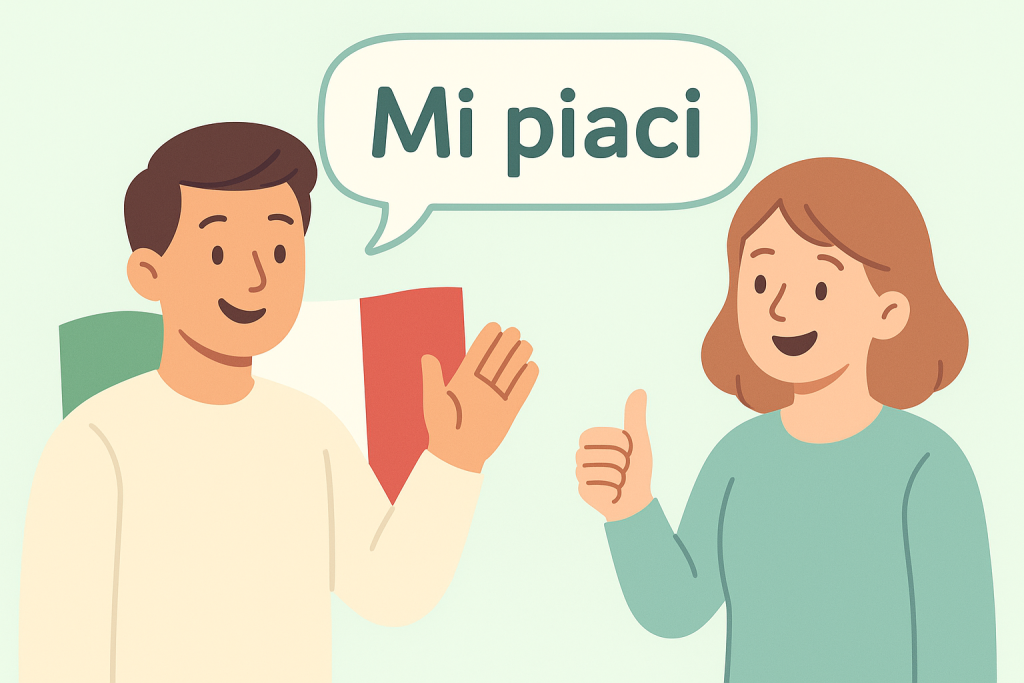
In Italian, there isn’t a single, direct translation for “I like you” that covers all contexts. Instead, Italians use different phrases to express varying degrees of affection and attraction. The most common phrases include “Mi piaci,” “Mi sei simpatico/a,” and “Ti piace.” Each of these phrases carries a slightly different meaning and is used in specific situations. Understanding these nuances is essential for effectively communicating your feelings in Italian.
The phrase “Mi piaci” is generally used to express romantic interest or attraction. It implies a deeper level of liking than simply enjoying someone’s company. “Mi sei simpatico/a,” on the other hand, expresses a more platonic liking, similar to saying “I like you as a person.” The adjective *simpatico/a* means likeable or nice. The phrase “Ti piace” is used when you like something *about* someone, such as their hair, their laugh, or their personality. It’s important to choose the correct phrase to avoid misunderstandings and to accurately convey your intended message.
Structural Breakdown
The structure of these phrases often involves indirect object pronouns and the verb *piacere* (to be pleasing). This verb works differently from English verbs, as the subject of the sentence is the thing that is pleasing, not the person doing the liking.
Let’s break down each phrase:
- Mi piaci: Here, “mi” is an indirect object pronoun meaning “to me,” and “piaci” is the second-person singular form of *piacere*. The literal translation is closer to “You are pleasing to me.”
- Mi sei simpatico/a: “Mi” is again the indirect object pronoun “to me,” “sei” is the second-person singular form of the verb *essere* (to be), and “simpatico/a” is an adjective meaning “likeable.” The adjective must agree in gender with the person being liked.
- Ti piace: “Ti” is the indirect object pronoun “to you,” and “piace” is the third-person singular of *piacere*. This phrase is followed by the thing you like *about* the person.
- Volere bene: This phrase uses the verb *volere* (to want) and *bene* (well). The structure emphasizes the desire for someone’s well-being, expressing a deep affection without necessarily romantic connotations.
Understanding the grammatical structure of these phrases is crucial for using them correctly. The verb *piacere* can be particularly tricky for English speakers, as it inverts the subject and object.
Mastering this structure will allow you to express your feelings more accurately and confidently in Italian. It’s also important to pay attention to gender agreement when using adjectives like *simpatico/a*.
Types and Categories of “I Like You”
Italian offers several ways to express “I like you,” each with its own nuance and level of intensity. Here’s a breakdown of the most common expressions:
“Ti Piace” – Liking Something About Someone
This phrase is used when you like a specific quality or characteristic of a person. It’s not necessarily romantic but expresses appreciation for something particular about them.
It’s a more indirect way of saying “I like you” because you are saying that you like something *about* them.
“Mi Sei Simpatico/a” – You’re Likeable to Me
This expression conveys a friendly or platonic liking. It’s suitable for expressing appreciation for someone’s personality or character without implying romantic interest.
The ending of *simpatico* changes based on the gender of the person you are referring to, so you will say *simpatico* referring to a male, and *simpatica* referring to a female.
“Mi Piaci” – I Like You (Romantically)
This is the most common way to express romantic interest in Italian. It’s a direct way of saying “I like you” in a romantic context and implies attraction.
It’s a stronger expression than “Mi sei simpatico/a” and should be used when you want to convey romantic feelings.
“Volere Bene” – To Care About Someone
This phrase expresses a deep affection or caring for someone, but it’s not necessarily romantic. It’s often used to express love for family members or close friends.
It implies a strong emotional connection and a desire for their well-being. This phrase is more about deeply caring for someone, rather than just ‘liking’ them.
Examples
To fully understand how to use these phrases, let’s look at some examples in context.
“Ti Piace” Examples
This phrase is used to express that you like something *about* a person. The following table provides examples of situations when you might use this phrase.
| English | Italian |
|---|---|
| I like your laugh. | Mi piace la tua risata. |
| I like your smile. | Mi piace il tuo sorriso. |
| I like your hair. | Mi piacciono i tuoi capelli. |
| I like your sense of humor. | Mi piace il tuo senso dell’umorismo. |
| I like your intelligence. | Mi piace la tua intelligenza. |
| I like your kindness. | Mi piace la tua gentilezza. |
| I like your passion. | Mi piace la tua passione. |
| I like your energy. | Mi piace la tua energia. |
| I like your style. | Mi piace il tuo stile. |
| I like your voice. | Mi piace la tua voce. |
| I like the way you think. | Mi piace il modo in cui pensi. |
| I like the way you dress. | Mi piace come ti vesti. |
| I like the way you talk. | Mi piace come parli. |
| I like how you handle situations. | Mi piace come gestisci le situazioni. |
| I like your dedication. | Mi piace la tua dedizione. |
| I like your courage. | Mi piace il tuo coraggio. |
| I like your honesty. | Mi piace la tua onestà. |
| I like your optimism. | Mi piace il tuo ottimismo. |
| I like your creativity. | Mi piace la tua creatività. |
| I like your enthusiasm. | Mi piace il tuo entusiasmo. |
| I like your cooking. | Mi piace come cucini. |
| I like your singing. | Mi piace come canti. |
| I like your dancing. | Mi piace come balli. |
| I like your painting. | Mi piace come dipingi. |
| I like your writing. | Mi piace come scrivi. |
“Mi Sei Simpatico/a” Examples
This phrase is used to express that you like someone as a person. Remember to use *simpatico* for males and *simpatica* for females.
The following table provides examples of when to use this phrase.
| English | Italian |
|---|---|
| I like you (to a male friend). | Mi sei simpatico. |
| I like you (to a female friend). | Mi sei simpatica. |
| I think you’re a nice person (to a male). | Penso che tu sia una persona simpatica. |
| I think you’re a nice person (to a female). | Penso che tu sia una persona simpatica. |
| You’re likeable (to a male). | Sei simpatico. |
| You’re likeable (to a female). | Sei simpatica. |
| I find you likeable (male). | Ti trovo simpatico. |
| I find you likeable (female). | Ti trovo simpatica. |
| He’s likeable (general statement). | Lui è simpatico. |
| She’s likeable (general statement). | Lei è simpatica. |
| I like your personality (to a male). | Mi piace la tua personalità, sei simpatico. |
| I like your personality (to a female). | Mi piace la tua personalità, sei simpatica. |
| It’s nice to be around you (said to a male). | È bello stare con te, sei simpatico. |
| It’s nice to be around you (said to a female). | È bello stare con te, sei simpatica. |
| I enjoy talking to you (said to a male). | Mi piace parlare con te, sei simpatico. |
| I enjoy talking to you (said to a female). | Mi piace parlare con te, sei simpatica. |
| You’re always so positive (said to a male). | Sei sempre così positivo, sei simpatico. |
| You’re always so positive (said to a female). | Sei sempre così positiva, sei simpatica. |
| I appreciate your kindness (said to a male). | Apprezzo la tua gentilezza, sei simpatico. |
| I appreciate your kindness (said to a female). | Apprezzo la tua gentilezza, sei simpatica. |
| I admire your honesty (said to a male). | Ammiro la tua onestà, sei simpatico. |
| I admire your honesty (said to a female). | Ammiro la tua onestà, sei simpatica. |
| You’re a great friend (said to a male). | Sei un grande amico, sei simpatico. |
| You’re a great friend (said to a female). | Sei una grande amica, sei simpatica. |
| I always have fun with you (said to a male). | Mi diverto sempre con te, sei simpatico. |
| I always have fun with you (said to a female). | Mi diverto sempre con te, sei simpatica. |
“Mi Piaci” Examples
This phrase expresses romantic interest. The following table provides examples of using this phrase in different contexts.
| English | Italian |
|---|---|
| I like you (romantically). | Mi piaci. |
| I really like you. | Mi piaci molto. |
| I like you a lot. | Mi piaci tanto. |
| I’m attracted to you. | Mi attrai. |
| I have a crush on you. | Ho una cotta per te. |
| I’m starting to like you. | Comincio a piacerti. |
| I think I like you. | Penso che tu mi piaccia. |
| I’ve started to like you. | Ho cominciato a piacerti. |
| I like you more and more. | Mi piaci sempre di più. |
| I like you as more than a friend. | Mi piaci più che come un amico/un’amica. |
| I’m falling for you. | Mi sto innamorando di te. |
| I can’t help but like you. | Non posso fare a meno di piacerti. |
| I’m fond of you. | Ti voglio bene (in a romantic way). |
| I’m very fond of you. | Ti voglio molto bene (in a romantic way). |
| You’re growing on me. | Mi stai piacendo sempre di più. |
| I have feelings for you. | Ho dei sentimenti per te. |
| I’m developing feelings for you. | Sto sviluppando dei sentimenti per te. |
| I’m drawn to you. | Sono attratto/a da te. |
| I feel a connection with you. | Sento una connessione con te. |
| I enjoy spending time with you (romantically). | Mi piace passare del tempo con te (in modo romantico). |
| I like the way you make me feel. | Mi piace come mi fai sentire. |
| You make me happy. | Mi rendi felice. |
| You’re special to me. | Sei speciale per me. |
| You’re important to me. | Sei importante per me. |
| I think about you a lot. | Ti penso spesso. |
| I can’t stop thinking about you. | Non riesco a smettere di pensarti. |
“Volere Bene” Examples
This phrase expresses a deep affection or caring, often used for family or close friends. It is a stronger expression than mi sei simpatico/a, but not necessarily romantic. The following table provides examples of using *volere bene*
| English | Italian |
|---|---|
| I care about you. | Ti voglio bene. |
| I love you (to a family member). | Ti voglio bene. |
| I love you very much (to a family member). | Ti voglio molto bene. |
| I care deeply about you. | Ti voglio tanto bene. |
| I care for you like a brother/sister. | Ti voglio bene come a un fratello/una sorella. |
| We care about you. | Ti vogliamo bene. |
| They care about you. | Ti vogliono bene. |
| I want the best for you. | Ti voglio bene e voglio il meglio per te. |
| I’m here for you, I care about you. | Sono qui per te, ti voglio bene. |
| I always care about you. | Ti voglio sempre bene. |
| I’ll always care about you. | Ti vorrò sempre bene. |
| I’ve always cared about you. | Ti ho sempre voluto bene. |
| I care about your well-being. | Voglio bene al tuo benessere. |
| I care about your happiness. | Voglio bene alla tua felicità. |
| I care about your future. | Voglio bene al tuo futuro. |
| I care about your dreams. | Voglio bene ai tuoi sogni. |
| I care about your health. | Voglio bene alla tua salute. |
| I care about your safety. | Voglio bene alla tua sicurezza. |
| We all care about you very much. | Ti vogliamo tutti molto bene. |
| They all care about you very much. | Ti vogliono tutti molto bene. |
| My family cares about you. | La mia famiglia ti vuole bene. |
| My friends care about you. | I miei amici ti vogliono bene. |
| I’m grateful that you’re in my life, I care about you. | Sono grato/a che tu sia nella mia vita, ti voglio bene. |
| I’m lucky to have you in my life, I care about you. | Sono fortunato/a ad averti nella mia vita, ti voglio bene. |
Usage Rules
Using these phrases correctly involves understanding a few key grammatical and contextual rules.
Agreement in Gender and Number
When using “Mi sei simpatico/a,” remember that the adjective *simpatico/a* must agree in gender with the person you are referring to. Use *simpatico* for males and *simpatica* for females.
If you are talking to more than one person, you will use *simpatici* for a group of males or a mixed group, and *simpatiche* for a group of females.
Formal vs. Informal “You”
In Italian, there are two forms of “you”: formal (*Lei*) and informal (*tu*). When expressing affection, you will almost always use the informal *tu* form, as the formal *Lei* is reserved for more distant or professional relationships.
However, it’s crucial to be aware of the distinction, especially when interacting with elders or individuals you don’t know well. Using the formal *Lei* in place of *tu* might be more appropriate in some specific situations.
Contextual Appropriateness
The choice of phrase depends heavily on the context and your relationship with the person you’re addressing. “Mi piaci” is suitable for romantic interests, while “Mi sei simpatico/a” is better for platonic friendships.
“Volere bene” is reserved for close friends and family members. Using the wrong phrase can lead to misunderstandings or awkward situations, so it’s essential to consider the context carefully before expressing your feelings.
Common Mistakes
Here are some common mistakes to avoid when expressing “I like you” in Italian:
| Incorrect | Correct | Explanation |
|---|---|---|
| Io piace te. | Mi piaci. | The verb *piacere* requires an indirect object pronoun and the subject is the person you like. |
| Mi sei simpatico (said to a female). | Mi sei simpatica. | The adjective must agree in gender with the person being liked. |
| Ti voglio bene (said to a romantic interest too early). | Mi piaci. | “Ti voglio bene” implies a deeper level of affection than simply liking someone romantically. |
| Mi piace te. | Mi piaci. | The correct word order is “Mi piaci”, not “Mi piace te”. |
Another common mistake is using the formal *Lei* when expressing affection. Always use the informal *tu* unless you have a very specific reason to use the formal form, such as addressing someone much older than you or in a formal professional setting.
However, in most situations where you’re expressing affection, the informal *tu* is more appropriate.
Practice Exercises
Test your understanding with these practice exercises.
Exercise 1: Translation
Translate the following sentences into Italian.
| Question | Answer |
|---|---|
| I like you (romantically). | Mi piaci. |
| I like you (to a male friend). | Mi sei simpatico. |
| I like you (to a female friend). | Mi sei simpatica. |
| I care about you (to a family member). | Ti voglio bene. |
| I like your smile. | Mi piace il tuo sorriso. |
| I really like you (romantically). | Mi piaci molto. |
| I care about you very much (to a family member). | Ti voglio molto bene. |
| I like your sense of humor. | Mi piace il tuo senso dell’umorismo. |
| I think you’re a nice person (to a male). | Penso che tu sia una persona simpatica. |
| I think you’re a nice person (to a female). | Penso che tu sia una persona simpatica. |
Exercise 2: Fill in the Blanks
Fill in the blanks with the correct Italian phrase.
| Question | Answer |
|---|---|
| ____ (I like you romantically). | Mi piaci. |
| ____ (I like you to a male friend). | Mi sei simpatico. |
| ____ (I like you to a female friend). | Mi sei simpatica. |
| ____ (I care about you to a family member). | Ti voglio bene. |
| ____ (I like your eyes). | Mi piacciono i tuoi occhi. |
| ____ (I really like you romantically). | Mi piaci molto. |
| ____ (I care about you very much to a family member). | Ti voglio molto bene. |
| ____ (I like your passion). | Mi piace la tua passione. |
| ____ (I think you’re a nice person to a male). | Penso che tu sia una persona simpatica. |
| ____ (I think you’re a nice person to a female). | Penso che tu sia una persona simpatica. |
Exercise 3: Sentence Completion
Complete the sentences with the appropriate ending.
| Question | Answer |
|---|---|
| Mi piaci… | …molto. |
| Mi sei simpatico… | …perché sei sempre positivo. |
| Mi sei simpatica… | …perché sei sempre sorridente. |
| Ti voglio bene… | …mamma. |
| Mi piace… | …come pensi. |
| Ti voglio molto bene… | …papà. |
| Mi piacciono… | …i tuoi capelli. |
| Mi sei simpatico… | …perché sei un buon amico. |
| Mi sei simpatica… | …perché sei una buona amica. |
Advanced Topics
For advanced learners, here are some more complex ways to express affection in Italian.
Using Intensifiers
To intensify your feelings, you can use adverbs like *molto* (very), *tanto* (a lot), or *davvero* (really). For example, “Mi piaci molto” means “I like you very much.” You can also use phrases like “da morire” (to die for) for a very strong expression, though it’s more common for things than people.
Expressing Deeper Love
While “Mi piaci” expresses liking, “Ti amo” expresses love. However, “Ti amo” is a very strong expression and should be reserved for serious romantic relationships.
“Ti voglio bene” can also express love, but it’s often used for family and close friends. Using “Ti amo” too early in a relationship can be overwhelming, so it’s essential to use it appropriately.
Idiomatic Expressions
Italian also has idiomatic expressions to express affection. For example, “Avere un debole per qualcuno” means “to have a soft spot for someone.” These expressions can add color and nuance to your expressions of affection, but it’s essential to understand their meaning and context before using them.
FAQ
Here are some frequently asked questions about expressing “I like you” in Italian:
- What’s the difference between “Mi piaci” and “Mi sei simpatico/a”?
“Mi piaci” expresses romantic interest, while “Mi sei simpatico/a” expresses platonic liking.
- When should I use “Ti voglio bene”?
Use “Ti voglio bene” to express deep affection for family members or close friends.
- Is it appropriate to say “Ti amo” early in a relationship?
No, “Ti amo” is a strong expression of love and should be reserved for serious romantic relationships.
- How do I make “Mi piaci” stronger?
You can use adverbs like “molto” or “tanto” to intensify the expression, such as “Mi piaci molto.”
- How do I know whether to use ‘simpatico’ or ‘simpatica’?
Use ‘simpatico’ when you are referring to a male, and use ‘simpatica’ when you are referring to a female.
- Can I say “Mi piace te” instead of “Mi piaci”?
No, the correct word order is “Mi piaci.” “Mi piace te” is grammatically incorrect.
- How do you express “I like you all” in Italian?
If you mean you like them romantically, it would be “Mi piacete”. If you mean you like them as friends, it would be “Mi siete simpatici/he” (depending on the gender of the group).
- What is the formal way to say “I like you”?
In formal situations, avoid expressing liking directly. Instead, focus on polite and respectful conversation. If you must express liking, you could say, “Apprezzo molto la sua compagnia” (I very much appreciate your company).
Conclusion
Expressing “I like you” in Italian requires understanding the nuances of different phrases and their appropriate contexts. “Mi piaci” conveys romantic interest, “Mi sei simpatico/a” expresses platonic liking, and “Ti voglio bene” signifies deep affection for family and close friends.
By mastering these expressions and avoiding common mistakes, you can effectively communicate your feelings in Italian and build meaningful connections with others.
Remember to consider the context, your relationship with the person, and the level of affection you
want to express. With practice and attention to these details, you’ll confidently express your feelings in Italian and foster stronger, more meaningful relationships.