Bread, a staple in many cultures, comes in countless varieties, each with its own unique characteristics. Learning how to describe bread effectively not only enhances your vocabulary but also improves your ability to communicate about food in general.
This article provides a comprehensive guide to adjectives for bread, covering various categories, usage rules, common mistakes, and practice exercises. Whether you are a food enthusiast, a student learning English, or simply looking to expand your descriptive language, this guide will help you master the art of describing bread with precision and flair.
This article is designed for English language learners of all levels, from beginners to advanced speakers. By the end of this guide, you will have a solid understanding of how to use adjectives to describe the texture, taste, appearance, and other qualities of different types of bread.
You’ll also learn to avoid common errors and use adjectives in a way that is both accurate and engaging.
Table of Contents
- Definition of Adjectives for Bread
- Structural Breakdown
- Types and Categories of Adjectives for Bread
- Examples of Adjectives for Bread
- Usage Rules for Adjectives
- Common Mistakes
- Practice Exercises
- Advanced Topics
- FAQ
- Conclusion
Definition of Adjectives for Bread
Adjectives are words that describe or modify nouns. When we talk about “adjectives for bread,” we’re referring to words that describe the various qualities and characteristics of bread.
These adjectives help us paint a more vivid picture of the bread, conveying its texture, taste, appearance, ingredients, and origin. Understanding and using these adjectives effectively is crucial for clear and descriptive communication about food.
Adjectives can be classified based on their function. Descriptive adjectives provide information about the qualities of the bread (e.g., soft, crusty, sweet). Possessive adjectives indicate ownership (e.g., miller’s bread). Demonstrative adjectives point out specific bread (e.g., this bread, that loaf). Quantitative adjectives express the quantity of bread (e.g., some bread, much flour). Interrogative adjectives ask questions about bread (e.g., which bread?). In the context of describing bread, descriptive adjectives are most commonly used.
The context in which you’re using adjectives for bread is important. Are you writing a menu description, a food review, or simply chatting with a friend about your favorite bakery?
The level of detail and the specific adjectives you choose will vary depending on the situation. For example, a menu might use enticing adjectives like “artisan” and “rustic,” while a food review might use more critical adjectives such as “dense” or “overbaked.”
Structural Breakdown
The structure of adjective usage is relatively straightforward in English. Adjectives typically appear before the noun they modify (e.g., fresh bread, whole wheat bread). However, they can also follow a linking verb, such as “is,” “are,” “was,” or “were” (e.g., The bread is stale, The rolls are fluffy). Understanding these basic structures is essential for constructing grammatically correct and descriptive sentences.
When using multiple adjectives to describe bread, there is a general order to follow, although it’s not always strictly enforced, especially in informal contexts. A common guideline is: opinion, size, age, shape, color, origin, material, and purpose.
For example, you might say, “a delicious small new round brown Italian sourdough bread.” However, in many cases, it’s better to use fewer adjectives to avoid sounding awkward.
Adjectives can also be modified by adverbs to add further detail. For example, instead of simply saying “sweet bread,” you could say “very sweet bread” or “slightly sweet bread.” The adverb modifies the adjective, providing a more nuanced description.
Types and Categories of Adjectives for Bread
Adjectives for bread can be categorized based on the aspect of the bread they describe. Here are some of the main categories:
Texture Adjectives
These adjectives describe how the bread feels to the touch and in the mouth. They are essential for conveying the tactile experience of eating bread.
Taste Adjectives
These adjectives describe the flavor of the bread, including its sweetness, sourness, saltiness, and other taste characteristics. They appeal directly to the sense of taste.
Appearance Adjectives
These adjectives describe how the bread looks, including its color, shape, and surface features. They help to create a visual image of the bread.
Ingredient Adjectives
These adjectives specify the main ingredients used in the bread, such as wheat, rye, or sourdough. They provide information about the composition of the bread.
Origin Adjectives
These adjectives indicate the geographical origin or cultural association of the bread, such as French, Italian, or Irish. They add a sense of place and tradition.
General Descriptive Adjectives
These adjectives provide overall impressions or evaluations of the bread, such as delicious, amazing, or ordinary. They convey a general sense of the bread’s quality.
Examples of Adjectives for Bread
Here are some examples of adjectives for bread, organized by category. Each table provides a list of adjectives with example sentences to illustrate their usage.
Texture Examples
The following table provides examples of adjectives that describe the texture of bread. Texture is a key element in the overall enjoyment of bread, and these adjectives help to convey that experience.
| Adjective | Example Sentence |
|---|---|
| Soft | The soft bread melted in my mouth. |
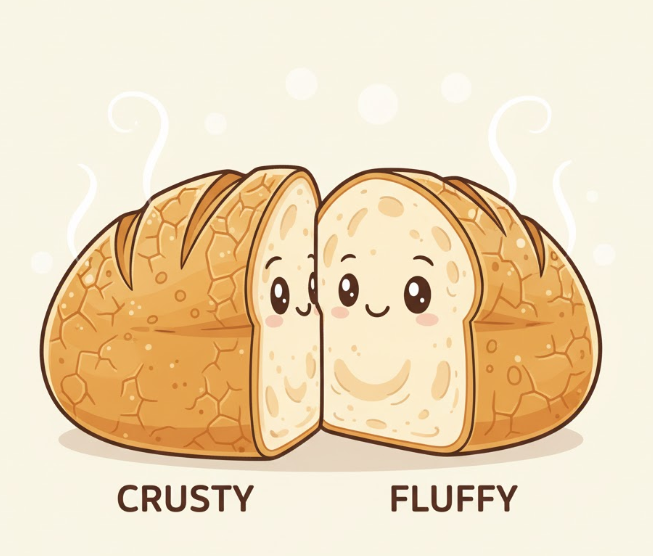
| Crusty | I love the crusty exterior of this sourdough. |
| Chewy | The bagel had a perfectly chewy texture. |
| Fluffy | The dinner rolls were light and fluffy. |
| Dense | This rye bread is quite dense and filling. |
| Airy | The ciabatta had a wonderfully airy crumb. |
| Tender | The brioche was incredibly tender and buttery. |
| Crisp | The toasted bread was crisp and golden brown. |
| Hard | The stale baguette had become quite hard. |
| Soggy | The bread became soggy after being left out in the rain. |
| Springy | The freshly baked bread had a springy texture. |
| Grainy | The whole wheat bread had a slightly grainy texture. |
| Delicate | The pastry chef created a bread with a delicate crumb. |
| Rough | The rustic bread had a rough and uneven texture. |
| Velvety | The inside of the bread was velvety smooth. |
| Firm | The bread’s firm texture makes it perfect for sandwiches. |
| Porous | The focaccia’s porous texture allows it to soak up olive oil beautifully. |
| Crumbly | The cornbread had a delightfully crumbly texture. |
| Resilient | This bread is surprisingly resilient, bouncing back when pressed. |
| Spongy | The challah bread had a light and spongy texture. |
| Moist | The banana bread was incredibly moist and flavorful. |
| Dry | The day-old bread was a bit dry, but still good toasted. |
| Cracked | The bread’s cracked crust added a rustic charm. |
| Rustic | The rustic nature of the bread gave it a great texture. |
| Fine | The bread had a very fine crumb. |
Taste Examples
The following table provides examples of adjectives that describe the taste of bread. Taste is subjective, but these adjectives offer a common vocabulary for discussing flavors.
| Adjective | Example Sentence |
|---|---|
| Sweet | The sweet bread was perfect for dessert. |
| Savory | The savory bread was a great accompaniment to the soup. |
| Sour | The sourdough bread had a distinct sour tang. |
| Buttery | The croissant was rich and buttery. |
| Mild | The white bread had a very mild flavor. |
| Strong | The rye bread had a strong, earthy taste. |
| Earthy | The whole grain bread had an earthy flavor. |
| Nutty | The bread with added seeds had a nutty taste. |
| Tangy | The fermented bread had a tangy aftertaste. |
| Rich | The brioche was incredibly rich and decadent. |
| Delicate | The flavor of the bread was surprisingly delicate. |
| Complex | The artisan bread had a complex flavor profile. |
| Bland | The bread was unfortunately quite bland. |
| Spicy | The bread with chili flakes had a spicy kick. |
| Salty | The pretzel bread was perfectly salty. |
| Yeasty | The freshly baked bread had a pleasantly yeasty aroma and flavor. |
| Smoky | The grilled bread had a delicious smoky flavor. |
| Aromatic | The bread was aromatic, filling the kitchen with a wonderful scent. |
| Subtle | The bread had a subtle hint of rosemary. |
| Zesty | The lemon bread had a zesty flavor. |
| Tart | The cranberry bread had a pleasantly tart taste. |
| Garlicky | The bread was infused with a strong, garlicky flavor. |
| Oniony | The bread had a nice oniony flavor. |
| Herbal | The bread had an herbal aroma and flavor. |
| Malty | The rye bread had a distinct malty taste. |
Appearance Examples
The following table provides examples of adjectives that describe the appearance of bread. Visual appeal is often the first impression, and these adjectives help to capture that.
| Adjective | Example Sentence |
|---|---|
| Golden | The golden crust of the bread was perfectly baked. |
| Brown | The brown bread was made with whole wheat flour. |
| White | The white bread was soft and fluffy. |
| Dark | The dark rye bread had a rich, intense flavor. |
| Round | The round loaf of bread was perfect for sharing. |
| Long | The long baguette was ideal for making sandwiches. |
| Cracked | The cracked surface of the bread added a rustic touch. |
| Smooth | The smooth surface of the bread was appealing. |
| Shiny | The shiny glaze made the bread look irresistible. |
| Rustic | The rustic appearance of the bread suggested it was homemade. |
| Artisan | The artisan bread was carefully crafted. |
| Even | The bread had an even color throughout. |
| Uneven | The uneven texture gave it character. |
| Textured | The textured crust was visually appealing. |
| Pitted | The pitted surface of the focaccia was perfect for holding olive oil. |
| Well-risen | The well-risen loaf looked light and airy. |
| Flat | The flat bread was easy to tear and share. |
| Tall | The tall loaf of bread towered over the others. |
| Scored | The scored pattern on the bread’s surface allowed for even baking. |
| Speckled | The bread was speckled with sesame seeds. |
| Swirled | The cinnamon bread had a beautiful swirled pattern. |
| Puffy | The puffy rolls were light and airy. |
| Dense | The dense color of the bread showed rich ingredients. |
| Thin | The thin crust of the pizza bread was crispy. |
| Thick | The thick crust bread was great for dipping. |
Ingredient Examples
The following table provides examples of adjectives that specify the ingredients used in the bread. Knowing the ingredients can help to understand the bread’s flavor and texture.
| Adjective | Example Sentence |
|---|---|
| Wheat | The wheat bread was a staple in our household. |
| Rye | The rye bread had a distinctive, slightly sour flavor. |
| Sourdough | The sourdough bread was tangy and delicious. |
| Whole grain | The whole grain bread was packed with nutrients. |
| Multigrain | The multigrain bread was a healthy choice. |
| Oatmeal | The oatmeal bread had a slightly sweet and nutty flavor. |
| Corn | The corn bread was a classic Southern dish. |
| Potato | The potato bread was soft and moist. |
| Olive | The olive bread was infused with the flavor of olives. |
| Herb | The herb bread was fragrant and flavorful. |
| Cheese | The cheese bread was a popular snack. |
| Garlic | The garlic bread was perfect with pasta. |
| Cinnamon | The cinnamon bread was a sweet treat. |
| Raisin | The raisin bread was delicious toasted. |
| Seed | The seed bread was crunchy and flavorful. |
| Gluten-free | The gluten-free bread was suitable for those with dietary restrictions. |
| Spelt | The spelt bread had a slightly nutty flavor. |
| Buckwheat | The buckwheat bread was dark and hearty. |
| Coconut | The coconut bread had a tropical flavor. |
| Pumpkin | The pumpkin bread was a seasonal favorite. |
| Banana | The banana bread was moist and sweet. |
| Date | The date bread had a rich, caramel-like flavor. |
| Walnut | The walnut bread was crunchy and flavorful. |
| Rosemary | The rosemary bread was fragrant and delicious. |
| Poppy seed | The poppy seed bread had a subtle nutty flavor. |
Origin Examples
The following table provides examples of adjectives that indicate the origin or cultural association of the bread. These adjectives add a sense of place and tradition.
| Adjective | Example Sentence |
|---|---|
| French | The French baguette was long and crusty. |
| Italian | The Italian ciabatta was perfect for sandwiches. |
| Irish | The Irish soda bread was dense and hearty. |
| German | The German rye bread was dark and flavorful. |
| Jewish | The Jewish challah was braided and sweet. |
| Mexican | The Mexican bolillo was used for tortas. |
| Indian | The Indian naan was cooked in a tandoor oven. |
| Russian | The Russian black bread was dense and tangy. |
| Scandinavian | The Scandinavian rye bread was hearty and dark. |
| Greek | The Greek pita bread was soft and pliable. |
| English | The English muffin was perfect for breakfast sandwiches. |
| American | The American white bread was soft and mild. |
| Spanish | The Spanish pan de cristal was light and airy. |
| Turkish | The Turkish pide bread was flat and oval-shaped. |
| Moroccan | The Moroccan bread was served with tagine. |
| Ethiopian | The Ethiopian injera bread was spongy and sour. |
| Armenian | The Armenian lavash bread was thin and crispy. |
| Vietnamese | The Vietnamese banh mi bread was used for sandwiches. |
| Polish | The Polish bread had a unique flavor. |
| Swiss | The Swiss bread had a nutty flavor. |
| Argentinian | The Argentinian bread was served with grilled meats. |
| Brazilian | The Brazilian pao de queijo bread was cheesy and chewy. |
| Kenyan | The Kenyan bread was a staple in their diet. |
| Egyptian | The Egyptian bread was often flat and unleavened. |
| Lebanese | The Lebanese pita bread was used for wraps. |
General Descriptive Examples
The following table provides examples of general descriptive adjectives that can be used to describe bread. These adjectives convey an overall impression of the bread’s quality.
| Adjective | Example Sentence |
|---|---|
| Delicious | The delicious bread was a real treat. |
| Amazing | The amazing bread was the best I’ve ever tasted. |
| Wonderful | The wonderful bread made the meal complete. |
| Excellent | The excellent bread was perfectly baked. |
| Fresh | The fresh bread was still warm from the oven. |
| Homemade | The homemade bread was made with love. |
| Artisan | The artisan bread was carefully crafted by hand. |
| Tasty | The tasty bread was a satisfying snack. |
| Inviting | The inviting aroma of the bread drew me in. |
| Satisfying | The satisfying bread filled me up. |
| Unique | The unique bread had a flavor I’d never experienced before. |
| Traditional | The traditional bread was made according to an old recipe. |
| Authentic | The authentic bread tasted just like it did in its country of origin. |
| Ordinary | The ordinary bread was nothing special. |
| Unremarkable | The unremarkable bread didn’t stand out. |
| Exceptional | The exceptional bread was a culinary masterpiece. |
| Remarkable | The remarkable bread was unlike anything I’ve ever eaten. |
| Exquisite | The exquisite bread was a true delight. |
| Pleasant | The pleasant aroma of the bread filled the kitchen. |
| Comforting | The comforting bread brought back fond memories. |
| Appetizing | The appetizing bread made my mouth water. |
| Wholesome | The wholesome bread was packed with nutrients. |
| Hearty | The hearty bread was perfect for a cold day. |
| Fragrant | The fragrant bread filled the room with its scent. |
| Aromatic | The aromatic bread had a complex and inviting smell. |
Usage Rules for Adjectives
Using adjectives correctly involves following certain rules to ensure clarity and grammatical accuracy. Here are some key usage rules to keep in mind:
- Placement: Adjectives usually come before the noun they modify (e.g., fresh bread). However, they can also follow linking verbs (e.g., The bread is fresh).
- Order: When using multiple adjectives, follow a general order: opinion, size, age, shape, color, origin, material, purpose (e.g., a delicious small new round brown Italian sourdough bread).
- Coordination: Coordinate adjectives (adjectives that independently modify the noun) are separated by commas (e.g., soft, chewy bread). Cumulative adjectives (adjectives that build upon each other) are not separated by commas (e.g., dark rye bread).
- Comparative and Superlative Forms: Use comparative forms (-er or “more”) to compare two things (e.g., This bread is softer than that one). Use superlative forms (-est or “most”) to compare three or more things (e.g., This is the softest bread I’ve ever tasted).
- Articles: Use articles (a, an, the) appropriately with adjectives and nouns (e.g., a delicious loaf, the fresh bread).
There are some exceptions to these rules. For example, in some poetic or stylistic writing, the order of adjectives may be varied for effect.
Additionally, certain fixed expressions may have unconventional adjective placement.
Common Mistakes
Here are some common mistakes to avoid when using adjectives for bread:
| Incorrect | Correct | Explanation |
|---|---|---|
| The bread is more softer. | The bread is softer. | Avoid using “more” with adjectives that already have the -er ending. |
| A delicious, fresh, bread. | A delicious, fresh bread. | Do not use a comma before the noun. |
| The bread is very more delicious. | The bread is much more delicious. | Use “much” instead of “very” to modify “more delicious.” |
| The bread taste good. | The bread tastes good. | Ensure subject-verb agreement. |
| I like bread crusty. | I like crusty bread. | Adjectives usually precede the noun they modify. |
| The bread is goodly. | The bread is good. | Avoid using “-ly” with adjectives; “-ly” is typically for adverbs. |
| The stale bread hardly. | The bread is hard and stale. | Hard and stale are both adjectives describing the bread. |
| Much breads. | Much bread. | “Bread” is typically uncountable, so it does not take a plural form. |
| More tastier. | Tastier. | Do not use both “more” and the “-er” suffix together. |
| Bread delicious. | The bread is delicious. | Sentences need a subject and a verb. |
Practice Exercises
Test your understanding of adjectives for bread with these practice exercises. Choose the best adjective to complete each sentence.
| Question | Answer |
|---|---|
| 1. The _______ bread was perfect for dipping in olive oil. (a. soggy, b. porous, c. hard) | b. porous |
| 2. The _______ crust of the sourdough was a delight to bite into. (a. soft, b. chewy, c. crusty) | c. crusty |
| 3. The _______ bread had a subtle hint of rosemary. (a. bland, b. aromatic, c. tasteless) | b. aromatic |
| 4. The _______ bread was packed with whole grains and seeds. (a. white, b. multigrain, c. plain) | b. multigrain |
| 5. The _______ challah bread was braided and eggy. (a. Italian, b. French, c. Jewish) | c. Jewish |
| 6. The _______ bread made the perfect breakfast toast. (a. fresh, b. old, c. molded) | a. fresh |
| 7. The _______ bread was a bit too salty for my taste. (a. mild, b. salty, c. sweet) | b. salty |
| 8. The _______ bread had a beautiful swirled pattern. (a. plain, b. swirled, c. rough) | b. swirled |
| 9. The _______ texture of the bread made it easy to eat. (a. rough, b. delicate, c. hard) | b. delicate |
| 10. The _______ bread was an excellent addition to the meal. (a. mediocre, b. excellent, c. bad) | b. excellent |
Exercise 2: Rewrite the following sentences using more descriptive adjectives.
| Original Sentence | Rewritten Sentence |
|---|---|
| 1. The bread was good. | The delicious, freshly baked bread was a real treat. |
| 2. The bread was brown. | The dark brown rye bread had a rich, earthy flavor. |
| 3. The bread was soft. | The soft, fluffy bread melted in my mouth. |
| 4. The bread had seeds. | The seed bread had a nutty and crunchy flavor. |
| 5. The bread was Italian. | The authentic Italian ciabatta bread was perfect for sandwiches. |
| 6. The bread was fresh. | The fresh, warm bread was still steaming from the oven. |
| 7. The bread was plain. | The bland and unremarkable bread didn’t stand out. |
| 8. The bread was tasty. | The tasty, savory bread was a satisfying snack. |
| 9. The bread was round. | The round, golden loaf of bread was perfect for sharing. |
| 10. The bread was crusty. | The crusty, golden-brown bread had a delightful texture. |
Exercise 3: Identify the type of adjective (texture, taste, appearance, ingredient, origin, general) in each sentence.
| Sentence | Type of Adjective |
|---|---|
| 1. The sourdough bread had a tangy flavor. | Ingredient |
| 2. The crusty bread was a delight to eat. | Texture |
| 3. The golden bread looked delicious. | Appearance |
| 4. The delicious bread was a real treat. | General |
| 5. The French baguette was long and crusty. | Origin |
| 6. The soft rolls were very nice. | Texture |
| 7. The salty pretzels were great. | Taste |
| 8. The whole wheat bread was very healthy. | Ingredient |
| 9. The amazing bread was the best I have had. | General |
| 10. The Italian bread had a great aroma. | Origin |
Advanced Topics
For advanced learners, consider exploring the following topics to deepen your understanding of adjectives for bread:
- Figurative Language: Use metaphors and similes to describe bread in more creative ways (e.g., “The bread was as soft as a cloud,” “The crust was a symphony of textures”).
- Regional Variations: Investigate how different cultures describe bread using unique adjectives and expressions.
- Sensory Language: Combine adjectives that appeal to multiple senses to create a more immersive description (e.g., “The warm, fragrant bread had a crisp crust and a soft, chewy interior”).
- Technical Terminology: Learn specialized vocabulary used by bakers and food professionals to describe bread characteristics (e.g., “crumb structure,” “oven spring”).
- Historical Context: Explore how the language used to describe bread has evolved over time, reflecting changes in baking techniques and culinary preferences.
FAQ
What is the best way to describe the texture of bread?
Use adjectives like “soft,” “crusty,” “chewy,” “fluffy,” “dense,” and “airy” to describe the texture of bread. Be specific about which part of the bread you are describing (e.g., “the crust was crisp,” “the crumb was tender”).
How can I describe the taste of bread without just saying it’s “good”?
Use adjectives like “sweet,” “savory,” “sour,” “buttery,” “nutty,” “earthy,” and “tangy” to provide more detail about the flavor. Consider mentioning specific ingredients or flavor notes (e.g., “a hint of rosemary,” “a subtle sweetness”).
What are some adjectives to describe the appearance of bread?
Use adjectives like “golden,” “brown,” “white,” “dark,” “round,” “long,” “cracked,” “smooth,” and “shiny” to describe the visual characteristics of bread. Mention any distinctive features, such as a scored pattern or a dusting of flour.
How do I use multiple adjectives correctly?
Follow the general order of adjectives: opinion, size, age, shape, color, origin, material, purpose. Separate coordinate adjectives with commas (e.g., “soft, chewy bread”).
Avoid using too many adjectives in one sentence.
What if I don’t know the exact origin of the bread?
If you’re unsure about the specific origin, you can use more general adjectives like “rustic,” “traditional,” or “artisan” to convey a sense of authenticity and craftsmanship.
Is it okay to use adverbs to modify adjectives for bread?
Yes, adverbs can be used to add further detail to adjectives (e.g., “very sweet bread,” “slightly sour bread”). However, use adverbs sparingly to avoid sounding repetitive or unnatural.
How do I avoid sounding repetitive when describing bread?
Use a variety of adjectives from different categories to provide a well-rounded description. Focus on specific details and sensory experiences rather than relying on generic terms like “good” or “delicious.”
Conclusion
Mastering the art of describing bread involves understanding the various categories of adjectives, following usage rules, avoiding common mistakes, and practicing regularly. By incorporating a diverse range of adjectives into your vocabulary, you can effectively communicate the unique qualities and characteristics of different types of bread.
Whether you are writing a food review, crafting a menu description, or simply sharing your culinary experiences with others, the ability to describe bread with precision and flair will enhance your communication skills and deepen your appreciation for this universal food.