Choosing the right adjectives to describe a cook isn’t just about being polite; it’s about accurately conveying their skills, style, and impact. A ‘skilled’ cook is different from an ‘innovative’ one, and understanding these nuances can significantly enhance your communication, whether you’re writing a restaurant review, providing feedback, or simply discussing your favorite chef.
This article provides a comprehensive guide to adjectives for cooks, exploring their meanings, usage, and providing numerous examples to help you master this aspect of English grammar.
Whether you’re an English language learner, a culinary student, or simply someone who enjoys talking about food, this guide will provide you with the vocabulary and understanding you need to describe cooks with precision and flair. We’ll delve into different categories of adjectives, explore common mistakes, and provide practice exercises to solidify your knowledge.
Get ready to expand your culinary vocabulary!
Table of Contents
- Introduction
- Definition of Adjectives for Cooks
- Structural Breakdown
- Categories of Adjectives for Cooks
- Examples of Adjectives for Cooks
- Usage Rules
- Common Mistakes
- Practice Exercises
- Advanced Topics
- FAQ
- Conclusion
Definition of Adjectives for Cooks
Adjectives are words that describe or modify nouns. In the context of cooks, adjectives provide information about their abilities, characteristics, and the impact they have.
These adjectives can relate to a cook’s skill level, their cooking style, their personality traits, or the overall effect of their cuisine. Understanding the nuances of these adjectives allows for more precise and descriptive language when discussing or evaluating culinary professionals.
The function of adjectives is to add detail and specificity. Instead of simply saying “the cook,” you can say “the talented cook” or “the innovative cook.” This provides a clearer and more vivid picture of the person being described. Adjectives can also be used to express opinions or judgments about a cook’s abilities or style.
Adjectives can be classified into several categories based on their function. Descriptive adjectives, also known as qualitative adjectives, describe the qualities of a noun (e.g., skillful, creative). Quantitative adjectives indicate quantity (e.g., several, many), though these are less common when describing cooks. Proper adjectives are derived from proper nouns (e.g., French cook, Italian cuisine). Demonstrative adjectives (this, that, these, those) and possessive adjectives (my, your, his, her, its, our, their) are also used but less frequently to describe the qualities of a cook.
Structural Breakdown
Adjectives typically appear before the noun they modify (attributive position), as in “the experienced chef.” However, they can also appear after a linking verb, such as is, are, was, were, seems, or becomes (predicative position), as in “The chef is innovative.” The choice between these positions can sometimes affect the emphasis or tone of the sentence.
Adjectives can also be modified by adverbs, which add further detail. For example, you might say “a highly skilled cook” or “an exceptionally creative chef.” Adverbs enhance the meaning of the adjective, providing a more nuanced description.
Many adjectives can be formed by adding suffixes to nouns or verbs. Common suffixes include -ful (e.g., skillful), -able (e.g., knowledgeable), -ive (e.g., creative), -ous (e.g., adventurous), and -ed (e.g., respected). Understanding these suffixes can help you expand your vocabulary and recognize new adjectives.
Categories of Adjectives for Cooks
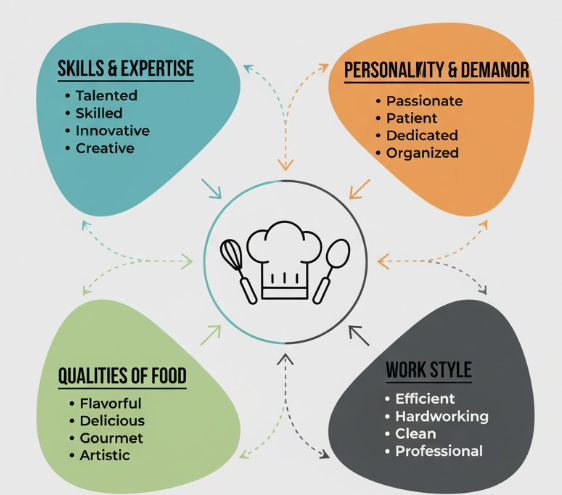
To better understand the wide range of adjectives that can be used to describe cooks, we can categorize them into several groups based on their primary focus.
Skill-Related Adjectives
These adjectives describe the cook’s technical abilities and expertise in the kitchen. They focus on the level of proficiency and competence demonstrated by the cook.
- Skilled: Possessing a high level of competence and expertise.
- Experienced: Having gained knowledge and expertise through practice.
- Talented: Naturally gifted or possessing innate ability.
- Proficient: Competent or skilled in a particular area.
- Masterful: Demonstrating exceptional skill and control.
- Adept: Very skilled or proficient.
- Competent: Having the necessary ability or skill.
- Versatile: Able to adapt to many different functions or activities.
- Knowledgeable: Possessing extensive information and understanding.
- Seasoned: Having a great deal of experience.
Style-Related Adjectives
These adjectives describe the cook’s approach to cooking, their culinary preferences, and the unique characteristics of their dishes.
- Innovative: Introducing new ideas or methods.
- Creative: Using imagination or original ideas to create something.
- Traditional: Following established customs or beliefs.
- Modern: Relating to the present or recent times.
- Classic: Representing an established standard.
- Fusion: Combining elements of different cultures or styles.
- Experimental: Involving a new or untested method or idea.
- Rustic: Simple and unsophisticated.
- Elegant: Graceful and stylish in appearance or manner.
- Sophisticated: Having or showing refined tastes and manners.
Personality-Related Adjectives
These adjectives describe the cook’s personal qualities and characteristics, which can influence their approach to cooking and their interactions with others.
- Passionate: Having intense enthusiasm or desire.
- Dedicated: Devoted to a task or purpose.
- Patient: Able to tolerate delays or problems without becoming annoyed.
- Disciplined: Showing a controlled form of behavior or way of working.
- Organized: Able to plan activities efficiently.
- Calm: Not showing or feeling nervousness, anger, or other emotions.
- Focused: Able to concentrate attention on something.
- Perfectionistic: Refusing to accept any standard short of perfection.
- Collaborative: Working jointly with others.
- Resilient: Able to withstand or recover quickly from difficult conditions.
Impact-Related Adjectives
These adjectives describe the effect the cook has on others, whether it’s through their food, their teaching, or their influence on the culinary world.
- Influential: Having a significant impact on others.
- Respected: Admired or esteemed for their abilities or qualities.
- Acclaimed: Publicly praised.
- Renowned: Known or talked about by many people.
- Beloved: Dearly loved or cherished.
- Popular: Liked or admired by many people.
- Inspiring: Having the effect of inspiring someone.
- Memorable: Worth remembering or easily remembered.
- Satisfying: Providing pleasure or contentment.
- Delightful: Causing delight; charming.
General Adjectives
These adjectives can be used to describe a cook in a general sense, without focusing on a specific skill, style, personality trait, or impact.
- Good: Of a high quality.
- Fine: Of high quality.
- Excellent: Extremely good; outstanding.
- Great: Of an extent, amount, or intensity considerably above the average.
- Professional: Relating to or belonging to a profession.
Examples of Adjectives for Cooks
The following tables provide examples of how to use different types of adjectives to describe cooks in various contexts. Each table focuses on a specific category of adjectives and includes a range of examples to illustrate their usage.
Skill-Related Adjectives Examples
This table showcases examples of skill-related adjectives used in complete sentences. Notice how these adjectives highlight the cook’s capabilities and expertise.
| Adjective | Example Sentence |
|---|---|
| Skilled | The skilled cook prepared a complex dish with ease. |
| Experienced | An experienced chef knows how to handle pressure in a busy kitchen. |
| Talented | The talented baker created a stunning wedding cake. |
| Proficient | She is a proficient sushi chef, mastering intricate techniques. |
| Masterful | The masterful saucier created a perfectly balanced reduction. |
| Adept | He is an adept knife handler, slicing vegetables with precision. |
| Competent | A competent cook can follow recipes accurately and efficiently. |
| Versatile | The versatile chef can cook a variety of cuisines, from Italian to Thai. |
| Knowledgeable | A knowledgeable sommelier can pair wines perfectly with each dish. |
| Seasoned | The seasoned chef has worked in kitchens around the world. |
| Accomplished | An accomplished pastry chef can create intricate desserts. |
| Expert | The restaurant hired an expert in molecular gastronomy |
| Qualified | Only a qualified chef should handle raw fish. |
| Trained | The trained cook knew exactly what to do in a food emergency. |
| Polished | The polished sous chef always had a calm demeanor. |
| Brilliant | The brilliant chef invented a new cooking technique. |
| Exceptional | Her exceptional skills made her the head chef in just two years. |
| Top-notch | The top-notch cook impressed everyone with his sauces. |
| World-class | The hotel restaurant hired a world-class chef. |
| Gifted | The gifted chef could make anything taste delicious. |
Style-Related Adjectives Examples
This table provides examples of style-related adjectives used in sentences. These adjectives describe the cook’s unique culinary approach and preferences.
| Adjective | Example Sentence |
|---|---|
| Innovative | The innovative chef introduced a new tasting menu each month. |
| Creative | A creative cook can make something delicious out of leftovers. |
| Traditional | The traditional chef insisted on using only time-honored recipes. |
| Modern | The modern restaurant offered a contemporary take on classic dishes. |
| Classic | The classic French cook adhered to strict culinary techniques. |
| Fusion | The fusion restaurant combined Asian and Latin flavors. |
| Experimental | The experimental chef tried unusual ingredient combinations. |
| Rustic | The rustic Italian restaurant served hearty, simple dishes. |
| Elegant | The elegant plating made each dish look like a work of art. |
| Sophisticated | The sophisticated menu featured rare and exotic ingredients. |
| Avant-garde | The Avant-garde chef was pushing the boundaries of cooking. |
| Contemporary | The contemporary chef gave a new spin to old dishes. |
| Eclectic | The eclectic chef drew inspiration from all over the world. |
| Refined | The refined cook used the best ingredients. |
| Minimalist | The minimalist chef used only a few ingredients for maximum flavor. |
| Bold | The bold chef wasn’t afraid to try new flavors. |
| Inventive | The inventive chef made new dishes every week. |
| Unique | The unique chef had his own style. |
| Artistic | The artistic chef made every dish look like a painting. |
| Trendy | The trendy chef always knew what was in style. |
Personality-Related Adjectives Examples
This table illustrates how personality-related adjectives can be used to describe a cook’s character and demeanor, which influences their work environment and culinary creations.
| Adjective | Example Sentence |
|---|---|
| Passionate | The passionate chef poured their heart into every dish. |
| Dedicated | The dedicated sous chef arrived early and stayed late every day. |
| Patient | A patient cook is essential for slow-cooking techniques. |
| Disciplined | A disciplined chef can maintain high standards under pressure. |
| Organized | An organized chef can manage a busy kitchen efficiently. |
| Calm | The calm chef kept the kitchen running smoothly during the rush. |
| Focused | The focused cook paid attention to every detail. |
| Perfectionistic | The perfectionistic chef demanded the highest quality ingredients. |
| Collaborative | The collaborative team of chefs created a harmonious menu. |
| Resilient | The resilient cook bounced back from setbacks with determination. |
| Attentive | The attentive chef always listened to the customers. |
| Careful | The careful cook never made mistakes. |
| Determined | The determined chef always worked hard. |
| Diligent | The diligent chef was consistent. |
| Earnest | The earnest chef loved his job. |
| Hardworking | The hardworking chef was never lazy. |
| Industrious | The industrious chef was always busy. |
| Meticulous | The meticulous chef checked everything. |
| Persistent | The persistent chef never gave up. |
| Resourceful | The resourceful chef always found a way to make the dish work. |
Impact-Related Adjectives Examples
This table demonstrates how impact-related adjectives describe the influence and effect a cook has on others.
| Adjective | Example Sentence |
|---|---|
| Influential | The influential chef shaped the culinary scene in the city. |
| Respected | The respected chef mentored many young cooks. |
| Acclaimed | The acclaimed chef received numerous awards for their cuisine. |
| Renowned | The renowned chef attracted diners from all over the world. |
| Beloved | The beloved cook made everyone feel at home with their food. |
| Popular | The popular chef’s cooking classes were always fully booked. |
| Inspiring | The inspiring chef motivated others to pursue their culinary dreams. |
| Memorable | The memorable meal at the restaurant left a lasting impression. |
| Satisfying | The satisfying meal was the perfect end to a long day. |
| Delightful | The delightful desserts were a sweet treat. |
| Admired | The admired chef was a role model to many. |
| Celebrated | The celebrated chef was famous. |
| Esteemed | The esteemed chef was well respected. |
| Famed | The famed chef was known around the world. |
| Illustrious | The illustrious chef was a legend. |
| Legendary | The legendary chef had an incredible career. |
| Noted | The noted chef was respected in the industry. |
| Prestigious | The prestigious chef had won many awards. |
| Revered | The revered chef was loved by all. |
| Triumphant | The triumphant chef won the competition. |
Usage Rules
When using adjectives to describe cooks, there are several rules to keep in mind to ensure correct and effective communication.
- Adjective Order: When using multiple adjectives, follow the general order: opinion, size, age, shape, color, origin, material, and purpose. For example: “a talented, young, French chef.”
- Coordinate Adjectives: Use a comma between coordinate adjectives, which are adjectives that equally modify the noun. Coordinate adjectives can be identified by whether you can replace the comma with “and” and the sentence still makes sense. For example: “The cook was skilled, creative, and passionate.”
- Compound Adjectives: Use a hyphen for compound adjectives that come before the noun. For example: “a well-known chef.”
- Articles: Use the correct article (a, an, the) depending on the adjective and the noun. For example: “a talented cook,” “an experienced chef,” “the renowned pastry chef.”
- Context: Choose adjectives that are appropriate for the context. A formal review might use more formal adjectives, while a casual conversation might use more informal adjectives.
Common Mistakes
Here are some common mistakes to avoid when using adjectives to describe cooks:
| Incorrect | Correct | Explanation |
|---|---|---|
| The cook is goodly. | The cook is good. | “Goodly” is an archaic word and not commonly used. |
| A experienced chef. | An experienced chef. | Use “an” before words that begin with a vowel sound. |
| The chef is skillful, creative and. | The chef is skillful, creative, and passionate. | Include all commas if using coordinate adjectives |
| A well know chef. | A well-known chef. | Use a hyphen for compound adjectives before a noun. |
| The chef, he is talented. | The chef is talented. | Avoid unnecessary pronouns after nouns. |
Practice Exercises
Test your understanding of adjectives for cooks with the following exercises. Choose the best adjective to complete each sentence.
Exercise 1: Fill in the Blanks
Choose the correct adjective from the word bank to complete each sentence.
Word Bank: skilled, innovative, passionate, respected, traditional
| Question | Answer |
|---|---|
| 1. The __________ chef created a new dish that combined flavors from different cultures. | innovative |
| 2. The __________ cook spent years perfecting their techniques. | skilled |
| 3. The __________ chef always used recipes passed down through generations. | traditional |
| 4. The __________ chef poured their heart and soul into every meal. | passionate |
| 5. The __________ chef was admired by all their colleagues. | respected |
| 6. The __________ baker created a stunning wedding cake. | skilled |
| 7. The __________ chef was always inventing new recipes. | innovative |
| 8. The __________ cook only cooked food from her culture. | traditional |
| 9. The __________ chef was emotional about food. | passionate |
| 10. The __________ chef was a leader in the kitchen. | respected |
Exercise 2: Multiple Choice
Choose the best adjective to describe the cook in each scenario.
| Question | Answer |
|---|---|
| 1. A cook who always tries new and unusual recipes is best described as: a) traditional b) experimental c) competent | b) experimental |
| 2. A cook who is highly competent and efficient is best described as: a) skilled b) creative c) passionate | a) skilled |
| 3. A cook who is admired and esteemed by their peers is best described as: a) influential b) respected c) beloved | b) respected |
| 4. A chef that adds new twists to old dinners is: a) traditional b) innovative c) classic | b) innovative |
| 5. A cook who is always in control in the kitchen is: a) calm b) creative c) innovative | a) calm |
| 6. A chef that can cook any dish is: a) skilled b) creative c) innovative | a) skilled |
| 7. A cook that is a role model is: a) influential b) respected c) beloved | a) influential |
| 8. A chef that is loved by everyone is: a) influential b) respected c) beloved | c) beloved |
| 9. A cook that is always thinking of new ideas is: a) traditional b) innovative c) classic | b) innovative |
| 10. A chef that is precise is: a) skilled b) creative c) innovative | a) skilled |
Exercise 3: Sentence Completion
Write a sentence using the given adjective to describe a cook.
| Adjective | Example Sentence |
|---|---|
| Versatile | The versatile cook can prepare dishes from many different cultures. |
| Elegant | The elegant cook plated the food with style. |
| Dedicated | The dedicated chef worked every day. |
| Masterful | The masterful chef created a sauce that everyone loved. |
| Sophisticated | The sophisticated chef made every dish fancy. |
| Calm | The calm cook never panicked. |
| Knowledgeable | The knowledgeable chef knew about every ingredient. |
| Memorable | The memorable chef made every meal special. |
| Passionate | The passionate chef loved to cook. |
| Competent | The competent chef could always do his job. |
Advanced Topics
For advanced learners, consider exploring the use of metaphorical adjectives and figurative language to describe cooks. For example, you might describe a cook as “a culinary wizard” or “a maestro of the kitchen.” These expressions add depth and creativity to your descriptions.
Also, explore how adjectives can be used to create specific tones or impressions. For example, using formal adjectives like “esteemed” or “renowned” creates a sense of respect and admiration, while using more informal adjectives like “amazing” or “fantastic” creates a sense of enthusiasm and excitement.
Finally, consider the cultural context of adjectives. Some adjectives may have different connotations or meanings in different cultures.
Be mindful of these differences to avoid misunderstandings or misinterpretations.
FAQ
- What is the difference between “skilled” and “talented”?While both adjectives describe a high level of ability, “skilled” implies that the ability was acquired through practice and training, while “talented” suggests a natural, innate ability.
- How do I choose the right adjective to describe a cook?Consider the specific qualities or characteristics you want to highlight. Are you focusing on their technical abilities, their unique style, their personality, or their impact on others? Choose an adjective that accurately reflects the aspect you want to emphasize.
- Can I use multiple adjectives to describe a cook?Yes, you can use multiple adjectives, but be mindful of adjective order and coordinate adjectives. Use commas between coordinate adjectives and follow the general order of adjectives when using multiple adjectives.
- What are some common mistakes to avoid when using adjectives for cooks?Avoid using archaic words, using the wrong article, omitting commas between coordinate adjectives, and using incorrect word forms.
- How can I expand my vocabulary of adjectives for cooks?Read culinary articles and reviews, pay attention to the language used by food critics, and use a thesaurus to find synonyms for common adjectives.
- Are there any adjectives that should be avoided when describing cooks?Avoid using adjectives that are vague or uninformative, such as “okay” or “average.” Also, avoid using adjectives that are disrespectful or offensive.
- How can I use adjectives to make my writing more engaging?Use vivid and descriptive adjectives that appeal to the senses. Instead of saying “the food was good,” say “the food was flavorful and aromatic.” This helps to create a more immersive and memorable experience for the reader.
- What is the best way to learn the different types of adjectives?The best way to learn the different types of adjectives is to study examples, practice using them in sentences, and ask for feedback from native English speakers. You can also use online resources and grammar guides to reinforce your understanding.
Conclusion
Mastering the use of adjectives to describe cooks is an essential skill for anyone who wants to communicate effectively about food and culinary arts. By understanding the different categories of adjectives, following usage rules, and avoiding common mistakes, you can enhance your writing and speaking skills and express your opinions with greater clarity and precision.
Whether you’re writing a restaurant review, providing feedback to a chef, or simply discussing your favorite dishes, the right adjectives can make all the difference.
Remember to practice using these adjectives in various contexts and to continue expanding your vocabulary. The more familiar you become with different adjectives, the more effectively you’ll be able to describe the skills, style, personality, and impact of cooks.
Keep exploring, keep learning, and keep cooking (or at least talking about it) with confidence!