Knowing how to ask for and tell the time in Italian is crucial for navigating daily life in Italy or when communicating with Italian speakers. This skill is essential for making appointments, understanding schedules, and simply coordinating activities.
This comprehensive guide will provide you with all the necessary vocabulary, grammar, and cultural nuances to confidently discuss time in Italian. Whether you’re a beginner or an advanced learner, this article will help you master this important aspect of the Italian language.
Table of Contents
- Introduction
- What Does “What Time Is It?” Mean in Italian?
- Structural Breakdown of “Che ore sono?”
- Variations of Asking the Time
- Examples of Asking and Telling Time
- Usage Rules and Cultural Considerations
- Common Mistakes to Avoid
- Practice Exercises
- Advanced Topics: Nuances and Subtleties
- Frequently Asked Questions
- Conclusion
What Does “What Time Is It?” Mean in Italian?
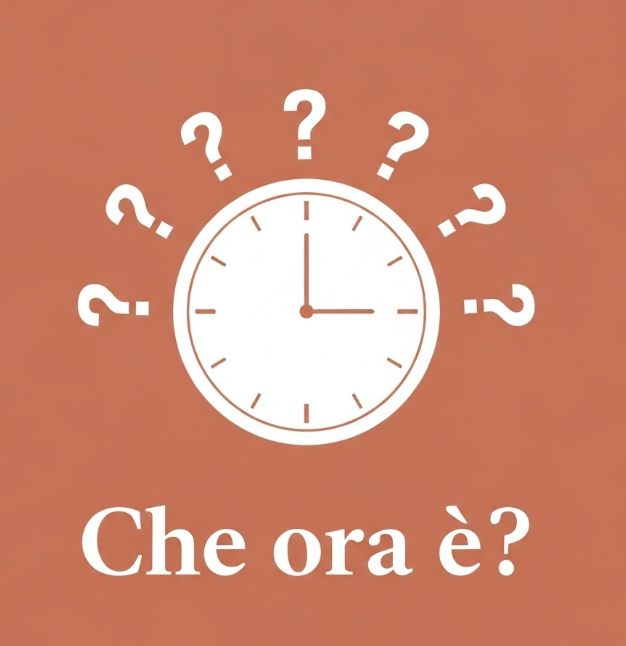
The most common way to ask “What time is it?” in Italian is “Che ore sono?” This phrase directly translates to “What hours are they?” in English, which might seem a bit odd at first. However, it’s the standard and most widely used expression. The verb essere (to be) is conjugated in the plural form (sono) because we’re referring to the “hours,” which are plural.
Understanding the meaning behind the phrase helps in remembering it and applying it correctly. It’s not just about memorizing the words, but also grasping the underlying concept of referring to the passing hours.
Structural Breakdown of “Che ore sono?”
Let’s break down the structure of the phrase “Che ore sono?” to understand each component:
- Che: This is an interrogative adjective, meaning “what.” It modifies the noun ore (hours).
- Ore: This is the plural form of the noun ora, meaning “hour.” In this context, it refers to the specific hours of the day.
- Sono: This is the third-person plural form of the verb essere (to be). It’s used because ore is plural.
The word order is slightly different from English, where we would say “What time is it?” In Italian, the verb usually comes at the end of the question, particularly in simple questions like this one.
Variations of Asking the Time
While “Che ore sono?” is the most common way to ask the time, there are a few other variations you might encounter or use depending on the context and your level of formality.
Formal vs. Informal
The phrase “Che ore sono?” is generally considered informal. In a more formal setting, you might use a slightly different construction.
However, it’s perfectly acceptable to use “Che ore sono?” in most situations.
Alternative Phrases
Here are some alternative phrases you can use to ask for the time:
- Mi scusi, che ore sono?: This translates to “Excuse me, what time is it?” Adding “Mi scusi” makes the question more polite.
- Scusi, sa che ore sono?: This means “Excuse me, do you know what time it is?” It’s another polite way to ask for the time.
- Avresti mica l’ora?: This translates to “Would you happen to have the time?” It’s a more indirect and polite way of asking.
Examples of Asking and Telling Time
Understanding how to ask for the time is only half the battle. You also need to know how to tell time in Italian.
Here are some examples of both, along with explanations of the grammar involved.
Asking the Time
The following table provides examples of asking the time in various ways, from informal to formal:
| Italian Phrase | English Translation | Context |
|---|---|---|
| Che ore sono? | What time is it? | Informal, general use |
| Mi scusi, che ore sono? | Excuse me, what time is it? | Polite, general use |
| Scusi, sa che ore sono? | Excuse me, do you know what time it is? | Polite, asking if someone knows |
| Avresti mica l’ora? | Would you happen to have the time? | Very polite, indirect |
| Sai che ore sono? | Do you know what time it is? | Informal, asking if someone knows |
| Che ora è? | What hour is it? | Less common, but still used |
| Per favore, che ore sono? | Please, what time is it? | Polite |
| Potresti dirmi che ore sono? | Could you tell me what time it is? | Very polite |
| Mi diresti che ore sono? | Would you tell me what time it is? | Polite |
| Scusa, che ore sono? | Sorry, what time is it? | Informal, showing apology |
| Sapresti dirmi l’ora? | Would you know how to tell me the time? | Polite, indirect |
| Che ore fa? | What time does it make? (What time is it?) | Less common, regional |
| A che ora siamo? | At what hour are we? | Referring to a point in a schedule |
| Che tempo è? (referring to time) | What time is it? | Rare, can be confusing with weather |
| Puoi dirmi l’ora, per favore? | Can you tell me the time, please? | Polite |
| Avete l’ora? | Do you (plural) have the time? | Asking a group |
| Scusate, che ore sono? | Excuse me (plural), what time is it? | Addressing a group |
| Signore, che ore sono? | Sir, what time is it? | Formal, addressing a man |
| Signora, che ore sono? | Madam, what time is it? | Formal, addressing a woman |
| Ragazzi, che ore sono? | Guys, what time is it? | Informal, addressing a group of young people |
| Amici, che ore sono? | Friends, what time is it? | Informal, addressing friends |
| Che ora sarà? | What time could it be? | Guessing the time |
| Più o meno che ore sono? | More or less what time is it? | Asking for an approximate time |
| Che ore sono all’incirca? | What time is it approximately? | Asking for an approximate time |
| Hai idea di che ore sono? | Do you have any idea what time it is? | Asking if someone has an idea |
| Per caso sai che ore sono? | By chance, do you know what time it is? | Polite, indirect |
| Mi sai dire che ore sono? | Can you tell me what time it is? | Polite |
Telling the Time
Telling the time in Italian involves using the verb essere (to be) and the numbers. Here’s a breakdown of how to do it:
- È l’una: It’s one o’clock. (Use l’una for 1:00 because una is singular and feminine, agreeing with ora which is feminine)
- Sono le due: It’s two o’clock. (Use le due for all other hours because they are plural)
To specify minutes, you add them after the hour, using e (and) for minutes 1-30 and meno (minus) for minutes 31-59.
The following table provides a comprehensive list of examples for telling time:
| Italian Phrase | English Translation |
|---|---|
| È l’una. | It’s one o’clock. |
| Sono le due. | It’s two o’clock. |
| Sono le tre. | It’s three o’clock. |
| Sono le quattro. | It’s four o’clock. |
| Sono le cinque. | It’s five o’clock. |
| Sono le sei. | It’s six o’clock. |
| Sono le sette. | It’s seven o’clock. |
| Sono le otto. | It’s eight o’clock. |
| Sono le nove. | It’s nine o’clock. |
| Sono le dieci. | It’s ten o’clock. |
| Sono le undici. | It’s eleven o’clock. |
| Sono le dodici. | It’s twelve o’clock. |
| È l’una e cinque. | It’s five past one. |
| Sono le due e dieci. | It’s ten past two. |
| Sono le tre e un quarto. | It’s quarter past three. (un quarto = a quarter) |
| Sono le quattro e venti. | It’s twenty past four. |
| Sono le cinque e venticinque. | It’s twenty-five past five. |
| Sono le sei e mezza. | It’s half past six. (mezza = half) |
| Sono le sette meno venticinque. | It’s twenty-five to seven. |
| Sono le otto meno venti. | It’s twenty to eight. |
| Sono le nove meno un quarto. | It’s quarter to nine. |
| Sono le dieci meno dieci. | It’s ten to ten. |
| Sono le undici meno cinque. | It’s five to eleven. |
| È mezzogiorno. | It’s noon. |
| È mezzanotte. | It’s midnight. |
| Sono le due di pomeriggio. | It’s two in the afternoon. |
| Sono le sette di sera. | It’s seven in the evening. |
| Sono le dieci di notte. | It’s ten at night. |
| È l’una di notte. | It’s one in the morning. |
Additional Examples
Here are more example sentences to illustrate different ways of telling the time in Italian:
| Italian Phrase | English Translation |
|---|---|
| Sono le otto in punto. | It’s eight o’clock sharp. |
| Sono quasi le cinque. | It’s almost five o’clock. |
| Sono le cinque passate. | It’s past five o’clock. |
| Sono le nove precise. | It’s nine o’clock exactly. |
| È circa l’una. | It’s about one o’clock. |
| Sono all’incirca le tre. | It’s approximately three o’clock. |
| Sono le sei e trentacinque. | It’s thirty-five past six. |
| Sono le dodici e dieci del mattino. | It’s 12:10 AM. |
| Sono le dodici e dieci di notte. | It’s 12:10 AM. |
| Sono le dodici e dieci del pomeriggio. | It’s 12:10 PM. |
| Sono le dodici e dieci della sera. | It’s 12:10 PM. |
| Sono le undici e quarantacinque. | It’s eleven forty-five. |
| Manca un quarto alle nove. | It’s a quarter to nine. (lit. A quarter is missing to nine) |
| Tra cinque minuti sono le sette. | It will be seven in five minutes. |
| Sono le undici e tre quarti. | It’s quarter to twelve. |
| A che ora ci vediamo? | What time do we meet? |
| Ci vediamo alle tre. | We meet at three. |
| Il treno parte alle nove e mezza. | The train leaves at half past nine. |
| L’appuntamento è alle cinque. | The appointment is at five. |
| Che ore sono secondo il tuo orologio? | What time is it according to your watch? |
| Il mio orologio segna le due e dieci. | My watch says two ten. |
| Il suo orologio è indietro di cinque minuti. | His watch is five minutes slow. |
| Il mio orologio è avanti di dieci minuti. | My watch is ten minutes fast. |
| Sono le quattro e venti circa. | It’s approximately four twenty. |
| Sono quasi le undici e mezza. | It’s almost half past eleven. |
Usage Rules and Cultural Considerations
When telling time, remember a few key rules:
- Use “È l’una” for one o’clock, and “Sono le…” for all other hours.
- Use “e” (and) to connect the hour and minutes when the minutes are between 1 and 30.
- Use “meno” (minus) to indicate minutes before the next hour when the minutes are between 31 and 59.
- “Mezzogiorno” is used for noon, and “mezzanotte” is used for midnight.
- To specify AM or PM, you can add “del mattino” (in the morning), “del pomeriggio” (in the afternoon), “di sera” (in the evening), or “di notte” (at night).
In Italian culture, punctuality is valued, but there is often a slightly more relaxed approach to time than in some other cultures. Being a few minutes late is generally acceptable, but it’s always best to be on time, especially for important appointments or meetings.
Common Mistakes to Avoid
Here are some common mistakes learners make when asking and telling time in Italian:
- Using “È le…” instead of “Sono le…”: Remember that “È” is used only for one o’clock (“È l’una”).
- Forgetting to use “e” or “meno”: Make sure to use these conjunctions correctly when specifying minutes.
- Incorrect gender agreement: Remember that “ora” (hour) is feminine, so the adjective must agree in gender.
- Using the 12-hour clock without specifying AM/PM: If the context isn’t clear, specify “del mattino,” “del pomeriggio,” “di sera,” or “di notte” to avoid confusion.
Here are some examples of correct and incorrect sentences:
| Incorrect | Correct | Explanation |
|---|---|---|
| È le due. | Sono le due. | “È” is only for “l’una.” |
| Sono l’una. | È l’una. | “Sono” is for plural hours. |
| Sono le tre venti. | Sono le tre e venti. | Missing the “e” (and). |
| Sono le cinque meno venti cinque. | Sono le cinque meno venticinque. | Combining “venti” and “cinque”. |
| Che ora è? (when plural is needed) | Che ore sono? | The most common way to ask the time is plural. |
Practice Exercises
Test your understanding with these practice exercises:
Exercise 1: Asking the Time
Translate the following sentences into Italian:
- What time is it? (Informal)
- Excuse me, what time is it? (Polite)
- Do you know what time it is? (Informal)
- Would you happen to have the time? (Very polite)
- Please, what time is it?
- Could you tell me what time it is?
- What time does your watch say?
- Excuse me, can you tell me the time?
- Do you have any idea what time it is?
- What time is it, approximately?
Answer Key:
- Che ore sono?
- Mi scusi, che ore sono?
- Sai che ore sono?
- Avresti mica l’ora?
- Per favore, che ore sono?
- Potresti dirmi che ore sono?
- Che ore segna il tuo orologio?
- Scusi, puoi dirmi l’ora?
- Hai idea di che ore sono?
- Che ore sono all’incirca?
Exercise 2: Telling the Time
Translate the following times into Italian:
- 1:00
- 3:00
- 6:15
- 9:30
- 12:45
- 2:05
- 4:20
- 7:50
- 10:55
- 11:00 PM
Answer Key:
- È l’una.
- Sono le tre.
- Sono le sei e un quarto.
- Sono le nove e mezza.
- È l’una meno un quarto. (Sono le dodici e quarantacinque.)
- Sono le due e cinque.
- Sono le quattro e venti.
- Sono le otto meno dieci. (Sono le sette e cinquanta.)
- Sono le undici meno cinque. (Sono le dieci e cinquantacinque.)
- Sono le undici di sera.
Exercise 3: Fill in the blanks
Complete the sentences with the correct form of the verb ‘essere’ and the appropriate numbers.
- Adesso _________ _________ (5:00).
- _________ _________ (1:30).
- _________ _________ (8:15) del mattino.
- _________ _________ (12:00) di notte.
- _________ _________ (3:45) del pomeriggio.
- _________ _________ (10:05) di sera.
- _________ _________ (6:20).
- _________ _________ (2:55).
- _________ quasi _________ (7:00).
- _________ _________ (4:10) di pomeriggio.
Answer Key:
- Adesso sono le cinque.
- È l’una e mezza.
- Sono le otto e un quarto del mattino.
- È mezzanotte.
- Sono le quattro meno un quarto del pomeriggio.
- Sono le dieci e cinque di sera.
- Sono le sei e venti
- Sono le tre meno cinque.
- Sono quasi le sette.
- Sono le quattro e dieci di pomeriggio.
Advanced Topics: Nuances and Subtleties
For advanced learners, there are some additional nuances to consider when discussing time in Italian.
- Using the 24-hour clock: While the 12-hour clock is common, the 24-hour clock is also used, especially in official settings like train schedules or announcements. For example, 3:00 PM would be 15:00 (quindici).
- Regional variations: Some regions might have slightly different expressions for telling time.
- Idiomatic expressions: There are various idiomatic expressions related to time in Italian, such as “avere fretta” (to be in a hurry) or “prendere tempo” (to stall for time).
Frequently Asked Questions
- Is “Che ora è?” also correct?Yes, “Che ora è?” (What hour is it?) is also correct, but “Che ore sono?” (What hours are they?) is more common and natural-sounding.
- How do I say “AM” and “PM” in Italian?You can use “del mattino” (in the morning) for AM, “del pomeriggio” (in the afternoon) for PM between 12:00 PM and 6:00 PM, “di sera” (in the evening) for PM between 6:00 PM and 9:00 PM, and “di notte” (at night) for PM between 9:00 PM and 12:00 AM.
- How do I say “half past” in Italian?You say “e mezza” (and half). For example, 2:30 is “Sono le due e mezza.”
- How do I say “quarter past” in Italian?You say “e un quarto” (and a quarter). For example, 3:15 is “Sono le tre e un quarto.”
- How do I say “quarter to” in Italian?You say “meno un quarto” (minus a quarter). For example, 8:45 is “Sono le nove meno un quarto.”
- Is it important to be punctual in Italy?While Italians are generally more relaxed about time than some other cultures, it’s still considered polite to be on time, especially for formal occasions or appointments. Being a few minutes late is usually acceptable, but aim to be punctual.
- What is the difference between ‘mattina’ and ‘mattino’?Both ‘mattina’ and ‘mattino’ mean “morning”. ‘Mattina’ is a noun, while ‘mattino’ is often used as part of an adverbial phrase, such as “di mattino” (in the morning).
- How do you express ‘around’ or ‘approximately’ when telling time?You can use ‘circa’ or ‘all’incirca’. For instance, “Sono circa le tre” (It’s approximately three o’clock) or “Sono all’incirca le cinque e mezza” (It’s approximately half past five).
- When should I use the 24-hour clock?The 24-hour clock is commonly used in formal schedules, such as train or flight timetables, and in official announcements. In everyday conversation, the 12-hour clock is more prevalent.
- How do you say “noon” and “midnight” in Italian?“Noon” is “mezzogiorno” and “midnight” is “mezzanotte”. “È mezzogiorno” means “It’s noon” and “È mezzanotte” means “It’s midnight”.
Conclusion
Mastering how to ask for and tell time in Italian is an essential skill for anyone learning the language. By understanding the basic phrases, grammar rules, and cultural nuances, you can confidently navigate daily life and communicate effectively with Italian speakers.
Remember to practice regularly and pay attention to how native speakers use these expressions in real-life situations. With consistent effort, you’ll be able to discuss time in Italian with ease and fluency.
Buon apprendimento!