Exploring antonyms is crucial for expanding vocabulary and understanding the nuances of language. Antonyms, words with opposite meanings, provide contrast and depth to our communication.
This article focuses on antonyms specifically related to the concept of “resolution,” delving into the various ways we can express its opposite. This comprehensive guide will benefit students, writers, and anyone looking to enhance their linguistic skills by mastering the art of expressing contrast.
Table of Contents
- Introduction
- Definition of Resolution and Its Antonyms
- Structural Breakdown of Antonyms
- Types of Antonyms
- Examples of Antonyms for Resolution
- Usage Rules for Antonyms
- Common Mistakes When Using Antonyms
- Practice Exercises
- Advanced Topics: Nuances in Antonym Usage
- Frequently Asked Questions
- Conclusion
Definition of Resolution and Its Antonyms
Resolution can be defined in several ways. It can refer to a firm decision to do or not to do something. It can also mean the quality of being determined or resolute. Moreover, resolution can denote the solving of a problem or dispute. Understanding these facets of “resolution” is essential to grasping its antonyms.
Antonyms, in general, are words that have opposite meanings. When considering antonyms for “resolution,” we need to consider the specific sense of the word we are addressing.
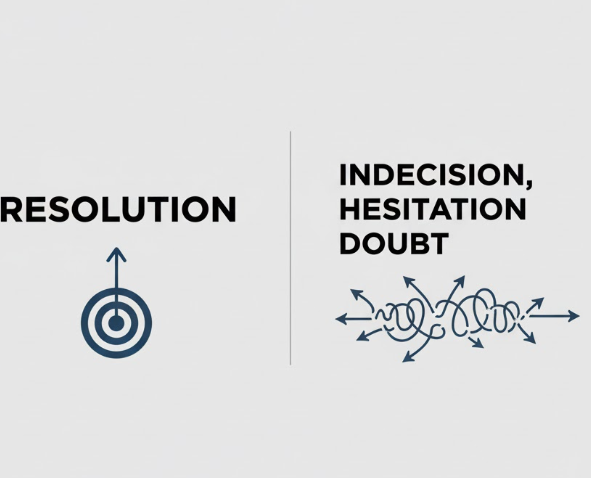
For example, the antonym of “resolution” as a firm decision might be “indecision,” while the antonym of “resolution” as problem-solving might be “complication.” Recognizing these nuances is key to using antonyms effectively.
Structural Breakdown of Antonyms
Antonyms can be formed in various ways. One common method is by adding prefixes like un-, in-, dis-, or non- to a word. For example, “decided” can become “undecided.” Another way is to use entirely different words that inherently express opposite meanings. The relationship between a word and its antonym is often semantic, meaning it is based on the meaning of the words themselves.
The structure of antonyms is not always straightforward. Some words have multiple antonyms depending on the context.
For instance, “resolution” in the context of a visual image (e.g., high resolution) might have antonyms like “low resolution” or “blurriness.” Therefore, understanding the context is crucial when identifying and using antonyms.
Types of Antonyms
Antonyms are not all created equal. They can be classified into different categories based on the nature of their opposition.
The three primary types of antonyms are complementary, gradable, and relational.
Complementary Antonyms
Complementary antonyms are pairs where the presence of one word implies the absence of the other. There is no middle ground. Examples include “on” and “off,” “dead” and “alive,” or “pass” and “fail.” In the context of resolution as a solved problem, an antonym could be “unsolved.” If a problem is solved, it cannot simultaneously be unsolved, and vice versa.
Gradable Antonyms
Gradable antonyms represent opposite ends of a spectrum. There are degrees of difference between the two words. Examples include “hot” and “cold,” “big” and “small,” or “happy” and “sad.” For “resolution” as determination, gradable antonyms could include words like “hesitant,” “doubtful,” or “uncommitted.” These words indicate varying degrees of lacking resolution.
Relational Antonyms
Relational antonyms describe a relationship from opposite perspectives. They often involve a reciprocal relationship. Examples include “teacher” and “student,” “buy” and “sell,” or “give” and “receive.” While perhaps less directly applicable to “resolution” in its core meanings, one could argue that “resolution” (as in a decision) and “procrastination” are relationally opposed, where resolution implies action and procrastination implies its delay or avoidance.
Examples of Antonyms for Resolution
Below are examples of antonyms for “resolution,” categorized by different facets of the word’s meaning. These examples are presented in tables for clarity.
Indecision
When “resolution” means a firm decision, its antonyms relate to indecision. The following table provides examples of words and phrases that convey a lack of decisiveness.
| Antonym | Example Sentence |
|---|---|
| Indecision | His indecision cost the team valuable time. |
| Uncertainty | She expressed uncertainty about the project’s future. |
| Hesitancy | There was a noticeable hesitancy in his voice. |
| Doubt | He harbored doubt about his ability to succeed. |
| Vacillation | Her vacillation on the issue frustrated her colleagues. |
| Wavering | The company’s commitment was wavering due to economic concerns. |
| Ambivalence | He felt ambivalence towards the proposed changes. |
| Irresolution | His irresolution made him an ineffective leader. |
| Equivocation | The politician’s equivocation angered the voters. |
| Procrastination | Procrastination prevented him from finishing the task on time. |
| Tentativeness | Her tentativeness suggested she wasn’t fully convinced. |
| Unsureness | He displayed unsureness about the correct answer. |
| Changeableness | The weather’s changeableness made planning difficult. |
| Fickleness | Her fickleness made it hard to rely on her decisions. |
| Capriciousness | The manager’s capriciousness created a stressful work environment. |
| Shilly-shallying | Stop shilly-shallying and make a decision! |
| Dithering | He was dithering over which option to choose. |
| Pussyfooting | The government was pussyfooting around the controversial issue. |
| Hedging | The investor was hedging his bets due to market volatility. |
| Sitting on the fence | He was sitting on the fence, unwilling to commit to either side. |
| Being on the horns of a dilemma | She felt like she was on the horns of a dilemma, with no good choices. |
| A state of flux | The company was in a state of flux, with constant changes. |
| At sixes and sevens | They were at sixes and sevens, unable to agree on a plan. |
| In two minds | She was in two minds about accepting the job offer. |
Hesitation
This table focuses on words that describe hesitation, which is a lack of immediate resolution or decisiveness.
| Antonym | Example Sentence |
|---|---|
| Hesitation | After a moment of hesitation, she accepted the offer. |
| Reluctance | He showed reluctance to participate in the activity. |
| Unwillingness | Her unwillingness to cooperate hindered the project. |
| Aversion | He had an aversion to public speaking. |
| Disinclination | She felt a strong disinclination to attend the meeting. |
| Demurring | She was demurring, not quite refusing but not agreeing either. |
| Paucity | There was a paucity of enthusiasm for the proposal. |
| Apathy | The students showed apathy towards the lecture. |
| Lethargy | A feeling of lethargy washed over him, preventing him from acting. |
| Sluggishness | The economy’s sluggishness worried investors. |
| Inertia | The company suffered from inertia, unable to adapt to change. |
| Passivity | His passivity allowed others to make decisions for him. |
| Resistance | They met with resistance when they tried to implement the new policy. |
| Opposition | There was strong opposition to the proposed law. |
| Rejection | The proposal faced immediate rejection. |
| Declination | His declination of the invitation was unexpected. |
| Spurning | She was spurning all offers of help. |
| Refusal | Their refusal to negotiate led to a stalemate. |
| Noncompliance | His noncompliance with the rules resulted in a penalty. |
| Disobedience | The child’s disobedience frustrated his parents. |
| Defiance | Her defiance of authority was well-known. |
| Rebelliousness | His rebelliousness often got him into trouble. |
| Insubordination | His insubordination at work led to his dismissal. |
| Mutiny | The sailors staged a mutiny against their captain. |
Doubt
When “resolution” implies certainty or a lack of doubt, its antonyms express skepticism or disbelief.
| Antonym | Example Sentence |
|---|---|
| Doubt | He expressed doubt about the accuracy of the report. |
| Skepticism | She approached the claims with skepticism. |
| Unbelief | There was an air of unbelief surrounding the story. |
| Disbelief | He shook his head in disbelief. |
| Incredulity | Her face registered incredulity at the news. |
| Suspicion | He viewed the offer with suspicion. |
| Distrust | There was a general sense of distrust in the company. |
| Misgiving | She had a misgiving about the upcoming trip. |
| Apprehension | He felt apprehension about the unknown future. |
| Trepidation | She approached the stage with trepidation. |
| Anxiety | He suffered from anxiety about his performance. |
| Worry | She expressed worry about the project’s deadline. |
| Concern | There was growing concern about the environmental impact. |
| Unease | He felt a sense of unease about the situation. |
| Disquiet | The rumors caused disquiet among the employees. |
| Lack of conviction | His lack of conviction made his argument unpersuasive. |
| Questioning | She was questioning the validity of the data. |
| Challenging | The lawyer was challenging the witness’s testimony. |
| Denial | He was in denial about the severity of the problem. |
| Rejection | The scientific community expressed rejection of the theory. |
| Contradiction | There was a clear contradiction in his statements. |
| Opposition | There was strong opposition to the proposed policy. |
| Refutation | The scientist presented a refutation of the previous findings. |
Wavering
This table explores antonyms relating to wavering, indicating an instability or lack of firmness, directly opposing the steadfastness of resolution.
| Antonym | Example Sentence |
|---|---|
| Wavering | His commitment was wavering under pressure. |
| Fluctuating | The stock prices were fluctuating wildly. |
| Oscillating | The pendulum was oscillating back and forth. |
| Vacillating | The politician was vacillating on the issue of tax reform. |
| Shifting | The sands were constantly shifting in the desert. |
| Changing | The weather was changing rapidly throughout the day. |
| Unstable | The economy was in an unstable condition. |
| Volatile | The political situation was highly volatile. |
| Erratic | His behavior was becoming increasingly erratic. |
| Capricious | Her decisions were often capricious and unpredictable. |
| Fickle | The market was fickle, changing its mind from day to day. |
| Mutable | Human nature is mutable, influenced by experiences. |
| Transitory | Life is transitory, with everything eventually passing away. |
| Ephemeral | Their fame was ephemeral, lasting only a short time. |
| Fleeting | He caught a fleeting glimpse of her in the crowd. |
| Transient | The feeling of joy was transient, quickly fading away. |
| Impermanent | Nothing is impermanent, everything is subject to change. |
| Uncertain | The outcome of the election was uncertain. |
| Ambiguous | Her response was ambiguous, leaving us unsure of her intentions. |
| Indefinite | The meeting was postponed to an indefinite date. |
| Vague | His explanation was vague and unhelpful. |
| Obscure | The meaning of the poem was obscure and difficult to understand. |
| Murky | The water was murky, making it hard to see the bottom. |
Ambivalence
This table presents examples of words that suggest ambivalence, which represents mixed feelings or contradictory ideas about something, hindering resolute action.
| Antonym | Example Sentence |
|---|---|
| Ambivalence | He felt ambivalence towards the job offer, unsure if it was the right fit. |
| Mixed feelings | She had mixed feelings about leaving her old job. |
| Conflicting emotions | He experienced conflicting emotions about the decision. |
| Contradictory ideas | She was torn between contradictory ideas. |
| Inner conflict | He was experiencing an intense inner conflict. |
| Mental conflict | The situation created a significant mental conflict. |
| Dissonance | There was a dissonance between his words and his actions. |
| Incongruity | The incongruity of the situation was unsettling. |
| Paradox | Life is full of paradox. |
| Contradiction | There was a clear contradiction in his statements. |
| Oxymoron | “Living dead” is an example of an oxymoron. |
| Dilemma | She faced a difficult dilemma. |
| Quandary | He was in a quandary about what to do next. |
| Predicament | They found themselves in a difficult predicament. |
| Impasse | Negotiations reached an impasse. |
| Stalemate | The game ended in a stalemate. |
| Deadlock | The jury was in a deadlock. |
| Gridlock | The city was in gridlock due to the snowstorm. |
| Imbroglio | The company was caught in a political imbroglio. |
| Entanglement | He was trying to escape the legal entanglement. |
| Complication | The new rule added a complication to the process. |
| Difficulty | They faced many difficulties in completing the project. |
| Hardship | The refugees endured great hardship. |
Usage Rules for Antonyms
Using antonyms correctly involves understanding their specific meanings and the contexts in which they are appropriate. Here are key rules to consider:
- Context is crucial: Always consider the context in which “resolution” is being used to choose the most appropriate antonym.
- Type of antonym: Be aware of whether the antonym is complementary, gradable, or relational, as this affects how it can be used.
- Nuance: Pay attention to the subtle differences in meaning between different antonyms. “Hesitation” and “doubt” both express a lack of resolution, but they have distinct connotations.
- Formal vs. Informal: Some antonyms are more formal than others. Choose words that are appropriate for the tone of your writing or speech.
Common Mistakes When Using Antonyms
Using antonyms incorrectly can lead to confusion or miscommunication. Here are some common mistakes to avoid:
- Incorrect antonym selection: Choosing an antonym that does not accurately reflect the intended opposite meaning.
- Incorrect: He showed resolution by being apathetic.
- Correct: He showed irresolution by being apathetic.
- Ignoring context: Failing to consider the context in which the word is being used.
- Incorrect: The resolution of the image was indecisive. (Resolution here refers to clarity, not a decision)
- Correct: The image lacked clarity.
- Using near-synonyms instead of true antonyms: Using words that are similar in meaning but not truly opposite.
- Incorrect: The resolution was happiness.
- Correct: The resolution was sadness.
Practice Exercises
Test your understanding of antonyms for “resolution” with the following exercises. Choose the best antonym for “resolution” in each sentence.
| Question | Answer |
|---|---|
| 1. Despite his initial ________, he eventually agreed to the plan. | Hesitation |
| 2. The committee’s ________ prevented them from taking decisive action. | Indecision |
| 3. She expressed ________ about the project’s chances of success. | Doubt |
| 4. His ________ commitment to the cause was evident in his actions. | Wavering |
| 5. He felt ________ towards the proposed changes, seeing both pros and cons. | Ambivalence |
| 6. After a moment of ________, she declined the offer. | Hesitation |
| 7. The team’s ________ to adapt to the new strategy cost them the game. | Indecision |
| 8. Many expressed ________ regarding the company’s financial stability. | Doubt |
| 9. The politician’s ________ stance on the issue alienated many voters. | Wavering |
| 10. He felt a sense of ________ towards the conflicting viewpoints. | Ambivalence |
Exercise 2: Fill in the blanks with an appropriate antonym of resolution.
| Question | Answer |
|---|---|
| 1. Her ________ to speak up in meetings hindered her career advancement. | Hesitation |
| 2. The company’s ________ in the face of changing market conditions led to its downfall. | Indecision |
| 3. He harbored ________ about the truthfulness of the witness’s testimony. | Doubt |
| 4. The government’s ________ on environmental issues drew criticism from activists. | Wavering |
| 5. She approached the project with ________, seeing both its potential and its risks. | Ambivalence |
| 6. Due to his ________, he could not decide on a course of action. | Indecision |
| 7. Her ________ to accept the new position was evident. | Hesitation |
| 8. The scientist presented his findings, but many expressed ________. | Doubt |
| 9. The CEO’s ________ leadership style created instability within the company. | Wavering |
| 10. The jury’s ________ made it difficult to reach a verdict. | Ambivalence |
Advanced Topics: Nuances in Antonym Usage
For advanced learners, understanding the subtleties of antonym usage is crucial. This includes recognizing how cultural context, idiomatic expressions, and figurative language can affect the choice and interpretation of antonyms.
For example, sarcasm often relies on using words with meanings opposite to what is intended, requiring a deeper understanding of context and tone.
Furthermore, exploring the historical evolution of antonyms can provide insights into how language changes over time. Some words may have acquired new or modified antonyms as their meanings have evolved.
Studying literature and historical texts can offer valuable examples of how antonyms have been used in different contexts.
Frequently Asked Questions
- What is the difference between an antonym and a synonym?An antonym is a word with the opposite meaning of another word, while a synonym is a word with a similar meaning.
- How can I improve my vocabulary of antonyms?Read widely, use a thesaurus, and practice identifying antonyms in different contexts. Pay attention to prefixes like un-, in-, and dis-, which often indicate negation.
- Are there words that have no antonyms?Yes, some words have no direct antonyms, especially highly specific or technical terms. In these cases, you may need to use a phrase to express the opposite meaning.
- Can a word have multiple antonyms?Yes, depending on the context and the specific meaning of the word. As seen with “resolution,” different facets of its meaning can have different antonyms.
- How important is context when choosing an antonym?Context is extremely important. The most appropriate antonym will depend on the specific way the word is being used in a sentence or situation.
- What are the benefits of knowing antonyms?Knowing antonyms enhances your vocabulary, improves your writing and speaking skills, and helps you understand the nuances of language. It also aids in critical thinking and problem-solving.
- How do I avoid making mistakes when using antonyms?Always double-check the meaning of the antonym in a dictionary or thesaurus, and consider the context in which you are using it. Practice using antonyms in sentences to ensure you understand their correct usage.
- Are antonyms the same in all languages?No, antonyms are language-specific. The antonym of a word in one language may not be the same as the antonym of its translation in another language.
Conclusion
Understanding antonyms, especially those related to “resolution,” is a valuable skill for anyone looking to improve their English proficiency. By recognizing the different types of antonyms and considering the context in which they are used, you can enhance your vocabulary and express yourself more precisely.
Remember to pay attention to nuance and avoid common mistakes when choosing antonyms.
Continue practicing with the exercises and examples provided in this article to solidify your understanding. With consistent effort, you can master the art of using antonyms effectively and add depth and clarity to your communication.
Exploring the opposites of words is a fun and rewarding way to expand your linguistic skills and enrich your understanding of the English language.